The Best Destinations for Culture Obsessives Are Still Living Their Own Story.
Destination: Global
Category: comparison
At 8:30 in the morning, before most of the Grand Bazaar’s visitors have reached the gates, shopkeepers are already moving through its lanes with keys, cartons, tea glasses, and the particular shorthand of people who have worked beside one another for years. The lamps are on. The vaulted passages have not yet become a setting for photographs. It is a market first: an old commercial machine beginning another working day.
That distinction separates cultural travel from the kind of travel that merely accumulates heritage. The best destinations for culture obsessives do not ask the visitor to make the culture happen. A museum can tell a visitor what mattered. A preserved quarter can show them where something once happened. But the deeper version of culture travel starts when a place stops explaining itself. A call to prayer changes the street’s tempo. A baker knows which customer wants which bread. A funeral procession has right of way. A teacher, a trader, a musician, and a family are all moving inside an inheritance they did not arrive to observe.
The best destinations for culture obsessives are places where culture is not an attraction layered onto the city; it is the atmosphere that organizes ordinary life. These six were chosen for the pressure their past still exerts on their present. Kyoto protects continuity while its wooden fabric is under strain. Fes sustains a medieval urban order without turning it into a reenactment. Varanasi makes mortality a public grammar. Athens keeps the old questions active. Havana turns constrained preservation into a contemporary argument. Istanbul adds civilizations without ever becoming only one of them.
That standard also requires exclusions. Rome has one of the world’s great concentrations of Western heritage, but its cultural encounter is so thoroughly interpreted that the visitor can remain safely outside it. Beijing holds an extraordinary imperial archive, but the political context makes the independent cultural encounter more constrained than this list requires. Marrakech has sensory force and a powerful medina, but Fes offers the more demanding Moroccan argument: a city where the older urban culture has not been as thoroughly reorganized around the visitor.
The Best Destinations for Culture Obsessives Reward Participation, Not Collection
A culture obsessive does not need more things to tick off. They need places that require a different kind of attention: learning when to arrive, when not to enter, which craft is still made for local use, and what not to mistake for a performance. The six cities below are not interchangeable versions of “cultural immersion.” Each makes one precise claim about how a civilization stays present tense.
Kyoto: Where the Past Is Still Being Asked to Pay Its Rent
Kyoto belongs on this list because it is a city whose culture survived catastrophic twentieth-century destruction, yet must still earn its survival inside a twenty-first-century real-estate market. The city was removed from the atomic-bomb target list in 1945 after Secretary of War Henry Stimson argued for its cultural significance. That decision spared a dense inheritance: temples and shrines, the old fabric of machiya townhouses, Nishiki’s food stalls, and Gion’s highly regulated arts districts. The point is not to treat Kyoto as an untouched reliquary. Its culture feels alive precisely because it remains vulnerable.
The machiya makes that vulnerability visible. These narrow wooden townhouses, with street-facing shops and rooms that stretch deep into the plot, were designed for a city in which trade, family, light, and season had to fit together. Inheritance costs, maintenance demands, and redevelopment pressure have made demolition tempting for many owners. Some have become guesthouses or restaurants through preservation efforts such as the Kyoto Machiya Revival Project; others have vanished behind new concrete facades. A culture obsessive should look at a machiya not as a pretty backdrop but as a contested piece of urban infrastructure.
Nishiki Market clarifies the difference between preservation and continuity. The covered market is crowded, but the lanes immediately behind it—often called Ura-Nishiki—still reveal the supplier culture that made the market work: pickle makers, tofu specialists, knife shops, sake counters, and wholesalers whose relationships precede the contemporary food-tour circuit. Go early, buy one thing from a specialist, and let the exchange matter more than the number of stalls covered. The best way to place that morning in a larger stay is with this Kyoto food guide, while a Kyoto solo itinerary gives enough time to move beyond the famous temple sequence.
Then stay long enough to understand the city’s calendar. On August 16, the five bonfires of Daimonji Gozan Okuribi appear on the mountains around Kyoto, guiding ancestral spirits away after Obon. It is not an event invented to animate a slow tourism month. It is a city performing an obligation to its dead. Tokyo has more energy and Osaka has more appetite, but Kyoto is the culture obsessive’s Japanese choice because it keeps choosing continuity even when continuity is difficult.
There is an etiquette to that attention. Do not turn Gion into a scavenger hunt for women on their way to appointments. Do not confuse the silence of a temple garden with an invitation to make it your private set. Kyoto rewards a traveler who returns to the same lane at different hours and sees what changes when the day’s commerce gives way to neighborhood routines. The city’s culture is not fragile because it is delicate. It is fragile because so much of it survives only when residents retain the practical ability to keep inhabiting it.
Fes: Where the Medieval City Never Became a Period Piece
Where Kyoto protects an endangered urban inheritance, Fes continues one so completely that the visitor’s first task is to stop looking for the boundary between heritage and ordinary life. Fes el-Bali was founded in the ninth century, but its importance cannot be measured by age alone. The medina’s passages, workshops, courtyards, mosques, schools, homes, and markets remain interdependent. A brassworker’s hammer is not an ambient soundtrack. It locates a trade. A donkey carrying goods through a narrow lane is not a staged image. It is a rational answer to a city built before the automobile.
That is why Fes asks more of a traveler than a decorative medina does. The tanneries are real workplaces, but their viewing terraces have become a familiar visitor ritual. Look instead for the processes that have not been simplified for an audience: a zellige maker setting cut tile by hand, a tadelakt plasterer working a surface into water resistance, a weaver whose loom belongs to a family trade. The useful question is not whether a shop feels “authentic.” It is whether the craft is still being made with the rigor that gave it meaning before a visitor arrived.
Al-Qarawiyyin brings the same tension into institutional form. Founded in 859, its mosque-university remains a center of Islamic learning, while access to its religious spaces is appropriately limited for non-Muslim visitors. That limit is part of the lesson. A culture obsessive is not entitled to every interior. The surrounding streets, the restored Qarawiyyin Library when public access permits, and the intellectual gravity of the quarter offer a more respectful way to understand what continuity looks like. This Fez couples guide is a useful basis for navigating the medina’s scale, even when the trip itself is designed around workshops and study rather than a conventional romantic itinerary.
Fes also has a contemporary cultural calendar that resists the idea that sacred culture belongs only in the past. The Fes Festival of World Sacred Music, held in early summer, brings devotional and sacred traditions into venues such as Bab Makina and Dar Batha. It is a different proposition from browsing the souks. Kyoto asks a visitor to notice what survived; Fes asks them to notice what never stopped being used. Marrakech offers a more polished entry into Morocco. Fes earns this place because the city still makes the visitor accommodate its working order.
The right pace in Fes is deliberately repetitive. Return to a lane after lunch. Buy bread at the same bakery twice. Ask before taking a craftsperson’s photograph, and accept a refusal without argument. The medina cannot be understood as an efficient route between landmarks because its value lies in the way work, worship, repair, delivery, and family life keep crossing the same tight passages. Its apparent disorder is the form of its coherence.
Varanasi: Where a City Gives Death a Daily Address
If Fes makes continuity visible through work, Varanasi makes it visible through the fact that life, worship, death, and return all share the same riverbank. This is not a city to approach as a spiritual spectacle. The Ganges ghats are the architecture of a lived Hindu relationship to time: bathing before sunrise, offerings at dusk, study, trade, cremation, mourning, and the ordinary traffic of a city that knows death cannot be banished from the public frame.
The clearest encounter begins on the river before the day gathers speed. A dawn boat does not create a private revelation; it gives the traveler enough distance to see the ghats as a single living edge. Morning bathers descend the steps. Priests prepare for ritual. Laundry appears. Temple bells move through the haze. The boat should pass Manikarnika with restraint. Do not photograph cremations. Do not turn the burning ghat into evidence of your own seriousness. The power of the place is that it remains a sacred working site for the people whose dead are brought there, not an experience waiting to be harvested.
Varanasi’s cultural life is also audible. The Banaras gharana has shaped Hindustani classical music through musicians including Bismillah Khan, Girija Devi, and Ravi Shankar. A city of chant and bells is also a city of raga, tabla, shehnai, and the long discipline of listening. If a visit aligns with the Sankat Mochan Sangeet Samaroh, treat the concert as a commitment rather than a stop between attractions; the audience’s attention is part of the form. Sampurnanand Sanskrit University offers another line into the city, connecting the river’s ritual language to a living intellectual tradition.
A three-day Varanasi culture guide is the right foundation for a first visit because it creates room for dawn, walking, rest, and the emotional weight of the place. Rishikesh has a distinct argument about yoga’s origin and the Himalayas; it cannot replace Varanasi’s total integration of death into daily geography. Fes showed culture continuing through the city’s trades. Varanasi shows culture completing a philosophy of life in public, without asking anyone to look away.
That does not mean every ritual is available for interpretation. The evening Ganga Aarti at Dashashwamedh Ghat can be moving, but it is also crowded and highly visible; a culture obsessive should understand it as one register of the city rather than its definitive one. A quieter morning in Assi, a long conversation with a boatman, or an hour listening without recording can reveal more about how Varanasi holds multiple tempos at once. Respect here is not a disclaimer attached to an itinerary. It is the itinerary’s governing method.
Athens: Where the Old Questions Still Have an Address
Where Varanasi makes culture a framework for mortality, Athens makes it a framework for argument. The city of Socrates, Plato, Aristotle, Sophocles, and Thucydides matters not because a visitor needs another lesson in “Western civilization,” but because the questions they sharpened remain active: What is justice? Who belongs in the political community? What does a good life require? What is the relationship between beauty and truth? Athens is still difficult because those questions are still difficult.
The Acropolis is essential, but it is not sufficient. Kerameikos, west of the ancient Agora, gives the city a more intimate register. Its grave markers hold names, families, farewells, and the small texture of individual lives beside the public scale of the Parthenon. Go there after the Agora rather than before it. The sequence matters: first see the civic center where public life was argued, then the cemetery where the people who inhabited that argument were remembered. It makes the classical city feel less like a pedestal and more like a community with children, servants, soldiers, artisans, and mourners.
The philosophical geography can be walked, though not in one polished line. The Academy in the Akadimia Platonos neighborhood, the Agora associated with Socratic exchange, and Aristotle’s Lyceum near the National Garden make a map of ideas rather than monuments. The National Archaeological Museum provides the necessary object lesson, especially the Antikythera Mechanism: a device complex enough to recalibrate any simplistic story of ancient technical life. A four-day Athens itinerary can organize the city’s major sites, while this Athens food and culture guide helps keep tavernas, markets, and present-day neighborhoods inside the same conversation.
Rome has a grander pageant of imperial continuity, but Athens is more precise for this list. Rome asks the traveler to confront a civilization’s reach. Athens asks them to keep answering the questions that civilization formulated. Varanasi completes a cycle of life and death. Athens asks what a human being is supposed to do with the life in between.
The city’s present tense matters as much as its archaeological one. Read a page of Plato before walking to the Agora, then take the question into a contemporary neighborhood where political argument is never far from the table. Athens is not an academic seminar disguised as a holiday. It is a place where the distance between the ancient assembly, the current street demonstration, and a late dinner can feel unexpectedly short. That compression is what makes its intellectual inheritance breathable rather than ornamental.
Havana: Where Preservation Became an Unplanned Art Form
If Athens makes culture a continuing argument, Havana makes it an improvisation under constraint. The city’s famous mid-century cars and weathered façades are not proof that time stopped in 1959. They are evidence of adaptation: repairs made with limited parts, buildings kept standing through resourcefulness, and a public life shaped by revolution, embargo, scarcity, and an extraordinary insistence on music, reading, debate, and dance.
A culture obsessive should arrive suspicious of nostalgia. The vintage-car image can reduce Havana to a beautiful freeze-frame and erase the labor required to keep those cars running. Better to understand the material city as the setting for a culture that has kept producing. Fábrica de Arte Cubano, in a former industrial building in Vedado, makes the point in contemporary form. Visual art, film, design, music, food, and conversation occupy the same night. It is not an archival display of Cuban creativity. It is a place where contemporary artists and audiences meet in real time.
The book fair offers another, quieter answer to the postcard version of Havana. Each February, the Feria Internacional del Libro de La Habana expands through Fortaleza de San Carlos de la Cabaña with readings, publishers, school groups, and the kind of public literary culture that is easy to overlook when a visitor’s entire schedule is set along the Malecón. For music, pay attention to the conditions around the performance: who is in the room, whether people are dancing with one another rather than at a stage, and whether the night has space to become social instead of merely demonstrative. The city’s son and rumba traditions live through participation.
A five-day Havana itinerary gives a first visit enough structure to move beyond Old Havana, while a Havana food and culture guide helps connect kitchens, markets, and the city’s changing palate to the larger story. Buenos Aires preserves a different twentieth-century cultural confidence; it is more literary, European, and self-consciously modern. Havana belongs here because its material constraints have made culture a daily act of upkeep, invention, and gathering.
The practical corollary is to leave room for the city’s pace and to avoid treating scarcity as aesthetic texture. Confirm performances, carry what cash and connectivity contingencies current conditions require, and understand that an unavailable ingredient or delayed plan can be part of the day’s actual conditions. That variability is not a reason to romanticize hardship. It is a reason to arrive less entitled to frictionless consumption and more prepared to meet the resourcefulness that Havana’s residents practice daily.
Istanbul: Where Every Layer Refuses to Leave
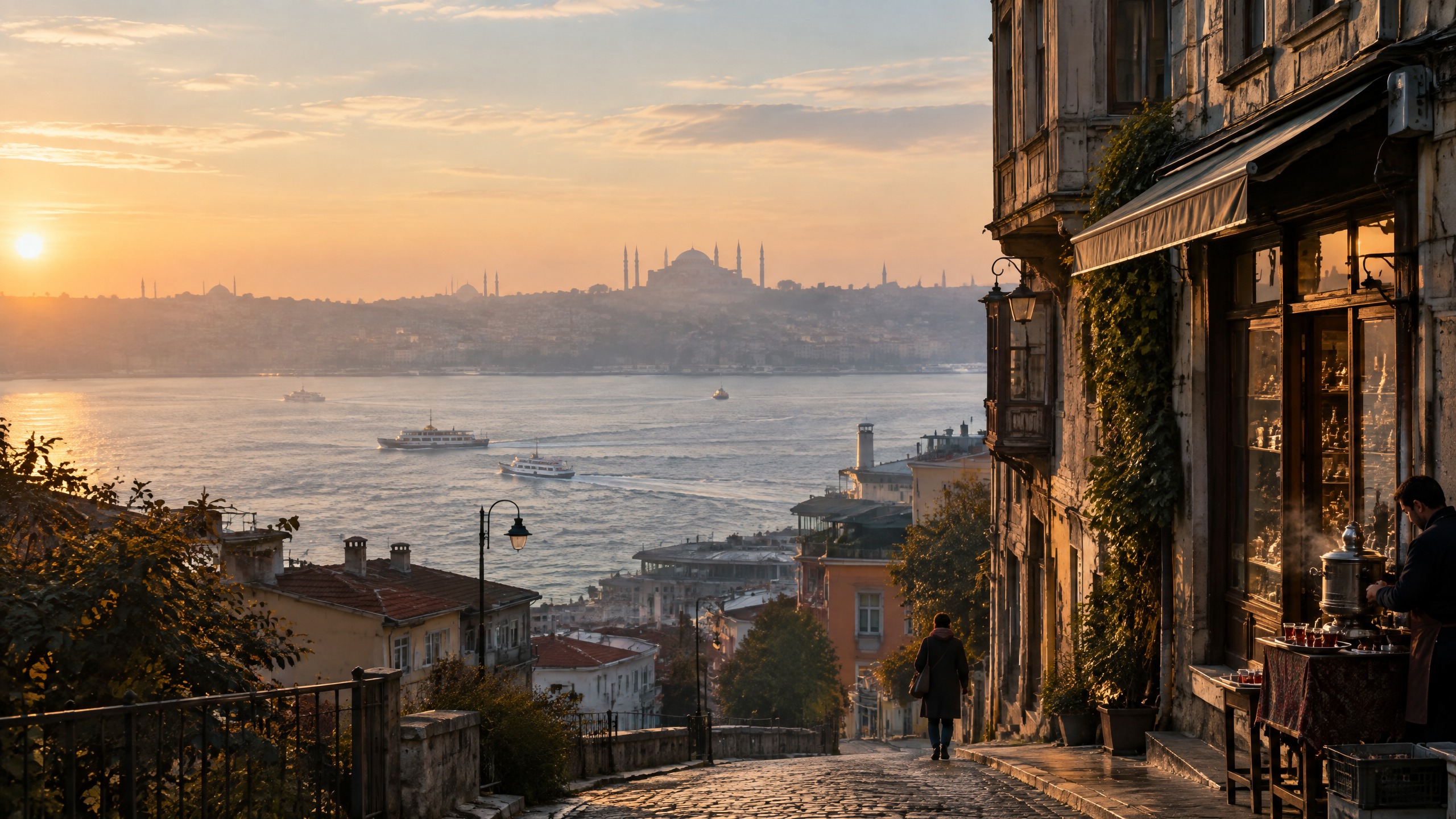
Where Havana shows a city adapting inside one modern rupture, Istanbul is the culture obsessive destination for a city that has absorbed successive civilizations without allowing any of them to disappear cleanly. Byzantium became Constantinople, Constantinople became Istanbul, and the names alone are not a history lesson. They are a map of claims: Greek foundation, Roman capital, Byzantine Christian center, Ottoman imperial city, and Turkish metropolis, all pressing against the present at once.
Hagia Sophia condenses that accumulation into one building, which is why it deserves more than a quick circuit. Give it time to register the scale, the Christian mosaics, the immense Islamic calligraphy, the architectural decisions of Justinian’s sixth-century church, and the fact that it functions as an active mosque. Access rules and visitor flow change with prayer and religious use; meet that reality with patience rather than treating it as a disruption to a sightseeing plan. The building’s argument is not that one era replaced another. It is that every era is still visible enough to complicate the next.
Then take the argument into Beyoğlu. The Pera Museum, SALT Galata in the former Ottoman Bank, and the side streets off İstiklal Avenue offer a smaller-scale palimpsest: galleries and archives, nineteenth-century apartments, Greek Orthodox churches, Armenian churches, synagogues, and the ordinary commercial pressure of a modern avenue. This five-day Istanbul travel guide helps arrange the city’s necessary first encounters, while an Istanbul food and culture guide keeps the ferry terminals, markets, and table inside the historical story rather than outside it.
The Grand Bazaar is a final corrective. Arrive at opening on a weekday and watch the market begin as a trading system before it becomes a symbol. The artisans, wholesalers, buyers, carriers, and tea runners are part of a commercial tradition that long predates the souvenir economy. Istanbul differs from every city above because it does not offer a single continuous culture to enter. It offers accumulation. Kyoto survived. Fes continued. Varanasi completed. Athens asked. Havana froze. Istanbul kept adding layers.
Use the ferries to make that argument physical. The crossing between Europe and Asia compresses a great deal of history into a daily commute, but its value is not the view alone. Buy tea, watch workers and students make an ordinary crossing, and arrive in Kadıköy or Üsküdar with enough time to wander without forcing the trip back into a peninsula-only itinerary. Istanbul’s layeredness is most convincing when it appears in the mundane fact that millions of people still move between its inherited worlds before lunch.
How Culture Obsessives Should Choose a Destination That Will Challenge Them
Choose Kyoto if you are willing to look closely at preservation as a contemporary fight rather than a finished achievement. Give it at least five days. It is costly compared with the other Asian options on this list, especially in peak foliage and blossom seasons, but more time lets temple visits, neighborhood meals, markets, and the city’s evening rhythms connect rather than compete.
Choose Fes if you prefer a city that refuses to flatten itself into a visitor-friendly sequence. Four or five days is enough to learn the medina’s orientation, return to a workshop, and leave room for a guide who can explain what cannot be read from a map. Costs can be moderate, but comfort depends on accepting narrow lanes, irregular access, and a more demanding navigation experience.
Choose Varanasi if you can arrive with humility and a willingness to let ritual set the limits. Three full days create space for multiple river mornings, music, walking, and recovery from the intensity. It is among the least expensive cities here, but the ethical challenge is high: the visitor must know when participation becomes intrusion.
Choose Athens if your pleasure is intellectual continuity. Four or five days allow the Acropolis and the museums to sit beside Kerameikos, the Agora, neighborhoods, and long dinners. It is mid-range by European standards, with a broad range of stays and an airport that makes it the simplest solo entry point on this list.
Choose Havana if contemporary art, music, and literature matter as much as preserved facades. Five days is a minimum because the city rewards repeat visits to the same neighborhood at different hours. Budgeting requires flexibility: cash, changing availability, and practical arrangements matter more here than perfect advance optimization. Check current entry, currency, and local conditions before booking.
Choose Istanbul if you enjoy density and intellectual whiplash. Five to six days allows the historic peninsula, Beyoğlu, the Bosphorus, markets, and long meals to become one connected story. It usually offers the widest range of value across food and lodging, though flight pricing can move the total quickly. Combine Istanbul with Athens only when you have at least ten days; pairing Kyoto with no other city is often the more intelligent decision.
The itinerary should protect margin, not fill it. A culture obsessive needs a second pass through a market, an unplanned hour after a museum, an evening with nothing assigned but a neighborhood. That is the kind of trip Leif can structure well: enough anchors to understand a place and enough empty space for the place to interrupt the plan.
The Cities That Are Still Telling Their Own Stories
A culture obsessive does not travel to stand before a completed past. They travel to feel a city’s unfinished sentences moving through its markets, prayers, arguments, music, workshops, meals, and silences.
Kyoto survived. Fes continued. Varanasi completed. Athens asked. Havana froze. Istanbul accumulated.
Those verbs are not slogans for six destinations. They are six different answers to the question of how a culture keeps living after the monuments have been photographed. The best places do not ask the visitor to admire their story from a distance. They make it impossible to mistake the story for something over.