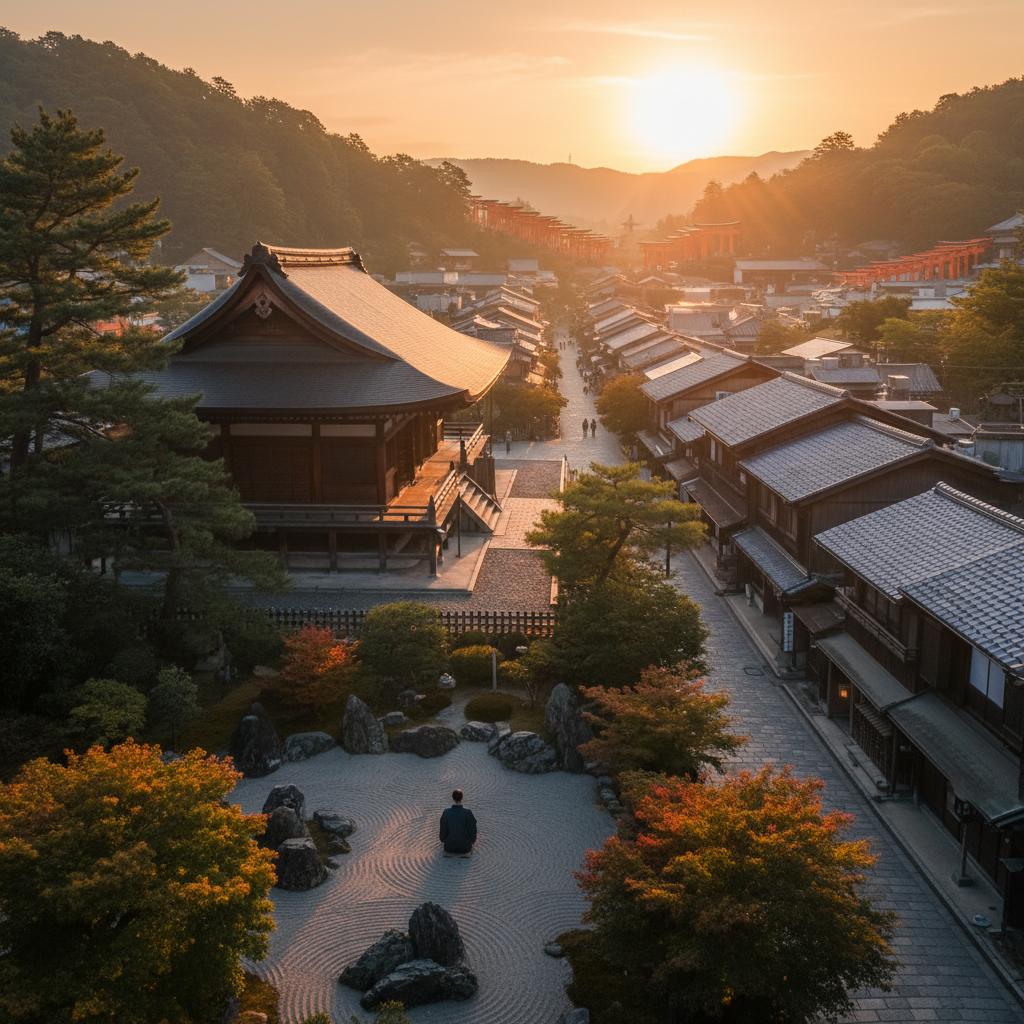
Kyoto Solo Travel Guide: 4 Days of Contemplative Temples & Authentic Machiya Stays
Discover the magic of Kyoto on a 4-day solo adventure. This guide unlocks dawn temple walks, zazen meditation, and authentic machiya guesthouses.
- Duration: 4 Days
- Estimated Budget: $800–$1,500
- Best Time to Visit: Late March-early April (cherry blossoms) and mid-November (autumn foliage) for stunning scenery; May-June and September-October for pleasant weather and fewer crowds.
- Destination: Kyoto, Japan
Kyoto rewards solo travel more than almost any other city in Asia. The temples, gardens, and tea ceremony culture are all designed for quiet individual experience — and the early morning hours, before the tour buses arrive, are when the city is at its most extraordinary. This guide is your key to unlocking Kyoto's most contemplative and authentic side, perfectly tailored for the solo explorer.
The moment you step into the quiet lanes around Kennin-ji Temple, a sense of profound calm washes over you. This isn't just an ancient religious site; it's a living sanctuary where the rustle of leaves in the meticulously raked garden becomes a meditation in itself. For the solo traveler, these early morning hours offer an unparalleled opportunity for introspection, a chance to connect with Kyoto's spiritual heart without the distractions of crowds. You'll find yourself lingering by the moss-covered stones, observing the subtle interplay of light and shadow, and understanding why this city has captivated solitary seekers for centuries. It’s a gentle immersion into a culture that values quiet contemplation.
Is navigating Kyoto's public transport system alone challenging? Not at all. Kyoto's bus and subway networks are incredibly efficient, clean, and surprisingly intuitive, even for first-time visitors. Each stop is clearly announced in both Japanese and English, and detailed maps are readily available. A rechargeable IC card, like an ICOCA or Pasmo, makes payment seamless – just tap and go. This ease of movement empowers you to explore independently, from the serene temples nestled in the northern hills to the bustling markets downtown, without the need for guided tours or relying on others. It truly opens up the entire city for your solo adventure.
You'll find yourself waking with the first blush of dawn, drawn by the promise of an empty path leading through thousands of vermilion gates. The rhythm of Kyoto for the solo traveler often begins before the city fully awakens, allowing for moments of pure, unadulterated serenity. Later, you might spend an afternoon wandering through a traditional garden, each stone and plant placed with deliberate intention, offering a peaceful backdrop for quiet reflection. Evenings could involve a solitary meal at a small, intimate eatery, savoring local delicacies, or a quiet stroll along a lantern-lit canal, the day's experiences settling into a profound sense of peace. It's a journey of self-discovery amidst ancient beauty.
Dawn Serenity and Zen Reflections
Start your Kyoto adventure with an early morning visit to Fushimi Inari Taisha, famous for its thousands of vermilion torii gates.
Experiencing Fushimi Inari at dawn, before the crowds, is a truly magical and solitary experience. You'll have the entire mountain path almost to yourself, allowing for quiet contemplation.
Participate in a Zazen meditation session at Kennin-ji Temple, one of Kyoto's oldest Zen temples.
This free, solo-friendly activity offers a profound insight into Zen Buddhism and a peaceful start to your day. It's a rare opportunity for quiet introspection in a beautiful setting.
Wander through the serene gardens of Kennin-ji Temple after your meditation, taking in the beauty of its dry landscape and traditional architecture.
The temple grounds are incredibly peaceful, especially after the meditation session, offering a perfect opportunity for quiet reflection. It's a wonderful way to extend your mindful morning.
Explore the Nishiki Market, known as 'Kyoto's Kitchen,' for a solo culinary adventure.
This bustling market is perfect for solo travelers to sample a wide array of local delicacies at their own pace. You can try small bites from various vendors without needing to coordinate with others.
Stroll along the Philosopher's Path (Tetsugaku no Michi), a picturesque canal-side walk.
This tranquil 2km path is best experienced alone, allowing you to fully immerse yourself in the natural beauty and the quiet contemplation it inspires. It's especially beautiful during cherry blossom or autumn foliage seasons.
Leif's Tip: Embrace the early mornings in Kyoto. The city truly comes alive before the crowds, offering a sense of peace and authenticity that is unparalleled. Set your alarm and experience the magic of a quiet Kyoto.
Between navigating the labyrinthine streets of Gion, understanding the nuances of temple etiquette, and choosing a machiya guesthouse that truly feels like a serene haven, planning a solo trip to Kyoto can feel like an intricate puzzle. It's not just about booking flights and hotels; it's about curating an experience that aligns with your desire for quiet contemplation and authentic cultural immersion, without falling into tourist traps or missing out on those truly transformative moments. The challenge lies in sifting through countless recommendations to find those hidden gems and solo-friendly activities that make Kyoto so special for individual explorers. This is precisely where the Leif experience shines, translating your unique solo travel aspirations into a perfectly orchestrated journey.
Say you want to experience a traditional tea ceremony but you're not sure which school offers an intimate, solo-friendly experience without feeling rushed or overly performative — Leif has already identified a small, family-run tea house in a quiet corner of Higashiyama that welcomes solo guests for a personal, meditative session. Or perhaps you're wondering how to get to the serene moss garden of Saiho-ji, which requires advance reservations and has strict visiting hours; Leif will provide precise, step-by-step instructions, including booking details and transport options, ensuring you arrive punctually and respectfully. Every decision, from your morning zazen session to your evening stroll, is carefully considered to maximize your solo enjoyment and minimize any logistical headaches, letting you focus on the profound beauty surrounding you.
You'll arrive in Kyoto knowing exactly where to find the most tranquil gardens, the best spots for a solitary ramen lunch, and the perfect machiya guesthouse that feels like your own private sanctuary. Instead of poring over maps and reviews, you'll be gracefully navigating the city, confident in every choice. The difference is feeling the cool morning air on your face as you walk through an empty temple ground, knowing you're exactly where you're meant to be, completely present in the moment. Arriving in Kyoto with your Leif itinerary already done means your mind is free to absorb the quiet beauty, the ancient traditions, and the profound peace that this extraordinary city offers to the solo traveler, creating memories that resonate deeply long after you've returned home.
Best Time to Visit Kyoto, Japan
Spring (late March to early April) for cherry blossoms, though be prepared for crowds, especially at popular spots like Philosopher's Path.
Autumn (mid-November to early December) for breathtaking fall foliage, offering a vibrant backdrop to your contemplative walks.
Early summer (May-June) offers pleasant weather and fewer crowds than peak spring, ideal for solo exploration.
Winter (December-February) is surprisingly serene, with fewer tourists and the possibility of snow-dusted temples, perfect for quiet reflection.
Getting Around Kyoto, Japan
Invest in an ICOCA card (or similar IC card like Pasmo/Suica) immediately upon arrival for seamless travel on buses and subways; it's much easier than buying individual tickets.
Kyoto's bus system is extensive and efficient for reaching temples and attractions; Google Maps is your best friend for navigating routes and schedules.
The subway system is excellent for longer distances and avoiding traffic, especially between Kyoto Station and the downtown area.
Consider renting a bicycle for a day to explore quieter neighborhoods and the Philosopher's Path at your own pace, but be mindful of narrow streets and pedestrian zones.
Walking is often the best way to experience Kyoto's charm, especially in areas like Gion and Higashiyama; wear comfortable shoes!
What to Pack
- Comfortable walking shoes (you'll be doing a lot of walking, especially for those early morning temple hikes).
- Layers of clothing, as temperatures can vary throughout the day, particularly when exploring temples and gardens.
- A small, lightweight backpack for daily essentials, water, and any souvenirs you pick up.
- A portable power bank for your phone – essential for navigation, photos, and staying connected.
- A compact umbrella or light rain jacket, as Kyoto weather can be unpredictable.
- Modest clothing for temple visits (shoulders and knees covered) out of respect for local customs.
- A refillable water bottle to stay hydrated during your explorations.
- A good quality camera to capture the serene beauty of Kyoto at dawn.
Money-Saving Tips
- Utilize the excellent public transportation system; individual taxi rides can add up quickly for a solo traveler.
- Look for lunch specials (teishoku) at local restaurants; they offer great value and a chance to try traditional dishes.
- Many temples and gardens offer free or low-cost admission, especially if you focus on the exterior grounds.
- Purchase snacks and drinks from convenience stores (konbini) like 7-Eleven or FamilyMart instead of tourist traps.
- Consider a Kyoto City Bus One-Day Pass if you plan on using the bus extensively for a full day of sightseeing.
Local Insights
- Embrace the quiet; Kyoto is a city that rewards contemplation, especially in its temples and gardens. Silence is often appreciated.
- Learn a few basic Japanese phrases like 'Arigato gozaimasu' (thank you) and 'Sumimasen' (excuse me/I'm sorry); locals appreciate the effort.
- Always remove your shoes when entering temples, traditional restaurants, and guesthouses; look for shoe racks or designated areas.
- Be mindful of photography rules; some temples and private gardens prohibit photos in certain areas or altogether.
- Carry a small bag for trash; public trash cans are scarce in Japan, so it's common practice to take your rubbish with you.
Frequently Asked Questions
What's the best way to get around Kyoto as a solo traveler?
Kyoto's public transport is excellent. I highly recommend purchasing an ICOCA card upon arrival; it works on buses, subways, and even some trains, making travel seamless. Buses are great for reaching temples, while the subway covers major city areas. Taxis are also readily available but can be pricier.
Is it safe to walk alone in Kyoto at night?
Absolutely. Kyoto is one of the safest cities in the world. You'll often see locals out late, and well-lit streets and a general sense of public order mean you can feel very comfortable exploring on your own, even after dark. Just exercise normal city precautions.
Can I find English speakers easily if I need help?
While not everyone speaks fluent English, many younger people, tourist information centers, hotels, and major attractions will have staff who can assist you. Learning a few basic Japanese phrases like 'arigato' (thank you) and 'sumimasen' (excuse me/sorry) goes a long way and is always appreciated.
What's the etiquette for visiting temples and shrines solo?
Always be respectful. Dress modestly (shoulders and knees covered), remove your shoes before entering temple halls, and refrain from loud conversations. Photography is generally allowed but be mindful of signs prohibiting it in certain areas, especially during religious ceremonies. Silence is golden.
Are there good options for solo dining in Kyoto?
Kyoto is fantastic for solo diners! Many ramen shops, izakayas, and even some traditional restaurants have counter seating specifically designed for individuals. Don't be shy about walking into a small, local spot; it's often where you'll find the most authentic and delicious experiences. Look for places with a 'hitori' (single person) friendly atmosphere.
How can I avoid crowds at popular attractions?
The best strategy for solo travelers is to go early. Aim to arrive at popular sites like Kiyomizu-dera or Kinkaku-ji right when they open, or even before, if possible. Late afternoons, especially on weekdays, can also be less crowded than midday. Exploring lesser-known temples also offers tranquility.
What should I pack for a solo trip to Kyoto?
Comfortable walking shoes are essential, as you'll be doing a lot of exploring. Layers are key for varying temperatures, especially if visiting in spring or autumn. A portable power bank for your phone, a small umbrella (for sun or light rain), and a reusable water bottle will also be very useful.