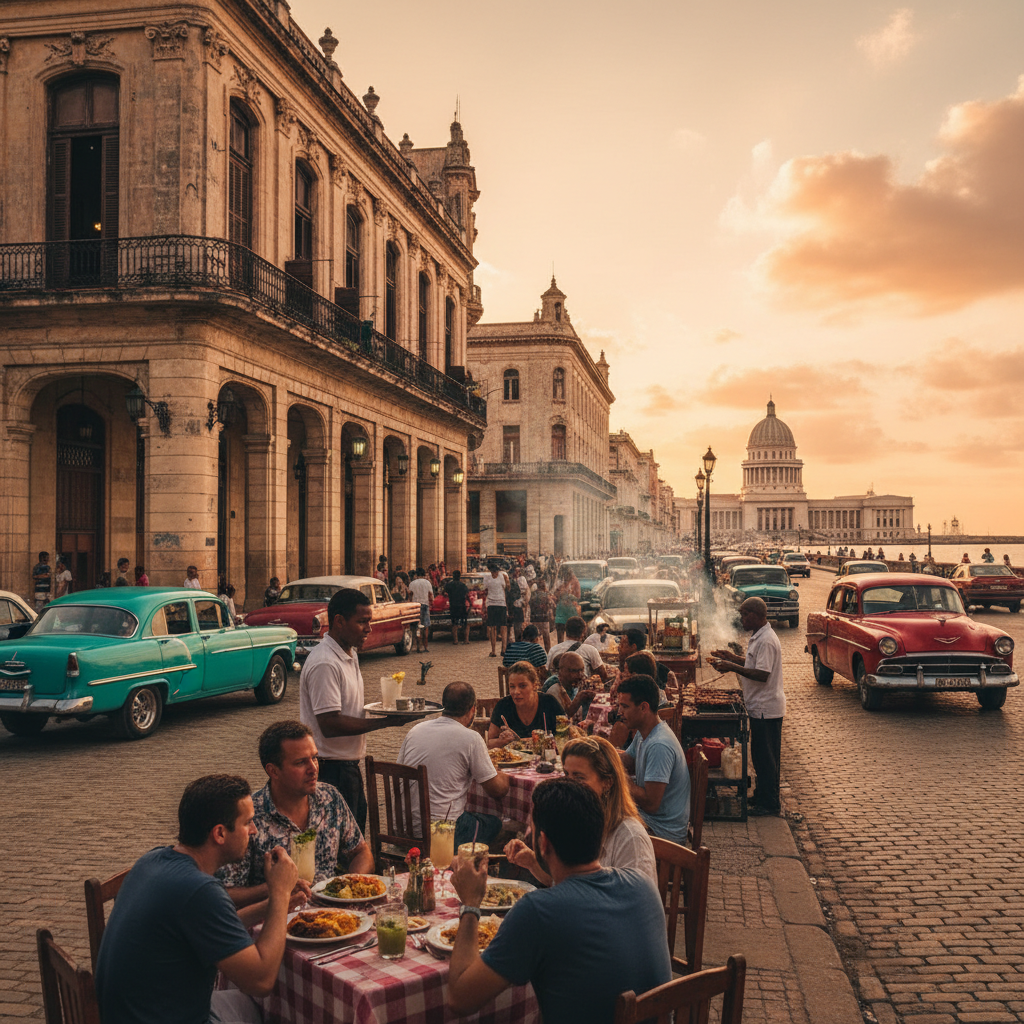
Havana's Culinary Revolution: A 4-Day Food & Culture Itinerary
Uncover Havana's vibrant food scene on a 4-day culinary journey. Explore paladares, savor ropa vieja, and dive into mojito culture with this expert guide.
- Duration: 4 Days
- Estimated Budget: $600–$1,200
- Best Time to Visit: November-April for cooler, drier weather
- Destination: Havana, Cuba
Havana's paladar revolution has transformed its culinary landscape, turning a city once known for scarcity into a vibrant hub for innovative Cuban cuisine. This guide is your passport to the best of Havana's food and culture, from historic eateries to hidden street food gems, showcasing the delicious rebirth of a nation's palate.
The moment you step into the bustling atmosphere of Calle Obispo, you're immediately immersed in the rhythm of daily life, a vibrant tapestry of sounds, smells, and sights. This iconic street, a main artery of the historic center, isn't just a thoroughfare; it's a living museum where every corner offers a glimpse into the city's soul. Here, you'll find everything from impromptu musical performances to small, family-run shops, all contributing to an energy that's uniquely Cuban. It’s the perfect starting point for understanding how the city’s heart beats, how its people interact, and how the past seamlessly blends with the present, setting the stage for a culinary exploration unlike any other.
How do you truly taste the authentic flavors of a city that has reinvented its food scene so dramatically? The reality is, navigating the burgeoning private restaurant (paladar) landscape requires more than just a quick search. Many of the most celebrated spots are tucked away in residential homes, offering an intimate dining experience that's a world away from state-run establishments. Knowing which ones truly deliver on their promise of innovative, delicious Cuban cuisine, and how to secure a table, is key. It's about discerning the genuine culinary gems from the tourist traps, ensuring every meal is a memorable journey through the island's evolving gastronomic identity.
Food-focused travelers spend their evenings savoring the rich, complex flavors of slow-cooked pork, often accompanied by the essential black beans and rice, in a beautifully restored colonial courtyard. You'll find yourself chatting with the chef, learning about their family recipes and the challenges and triumphs of sourcing fresh ingredients in a unique economic environment. The rhythm of dining in this vibrant city means lingering over strong coffee, indulging in sweet, tropical desserts, and perhaps even joining in an impromptu salsa dance. It's an immersive experience where every dish tells a story, connecting you deeply to the island's culture and its passionate people.
Habana Vieja's Culinary Heartbeat: From Coffee to Paladar Perfection
Start your day with a rich Cuban coffee at Café El Escorial, located in the bustling Plaza Vieja.
This spot is renowned for serving the best coffee in Havana, offering a perfect introduction to Cuba's strong and sweet coffee tradition. It's an ideal place to soak in the morning atmosphere of one of Havana's most beautiful squares.
Explore the historic Plaza Vieja, admiring the colonial architecture and vibrant street life.
This beautifully restored square is a UNESCO World Heritage site, offering a glimpse into Havana's rich past and present. It's a fantastic place for people-watching and capturing iconic Havana photographs.
Indulge in a legendary lunch at La Guarida, Cuba's most famous paladar, housed in a magnificent crumbling mansion.
This iconic restaurant is a must-visit for its unparalleled atmosphere and benchmark Cuban dishes like ropa vieja and lobster. It's where the paladar revolution truly began, offering a taste of history and culinary excellence.
Immerse yourself in local ingredients at the Mercado Agropecuario, a bustling farmers' market.
This market provides an authentic insight into the Cuban diet and the fresh produce available to locals. It's an excellent way to understand the foundational elements of Cuban cuisine.
Savor dinner at O'Reilly 304, known for its exceptional tapas-style Cuban fusion.
This paladar offers a modern and exciting take on Cuban flavors, with outstanding ceviche and octopus dishes that showcase the island's fresh seafood. It's a vibrant spot perfect for sharing plates and enjoying a lively atmosphere.
Leif's Tip: Wear comfortable shoes today, as you'll be doing a lot of walking through the charming, cobblestone streets of Habana Vieja. Also, remember to carry small denominations of Cuban pesos (CUP) for market purchases and smaller vendors, as credit cards are rarely accepted outside of larger establishments.
Havana has countless hidden culinary gems, and knowing which ones are truly worth your precious vacation time is the difference between a good trip and an unforgettable one. Between deciphering local menus, navigating the ever-changing currency situation, and understanding the nuances of booking a table at a sought-after private restaurant, planning a food-focused trip here can feel like a full-time job. You want to experience the real, evolving flavors of the island, not just the tourist traps. This is where many travelers get stuck, overwhelmed by choices and unsure how to access the most authentic experiences, often resorting to generic recommendations that don't quite capture the city's unique gastronomic spirit. Leif cuts through the noise, ensuring every meal is a discovery.,Say you want to experience the vibrant energy of a local market, but you're not sure which one offers the best selection of tropical fruits and local produce, or how to interact with the vendors. Leif already has that covered, guiding you to the Mercado de Cuatro Caminos, a bustling hub where you can immerse yourself in the sights and sounds of daily Cuban life, perhaps even picking up some exotic ingredients for a cooking class. Or maybe you're craving a specific regional dish, like a perfectly prepared ajiaco, and you need to know which paladar truly excels at it, even if it's off the beaten path. Leif provides that insider knowledge, giving you the confidence to explore beyond the obvious and savor every authentic bite.,You'll arrive in this sun-drenched city with the confidence of a seasoned traveler, your itinerary a perfectly curated culinary map. Instead of wasting precious hours searching for a decent meal or falling into tourist traps, you'll be savoring a perfectly balanced mojito at a charming rooftop bar in Centro Habana, watching the sunset over the Malecon. The difference is that you'll be experiencing the city's dynamic food scene through the eyes of a local, discovering the stories behind the dishes, and connecting with the vibrant culture in a way that goes beyond mere sightseeing. Arriving in Havana with your culinary journey meticulously planned means every moment is dedicated to delicious exploration and unforgettable memories. <p><strong>Ready to plan your Havana trip?</strong> Read our full guide: <a href="/blog/havana-cuba-complete-travel-guide-what-to-know">Havana Will Make You Feel Things You Weren't Prepared For — and That's Exactly the Point</a>.</p>
Best Time to Visit Havana, Cuba
November to April offers cooler, drier weather, perfect for exploring Havana's streets and enjoying outdoor dining without the intense humidity.
Avoid hurricane season (June to November) if possible, as heavy rains can impact your ability to move around and enjoy street food.
Visit during shoulder seasons like May or October for fewer crowds and slightly lower prices, though it will be warmer and more humid.
For a true taste of local life, consider visiting during a festival like the Havana Jazz Festival in January, but book accommodations and popular paladares well in advance.
Getting Around Havana, Cuba
In Habana Vieja, walking is your best bet; many of the best food spots are close together and the atmosphere is best experienced on foot.
For longer distances, like to Vedado or Miramar, use state-run taxis (yellow and black) or private taxis (often older American cars) which you can negotiate a price with before getting in.
Download an offline map of Havana before you go, as internet access can be spotty, making navigation for walking or taxi directions much easier.
Consider a shared taxi ('almendrón') for a more authentic and budget-friendly experience, especially for routes along major avenues like 23rd Street in Vedado.
What to Pack
- Lightweight, breathable clothing like linen or cotton to stay comfortable in Havana's heat and humidity.
- Comfortable walking shoes are essential for navigating cobblestone streets and exploring markets.
- A small umbrella or light rain jacket, especially during the rainy season, for unexpected showers.
- A portable power bank for your phone, as you'll be using it for photos, maps, and translating menus.
- Reusable water bottle to stay hydrated, as you'll be doing a lot of walking and trying different foods.
- Hand sanitizer and wet wipes, particularly for enjoying street food and before meals.
- A small notebook and pen to jot down restaurant names, dish recommendations, or new Spanish phrases.
- A camera to capture the vibrant food scene and the beautiful architecture of the paladares.
Money-Saving Tips
- Embrace street food! Pan con lechón, croquetas, and churros are delicious, authentic, and incredibly affordable ways to eat well.
- Look for 'peso' restaurants or cafeterias (often marked with CUP prices) for very cheap, local meals, though quality can vary.
- Buy local fruits and snacks from the Mercado Agropecuario for affordable and fresh options to supplement your meals.
- Limit your consumption of imported goods and drinks, as they are significantly more expensive than local Cuban products.
- Negotiate taxi fares before you get in; don't be afraid to haggle a bit to get a fair price, especially for longer distances.
Local Insights
- Cuban meal times are generally later than in many Western countries; lunch is often around 1-2 PM and dinner 8-9 PM or later.
- Tipping is appreciated in Cuba; a 10-15% tip is standard in paladares, and a small tip for street food vendors is a nice gesture.
- Don't be afraid to ask for recommendations from locals; they often know the best hidden gems for authentic Cuban food.
- Internet access is primarily through ETECSA Wi-Fi cards purchased at kiosks or hotels, which you'll need to connect at designated Wi-Fi parks.
- Cuban coffee is often served strong and sweet; if you prefer it less sweet, specify 'sin azúcar' (without sugar) when ordering.
Frequently Asked Questions
What's the best way to get around Havana for a food tour?
For exploring the historic areas and many paladares, walking is ideal, allowing you to soak in the atmosphere. For longer distances, like between Habana Vieja and Vedado, taxis (both classic American cars and modern ones) are readily available. Agree on the price before you get in, as meters are rarely used. Colectivos (shared taxis) are a cheaper option for specific routes.
Is it easy to find vegetarian or vegan options in Havana?
While traditional Cuban cuisine is meat-heavy, the paladar revolution has brought more diverse options. Many restaurants now offer vegetarian dishes, often featuring fresh vegetables, rice, beans, and plantains. Vegan options can be more challenging but are increasingly available, especially in more modern establishments. Always communicate your dietary needs clearly.
What's the tipping etiquette in Havana restaurants and bars?
Tipping is appreciated in Cuba. For paladares, a tip of 10-15% is standard if a service charge isn't already included. For bars and street food vendors, rounding up or leaving a few CUC (Cuban Convertible Pesos, though this is changing) is common. Always tip in CUC or a convertible foreign currency like Euros or USD if possible.
Can I drink the tap water in Havana?
It's generally not recommended to drink tap water in Havana. Stick to bottled water, which is widely available in stores, hotels, and restaurants. Many paladares will provide filtered water, but it's always best to ask if you're unsure.
What are some essential Cuban phrases for ordering food?
Knowing a few Spanish phrases will greatly enhance your experience. Try: 'Quiero...' (I want...), '¿Me puede recomendar...?' (Can you recommend...?), 'Soy vegetariano/a' (I am vegetarian), 'Sin carne/sin leche' (without meat/without milk), and 'La cuenta, por favor' (The bill, please). Cubans appreciate the effort!
Are reservations necessary for paladares?
For popular and highly-rated paladares, especially in the evenings, reservations are highly recommended, sometimes even essential, particularly for places like La Guarida. You can often make them via email, through your hotel, or by calling directly. For smaller, more casual spots, you might be able to walk in.
What's the difference between a state restaurant and a paladar?
State restaurants are government-owned and operated, often with more standardized menus and service. Paladares are private, family-run restaurants, which emerged after economic reforms. They typically offer more innovative cuisine, personalized service, and a unique ambiance, often set in charming private homes. The quality and creativity are generally much higher in paladares.