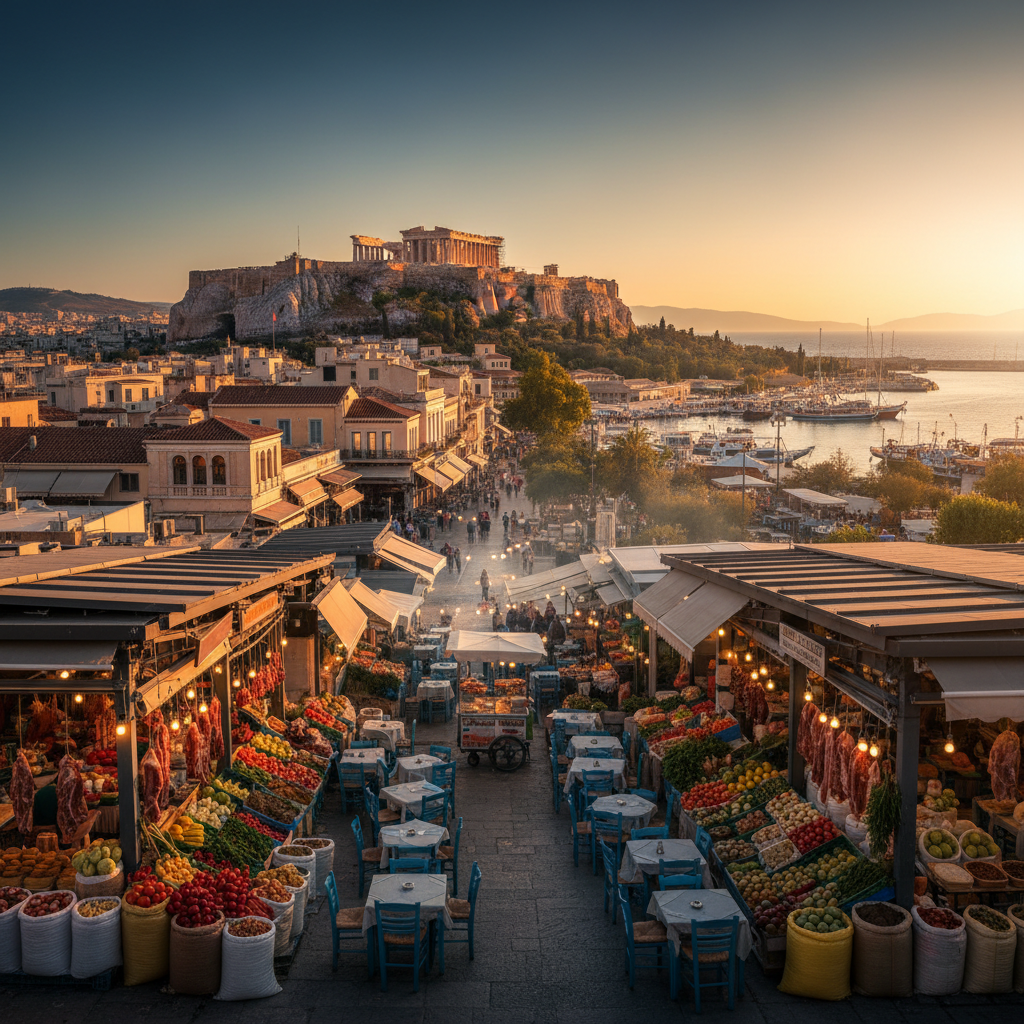
Athens Food & Culture: A 4-Day Culinary and Historical Journey
Savor 4 days of Athens' vibrant food and rich culture. Explore Varvakios Market, Psiri tavernas, and ancient sites on this unforgettable Greek adventure.
- Duration: 4 days
- Estimated Budget: $1,200–$2,500
- Best Time to Visit: April-June and September-October for pleasant weather and fewer crowds.
- Destination: Athens, Greece
The aroma of grilled souvlaki and fresh seafood permeates the air, beckoning you into Athens' vibrant culinary scene. This isn't just a trip; it's an immersion into the soul of Greece, where ancient history and modern flavors collide in a symphony for your senses.
Stepping into the vibrant energy of Kerameikos, you're immediately enveloped by the scent of grilling meats and the lively chatter spilling from family-run tavernas. This ancient neighborhood, once a burial ground, now pulses with a very different kind of life—one centered around shared meals and convivial conversation. It's here, amidst the unassuming storefronts and hidden courtyards, that you'll discover the true heart of Athenian gastronomy, far from the tourist throngs. Each bite tells a story, each sip of retsina connects you to generations of tradition. This isn't just about eating; it's about participating in a timeless ritual, a delicious journey through the city's living history.
Is it possible to truly eat like a local without getting lost in translation or overwhelmed by choice? Here's the reality: Athens' culinary landscape is vast and can be intimidating, especially when seeking out authentic, unpretentious spots. Many visitors gravitate towards the well-known, often pricier, establishments in central areas, missing out on the hidden gems favored by Athenians themselves. Knowing which markets offer the freshest produce, which bakeries still use traditional recipes, and where to find the best late-night souvlaki joint requires insider knowledge—the kind that transforms a good meal into an unforgettable experience, connecting you directly to the city's pulse and its people.
Evenings in the bustling Plaka district for food and culture enthusiasts look like a delightful progression of flavors and experiences. You'll find yourself navigating narrow, winding streets, drawn by the sounds of live bouzouki music emanating from a koutouki—a small, cozy tavern—before settling down for a meze feast. Perhaps you'll start with a plate of saganaki, its cheese sizzling as it arrives, followed by tender octopus grilled to perfection. Later, a stroll through the illuminated ancient Agora, absorbing millennia of history, perfectly balances the sensory indulgence, culminating in a sweet loukoumades treat from a street vendor, dusted with cinnamon and drenched in honey.
faq
A Taste of Athens: Markets, Tavernas, and Street Food Delights
Start your culinary adventure at Varvakios Agora, Athens' bustling central market, where you'll find everything from fresh fish and meats to spices and local produce.
This vibrant market is a feast for the senses and offers an authentic glimpse into daily Athenian life. It's the perfect place to immerse yourself in the local food culture from the moment you arrive.
Explore the charming streets of Psiri, a historic neighborhood known for its artisan workshops, street art, and traditional tavernas.
Psiri offers a wonderful blend of old and new Athens, with hidden gems around every corner. It's a fantastic area to wander, soak in the atmosphere, and discover local crafts.
Enjoy a traditional Greek lunch at one of Psiri's authentic tavernas, savoring classic dishes in a relaxed setting.
Psiri is renowned for its tavernas that serve hearty, home-style Greek food. It's the ideal spot to experience genuine Greek hospitality and flavors.
Stroll through Monastiraki Square and its surrounding streets, famous for their flea market, souvenir shops, and lively street food scene.
Monastiraki is a vibrant hub where ancient history meets modern commerce, offering fantastic people-watching and unique shopping opportunities. It's also a prime spot for delicious, quick bites.
Indulge in a sweet treat at a traditional Greek pastry shop, or 'zaharoplasteio,' in the Monastiraki area.
Greek pastries are an art form, and experiencing them is a crucial part of the culinary journey. It's a perfect way to recharge after exploring and satisfy your sweet tooth.
Leif's Tip: Upon arrival, purchase a multi-day public transport ticket (like the 3-day tourist ticket) at the airport or any metro station. This will save you time and money, allowing you to easily hop between neighborhoods without worrying about individual fares, especially useful for exploring the spread-out food scene.
The labyrinthine streets of Athens, particularly around areas like Gazi or Metaxourgeio, present a unique challenge for the food-focused traveler. You're trying to find that hole-in-the-wall eatery renowned for its slow-cooked lamb, or a specific bakery that still uses a wood-fired oven for its spanakopita, but without a local guide, it’s easy to get sidetracked by tourist-oriented spots that prioritize volume over authenticity. The sheer number of options can be overwhelming, and distinguishing between a truly traditional mezedopoleio and a generic restaurant can feel like a gamble. This is precisely where Leif steps in, cutting through the noise and guiding you directly to the culinary experiences that matter, ensuring every meal is a discovery, not a disappointment.
When you're standing on a bustling corner near Syntagma Square, wondering if the charming taverna with the blue chairs is genuinely local or just a facade, Leif has already done the legwork. Say you're craving an authentic 'pastourmadopita'—a savory pie with cured beef—but you're not sure which establishment is known for the best version. Leif will direct you to a specific, unassuming spot tucked away in a side street, a place cherished by Athenians for generations, complete with opening hours and a note on their signature dishes. You won't waste precious time wandering, consulting endless reviews, or settling for mediocrity; instead, you'll be savoring a dish that speaks volumes about Greek culinary heritage, just as if a local friend had whispered the secret into your ear.
You'll arrive in Athens with a culinary roadmap that feels intimately yours, knowing exactly where to find the freshest catch straight from the Aegean, the most aromatic coffee in a hidden courtyard, or the sweetest baklava from a family-run patisserie. Instead of the common anxiety of missing out on the 'real' Athens, you'll experience a seamless progression of flavors and cultural encounters. The difference is feeling completely at ease, confident that every recommendation is a curated gem, allowing you to fully immerse yourself in the vibrant tapestry of Athenian life. This preparation means your journey won't just be a trip; it will be a delicious, unforgettable story, written one authentic bite at a time.
Best Time to Visit Athens, Greece
Spring (April-May) and Autumn (September-October) offer pleasant weather, fewer crowds, and ideal temperatures for exploring on foot.
Avoid July and August if possible; the heat can be intense, making long walks and outdoor market visits less enjoyable.
For the freshest market produce and seafood, aim to visit Varvakios Market early in the morning, especially on a weekday.
If you want to experience Greek Orthodox Easter, which is a significant cultural event with unique culinary traditions, plan for spring (dates vary).
Getting Around Athens, Greece
Athens has an excellent metro system; it's clean, efficient, and connects major attractions and neighborhoods like Monastiraki, Syntagma, and Piraeus.
Consider purchasing a multi-day Athens Public Transport ticket if you plan on using the metro, bus, or tram frequently; it's more economical than single tickets.
Walking is the best way to explore central Athens, especially areas like Psiri, Monastiraki, and Plaka, allowing you to discover hidden gems and street food stalls.
Taxis and ride-sharing apps (like Beat) are readily available but can be pricier; use them for longer distances or late-night returns.
What to Pack
- Comfortable walking shoes – you'll be on your feet a lot, exploring markets and ancient sites.
- Lightweight, breathable clothing – especially crucial for warm weather, think linen and cotton.
- A small backpack or tote bag – perfect for carrying market finds, water, and snacks.
- Sunscreen, sunglasses, and a hat – the Athenian sun can be strong, even outside of summer.
- A reusable water bottle – stay hydrated while exploring and reduce plastic waste.
- A portable power bank – for keeping your phone charged for photos and navigation.
- A light jacket or shawl – for cooler evenings or air-conditioned restaurants.
- An appetite and an open mind – for all the delicious food you're about to discover!
Money-Saving Tips
- Embrace street food! Souvlaki, koulouri, and spanakopita from local vendors are delicious, authentic, and incredibly affordable.
- Look for 'fixed price' lunch menus (often called 'menu del día' or similar) at tavernas, which can offer great value.
- Buy fresh produce, cheese, and olives from Varvakios Market for budget-friendly snacks and picnic items.
- Drink tap water; it's safe in Athens, so carry a reusable bottle instead of constantly buying bottled water.
- Consider staying in areas like Psiri or Koukaki, which offer a good balance of central location and slightly more affordable accommodation than Plaka.
Local Insights
- Greeks often eat dinner late, usually starting around 9 PM or even later, especially in summer. Don't be surprised if restaurants are quiet before then.
- Tipping is appreciated but not mandatory in Greece. A small amount (rounding up or 5-10%) for good service is customary, especially in tavernas.
- Don't be afraid to try new foods! Greek cuisine is diverse and flavorful; ask locals for their recommendations.
- Many small shops and markets may still close for a siesta in the early afternoon, especially outside the main tourist areas; check opening hours.
- Learn a few basic Greek phrases like 'Efharisto' (thank you), 'Parakalo' (please/you're welcome), and 'Kalimera' (good morning); locals appreciate the effort.
Frequently Asked Questions
What's the best way to experience the local food scene beyond tourist traps?
Focus on neighborhoods like Exarchia or Koukaki. These areas are less frequented by tourists and offer authentic tavernas and eateries where locals dine. Look for places with handwritten menus or where the staff primarily speaks Greek – often a good sign of authenticity.
Is it safe to explore food markets and street food vendors alone?
Absolutely, Athens is generally very safe for solo travelers, especially in bustling areas like markets. Just be mindful of your belongings in crowded places, as with any major city. Embrace the experience, chat with vendors, and don't be afraid to try new things!
What's a must-try traditional Athenian dish I might not know about?
Beyond souvlaki, seek out 'pastitsio' (baked pasta with minced meat and béchamel) or 'gemista' (vegetables like tomatoes or peppers stuffed with rice and herbs). For a unique dessert, try 'galaktoboureko' – a semolina custard baked in filo pastry, often served warm with syrup.
How can I find good vegetarian or vegan options in Athens?
Greek cuisine is surprisingly vegetarian-friendly, with many dishes naturally plant-based. Look for 'fasolada' (bean soup), 'gigantes plaki' (baked giant beans), 'horta' (wild greens), and 'briam' (roasted mixed vegetables). Many tavernas will have a dedicated 'ladera' (oil-based) section on their menu, which is usually vegan.
Do I need to make reservations for restaurants, especially for dinner?
For popular or upscale restaurants, especially on weekends, reservations are highly recommended. For smaller, more casual tavernas, you can often walk in, but be prepared for a short wait during peak hours. It's always a good idea to call ahead if you have a specific place in mind.
What's the tipping etiquette in Athens restaurants and cafes?
Tipping is appreciated but not strictly mandatory. For good service in a restaurant, rounding up the bill or leaving 5-10% is customary. For cafes or quick bites, leaving a few euros or rounding up is sufficient. Service charges are sometimes included, so check your bill.
How do I navigate public transport to reach different food districts?
Athens has an excellent metro system that connects most major areas, including food hotspots. Purchase an Athena Card for easy tap-and-go travel. Buses and trams also cover extensive routes. Google Maps is reliable for planning routes and checking schedules in real-time.