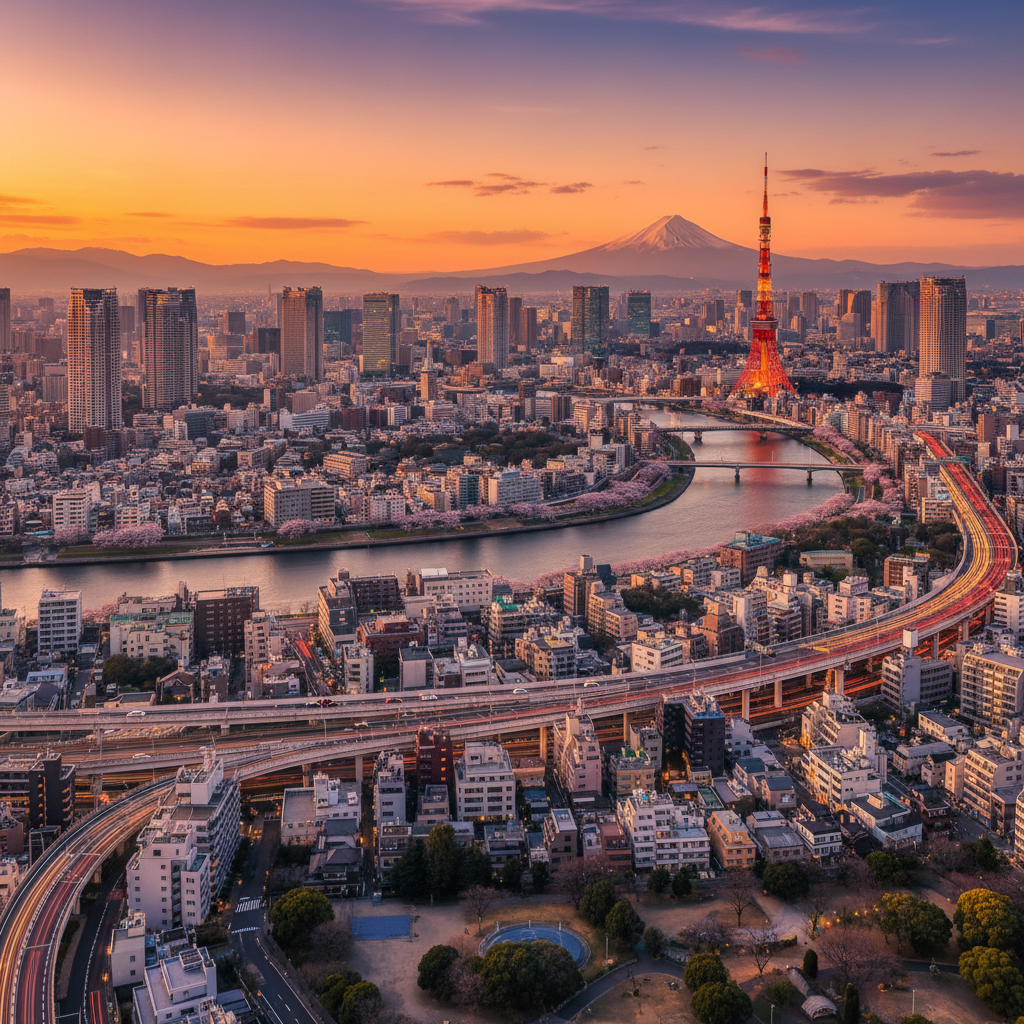
Tokyo in 7 Days: A Complete City and Culture Travel Guide
The definitive 7-day Tokyo itinerary — Shinjuku, Shibuya, Asakusa, Tsukiji, Akihabara, and day trips to Nikko or Kamakura. Real logistics, real prices, real insider knowledge.
- Duration: 7 Days
- Estimated Budget: $2,500–$5,500
- Best Time to Visit: Spring (March-May) for cherry blossoms and pleasant weather; Autumn (September-November) for vibrant fall foliage and comfortable temperatures.
- Destination: Tokyo, Japan
Tokyo is a city that pulses with an electrifying energy, where serene ancient temples stand in harmony with neon-lit skyscrapers and innovative technology. It's a destination where every corner offers a new discovery, from tranquil gardens to bustling street markets and world-class dining. Prepare to be captivated by its unique blend of tradition, modernity, and unparalleled hospitality. --- **Looking for the full architecture cities argument?** Read Every City Has Buildings. These Six Have Arguments. — the post that explains why these specific cities were chosen and what each one's architectural argument means for how you travel.
Tokyo is often imagined as a futuristic neon wonderland, a city of bullet trains and anime, but what truly sets it apart is its profound sense of organized chaos and quiet reverence. Beneath the dazzling lights of Shibuya and Shinjuku, you'll discover ancient temples nestled between skyscrapers, serene gardens offering an escape from the urban hum, and a meticulous attention to detail in every aspect of daily life, from a perfectly brewed cup of matcha to the intricate presentation of a bento box. It’s a city where tradition and innovation don't just coexist; they intertwine to create an experience far richer and more nuanced than any postcard could convey, a place that constantly surprises with its layers of discovery.
**Who this guide is for:** This guide is crafted for the curious, independent traveler who thrives on cultural immersion and urban exploration, someone eager to delve beyond the surface-level attractions. It's for those who appreciate meticulous planning but also embrace spontaneous discoveries, who find joy in both bustling markets and tranquil shrines. If you're fascinated by unique culinary experiences, cutting-edge fashion, and a society that blends ancient customs with hyper-modernity, this itinerary is for you. This guide is likely not ideal for travelers seeking a purely relaxing, beach-centric vacation or those who prefer all-inclusive resorts and minimal walking.
**What makes Tokyo, Japan worth 7 days:** Seven days in Tokyo allows for a deep dive into its diverse districts without feeling rushed, providing ample time to truly absorb its unique rhythm. A shorter trip often means skimming the surface, but a week enables you to explore iconic areas like Shibuya and Shinjuku, wander through the historic lanes of Asakusa, immerse yourself in the youth culture of Harajuku, and even take a day trip to Hakone for a glimpse of Mount Fuji. This duration strikes the perfect balance, preventing burnout from constant movement while ensuring you experience the vast cultural, culinary, and entertainment offerings that make Tokyo so captivating, allowing for both major sights and serendipitous local encounters.
**The honest logistics:** Budget-wise, expect to spend ¥15,000–¥30,000 per person per day for mid-range accommodation, food, and transport, excluding major splurges. The best booking window for flights and popular accommodations (especially ryokans or unique boutique hotels) is 6–9 months in advance, particularly if traveling during cherry blossom season (late March/early April) or autumn foliage (November). Key things to book well in advance include Ghibli Museum tickets (released on the 10th of the prior month, sell out instantly), specific Michelin-starred restaurants (often months ahead), and certain cultural experiences like tea ceremonies. A common mistake travelers make is underestimating the sheer size of Tokyo and over-scheduling; prioritize quality over quantity, and build in downtime.
Welcome to Tokyo: Shinjuku's Neon Glow & Serene Sanctuary
Arrive at Narita International Airport (NRT) and take the Narita Express (N'EX) to Shinjuku Station.
The Narita Express offers a comfortable and efficient transfer directly into the heart of Tokyo, allowing you to relax and enjoy the changing scenery as you anticipate your adventure. It's a seamless introduction to Japan's renowned public transportation system.
Check into your hotel in Shinjuku and freshen up.
Shinjuku provides an excellent central base with fantastic transport links, diverse dining, and vibrant nightlife. Settling in quickly allows you to maximize your precious time exploring this incredible city.
Explore the Shinjuku Gyoen National Garden (Shinjuku)
Escape the urban bustle and immerse yourselves in the tranquil beauty of Shinjuku Gyoen. This expansive garden seamlessly blends traditional Japanese, French Formal, and English Landscape styles, offering a peaceful retreat and a stunning visual contrast to the city's skyscrapers.
Walk through the neon-lit streets of Shinjuku (Shinjuku)
Experience the iconic, electric energy of Shinjuku as dusk falls and the city lights up. This sensory overload of glowing signs and bustling crowds is quintessential Tokyo, offering a thrilling first impression of its modern vibrancy.
Leif's Tip: Resist the urge to overschedule on arrival day. Focus on settling in, enjoying a couple of iconic, yet relaxing, experiences, and savoring your first authentic Japanese meal. Your internal clocks will thank you!
Most visitors to Tokyo spend their first morning overwhelmed by the sheer scale of the transit system, trying to decipher routes and interchanges for a simple journey. You're not just dealing with multiple train companies, but also navigating stations that are cities unto themselves, all while trying to avoid peak hour crushes and ensure you're heading to an authentic eatery rather than a tourist trap. Then there's the challenge of finding those hidden cultural gems – the small, family-run workshops, the serene temple gardens tucked away from the main thoroughfares, or the best spot for an evening stroll that offers a genuine local perspective. Without insider knowledge, it's easy to get lost in translation, literally and figuratively, missing out on the nuanced experiences that truly define Tokyo's character. This is precisely where Leif steps in, transforming potential headaches into seamless exploration.,Shinjuku, usually a bustling hub, transforms into a seamless experience when Leif guides your cultural exploration. Instead, Leif has already pinpointed a charming kissaten in Ginza, known for its perfectly brewed coffee and classic toast sets, a short walk from your accommodation. Later, as you consider an afternoon exploring the art galleries of Ueno, Leif provides not just directions, but also a curated list of current exhibitions, suggesting a detour through Yanaka for its old-world charm and a specific, highly-rated soba shop for lunch. When you're faced with the dilemma of choosing between a bustling izakaya in Shinjuku or a more refined kaiseki experience in Shibuya, Leif offers tailored recommendations based on your preferences, complete with reservation tips and precise transport instructions, ensuring every moment is spent enjoying, not agonizing over logistics.,The subtle aroma of incense from a quiet shrine, juxtaposed with the distant hum of the city, envelops you as you wander through a meticulously planned afternoon. You feel a profound sense of calm and discovery, knowing that every turn, every meal, and every cultural encounter has been thoughtfully curated for your interests. There’s no second-guessing, no wasted time, just pure immersion in the vibrant tapestry of Tokyo. You'll carry home not just souvenirs, but a collection of deeply personal stories and authentic connections, having experienced the city's heartbeat from its ancient roots to its futuristic pulse. Let Leif guide you to your own extraordinary Tokyo narrative. [Your First Trip to Asia Will Define Every Trip After It. Here's Where to Start.](https://askleif.com/blog/your-first-trip-to-asia-will-define-every-trip-after-it)
Best Time to Visit Tokyo, Japan
Alright, let's talk timing for your Tokyo adventure. The absolute sweet spot, the crème de la crème, is undoubtedly spring (late March to early May) or autumn (late September to November). Spring, of course, brings the iconic cherry blossom season (late March to early April), transforming the city into a pastel wonderland. Temperatures are delightfully mild, averaging 50-70°F (10-21°C), perfect for exploring. Autumn offers equally pleasant weather, with crisp air and stunning fall foliage, especially in parks like Shinjuku Gyoen. Both seasons see moderate crowds and reasonable prices, though cherry blossom season can definitely drive up accommodation costs.
If those prime windows don't work, consider early summer (June) or late winter (February). June can be a bit of a gamble, as it marks the start of the rainy season, but you'll find fewer crowds and potentially lower prices before the peak summer rush. Temperatures hover around 70-80°F (21-27°C) with higher humidity. February, while chilly (30-50°F / -1-10°C), offers clear skies and incredible deals on flights and hotels. You might even catch some early plum blossoms, a beautiful precursor to cherry blossom season, without the intense crowds.
What to avoid? Unless you love sweating and battling crowds, steer clear of July and August. These months are notoriously hot and humid, with temperatures often soaring above 90°F (32°C) and high chances of typhoons. Golden Week (late April to early May) is another period to approach with caution. While beautiful, it's a major Japanese holiday, meaning attractions are packed, and travel prices skyrocket. You'll spend more time waiting in lines than experiencing the city.
Getting Around Tokyo, Japan
Navigating Tokyo's sprawling metropolis is surprisingly straightforward, thanks to its world-class public transportation system. Your absolute best friend will be the train and subway network. Invest in a Suica or Pasmo IC card immediately upon arrival. These reloadable cards work on virtually all trains, subways, and even many buses, saving you the hassle of buying individual tickets. Simply tap and go! You can purchase them at any major station for around ¥1,000 (approx. $7 USD) deposit, plus a starting balance. For planning your routes, Google Maps is incredibly accurate and will give you real-time train schedules and platform numbers. Expect to spend around ¥150-300 ($1-2 USD) per ride, depending on distance.
While trains and subways are king, other options have their place. Taxis are plentiful and immaculate, but they can be expensive, especially for longer distances or during peak hours. Use them for late-night journeys when trains stop running (around midnight) or when you have heavy luggage. Rental cars are generally not recommended for city exploration due to heavy traffic, complex parking, and excellent public transport. However, if you plan day trips outside Tokyo, a rental car might be a good option. For a unique perspective, consider renting a bicycle in areas like Ueno Park or along the Sumida River for a leisurely ride.
For travelers with specific needs, a few extra tips: Tokyo's stations are generally very stroller-friendly, with elevators and escalators widely available. However, during rush hour, navigating crowded platforms with a stroller can be challenging. Car seats are not legally required in taxis for children over six, but it's always safer to use one if possible (though finding taxis with them is rare). For luggage, many train stations and major attractions offer coin lockers of various sizes, perfect for storing your bags for a few hours or even a full day while you explore. Look for the 'coin locker' signs, usually near ticket gates.
What to Pack
- A portable Wi-Fi device or an eSIM is essential for navigating Tokyo's extensive public transport and finding hidden gems, as free public Wi-Fi is not as ubiquitous as in some other major cities.
- A comfortable pair of walking shoes is crucial, as you'll be doing a lot of walking through bustling districts, expansive temple grounds, and large train stations.
- A coin purse is highly recommended, as many smaller shops and vending machines still prefer cash, and you'll accumulate a lot of 100-yen coins.
- A compact umbrella or light rain jacket is advisable, as Tokyo's weather can be unpredictable, with sudden showers possible even outside of rainy season.
- A portable power bank is a must-have to keep your phone charged for navigation, translation apps, and capturing countless photos throughout your long days exploring.
- An IC card (like Suica or Pasmo), pre-loaded if possible, will streamline your public transport experience, allowing seamless tap-and-go travel on trains and subways without fumbling for individual tickets.
Money-Saving Tips
- Utilize convenience stores like 7-Eleven, FamilyMart, and Lawson for affordable and delicious meals, including bento boxes, onigiri, and fresh sandwiches, often costing less than ¥700 for a satisfying lunch.
- Purchase a Tokyo Metro 24/48/72-hour ticket if you plan extensive subway use; a 72-hour pass costs around ¥1500 and can significantly reduce transport costs compared to individual fares.
- Look for lunch specials (lunch sets or 'teishoku') at local restaurants, which often offer substantial meals for ¥800-¥1500, a much better value than dinner prices for similar dishes.
- Book accommodations well in advance, especially if traveling during peak seasons like cherry blossom (March-April) or autumn leaves (October-November), as prices can increase by 20-30% for last-minute bookings.
- Take advantage of free attractions such as the Tokyo Metropolitan Government Building observation decks, the Imperial Palace East Garden, and numerous temples and shrines like Senso-ji, offering rich cultural experiences without an entrance fee.
Local Insights
- Many smaller restaurants and izakayas in Tokyo still operate on a cash-only basis, so always carry a decent amount of yen, especially when exploring less touristy neighborhoods.
- Tipping is not customary in Japan and can even be considered rude; excellent service is expected, and attempting to tip might cause confusion or discomfort.
- When using escalators, stand on the left side in Tokyo (and most of Eastern Japan) to allow those in a hurry to pass on the right, contrasting with Osaka where you stand on the right.
- Most Tokyo restaurants, especially those specializing in a particular dish, will have realistic plastic food displays outside; you can often simply point to what you want to order, even if you don't speak Japanese.
- Public transportation, particularly the train and subway system, is incredibly efficient and punctual; trust the schedules and allow ample time during rush hour, but avoid speaking loudly on trains out of respect for other passengers.
Frequently Asked Questions
What's the best time of year to visit Tokyo for a 7-day trip?
For a 7-day trip, the sweet spots are spring (March to early May) for cherry blossoms and pleasant weather, or autumn (late September to November) for vibrant foliage and comfortable temperatures. Summer (June-August) can be hot and humid with a rainy season, while winter (December-February) is cold but often sunny, offering unique experiences like illuminations. If you're flexible, aiming for the shoulder seasons will give you the best balance of weather, fewer crowds than peak cherry blossom, and a wide range of activities to enjoy.
How much should I budget for a 7-day trip to Tokyo?
For a comfortable 7-day trip to Tokyo, a budget of $2,500–$5,500 per person is a good estimate, excluding international flights. This range accounts for mid-range to slightly upscale accommodation, daily meals (from street food to nice dinners), transportation via the excellent public transit, and entry fees for attractions. If you're a budget traveler, you could aim lower by staying in hostels and eating more convenience store meals. For luxury experiences, the sky's the limit, especially with high-end dining and unique cultural activities.
What attractions or experiences in Tokyo absolutely require advance booking?
Several popular Tokyo attractions require advance booking, sometimes months ahead. The Ghibli Museum (Mitaka) is notorious for selling out immediately, so book exactly when tickets are released. TeamLab Planets and TeamLab Borderless (when it reopens) also benefit from advance booking to secure your preferred time slot. For popular themed cafes (like certain anime or character cafes), specific restaurant reservations, or unique cultural experiences like a tea ceremony or sumo stable visit, booking ahead is highly recommended to avoid disappointment, especially during peak season.
What's the most efficient way to get around Tokyo for a week?
The Tokyo Metro and JR train lines are your best friends for a week-long trip. They are incredibly efficient, clean, and cover virtually every corner of the city. Purchase a Suica or Pasmo IC card upon arrival; it's a rechargeable card that works on almost all trains and buses, saving you from buying individual tickets. While a Japan Rail Pass might seem appealing, it's usually not cost-effective for just a 7-day trip solely within Tokyo, as local subway lines aren't covered. Walking is also a fantastic way to explore neighborhoods once you've arrived by train.
What should I pack or prepare for a 7-day trip to Tokyo?
Beyond your essentials, pack comfortable walking shoes – you'll be doing a lot of walking! Layers are key, especially in spring and autumn, as temperatures can fluctuate. A portable power bank for your phone is a lifesaver for navigation and photos. Consider a small umbrella, as sudden showers can occur. Don't forget an adapter for Japanese outlets (Type A/B, 100V). It's also wise to have some yen cash on hand, as while cards are widely accepted, some smaller shops or restaurants might be cash-only. A small backpack for daily essentials is also very useful.
What are some common mistakes travelers make in Tokyo, and how can I avoid them?
A common mistake is underestimating the sheer size and complexity of Tokyo's train system. Don't try to cram too many distant neighborhoods into one day; group nearby areas to save travel time. Another pitfall is not having a portable Wi-Fi device or local SIM card; reliable internet is crucial for navigation. Also, be mindful of local etiquette, like not eating or drinking on public transport (except Shinkansen) and always removing your shoes before entering homes, some restaurants, or traditional accommodations. Lastly, don't rely solely on credit cards; always carry some yen cash.
Is it worth taking a day trip outside of Tokyo during a 7-day visit?
Absolutely, if your interests align! With 7 days, you have enough time to dedicate one day to an enriching excursion. Popular choices include Hakone for stunning views of Mount Fuji and relaxing onsen experiences, or Nikko for its UNESCO World Heritage shrines and temples amidst beautiful nature. Kamakura offers ancient temples and a giant Buddha, while Yokohama provides a more modern port city vibe. Choose based on what truly excites you; a well-planned day trip can offer a wonderful contrast to Tokyo's urban energy and deepen your understanding of Japan.