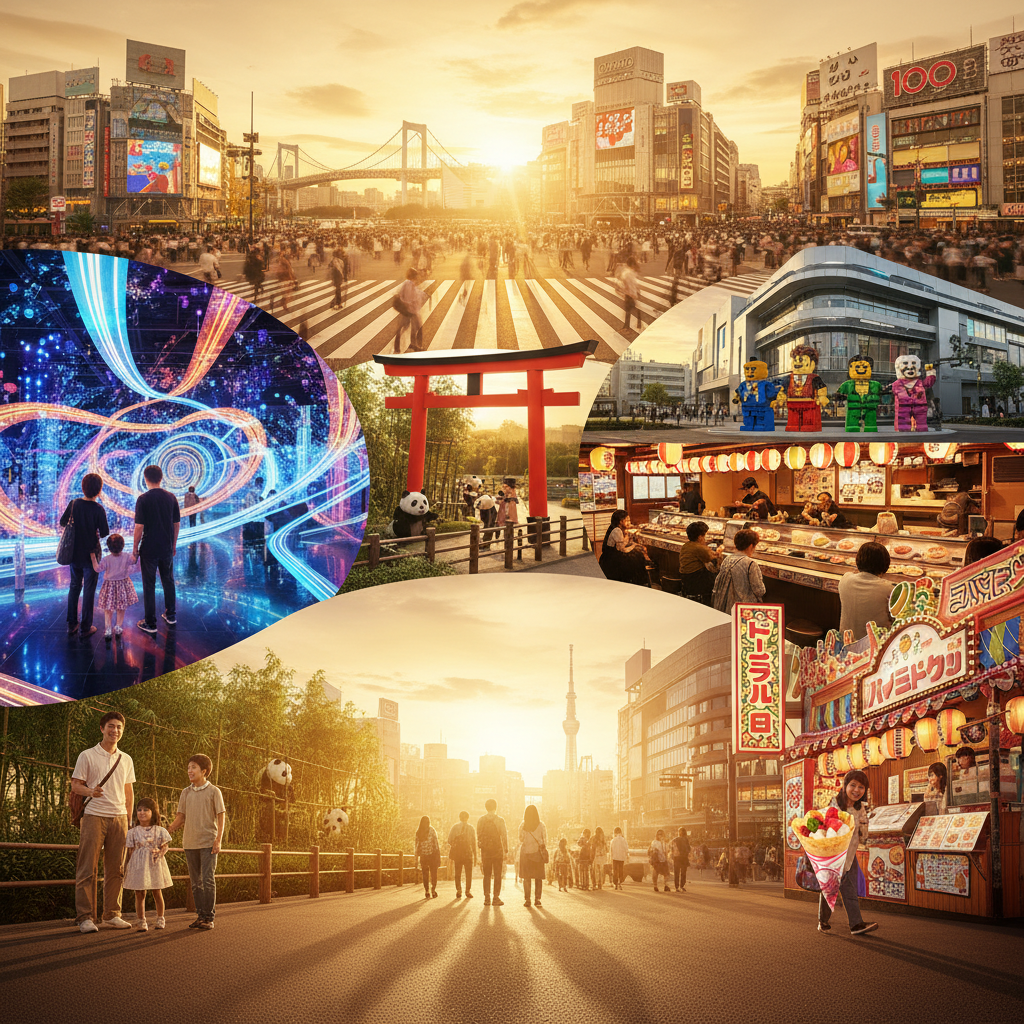
Tokyo Family Adventure: 6 Days of Digital Art, Pandas & Harajuku Crepes
Unforgettable 6-day Tokyo family trip! Explore teamLab Borderless, Ueno Zoo, and Shibuya Crossing, with kid-friendly food and cultural gems.
- Duration: 6 Days
- Estimated Budget: $900–$1,200
- Best Time to Visit: March-April (cherry blossoms, mild weather) or October-November (fall foliage, comfortable temperatures). Avoid Golden Week (late April-early May).
- Destination: Tokyo, Japan
Tokyo with kids is one of the great family travel experiences on earth — the city is extraordinarily safe, public transport is immaculate, the food is endlessly kid-friendly, and the sheer density of child-oriented attractions (theme parks, arcades, interactive museums, robot restaurants) is unmatched anywhere in the world. Japan is extremely child-friendly: restaurants have high chairs, department stores have excellent nursing rooms, and the concept of bothering other diners with noisy children is essentially nonexistent because Japanese culture is deeply accommodating of families.
Tokyo with kids is a truly unforgettable adventure, a destination where every corner offers a new delight for young explorers. Imagine your children's faces lighting up as they watch 3,000 people cross Shibuya Scramble simultaneously, or their awe as they run through waterfalls of light at teamLab Borderless. This isn't just a city; it's a giant, interactive playground where safety is paramount, public transport is a breeze, and the food is an adventure in itself. From conveyor belt sushi that feels like a game to Harajuku crepes that are works of art, Tokyo caters to every palate and curiosity, ensuring your family creates unforgettable memories around every corner.
What truly sets Tokyo apart for families is its extraordinary child-friendliness and meticulous attention to detail. From the whimsical Ghibli Museum to the interactive exhibits of the National Museum of Nature and Science, there’s an endless array of engaging experiences designed with young explorers in mind. The cultural embrace of children means you'll never feel out of place with a boisterous toddler. Logistics are surprisingly simple: a Suica IC card for each family member transforms travel into a tap-and-go affair, and staying in central hubs like Shinjuku or Shibuya puts you at the heart of the action. You can pack light, knowing that Japan's incredible shopping will fill any gaps, making your family adventure not just easy, but genuinely joyful from the moment you land at Haneda.
This guide is crafted to immerse your family in Tokyo's unique blend of tradition and futuristic wonder, balancing iconic sights with kid-centric thrills. We'll navigate the city's best attractions, from the giant pandas of Ueno Zoo to the vibrant street art of Harajuku, ensuring each day is packed with discovery and fun. You'll find specific recommendations for dining, accommodation, and insider tips to make every experience seamless and memorable. Prepare to be amazed by a city that not only welcomes families but celebrates them, offering an unparalleled travel experience that will delight both children and adults alike.
Arrival and Shibuya's Electric Pulse
Arrive at Haneda (HND) Airport, clear customs, and navigate the efficient Tokyo Monorail to Hamamatsucho Station.
Haneda is incredibly convenient for families, offering a quick and stress-free journey into the city center. The monorail provides a scenic introduction to Tokyo's urban landscape.
Transfer from Hamamatsucho to Shibuya via the Yamanote Line, then check into your hotel and drop off your luggage.
Shibuya is a fantastic base for families, offering excellent transport links, a vibrant atmosphere, and countless dining options. Getting settled quickly allows for maximum exploration.
Experience the legendary Shibuya Crossing, the world's busiest pedestrian intersection, with thousands of people crossing simultaneously.
This iconic spectacle is a mesmerizing and unforgettable introduction to Tokyo's energy, captivating children with its sheer scale and organized chaos. It's a true 'only in Tokyo' moment.
Enjoy a fun and interactive dinner at a conveyor belt sushi (kaiten-zushi) restaurant in Shibuya.
Kaiten-zushi is an absolute hit with kids, offering a playful way to try different dishes as they pass by, and the tablet ordering system adds to the entertainment. It's a delicious and engaging first meal in Japan.
Take a leisurely stroll around Shibuya's illuminated streets, soaking in the vibrant atmosphere before heading back to the hotel for an early night.
Even a short walk helps to shake off jet lag and allows the family to absorb the exciting sights and sounds of Tokyo at night. The city feels incredibly safe and alive after dark.
Leif's Tip: Upon arrival, prioritize getting your Suica cards for everyone. This small step will save you countless minutes and frustrations throughout your trip, making public transport effortless and even allowing for quick purchases at convenience stores. Also, don't underestimate the power of a quick nap or early bedtime to combat jet lag effectively on your first day.
Most visitors to Tokyo with children find themselves overwhelmed by the sheer volume of options, struggling to differentiate between a truly engaging experience and a crowded tourist trap. The challenge isn't just finding kid-friendly activities, but weaving them into a seamless day that accounts for nap times, snack breaks, and the often-unpredictable energy levels of little ones, all while navigating a new city with a different language and cultural norms. You might spend hours sifting through blogs trying to figure out if the Legoland Discovery Center in Odaiba is worth the trek, or how to best time your visit to teamLab Borderless to avoid peak crowds with a stroller. Deciphering the best way to get from Ueno Zoo to a conveyor belt sushi restaurant without losing precious sightseeing time can be a puzzle, and ensuring you catch the Shibuya crossing at its most vibrant, yet manageable, can feel like a high-stakes gamble. This is precisely where Leif steps in, transforming potential headaches into effortless exploration.
Experience, on this family adventure, will be seamless, letting you soak in every moment of Tokyo's vibrant energy. Later, as you finish marveling at the pandas in Ueno Zoo, Leif provides clear, step-by-step directions for the quickest, most comfortable route to your pre-booked time slot at teamLab Borderless, suggesting a perfect park for a quick run-around beforehand to burn off some energy. When a sudden afternoon shower threatens your plans for Harajuku crepes, Leif instantly suggests an indoor alternative nearby, perhaps a whimsical themed cafe, ensuring your day remains delightful and dry, all while keeping your evening reservation for that prime Shibuya crossing viewing spot perfectly on track. You'll receive real-time updates on public transport, ensuring you always choose the most efficient and least stressful option for your family.
The subtle hum of Tokyo's energy, combined with the aroma of freshly baked crepes and savory ramen, becomes the soundtrack to your family's adventure, not a source of stress. You arrive at each destination feeling calm and prepared, knowing exactly what to expect and how to maximize your time, allowing you to fully immerse yourselves in every moment, from the dazzling digital art to the captivating street scenes. This isn't just about seeing the sights; it's about experiencing the joy of discovery through your children's eyes, creating shared laughter over a spinning sushi plate, and relishing the quiet moments of connection. With Leif, you're not just visiting Tokyo; you're truly living it, building a treasure trove of family memories that will last a lifetime.
Best Time to Visit Tokyo, Japan
March-April for cherry blossoms and mild weather – absolutely magical for family photos and outdoor activities.
October-November for stunning fall foliage and comfortable temperatures, perfect for exploring without overheating.
Avoid Golden Week (late April-early May) at all costs; it's peak travel season in Japan, meaning huge crowds and double prices.
Summer (June-August) can be very hot and humid, which might be challenging for young children and extensive outdoor exploration.
Winter (December-February) is generally cold but less crowded, and you might catch some beautiful illuminations.
Getting Around Tokyo, Japan
Get a Suica IC card for every family member upon arrival; it's a tap-and-go system for all trains, buses, and even some convenience stores.
Utilize Tokyo's efficient train system (JR Yamanote Line is your best friend for major attractions); it's incredibly clean, safe, and punctual.
Consider a Japan Rail Pass only if you plan extensive inter-city travel; for Tokyo alone, individual Suica cards are more cost-effective.
Strollers are common but can be tricky on crowded trains during rush hour; aim to travel during off-peak times if possible.
Taxis are available but can be expensive; save them for late-night trips or when you have a lot of luggage.
What to Pack
- Comfortable walking shoes for everyone – you'll be doing a lot of walking, especially at theme parks and museums.
- Lightweight, layered clothing suitable for varying indoor/outdoor temperatures and air conditioning.
- A portable power bank for charging phones and cameras – you'll be using them constantly for navigation and photos.
- Small backpack or day bag for snacks, drinks, and souvenirs – essential for family outings.
- Hand sanitizer and wet wipes – always handy for quick clean-ups on the go.
- Any essential medications, as specific brands might be hard to find in Japan.
- Small, foldable umbrella or light rain jacket, especially during spring and fall.
- Entertainment for kids during train rides or restaurant waits (small toys, coloring books, tablets).
Money-Saving Tips
- Eat at convenience stores (konbini) like 7-Eleven, FamilyMart, or Lawson for delicious and affordable meals, snacks, and drinks.
- Look for lunch specials (teishoku) at restaurants, which often offer great value compared to dinner prices.
- Utilize free attractions like Shibuya Crossing, Meiji Shrine, and Ueno Park for budget-friendly sightseeing.
- Buy drinks from vending machines, which are ubiquitous and often cheaper than buying from cafes or restaurants.
- Consider a hotel with a kitchenette or free breakfast to save on meal costs, especially for picky eaters.
- Limit souvenir shopping to specific items or designated souvenir streets like Nakamise in Asakusa to avoid impulse buys.
Local Insights
- Always carry a small trash bag; public trash cans are scarce in Japan, so you'll need to carry your trash until you find one.
- Tipping is not customary and can even be considered rude; excellent service is expected and included in the price.
- Be prepared for bowing – a common form of greeting and showing respect; a simple nod is usually sufficient in return.
- Learn a few basic Japanese phrases like 'Arigato gozaimasu' (thank you) and 'Sumimasen' (excuse me/I'm sorry) – locals appreciate the effort.
- Japanese culture is incredibly child-friendly; don't worry about noise or mess in restaurants, as families are warmly welcomed.
- Always remove your shoes when entering homes, some restaurants, and temples; look for shoe lockers or designated areas.
Frequently Asked Questions
What's the best way to get around Tokyo with kids?
The Tokyo subway and JR train lines are incredibly efficient and family-friendly. Get a Suica or Pasmo IC card for everyone (even kids need their own) – it’s a tap-and-go system that works on all trains, subways, and buses, and even at many convenience stores. Strollers are common, and elevators/escalators are plentiful at major stations. Avoid rush hour (7-9 AM, 5-7 PM) if possible to ensure a more comfortable ride with little ones.
Is Tokyo expensive for a family trip?
Tokyo can be budget-friendly or luxurious, depending on your choices. Accommodation will likely be your biggest expense, but family rooms in business hotels or aparthotels offer good value. Food is surprisingly affordable, especially at local ramen shops, udon spots, and convenience stores (konbini). Activities like teamLab Borderless or Disney Parks require advance booking and are pricier, so budget around $150-$200/day for food and activities, not including accommodation.
What are some kid-friendly food options in Tokyo?
Tokyo is a paradise for picky eaters! Conveyor belt sushi (kaiten-zushi) is an interactive hit, ramen and udon bowls are universally loved, and convenience stores offer an amazing array of snacks, sandwiches, and rice balls (onigiri). Don't forget the famous Harajuku crepes for a sweet treat, and department store food halls (depachika) have incredible bento boxes and pastries. Most restaurants are very accommodating and often have smaller portions or plain options.
How far in advance should I book tickets for popular attractions?
For high-demand attractions like teamLab Borderless, teamLab Planets, Shibuya Sky, and especially DisneySea/Disneyland, you MUST book tickets well in advance. Disney tickets often sell out two months ahead, and teamLab experiences can be gone weeks before. Always check the official websites for booking windows and aim to purchase as soon as your dates are firm to avoid disappointment.
What should I pack for a family trip to Tokyo?
Pack comfortable walking shoes for everyone – you'll be doing a lot of walking! Layers are always a good idea, as temperatures can fluctuate. A portable charger for phones, a small first-aid kit, and any specific medications are essential. Don't overpack clothes; Japan has excellent laundry facilities and you'll likely want to buy some unique souvenirs. A small backpack for daily essentials and snacks is also handy.
Are there any cultural norms I should be aware of with kids?
Japanese culture is very polite and respectful. Teach your children to bow slightly when greeting or thanking, and to keep noise levels down in public spaces like trains and temples. Always remove shoes when entering homes, some restaurants, and traditional accommodations. While Japanese people are incredibly tolerant of children, a little effort to respect local customs goes a long way and will be greatly appreciated.
What's the best time of year to visit Tokyo with family?
Spring (March-April) for cherry blossoms and mild weather, or Autumn (October-November) for beautiful fall foliage and comfortable temperatures, are ideal. Summers (July-August) can be very hot and humid, while winters (December-February) are cold but often sunny. Avoid Golden Week (late April-early May) as it's a major holiday, meaning crowds and higher prices for everything.