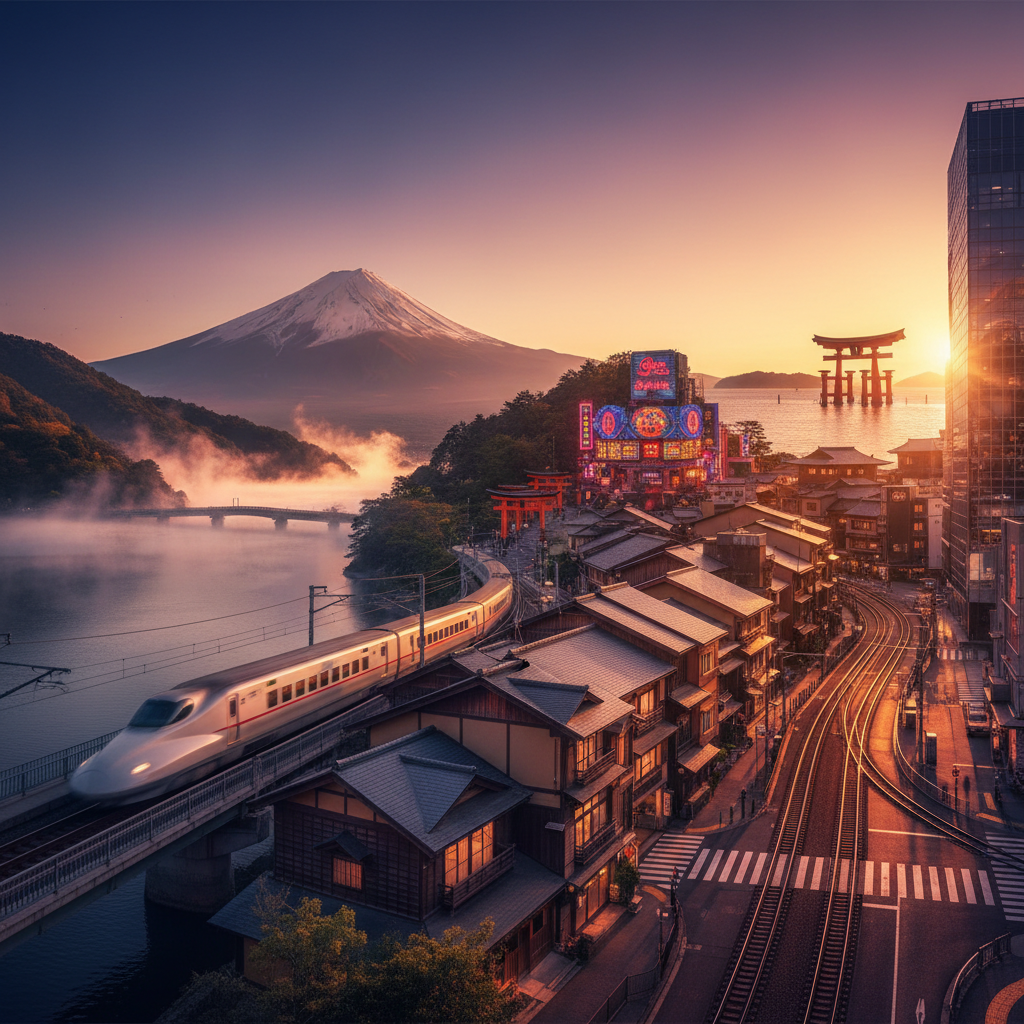
Japan 14-Day First-Timer Rail Pass Itinerary: Tokyo, Kyoto & More
Experience Japan's iconic highlights on this 14-day first-timer rail pass adventure. Explore Tokyo's neon, Kyoto's temples, and Mt. Fuji's beauty with ease.
- Duration: 14 Days
- Estimated Budget: $2,520–$5,320
- Best Time to Visit: March-April (cherry blossoms) or October-November (autumn foliage). Avoid Golden Week (late April-early May) and Obon (mid-August).
- Destination: Japan (Multi-City)
From the cherry blossoms of Kyoto to the neon glow of Tokyo, Japan offers a journey where ancient traditions meet futuristic marvels! This 14-day rail pass itinerary is meticulously crafted for first-time visitors, ensuring you hit all the iconic spots from the bustling streets of Tokyo to the serene temples of Kyoto, all while maximizing the incredible Japan Rail Pass. Prepare for a journey that balances exhilarating city exploration with tranquil cultural immersion, leaving you with unforgettable memories of the Land of the Rising Sun.
Your Japanese adventure begins here, first-timer! This 14-day Rail Pass adventure is meticulously crafted to be your perfect introduction to a country that will undoubtedly captivate your heart. We're talking about a seamless journey from the neon-drenched energy of Tokyo to the serene, ancient beauty of Kyoto, with essential stops in between that paint a complete picture of Japan's diverse soul. Imagine yourself standing amidst the organized chaos of Shibuya Crossing, then just days later, exploring the bamboo groves of Arashiyama. This itinerary isn't just about seeing the sights; it's about experiencing the rhythm of Japanese life, tasting its incredible flavors, and understanding its profound history, all while making the most of your incredible Japan Rail Pass.
Your journey begins in Tokyo, a city that pulsates with innovation and tradition, offering everything from the futuristic digital art of teamLab Borderless to the spiritual calm of Senso-ji Temple. Then, we whisk you away to Hakone, a mountain retreat where you'll find invigorating hot springs and the unique cultural experience of a ryokan stay. Next, it's on to Kyoto, the spiritual heart of Japan, where thousands of vermillion torii gates at Fushimi Inari Shrine and the ethereal beauty of Arashiyama Bamboo Grove await. Each destination has been chosen to provide a balanced and unforgettable first taste of Japan, ensuring you leave with a deep appreciation for its wonders.
This itinerary is specifically designed for the first-time visitor, allowing you to discover the vibrant energy of Shibuya Crossing while also providing insider tips to enhance your experience. We'll guide you through navigating the efficient Shinkansen bullet trains, using your essential IC card for local travel, and even suggest the best times to visit popular spots to avoid the crowds. From savoring street food in Osaka's Dotonbori to reflecting on history in Hiroshima, every day is an opportunity for discovery. Get ready to fall in love with Japan – its polite culture, delicious cuisine, stunning landscapes, and unforgettable moments are waiting to be explored.
Shinjuku's Neon Glow: First Tastes of Tokyo's Electric Energy
Arrive at Narita (NRT) or Haneda (HND) Airport, clear customs, and activate your Japan Rail Pass before taking the Narita Express or Keikyu Line into Tokyo.
This is your first step into Japan, and utilizing your JR Pass immediately sets you up for seamless travel. Getting to your hotel efficiently allows more time for exploration.
Check into your hotel in Shinjuku, drop off your luggage, and take a moment to refresh.
Shinjuku is an excellent base for first-timers due to its central location, incredible transport links, and vibrant atmosphere. Settling in quickly helps you hit the ground running.
Ascend to the Tokyo Metropolitan Government Building's South Observation Deck for panoramic views of the city as dusk settles.
This free observation deck offers breathtaking 360-degree views of Tokyo, providing an incredible sense of scale for this sprawling metropolis. Seeing the city light up is an unforgettable first impression.
Explore the vibrant streets of Kabukicho, Tokyo's famous entertainment district, known for its dazzling neon signs and lively atmosphere.
Kabukicho is a sensory overload in the best way, showcasing Tokyo's energetic nightlife and unique urban culture. It's an iconic area that truly feels like 'Tokyo'.
Experience the unique charm of Golden Gai, a tiny alleyway packed with over 200 miniature bars, each with its own distinct personality.
Golden Gai offers an intimate and authentic Japanese bar experience, a stark contrast to the larger establishments in Kabukicho. It's perfect for a unique nightcap and meeting locals.
Leif's Tip: Upon arrival, purchase a Suica or Pasmo IC card at any major station. Load it with about 3,000-5,000 JPY; this card will be your best friend for local trains, buses, and even convenience store purchases, saving you from fumbling for cash or exact change.
Navigating the intricate web of Japan's public transportation, especially the Shinkansen bullet trains and local lines across multiple cities, can feel overwhelming for a first-timer. Deciphering which Japan Rail Pass to activate, understanding seat reservations, and coordinating transfers between different train stations in bustling hubs like Tokyo and Osaka often leads to missed connections or wasted time. Furthermore, distinguishing genuinely immersive cultural experiences from tourist-heavy traps, particularly in historically rich areas like Kyoto, requires insider knowledge. Leif cuts through this complexity, providing a meticulously planned itinerary that optimizes your travel time, ensures seamless transitions between destinations, and highlights authentic encounters, allowing you to experience Japan's wonders without the planning stress.,Golden Gai, with its labyrinthine alleys and tiny, atmospheric bars, offers a quintessential Tokyo nightlife experience. Later, as you consider your evening meal in Kyoto, Leif anticipates your desire for an authentic experience beyond the main tourist thoroughfares. It suggests a charming izakaya in the Gion district known for its local specialties, complete with directions and a brief explanation of common dining etiquette, helping you confidently navigate the menu and cultural nuances. Leif doesn't just list attractions; it integrates practical logistics and cultural insights, empowering you to make informed decisions and truly savor each moment of your Japanese adventure, from the bustling markets of Osaka to the tranquil temples of Nara.,The subtle scent of burning incense from a small temple in Kyoto, or the distant rumble of a Shinkansen arriving precisely on time, becomes a part of your journey, not a source of anxiety. You arrive in each new city with a clear understanding of your next steps, from locating your accommodation near a convenient transit hub to knowing the best time to visit a popular site like Miyajima Island to avoid the largest crowds. This preparedness transforms potential hurdles into smooth transitions, freeing your mind to absorb the vibrant colors of a traditional garden, the intricate details of ancient architecture, or the lively atmosphere of a street food stall. Embrace the effortless exploration that awaits you; your Japanese adventure, perfectly orchestrated, is ready to unfold. [January Doesn't Have Fewer Tourists. It Has the City Back.](https://askleif.com/blog/january-doesnt-have-fewer-tourists-it-has-the-city-back) — Six cities that are fundamentally different in January, and why that difference is the entire point.
Best Time to Visit Japan (Multi-City)
March-April is ideal for cherry blossoms, offering Japan at its most picturesque, but expect larger crowds and book accommodations well in advance.
October-November provides stunning autumn foliage, comfortable temperatures, and generally fewer tourists than spring.
Avoid Golden Week (late April-early May) and Obon (mid-August) at all costs; hotels are exorbitantly priced and trains are packed.
Consider late September to early October for pleasant weather and a good balance of fewer crowds and still-green scenery before the autumn leaves peak.
Getting Around Japan (Multi-City)
Purchase your 14-day Japan Rail Pass before arriving in Japan; it's a significant saving for this itinerary, especially for the Tokyo-Kyoto Shinkansen.
Activate your JR Pass at a major JR station upon arrival (like Narita or Haneda Airport, or Tokyo Station) and reserve your Shinkansen seats immediately for popular routes.
Get an IC card (Suica or Pasmo) for local trains, subways, and buses in cities like Tokyo and Kyoto, as well as for convenient purchases at vending machines and convenience stores.
Utilize Hyperdia or Google Maps for precise train schedules and platform information; they are incredibly accurate and indispensable for navigating Japan's public transport.
When traveling with luggage on the Shinkansen, be aware of luggage restrictions and consider using luggage forwarding services (Takuhaibin) for larger bags between cities.
What to Pack
- Comfortable walking shoes are non-negotiable; you'll be doing a lot of walking, especially in cities and temple complexes.
- Layers of clothing are essential, as temperatures can vary throughout the day and between regions, especially in spring and autumn.
- A portable power bank for your phone, as you'll be relying on it for navigation, translation, and capturing countless photos.
- A small, foldable umbrella or light rain jacket; sudden showers can occur, and it's always good to be prepared.
- A reusable water bottle; Japan has excellent tap water, and you'll find plenty of places to refill.
- Cash for smaller shops, street food vendors, and temple entrance fees, as not all places accept credit cards.
- A small towel for onsen visits, though most ryokans provide them, it's handy to have your own for public baths.
- Modest clothing for temple visits, especially in Kyoto and Hakone, covering shoulders and knees out of respect.
Money-Saving Tips
- Utilize convenience stores (konbini like 7-Eleven, FamilyMart, Lawson) for affordable and delicious meals, snacks, and drinks.
- Look for lunch specials (teishoku) at local restaurants; they often offer great value compared to dinner prices.
- Take advantage of free attractions like the Tokyo Metropolitan Government Building observation deck and Fushimi Inari Shrine.
- Consider staying in business hotels or guesthouses outside the absolute prime tourist areas; they offer good value and are often well-connected by public transport.
- Limit souvenir shopping to specific items you truly love rather than impulse buys; prices can add up quickly.
Local Insights
- Always carry a small trash bag; public trash cans are rare in Japan, and it's customary to take your trash with you.
- Learn a few basic Japanese phrases like 'Arigato gozaimasu' (thank you) and 'Sumimasen' (excuse me/I'm sorry); it goes a long way.
- Be mindful of local customs, such as removing your shoes before entering homes, some restaurants, and temples.
- When visiting onsens, follow the etiquette: shower thoroughly before entering the bath, and no swimwear is allowed in traditional onsens.
- Don't be afraid to try street food, especially in Dotonbori and Nishiki Market; it's a fantastic and authentic culinary experience.
Frequently Asked Questions
Is the 14-day Japan Rail Pass worth it for this itinerary?
Absolutely! The 14-day Japan Rail Pass, purchased before you arrive, is an incredible value. The Shinkansen bullet train from Tokyo to Kyoto alone costs around $130 USD one way, and this itinerary includes multiple long-distance journeys. It will easily pay for itself and save you the hassle of buying individual tickets, covering all your inter-city travel and many local JR lines within cities.
What's the best time of year for this first-timer trip?
For a truly magical first-time experience, aim for March-April for the iconic cherry blossoms – it's undeniably beautiful, though also the busiest. Alternatively, October-November offers stunning autumn foliage, cooler weather, and generally fewer crowds than spring. Avoid Golden Week (late April-early May) and Obon (mid-August) as hotels triple in price and trains are packed.
How much should I budget for daily expenses like food and local transport?
Beyond lodging, you should budget approximately $50-100 USD per day for food and local transport. Your JR Pass covers inter-city travel, but you'll need an IC card (like Suica or Pasmo, load with $30-50 USD) for local subways, non-JR trains, buses, and even convenience store purchases. Food can range from inexpensive street eats to more upscale dining.
Do I need to book activities and hotels in advance?
Yes, especially for popular attractions and unique experiences. teamLab Borderless in Tokyo, for example, requires booking at least two months in advance. Ryokan stays in Hakone, particularly the highly-rated ones like Gora Kadan or Hakone Ginyu, also book up quickly. For hotels, booking 3-6 months out is ideal, especially during peak seasons like cherry blossom or autumn.
What's the best way to get around within cities?
Within cities like Tokyo, Kyoto, and Osaka, your IC card (Suica or Pasmo) will be your best friend. It works on most subway lines, private railways, and buses. While your JR Pass covers some JR lines within cities, the IC card offers more flexibility for local transport. Google Maps is excellent for navigating public transport routes.
Is it difficult to navigate Japan if I don't speak Japanese?
Not at all! Japan is incredibly tourist-friendly, especially in major cities and popular tourist destinations. English signage is common in train stations, airports, and major attractions. Most Japanese people are also incredibly helpful and polite. Having Google Translate on your phone can be useful for reading menus or asking specific questions, but you'll manage just fine.
What's one essential cultural experience I shouldn't miss as a first-timer?
A ryokan stay with an onsen (hot spring bath) in Hakone is arguably the most important cultural experience. It offers a deep dive into traditional Japanese hospitality, exquisite multi-course kaiseki meals, and the ultimate relaxation. It's a splurge, but the memory of soaking in a natural hot spring, perhaps with Mount Fuji in the distance, is truly priceless.