January Doesn't Have Fewer Tourists. It Has the City Back.
Destination: Global
Category: Destination Guides
There is a version of every great city that most travelers never see. It is not the version that appears on the cover of the magazine or in the Instagram grid of the person who went in August. It is the version that exists when the tourist infrastructure is no longer performing — when the restaurants are cooking for the people who live there rather than for the people passing through, when the market vendors are selling to their neighbors rather than to visitors with cameras, when the city's actual character is visible beneath the layer of hospitality that high season requires.
That version of the city exists in January.
Not because January is secretly beautiful — though in several of the cities on this list, it is. Not because January flights are cheap — though they are, dramatically. But because January is when the city stops performing. The Djemaa el-Fna square in Marrakech in July is a production designed for tourists. The same square in January is a neighborhood gathering. The fado at Tasca do Chico in Lisbon in August is a performance for tables of visitors who found the place on a list. The same fado in January is a Tuesday evening in a 20-seat room where the owner sings because this is what he does on Tuesday evenings. The difference is not the song. It is who the song is for.
This post is an argument for January travel — not as a budget strategy, not as a crowd-avoidance tactic, but as a fundamentally different category of experience. The thesis is simple: January doesn't have fewer tourists. It has the city back. And the cities that reward this most are not the obvious ones.
A note on what this list is not. It is not a list of warm-weather escapes for Northern Hemisphere winter refugees. Bali, Phuket, the Maldives, Cancún — these are the destinations that peak in January precisely because everyone is trying to escape the cold. They are the most crowded they will be all year. They belong on a different list. Australia and New Zealand are in peak summer in January and peak tourist season. Japan's ski resorts — Niseko, Hakuba — are extraordinary in January but they are single-activity destinations, not culturally rich cities. They belong on a dedicated ski post. What this list contains are the cities where January changes the experience fundamentally rather than just reducing the headcount.
Six cities. Six different reasons January is the right month. Six versions of the same argument.
Marrakech: The City That Belongs to Itself in January
The problem with Marrakech in July is the heat. Not inconvenient heat — genuinely limiting heat. Forty-two degrees Celsius in the medina means that the souks, which require hours of walking to understand, become a 90-minute exercise in survival. The Djemaa el-Fna at midday is empty. The city retreats behind its walls and waits for evening, and by evening the tourist infrastructure has taken over — the snake charmers positioned for photographs, the food stalls priced for visitors, the storytelling circles performing in French and English rather than Darija Arabic.
January Marrakech is 15 degrees Celsius. You can walk the souks for three hours without the heat forcing a retreat. The dyers' quarter in the northern medina — the vats of saffron yellow and indigo blue that appear in every Marrakech photograph — is navigable at a pace that allows you to understand what you're looking at rather than simply survive it. The Saadian Tombs, which date from the 16th century and were sealed for 200 years until a French aerial survey rediscovered them in 1917, are accessible in January without the summer queue that forms before opening time.
The Djemaa el-Fna at 9pm in January is a different square than the one that appears in summer travel content. The ratio of locals to tourists inverts. The storytelling circles — the halqa — perform in Darija Arabic for Moroccan audiences rather than in the pidgin French and English that summer tourist pressure produces. The food stalls are cooking for the people who live in the medina rather than for tour groups. The bissara vendors appear — the dried fava bean soup that is a Marrakech winter staple, served with olive oil and cumin, available only when the temperature drops enough to make hot soup the obvious choice. The vendor near Bab Doukkala who has been making bissara at the same spot since 1988 is not in any travel guide. He is there because January is when Marrakechis eat bissara.
The hammam culture in January is the specific version that the tourist-facing spa hammams are designed to approximate but cannot replicate. Hammam el-Bacha on Rue Fatima Zohra has been operating since 1917. In January it accepts visitors during the afternoon session without advance booking — the summer tourist pressure that requires reservations weeks in advance disappears entirely. The ritual is the same as it has always been: the marble slab, the kessa glove, the black beldi soap made from olive oil and eucalyptus. The difference is that in January you are doing it alongside the people for whom this is a Thursday afternoon rather than a bucket list experience.
The Atlas Mountains day trip in January produces a landscape that doesn't exist in any other season. The road to Imlil village at 1,740 meters in the Atlas foothills runs through a valley that is dusted with snow on the peaks and green from winter rain in the valley below. The specific January light on the mountains — clear North African winter air without summer's heat haze — is the Marrakech photograph that most visitors never take because most visitors aren't there in January.
For planning your Marrakech visit, the Marrakech 4-Day Couples Guide covers the medina routing in detail. The Marrakech 4-Day Food Guide maps the specific market sections and street food circuits that January makes fully accessible.
Lisbon: Where January Makes the Fado Make Sense
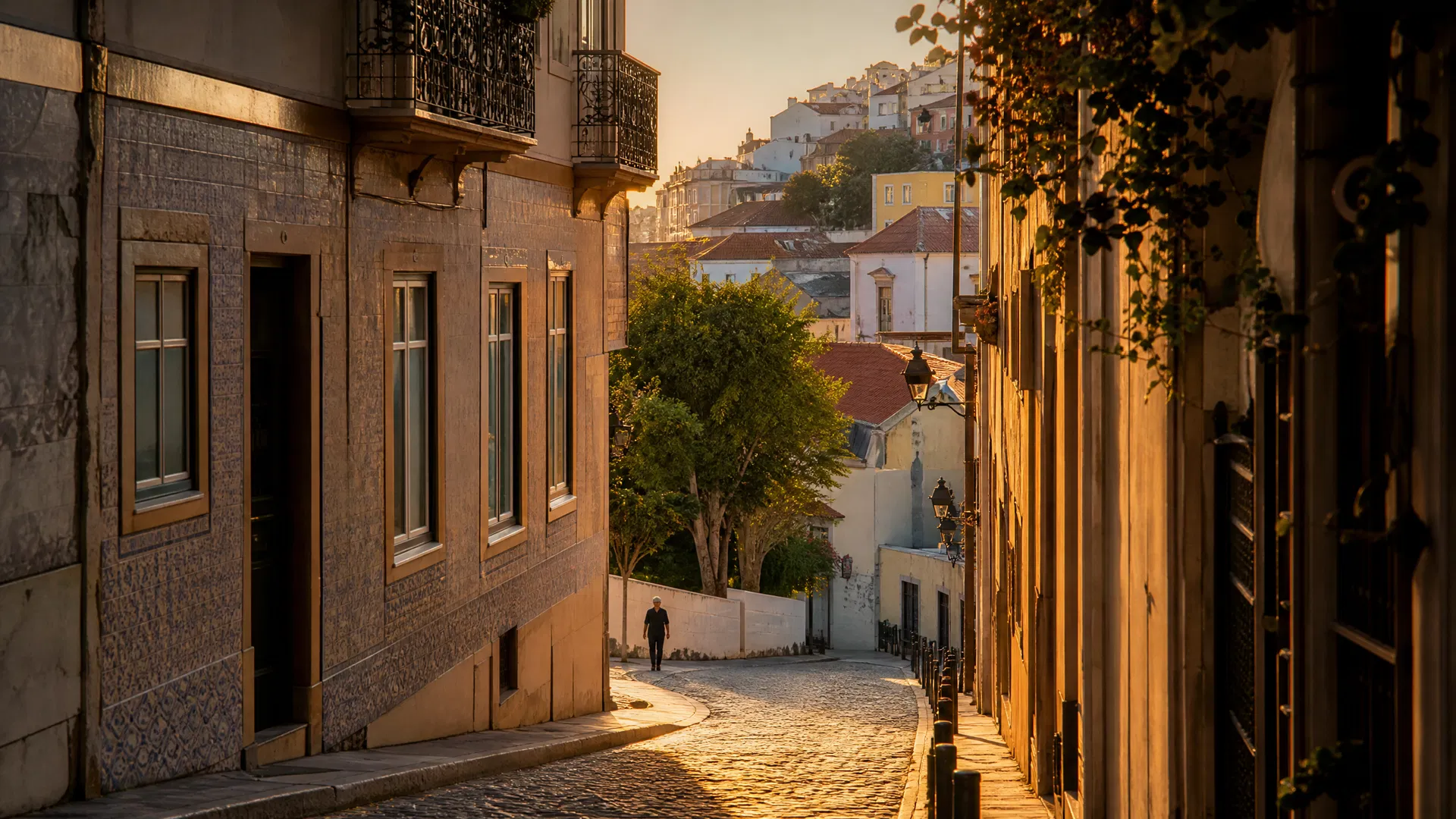
Where Marrakech rewards January with physical accessibility — the city becomes walkable in a way that summer makes impossible — Lisbon rewards January with something more elusive: emotional coherence. The city's essential character was built for grey winter light and rain on cobblestones. In January, Lisbon finally makes complete sense.
The fado is the clearest example. Saudade — the untranslatable Portuguese longing that defines the national emotional register — is a concept that requires a specific atmospheric context to be fully comprehensible. In August, with the Alfama packed with visitors and the miradouros crowded with tour groups, the fado performances at the tourist-facing venues are technically correct but emotionally unconvincing. The song is right. The setting is wrong.
Tasca do Chico on Rua do Diário de Notícias in the Bairro Alto is a 20-seat restaurant where the owner, Chico, performs alongside invited musicians on Tuesday and Thursday evenings. In summer, the waiting list for a reservation stretches to six weeks. In January, reservations are available two weeks out — sometimes less. The room holds 20 people. The performance is not scheduled for a specific time; it begins when Chico decides it should begin. The fado that emerges in that room in January — in the specific grey-lit, rain-on-cobblestone context that the month provides — is the fado that Amália Rodrigues was singing about when she described the music as "the sound of the city's longing for itself."
The Feira da Ladra flea market operates on Tuesday and Saturday mornings in the Campo de Santa Clara, and January produces a version of it that summer visitors never encounter. The dealers who avoid the summer tourist circuit — the ones with estate sale finds, the ones selling colonial-era objects that reflect Lisbon's history as a trading empire, the ones who know what their inventory is worth and price it accordingly rather than inflating for tourist demand — appear in January. The specific section of African and Asian objects that reflects Lisbon's 500-year relationship with the sea trade is most fully represented in the winter months when the market operates for the people who actually buy from it.
The Pastéis de Belém queue is the most cited practical reason to visit Lisbon in January, and it is accurate: the famous custard tart bakery that operates with a one-hour line in summer has zero wait in January. But the more important reason is the table by the original 1837 azulejo tiles in the back room — the table that is always occupied in summer and usually available in January — where you can sit with a pastel de nata and a bica and understand, in the specific quality of January light coming through the window, why this city produces the music it produces.
The miradouro at Portas do Sol at 4pm in January is a specific visual argument for the month. The low winter sun hits the Alfama rooftops at an angle that summer's overhead light never produces — the terracotta tiles glow, the white walls catch the light at a specific oblique angle, the Tagus below reflects the sky in a way that summer's harsh midday sun flattens entirely. This is the Lisbon that the fado singers are singing about.
The Lisbon 4-Day Couples Guide covers the Alfama and Bairro Alto routing. For the food and market circuit, the Lisbon 4-Day Food Guide maps the Feira da Ladra and the specific market sections that January makes most rewarding.
Tokyo: The City That January Made Quieter and More Itself
If Lisbon rewards January with emotional coherence, Tokyo rewards it with a specific two-week window that most travel content about the city doesn't acknowledge. Tokyo in January exists in transition between two festivals — the New Year celebrations of early January and the plum blossom season of late January through February — and the mid-January window when both have passed is one of the least crowded periods in the city's annual calendar.
The hatsumode — the first shrine visit of the New Year — draws enormous crowds to Meiji Jingu on January 1st through 3rd, with three million visitors in the first three days. By January 15th, those crowds have dispersed entirely. The shrine in mid-January is a different place: the gravel paths quiet, the torii gate visible without a queue of visitors waiting to photograph it, the specific sound of the shrine bell audible rather than lost in crowd noise. The omikuji fortune papers — the ritual of drawing a paper fortune and tying it to the designated tree if the fortune is bad — is a practice that most visitors do at peak crowding rather than in the quiet mid-month window when the ritual has its proper weight.
The Shinjuku Gyoen National Garden is famous for cherry blossoms in April and receives millions of visitors during that season. In January it contains something that almost no mainstream Tokyo travel content mentions: the only winter greenhouse in a major Tokyo park, with an orchid collection that blooms exclusively in January. The greenhouse is warm, the orchids are in full bloom, and the garden outside is empty. The specific contrast — the winter-bare garden surrounding a room of tropical color — is a January Tokyo experience that exists nowhere else in the city's calendar.
The Nakameguro canal is the most photographed Tokyo location during cherry blossom season, when the canal-side cherry trees produce the specific pink tunnel that appears in every Tokyo spring photograph. In January the canal is completely empty. The canal-side coffee shops — Onibus Coffee, Fuglen Tokyo's Nakameguro outpost — operate as neighborhood cafés for local residents, without the spring tourist infrastructure of outdoor seating and cherry blossom merchandise. The specific experience of sitting in Onibus with a single-origin pour-over and watching the winter canal through the window is a Tokyo that the spring visitor never accesses.
The Ameya-Yokocho market in Ueno in early January runs the post-New Year bargain sales that Japanese retailers hold specifically in the first two weeks of January. The textile vendors, the food stalls, the kitchen equipment dealers who stock the market year-round discount their remaining holiday season inventory. The specific atmosphere of a Japanese bargain sale — the fukubukuro lucky bags, the hand-lettered discount signs, the specific energy of a market operating at full commercial intensity for its own community rather than for visitors — is a January Tokyo experience that disappears by February.
The alternative to Meiji Jingu for hatsumode is Kawasaki Daishi temple, south of Tokyo in Kanagawa Prefecture. It receives three million visitors in the first three days of January — the same volume as Meiji Jingu — and is completely quiet by January 15th. The daruma doll burning ceremony on January 18th, the Daruma Kuyo, marks the end of the New Year ritual calendar: the daruma dolls purchased at the beginning of the year, in which one eye is painted when a wish is made and the second eye when the wish is fulfilled, are brought to the temple and burned in a ceremony that has been performed since the Edo period. This ceremony appears in essentially no mainstream Tokyo January travel content.
The Tokyo 5-Day Couples Guide covers the core Tokyo routing including Nakameguro and Shinjuku Gyoen. The Tokyo 5-Day Food Guide maps the Tsukiji outer market and Ameya-Yokocho circuits. For those building a broader Japan itinerary, the Japan 2-Week Rail Pass Guide covers the full country routing.
Oaxaca: The City Where January Is the Creative Season
Where Tokyo rewards January with a specific calendar window, Oaxaca rewards it with something more structural: the return of the city's creative community after the festival season that defines November and December. Oaxaca is Mexico's most culturally dense city — the centro histórico contains more indigenous craft traditions, more mezcal distilleries, more pre-Columbian archaeological sites, and more working artists per square kilometer than any other Mexican city — and January is when that density becomes accessible rather than performed.
The Día de los Muertos in November and the Noche de Rábanos in December bring the tourist crowds. The artists return to their studios. The market vendors return to their stalls. The mezcal producers return to their palenques. The performance layer that festival season requires — the crafts priced for visitors, the mezcal bars designed for Instagram, the cooking demonstrations staged for tour groups — disappears. What remains is the city's actual creative infrastructure, operating for the people who built it.
The Tlacolula market on Sunday mornings is 40 kilometers from Oaxaca and has been operating since the pre-Columbian period. It is the largest indigenous market in Mexico. The specific section where Zapotec weavers sell directly from their looms — the backstrap loom textiles that take weeks to produce and that appear in the city's craft shops at three times the market price — is accessible in January without the festival-season crowds that make the market a logistical challenge rather than a cultural experience. The tlayuda preparation visible from the market's eastern edge, where women have been making the same large tortilla on the same clay comals since before Spanish contact, is the specific Oaxacan food experience that no restaurant can replicate.
The mezcal palenque visits in January coincide with the agave harvest season in the Cañada region. The specific villages where the harvest begins in January — Santiago Matatlán, the self-described mezcal capital of the world — allow visitors to observe the entire production process: the roasting of the piña hearts in underground pits, the crushing by stone tahona wheel, the fermentation in open wooden vats, the distillation in clay pots. Palenque Rey Zapoteco in Santiago Matatlán allows visitors to observe the full process during harvest season. This experience — watching the agave that was planted eight years ago become the mezcal in the glass — is absent from the in-city mezcal bar circuit that most Oaxaca travel content defaults to.
Monte Albán at 8am in January is a specific argument for the month. The Zapotec archaeological site on the flattened mountaintop above Oaxaca — the most important pre-Columbian site in southern Mexico, occupied continuously from 500 BC to 700 AD — receives tour groups beginning at 10am. The 8am opening produces 90 minutes of solitude on a site that was a city of 25,000 people at its peak. The specific January light on the stone platforms — clear winter air, no heat haze, the valley of Oaxaca visible in all directions below — is the Monte Albán that the afternoon visitor, arriving with a tour group in the heat of midday, never sees.
The Oaxaca 4-Day Couples Guide covers the centro histórico routing and the mezcal circuit. The Tlacolula market and Monte Albán are both included in the guide's day-trip section.
Chiang Mai: The City Where January Is the Perfect Season
Where Oaxaca rewards January with the return of its creative community, Chiang Mai rewards it with something simpler and more total: the weather is perfect. Not acceptable. Not manageable. Perfect. The cool dry season runs from November through February, with temperatures between 15 and 28 degrees Celsius, zero humidity, zero rain, and clear mountain air. January sits in the precise middle of this window.
Most travel content about Chiang Mai gets the climate calendar wrong. It describes the cool season as "pleasant" and the hot season (March through May, with temperatures above 40 degrees Celsius and smoke from agricultural burning) as "challenging." This is an understatement in both directions. The cool season is not pleasant — it is the specific climate that the city was designed for, the reason the Lanna Kingdom chose this valley, the reason the temples were built with open-air pavilions rather than enclosed spaces. January Chiang Mai is not when you visit despite the season. It is when you visit because of it.
The moat city at 7am in January — the Old City surrounded by its square moat and crumbling brick walls, the morning mist still in the air, the monks in saffron robes completing their alms rounds through the streets — is a specific sensory experience that the hot season's 7am heat eliminates. The Doi Suthep temple at sunrise, reached by the 306-step naga staircase, produces a view of the city below in mountain mist that exists only in the cool season. The night markets — the Sunday Walking Street on Wualai Road, the Saturday Walking Street on the same road, the Night Bazaar on Chang Khlan Road — are comfortable at midnight rather than oppressive.
The Bo Sang umbrella village, 9 kilometers east of Chiang Mai, produces the hand-painted paper umbrellas and lacquerware that appear in every Thai craft market. The Umbrella Festival in mid-January brings visitors to the village for three days of demonstrations and performances. In the week after the festival, the village returns to working production mode — the artisans back at their frames, the paper being stretched and painted without an audience, the full manufacturing process visible without festival crowds. This specific post-festival window is absent from mainstream Chiang Mai travel content.
The Warorot Market at 6am in January is the wholesale market that supplies Chiang Mai's restaurants and households. The flower section — vendors from the mountain villages arriving with cold-season flowers that only grow in the northern Thai winter, chrysanthemums and marigolds and the specific white dok champa flowers that appear in temple offerings — is a January-specific experience. The flower vendors are selling to the temple supply buyers and the restaurant florists, not to tourists. The specific 6am atmosphere of a wholesale market operating at full intensity for its own community is the Chiang Mai that the cooking school tour of Warorot, which arrives at 9am when the wholesale activity is over, never accesses.
Doi Inthanon National Park — Thailand's highest peak at 2,565 meters — produces a specific January experience that the park's summer visitors don't encounter. The summit temperature drops to near freezing at dawn in January. The twin royal chedis, built in honor of the King and Queen, are surrounded by the specific dawn light that January's clear mountain air produces. The park's lower elevations, where the hill tribe villages and the Wachirathan Waterfall are located, are at their most accessible in January's dry season.
The Chiang Mai 5-Day Solo Guide covers the Old City routing and the temple circuit. The Chiang Mai 4-Day Food Guide maps the Warorot Market and the specific street food circuits that January makes fully accessible.
Cartagena: The City Where January Finally Aligns
Where Chiang Mai rewards January with its peak climate, Cartagena rewards it with something more specific: the alignment of its architecture and its weather. Cartagena's colonial walled city — the most intact Spanish colonial fortification in the Americas, a UNESCO World Heritage Site since 1984 — was built for a specific kind of walking. The city walls, the Getsemaní neighborhood's narrow streets, the Castillo San Felipe de Barajas on its hill above the city — all of it was designed to be experienced on foot, at a pace that allows the 400-year-old stone to register. In August, with 30-degree heat and 90 percent humidity, that pace is impossible. In January, at 26 degrees Celsius with trade winds off the Caribbean, it is exactly what the city requires.
The Castillo San Felipe de Barajas is Cartagena's most visited site — the 16th-century Spanish fortress with the most sophisticated tunnel system in the Americas, built to allow troops to move invisibly between defensive positions during siege. The guided tours of the tunnel network begin at 8am. In January, the 8am tour starts without the summer queue that forms before opening time. The specific experience of walking the tunnels in the cool morning air — the stone still cold from the night, the torchlight on the 400-year-old walls — is a January Cartagena experience that the afternoon visitor, arriving in the heat with a tour group, never accesses.
The Getsemaní neighborhood is Cartagena's oldest — a 17th-century working-class barrio that has become the city's creative center without losing its original character. The outdoor restaurants and bars that line the neighborhood's streets are comfortable at midnight in January. The street food tradition that has been operating in Getsemaní since the colonial period — the arepa de huevo vendor on Calle de la Sierpe who has been frying at the same corner since 1974, the sequence of three vendors that constitutes the neighborhood's unofficial tasting menu — operates at full intensity in January when the temperature allows it. In August, the same street at midnight is oppressive. In January, it is exactly what a Caribbean night should be.
The Rosario Islands — the coral archipelago 45 minutes by speedboat from Cartagena — produce their best diving and snorkeling in January. The water clarity in January reaches 12 meters of visibility. The specific coral formations at Isla Grande, which the summer boat traffic disturbs and which January's lower visitor numbers leave intact, are accessible in a way that August's crowded boats don't allow. The specific January light on Caribbean water — clear air, no summer haze, the specific angle of January sun on coral — is the Rosario Islands photograph that the August visitor, arriving on a boat with 40 other passengers, never takes.
The Mercado de Bazurto at 7am is Cartagena's wholesale food market — the specific section where the fishing boats from the Magdalena River delta deliver freshwater fish that don't appear on any tourist restaurant menu, the sancocho preparation visible through the market's interior eating stalls, the specific atmosphere of a market operating at full commercial intensity for its own community. January's lower tourist pressure means the market is operating for the people who supply the city's restaurants rather than for visitors on food tours.
The Cartagena 4-Day Couples Guide covers the walled city routing and the Getsemaní circuit. The Cartagena 4-Day Food Guide maps the Mercado de Bazurto and the Rosario Islands day trip.
Planning Your January Trip
The six destinations on this list are on four continents and don't suggest a single routing. The January argument is different for each, and the right destination depends on which argument matches your specific travel motivation.
If you want the city back after the heat: Marrakech. The January window is specific — the Atlas Mountains are snow-dusted, the medina is walkable, the Djemaa el-Fna belongs to its residents. Optimal timing: mid-January through early February, after the New Year holiday crowds and before the spring shoulder season begins.
If you want the city to make emotional sense: Lisbon. The fado, the saudade, the grey winter light on the Alfama — all of it requires January to be fully comprehensible. Optimal timing: the entire month. Lisbon in January is consistent; there is no bad week.
If you want the city at its quietest: Tokyo. The specific mid-January window — after the New Year crowds and before the plum blossom season — is the least crowded period in Tokyo's annual calendar. Optimal timing: January 15th through January 31st. Avoid the first two weeks if crowds are the primary concern; embrace them if the hatsumode ritual is the draw.
If you want the city's creative community: Oaxaca. January is when the artists are in their studios and the mezcal producers are in their palenques. Optimal timing: mid-January through February. The first two weeks of January follow the December festival calendar and retain some holiday energy; mid-month is when the creative community fully returns.
If you want the city at its climatically perfect: Chiang Mai. January is the precise middle of the cool dry season. Optimal timing: the entire month. The Umbrella Festival in mid-January is a specific event worth timing around; the week after the festival, when the village returns to working production, is the specific window for the Bo Sang experience.
If you want the city's architecture and climate to finally align: Cartagena. January is the one month when the colonial walled city is physically navigable at the pace it was designed for. Optimal timing: the entire month. January is Cartagena's peak season for a reason — the weather is the best it will be all year — but peak season in January is still dramatically less crowded than peak season in August.
Budget reality across the group: January is the low season for all six destinations except Cartagena (where it is high season but still significantly less expensive than peak Caribbean alternatives). Marrakech, Lisbon, and Tokyo see their lowest hotel rates of the year in January. Oaxaca and Chiang Mai are consistently affordable year-round; January prices are standard. Cartagena's January rates are higher than its off-season but lower than comparable Caribbean destinations in the same month.
Combining destinations: Marrakech and Lisbon share a direct flight (2 hours 45 minutes on TAP Air Portugal or Royal Air Maroc) and make a natural two-city January pairing — the North African winter and the Atlantic European winter in sequence. Tokyo and Chiang Mai are a natural pairing for those doing a January Asia trip, with Bangkok as a logical connection point. Oaxaca and Cartagena require a connection through Mexico City or Bogotá and work best as independent trips rather than a combined routing.
When you're ready to plan the specifics, Ask Leif builds the full itinerary — day by day, neighborhood by neighborhood, with the specific timing and sequencing that makes the difference between a good trip and the right trip.
The Argument, Compressed
January is not the month to stay home. It is not the month to book the beach resort that everyone else is booking because they're cold. It is the month to go somewhere that rewards being seen without an audience — somewhere that has its city back.
Marrakech belongs to itself. Lisbon makes sense. Tokyo quiets. Oaxaca creates. Chiang Mai peaks. Cartagena aligns.
Six verbs. Six January dimensions. Each irreplaceable by any other month. The travelers who understand this are not going somewhere despite January. They are going because of it.