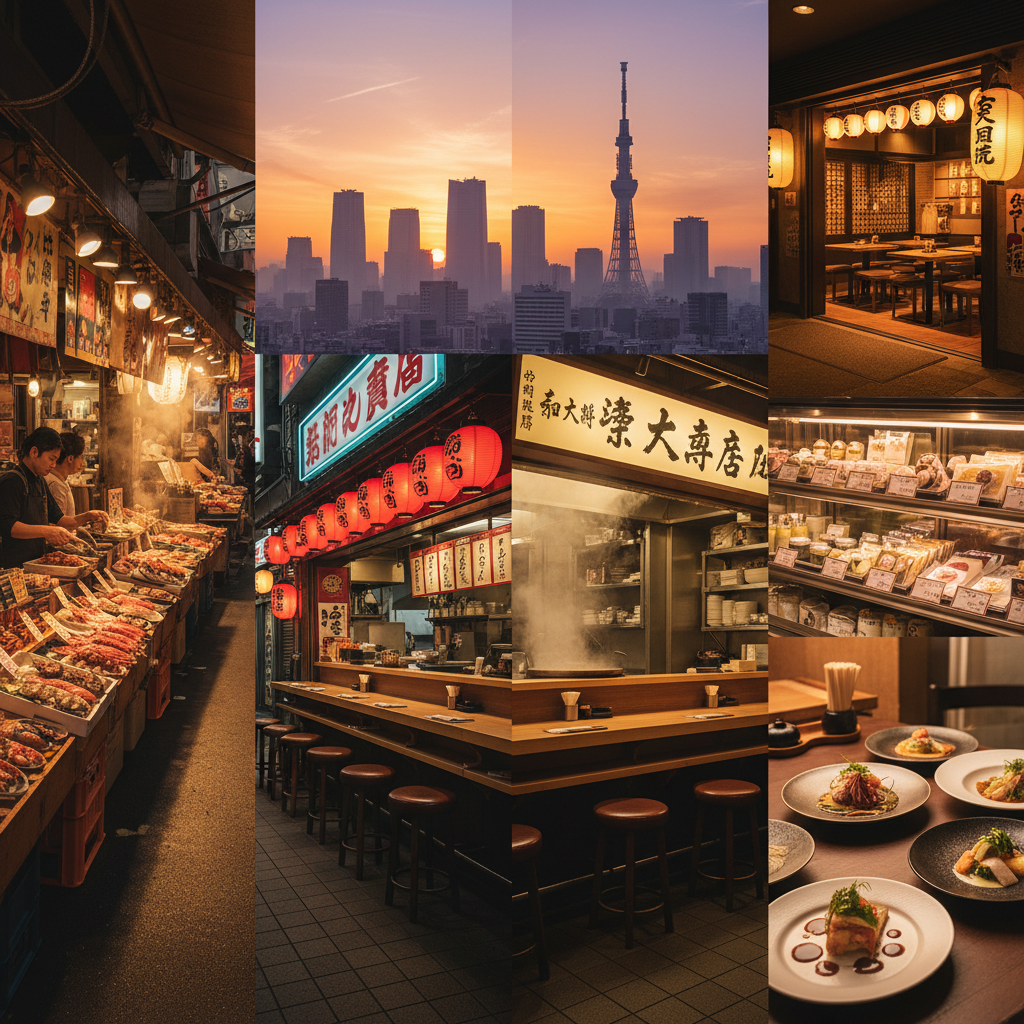
Tokyo Food Guide: 5 Days of Michelin Stars, Ramen Alleys & Tsukiji Market
Unlock Tokyo's unparalleled food scene with this 5-day guide. From €2 convenience store onigiri to Michelin-starred omakase, eat like a local in the world's greatest food city.
- Duration: 5 Days
- Estimated Budget: $800–$2,500
- Best Time to Visit: March-May (cherry blossoms) and September-November (autumn leaves) for pleasant weather.
- Destination: Tokyo, Japan
Tokyo isn't just a city with more Michelin stars than any other; it's a culinary universe where generations of dedication meet innovation. This guide is your roadmap to navigating its dizzying array of flavors, from the freshest sushi at Tsukiji Outer Market to the perfect bowl of ramen, ensuring every bite is an adventure.
The moment you step into the vibrant, bustling atmosphere of Ameyoko Market in Ueno, you're immediately enveloped in a symphony of aromas and sounds. This lively street market, a relic from post-war black markets, now offers an incredible array of street food, fresh produce, and quirky goods. It’s a fantastic place to graze on takoyaki, grilled seafood skewers, or even a fresh fruit juice from one of the many stalls. The energy here is infectious, providing a stark contrast to the city's more polished districts, and it’s a perfect spot to witness everyday Tokyo life unfold through its culinary offerings, proving that exceptional flavors aren't confined to white tablecloths.
Should you prioritize reservations for every meal in this culinary capital? Here's the reality: while securing a spot at a top-tier omakase counter or a sought-after Michelin-starred establishment often requires booking months in advance, much of Tokyo's most authentic and delicious food culture thrives on spontaneity. Many ramen shops, izakayas, and even some sushi counters operate on a first-come, first-served basis, often with a queue that's part of the experience. Knowing which places demand foresight and which welcome a walk-in allows you to balance meticulously planned gastronomic adventures with delightful, unplanned discoveries, ensuring you savor every moment without unnecessary stress.
Food enthusiasts spend their evenings exploring the hidden culinary gems tucked away in the narrow alleys of Shinjuku's Golden Gai. Here, tiny bars, often seating no more than six or eight patrons, offer an intimate glimpse into local nightlife and snack culture. You'll find yourself sipping sake or a local craft beer, chatting with the owner and fellow patrons, and nibbling on small, expertly prepared dishes like yakitori or edamame. This isn't just about the food; it's about the immersive cultural exchange and the discovery of unique, character-filled establishments that define Tokyo's diverse and endlessly fascinating dining landscape, far from the tourist throngs.
Tsukiji's Dawn Delights & Ginza's Gourmet Glories
Start your culinary adventure bright and early at the Tsukiji Outer Market, a vibrant labyrinth of food stalls and shops that has been feeding Tokyo for generations.
The inner market may have moved, but the outer market remains the beating heart of Tokyo's seafood culture. You'll find the freshest sushi, sashimi, and local delicacies here, prepared by vendors who have perfected their craft over decades.
Wander through the bustling lanes of the Tsukiji Outer Market, sampling various street foods and soaking in the lively atmosphere.
Beyond sushi, Tsukiji offers a treasure trove of Japanese street food, from sweet tamagoyaki (rolled omelets) to savory grilled scallops. It's an essential experience to understand the breadth of Tokyo's food scene.
Take a short subway ride to Ginza and immerse yourself in the luxurious world of Mitsukoshi's Depachika, their legendary basement food hall.
Depachika are culinary palaces, showcasing an incredible array of gourmet foods, from exquisite bento boxes and artisanal sweets to fresh produce and international delicacies. It's a feast for the eyes and the palate.
Enjoy a refined lunch from your Mitsukoshi Depachika selections, perhaps in a nearby park or back at your accommodation.
Depachika bento boxes are a culinary art form, offering a balanced and beautifully presented meal. It's a chance to savor gourmet quality without the restaurant price tag, and you get to choose exactly what you want.
Head to Yurakucho for an authentic izakaya experience under the train tracks, a lively area known for its standing bars and delicious small plates.
Yurakucho offers a quintessential Tokyo izakaya atmosphere – bustling, noisy, and incredibly social. It's the perfect place to unwind, enjoy cold beer or sake, and sample a variety of Japanese comfort foods.
Leif's Tip: Set your alarm clock for an ungodly hour! Arriving at Tsukiji Outer Market by 6:00 AM isn't just about beating the crowds; it's about experiencing the market at its most authentic, when the seafood is freshest and the energy is palpable. You'll be rewarded with the best breakfast of your life.
Tokyo has countless small, specialized eateries, each perfecting one craft for decades, and trying to discern which humble noodle shop or sushi counter is truly exceptional among the thousands can feel like an impossible task. The sheer volume of choices, coupled with potential language barriers when trying to understand menus or make reservations, often leads travelers to stick to safe, generic options rather than discovering the city's true culinary treasures. You might find yourself wandering aimlessly, overwhelmed by the neon signs and delicious smells, unsure where to commit your precious mealtime. This is precisely where Leif steps in, cutting through the noise to deliver a curated, authentic, and unforgettable gastronomic journey tailored just for you.,When you're standing in front of a tiny, unassuming ramen shop in Shibuya, wondering if the 20-minute queue is truly worth it, Leif already knows the answer. Our guide will tell you that this particular spot is renowned for its unique yuzu-infused broth, a refreshing twist on a classic, and that the wait is an integral part of the anticipation and the experience. Or perhaps you're looking for an authentic izakaya experience near your hotel in Ginza, but the multitude of options is paralyzing. Leif will guide you to a specific establishment known for its incredible yakitori and extensive sake list, complete with insider tips on what to order and how to navigate the menu, ensuring you feel like a local, not a lost tourist.,You'll arrive in this vibrant metropolis knowing exactly where to find the finest tempura, the most comforting bowl of udon, and the most exquisite wagashi sweets, all without a moment of hesitation. Instead of wasting time researching or falling into tourist traps, you'll be confidently navigating bustling markets, cozy back-alley eateries, and elegant dining rooms. The difference is savoring every bite of a perfectly grilled skewer under the train tracks in Yurakucho, or discovering a hidden gem of a coffee shop in Kiyosumi-Shirakawa, feeling completely immersed in the local food culture. Arriving in this food paradise with every delicious detail already mapped out means your trip will be a seamless, mouth-watering adventure from the very first taste. [January Doesn't Have Fewer Tourists. It Has the City Back.](https://askleif.com/blog/january-doesnt-have-fewer-tourists-it-has-the-city-back) — Six cities that are fundamentally different in January, and why that difference is the entire point.
Best Time to Visit Tokyo, Japan
Spring (March-May) for cherry blossoms and pleasant weather, ideal for walking between food spots.
Autumn (September-November) offers comfortable temperatures and beautiful fall foliage, perfect for culinary exploration.
Avoid peak summer (July-August) due to intense heat and humidity, which can make extensive food tours less enjoyable.
Winter (December-February) is excellent for hot ramen and izakaya hopping, with fewer crowds at popular eateries.
Getting Around Tokyo, Japan
Invest in a Suica or Pasmo IC card immediately upon arrival for seamless travel on Tokyo's extensive subway and train network. You can tap and go, making transfers effortless.
Tokyo's public transport is incredibly efficient, but be mindful of rush hour (7-9 AM and 5-7 PM) when trains are packed. Plan your longer journeys outside these times.
Many of Tokyo's best food neighborhoods are incredibly walkable. Wear comfortable shoes and be prepared to explore on foot between meals.
Taxis are expensive and generally unnecessary given the superb public transport. Only use them for late-night trips when trains have stopped, or if you're carrying heavy shopping.
What to Pack
- Comfortable walking shoes – you'll be doing a lot of walking between eateries and markets.
- A small, foldable bag for carrying snacks and souvenirs from depachika or markets.
- A portable power bank for your phone – essential for navigation, photos, and translating menus.
- Layers of clothing, as temperatures can vary between air-conditioned shops and outdoor markets.
- An empty stomach and an adventurous palate – this is a food trip, after all!
- A small notebook and pen to jot down restaurant names or food discoveries.
- Hand sanitizer, especially for market visits and before diving into street food.
- A reusable water bottle to stay hydrated while exploring.
Money-Saving Tips
- Embrace convenience store food: 7-Eleven, FamilyMart, and Lawson offer incredibly high-quality and affordable meals, from onigiri to bento boxes.
- Seek out lunch specials: Many high-end restaurants, including some Michelin-starred ones, offer significantly cheaper lunch sets than their dinner counterparts.
- Utilize depachika (department store basement food halls) for gourmet picnics. Grab a premium bento or exquisite sweets for a fraction of the cost of dining in a restaurant.
- Don't shy away from standing sushi bars (like Uogashi Nihon-Ichi) or ramen shops. These offer fantastic quality at very reasonable prices.
- Drink tap water: Tokyo's tap water is safe and delicious, saving you money on bottled drinks.
Local Insights
- Always wait to be seated in restaurants; don't just walk in and pick a table. Someone will direct you.
- Slurping your noodles is not only acceptable but often seen as a sign of enjoyment in ramen shops.
- Tipping is not customary in Japan and can even be considered rude. The service charge is usually included, or service is simply part of the culture.
- Many smaller eateries, especially in areas like Omoide Yokocho, may only accept cash. Always carry some yen with you.
- Be mindful of noise levels in smaller, more intimate dining settings, especially at high-end sushi counters. Keep conversations subdued.
Frequently Asked Questions
What's the best way to navigate Tokyo's vast food scene without getting overwhelmed?
Focus on one or two culinary themes per day, like 'ramen and depachika' or 'sushi and izakaya.' This helps you dive deep into specific experiences without feeling rushed. Leif's guide structures your days around these themes to ensure a cohesive and delicious journey.
Are there vegetarian or vegan options readily available in Tokyo?
While traditional Japanese cuisine often uses dashi (fish broth), Tokyo has seen a significant rise in vegetarian and vegan-friendly restaurants, especially in areas like Shibuya and Shinjuku. Look for specialized ramen shops, vegan cafes, or even ask for 'dashi-nuki' (without dashi) at some establishments. Convenience stores also offer surprisingly good plant-based options.
How much should I budget for food per day in Tokyo?
A comfortable food budget can range from €40-€80 per day, allowing for a mix of convenience store meals, casual ramen or udon, and a nice izakaya dinner. If you plan for a high-end omakase or Michelin-starred experience, that will be an additional splurge, often €100-€300+ per meal.
Is it rude to slurp noodles in Japan?
Absolutely not! Slurping noodles, especially ramen and soba, is considered a sign of enjoyment and appreciation for the chef's cooking. It also helps cool down the hot noodles and broth as you eat. Don't be shy; slurp away!
Can I drink tap water in Tokyo?
Yes, tap water in Tokyo is perfectly safe and clean to drink. Many restaurants will serve complimentary water, and you can refill your reusable bottle without concern. This is a great way to save money and reduce plastic waste.
What's the etiquette for tipping in Japanese restaurants?
Tipping is generally not practiced in Japan and can even be considered rude or confusing. The service charge is usually included in the price, or the excellent service is simply part of the culture. Just pay the bill as presented and offer a polite 'Arigato gozaimasu' (thank you).
How do I find the best local, non-touristy food spots?
Venture into residential neighborhoods, look for places with short queues of locals, or consult Leif's guide which highlights authentic, beloved establishments. Avoid restaurants with English menus prominently displayed outside, as these often cater specifically to tourists and may lack the genuine local flavor.