Marrakech Food & Culture: 4-Day Tagine Trails, Souk Secrets & Rooftop Dining
Uncover Marrakech's true culinary soul on a 4-day food and culture journey. Explore spice souks, master tagine, and savor rooftop dining in the medina.
- Duration: 4 Days
- Estimated Budget: $400–$800
- Best Time to Visit: March-May and October-November for pleasant weather
- Destination: Marrakech, Morocco
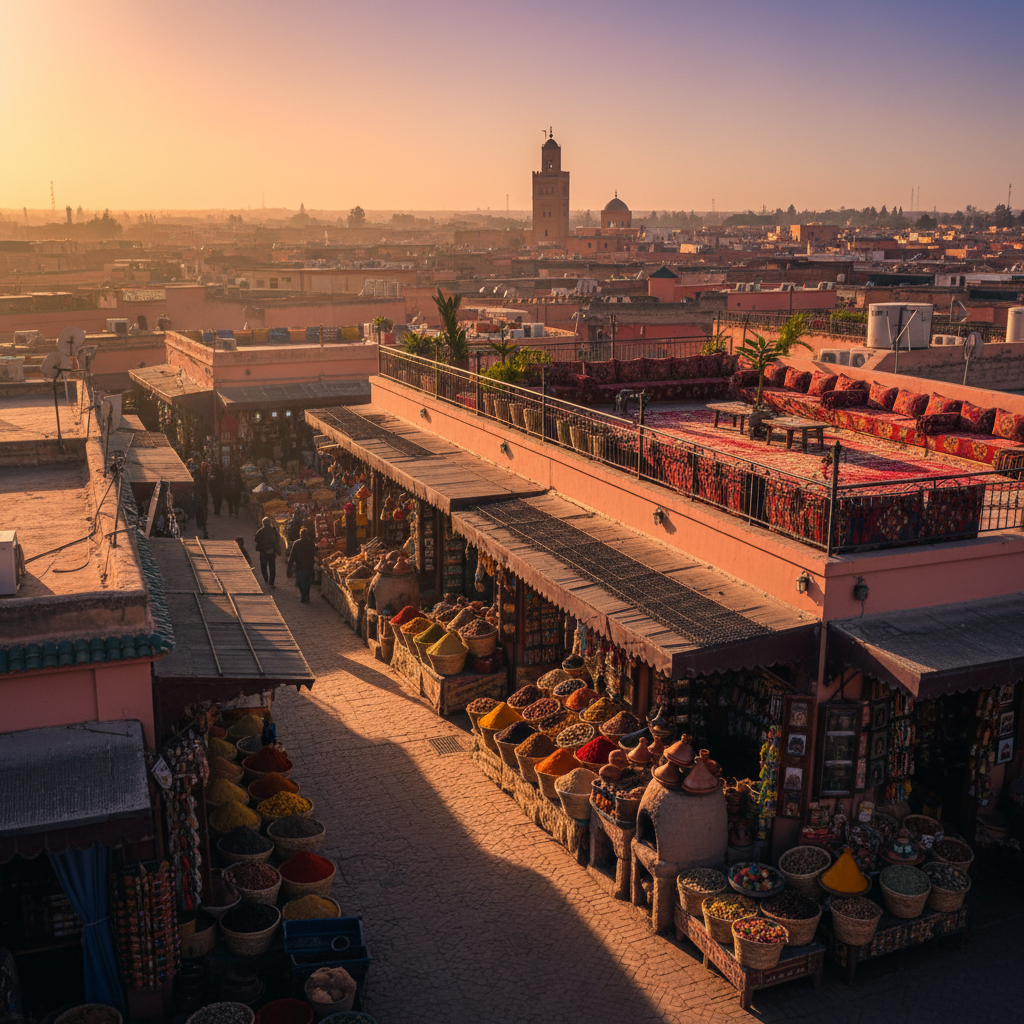
<p><em>Planning a trip to Morocco? Read our <a href="/blog/marrakech-the-city-that-rewires-your-senses">complete Marrakech travel guide</a> for everything you need to know before you go — the medina, food, hammams, day trips, and practical tips.</em></p> Beyond the bustling Djemaa el-Fna, Marrakech's true flavor lies hidden in its local neighborhoods, where ancient culinary traditions thrive. This guide will lead you through the city's authentic food scene, from the spice-laden alleys of the Mellah to the hidden riad kitchens of Mouassine, revealing a Marrakech that most tourists only dream of tasting.
The moment you step into the vibrant Bab Doukkala market, a symphony of aromas envelops you – fresh mint, sweet dates, and the earthy scent of spices. This is where local life truly unfolds, far from the tourist throngs. Here, you'll discover vendors meticulously arranging pyramids of olives, bakers pulling warm khobz (Moroccan bread) from traditional ovens, and the rhythmic clang of a butcher's knife. It’s a place to observe, to taste, and to truly feel the pulse of daily Moroccan culinary tradition. This neighborhood offers an unfiltered glimpse into the heart of Marrakech’s food culture, where every stall tells a story and every bite is a revelation.
What's the secret to finding the best tagine in Marrakech without falling into a tourist trap? The reality is, it's not about the most advertised spots. The true magic lies in seeking out the smaller, family-run eateries tucked away in residential areas, or even better, learning to distinguish between the different tagine preparations. A chicken tagine with preserved lemon and olives, for instance, is a bright, tangy affair, perfect for lunch. But for a richer, more celebratory meal, you'll want the slow-cooked lamb with prunes and almonds. Knowing these nuances, and where to find them, transforms a simple meal into an unforgettable cultural experience. Leif will guide you to these authentic culinary treasures.
Food-focused travelers spend their mornings exploring the artisan district of Sidi Ghanem, where the aroma of freshly baked goods mingles with the scent of leather and cedarwood. You'll find yourself sipping strong Moroccan coffee at a local cafe, watching artisans at work, before heading to the Saturday food market to sample organic produce and artisanal cheeses. Afternoons might involve a hands-on cooking class in a traditional riad kitchen, learning the secrets of Moroccan pastry-making. Evenings are dedicated to savoring multi-course meals at hidden gems, discussing the day's culinary discoveries over a glass of local wine, truly immersing yourself in the city's gastronomic rhythm.
Mellah Magic: Spice Secrets & Msemen Mornings
Begin your culinary journey in the vibrant Mellah, Marrakech's historic Jewish Quarter, focusing on its unique spice souk.
This souk offers a more authentic and less touristy experience than the main souks, with vendors specializing in specific spices and ingredients. It's the perfect place to understand the backbone of Moroccan cuisine.
Seek out the best msemen (Moroccan flatbread) in the Mellah, often found at small, unassuming stalls.
Msemen is a staple Moroccan breakfast, flaky and delicious, often served with honey and argan oil. Experiencing it fresh from a local vendor is a true taste of everyday Marrakech.
Explore the argan oil cooperatives within or near the Mellah, learning about its production and culinary uses.
Argan oil, often called 'liquid gold,' is central to Moroccan cuisine and beauty. Visiting a cooperative allows you to see the traditional process and taste the difference between culinary and cosmetic grades.
Head to the Mouassine neighborhood to visit a traditional riad for a cooking class focusing on tagine techniques.
Mouassine is known for its beautiful riads and culinary schools. Learning to make a tagine from a local chef is an immersive way to understand the layering of flavors and the cultural significance of this iconic dish.
Enjoy a rooftop dinner at a hidden gem in the Mouassine neighborhood, savoring traditional Moroccan cuisine with a view.
Mouassine boasts some of the most charming and authentic riad restaurants, often with stunning rooftop terraces overlooking the medina. It's the perfect blend of delicious food and enchanting ambiance.
Leif's Tip: Embrace the art of haggling, especially in the Mellah spice souk, but always do so with a smile and good humor. It's part of the cultural exchange, and you'll often walk away with a better price and a friendly interaction. Also, don't be afraid to try street food; it's often where the most authentic and delicious flavors are found.
Marrakech has countless hidden culinary gems, and knowing which small, unassuming doorway leads to the city's best bastilla or a truly authentic Moroccan breakfast is the difference between a good meal and an unforgettable one. The sheer volume of options, from bustling street food stalls to elegant riad restaurants, can be overwhelming, making it hard to discern genuine local favorites from tourist-oriented imitations. You might wonder which cooking class offers a real immersion into Moroccan home cooking versus a superficial demonstration, or how to navigate the spice souks to find high-quality ras el hanout without being overcharged. This is precisely where Leif steps in, cutting through the noise to deliver a curated, authentic, and delicious journey.,When you're standing in the vibrant, fragrant alleys of the Mellah, wondering where to find the absolute best msemen – that flaky, buttery Moroccan flatbread – Leif already has the answer. Instead of wandering aimlessly, you'll be directed to a specific, unassuming stall known only to locals, where the msemen is cooked fresh on a griddle right before your eyes, served with a side of local honey and argan oil. Or perhaps you're craving the rich, savory pigeon pie, bastilla, and want to experience it in a truly traditional setting. Leif will guide you to a hidden riad restaurant in the Mouassine neighborhood, a place with generations of culinary heritage, ensuring you taste the very best of Marrakech's secret gastronomic world.,You'll arrive in Marrakech knowing exactly where to find the most succulent mechoui lamb, how to order it like a local, and which rooftop terrace offers the most breathtaking sunset views with your tagine. Instead of second-guessing your food choices or falling into tourist traps, you'll be confidently exploring neighborhood markets, sipping authentic mint tea in a local cafe, and discovering the nuanced flavors of Moroccan cuisine. The difference is savoring every bite with the confidence of an insider, truly connecting with the culture through its food. This preparation means you'll spend less time planning and more time indulging, creating memories that will linger long after your last delicious meal. [January Doesn't Have Fewer Tourists. It Has the City Back.](https://askleif.com/blog/january-doesnt-have-fewer-tourists-it-has-the-city-back) — Six cities that are fundamentally different in January, and why that difference is the entire point.
Best Time to Visit Marrakech, Morocco
Spring (March to May) offers pleasant temperatures and blooming gardens, perfect for exploring on foot.
Autumn (September to November) is another ideal time, with warm days and cooler evenings, making rooftop dining a delight.
Avoid the peak summer months (June to August) as temperatures can be extremely high, making daytime exploration uncomfortable.
Winter (December to February) is generally mild, but evenings can be chilly, so pack layers if visiting then.
Ramadan dates vary annually; while it's a unique cultural experience, some restaurants may have altered hours, so plan accordingly if dining is your priority.
Getting Around Marrakech, Morocco
Within the Medina, walking is your best and often only option. Embrace getting a little lost; it's part of the charm!
For longer distances or when venturing outside the Medina, use official 'petit taxis' (beige cars) and insist on the meter ('le compteur, s'il vous plaît') to avoid inflated tourist prices.
Download a reliable offline map app like Maps.me for navigating the labyrinthine streets of the Medina without needing constant data.
Consider hiring a private driver for day trips to Sidi Ghanem or the Atlas Mountains; negotiate the price beforehand.
Avoid unofficial guides who approach you in the street; they often lead to tourist traps or pushy sales pitches.
What to Pack
- Lightweight, breathable clothing (linen, cotton) that covers shoulders and knees, out of respect for local customs.
- Comfortable walking shoes are non-negotiable for navigating the Medina's uneven surfaces and long walks.
- A light scarf or pashmina for women to cover shoulders when entering religious sites or for cooler evenings.
- Sunscreen, sunglasses, and a wide-brimmed hat to protect against the strong Moroccan sun.
- A small backpack or cross-body bag to keep your valuables secure and hands-free for exploring.
- Hand sanitizer and tissues are always useful, especially when enjoying street food.
- A portable power bank for your phone, as you'll be using it for navigation and photos.
- A reusable water bottle to stay hydrated; tap water isn't generally safe to drink, so refill with bottled water.
Money-Saving Tips
- Embrace street food and local eateries, especially in neighborhoods like Bab Doukkala and the Mellah, for delicious and incredibly affordable meals.
- Haggle respectfully when shopping in the souks; it's expected, but always do so with a smile and good humor.
- Opt for local 'petit taxis' with meters rather than grand taxis or tourist-focused transport services.
- Buy fresh produce and snacks from local markets rather than convenience stores for better prices and a more authentic experience.
- Consider a cooking class that includes a market visit; it's a fantastic way to learn about local ingredients and enjoy a meal you've prepared.
Local Insights
- Always greet people with 'Salam Alaikum' (peace be upon you) and 'Shukran' (thank you); a little Arabic goes a long way.
- When invited for mint tea, accept graciously; it's a sign of hospitality and a key part of Moroccan culture.
- Be mindful of your left hand, which is considered unclean in Moroccan culture; use your right hand for eating and passing items.
- Dress modestly, especially when visiting religious sites or less touristy areas, to show respect for local customs.
- Photography: always ask for permission before taking photos of people, especially women and children. A polite 'S'il vous plaît, photo?' usually works.
Frequently Asked Questions
How can I tell if a spice vendor in the souks is selling good quality spices?
Look for vendors with vibrant, whole spices rather than pre-ground powders. Ask to smell them – good quality spices will have a strong, distinct aroma. Also, observe if locals are buying from them; that's often the best indicator of authenticity and quality. Don't be afraid to haggle gently, but prioritize quality over the lowest price.
Is it safe to eat street food in Marrakech?
Yes, generally, but choose wisely. Look for stalls with high turnover, where food is cooked fresh and served hot. Observe hygiene practices – clean surfaces, gloved hands, and fresh ingredients are good signs. Avoid anything that looks like it's been sitting out for a long time. Trust your instincts, and if a place looks questionable, move on.
What's the proper etiquette for a Moroccan mint tea ceremony?
Accepting tea is a sign of hospitality. It's typically poured from a height to create foam, and you'll often be offered three glasses. It's polite to accept at least one, and usually all three. Don't rush; it's a social ritual. Compliment the host on the tea, and savor the moment. It's more than just a drink; it's a cultural experience.
Are there vegetarian or vegan options readily available in Marrakech?
Absolutely! Moroccan cuisine is very vegetarian-friendly. Many tagines are vegetable-based, and dishes like zaalouk (eggplant dip), taktouka (pepper and tomato salad), and various lentil and chickpea stews are staples. Always ask for 'tagine khodar' (vegetable tagine) or specify 'bidoun lahm' (without meat). Vegan options are also increasingly common, especially in more modern eateries.
How do I participate in a cooking class that feels authentic and supports local communities?
Seek out cooking classes run by women's cooperatives, particularly those located in the Mellah or other residential areas. These often provide a more immersive experience, including a market visit, and directly support local families. Avoid large, commercial operations in tourist-heavy areas if authenticity is your priority. Leif can point you to specific, reputable options.
What's the best way to enjoy the mechoui alley experience without feeling overwhelmed?
Go at lunchtime when it's bustling but not chaotic. Don't be shy; approach a stall and point to the lamb you'd like. Order by weight (e.g., 200g per person) and ask for it 'ma'a kamoun wa melh' (with cumin and salt). Find a plastic stool, eat with your hands (it's part of the tradition!), and wash it down with a glass of mint tea. It's a loud, messy, and utterly unforgettable experience.
Can I find good Moroccan wine in Marrakech, and where should I try it?
Yes, Morocco has a surprisingly rich winemaking tradition, particularly in the Meknes region. Look for labels like Domaine de Sahari, Les Celliers de Meknes, or Volubilia. You'll find these in upscale restaurants, some boutique hotels, and dedicated wine bars, especially in the modern Guéliz district. Don't expect a huge selection, but the quality can be excellent, especially the reds.