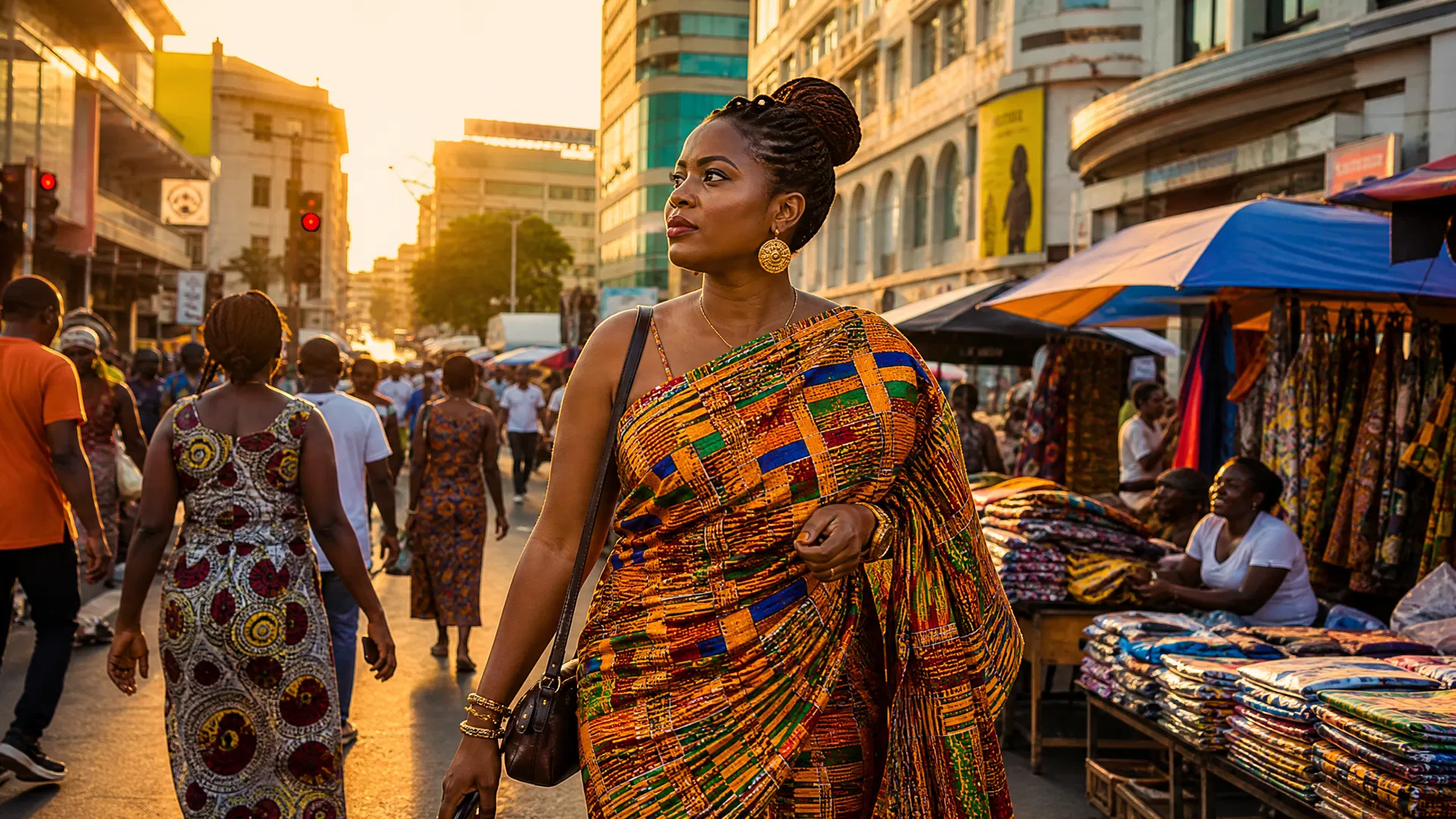
Africa Has Cities Worth Flying For. Most Travelers Never Get Past the Safari.
Destination: Multiple
Category: Destinations
The safari is not the problem. Let's say that clearly before anything else. The Serengeti migration, the Okavango Delta at flood, the moment a leopard drops from a fever tree into the long grass of the Masai Mara — these are among the most extraordinary experiences available to a traveler anywhere on Earth, and anyone who tells you otherwise is performing a sophistication they don't actually feel. The safari deserves every superlative it has ever received.
The problem is that the safari has become the only story most travelers hear about Africa. It has become so dominant as the default Africa experience that the continent of 54 countries, 1.4 billion people, and some of the oldest continuous civilizations on Earth has been reduced, in the Western travel imagination, to a single category of experience. You go to Africa for the animals. You go to Europe for the cities. You go to Asia for the food. These are the mental models that most travelers carry, and they are the reason that the cities on this list — cities with architectural depth, food cultures of genuine sophistication, colonial and post-colonial histories that are still being actively processed, and creative economies producing some of the most interesting art, music, and design anywhere in the world — are systematically underrepresented in the travel content that reaches most Western audiences.
This post is not an argument against the safari. It is an argument that Africa has always been more than the safari suggested, and that the traveler who discovers this — who lands in Accra or Addis Ababa or Kigali and realizes that the continent they thought they understood is something else entirely — will spend the rest of their traveling life trying to catch up.
The six cities on this list were chosen for a specific reason: each one carries a dimension of the African story that no wildlife reserve can tell. Each one is evidence for the thesis. Each one is the argument made specific.
Marrakech: The City That Operates on Its Own Logic
Every other city on this list will challenge your assumptions about Africa. Marrakech will challenge your assumptions about cities.
The medina — the old walled city — is a UNESCO World Heritage Site that has been continuously inhabited for nearly a thousand years and that operates on a spatial and commercial logic that has nothing to do with the grid-based urban planning most travelers are accustomed to. The streets of the medina were not designed to be legible. They were designed to be inhabited, and the distinction matters. Getting lost in the medina is not a failure of navigation. It is the correct way to experience a city that was built before the concept of legible urban planning existed — a city where the spatial organization by trade has persisted for centuries not because no one thought to reorganize it, but because the organization works.
The dyers' souk occupies the same streets it has occupied for five hundred years. The leather souk, the spice souk, the blacksmiths' souk — each trade clustered in its own quarter, each quarter maintaining its own rhythm and its own smell and its own particular quality of light. The Chouara tanneries, best viewed from the leather shops on the upper floors of the surrounding buildings, are most photographed in the morning before ten o'clock, when the natural light hits the dyeing vats at an angle that makes the colors — saffron yellow, poppy red, mint green — look like something from a century you can't quite place.
What most Marrakech travel content misses is Le Jardin Secret on Rue Mouassine. Two historic riads restored in 2016, the garden designed according to the Islamic geometric principles of the Saadian dynasty, the water channels running through the courtyard in the pattern that the dynasty's architects used to represent paradise. It opened after most guidebooks were last updated, which means almost no one who visits Marrakech knows it exists. The Mellah — the historic Jewish quarter established in 1558 — is similarly absent from most itineraries. The synagogues are still maintained by the small remaining Jewish community. The spice market that operates in the Mellah's eastern quarter functions differently from the main souks because of its Jewish commercial heritage, and the difference is legible to anyone paying attention.
Café des Épices on Place Rahba Kedima offers the best introduction to the medina's spatial logic available without a guide. The rooftop view of the spice square below — the women selling dried herbs, the tourists negotiating for things they don't need, the cats moving through the crowd with the authority of longtime residents — is the correct first hour of any Marrakech visit.
The thesis made immediate: Marrakech is the city that requires abandoning the mental models that work everywhere else. The traveler who does this understands something about the African continent that no amount of wildlife watching provides.
If you're planning time in Marrakech, AskLeif's Marrakech 4-day food guide and 4-day couples guide map the city's culinary and cultural depth in detail.
Accra: The City Where the Diaspora Comes Home
Where Marrakech asks you to abandon your spatial assumptions, Accra asks you to reckon with a history that most Western travelers have encountered only in the abstract.
The Year of Return in 2019 — the Ghanaian government's invitation to the African diaspora to return four hundred years after the first enslaved Africans arrived in America — produced a cultural moment that transformed Accra's creative economy and that is still reverberating in the city's art galleries, music venues, and restaurant scene. The diaspora conversation is more alive and more specific in Accra than anywhere else on the continent. The traveler who engages with it understands something about Africa — about the specific cultural exchange that has been flowing between Ghana and Black communities in the Americas and the Caribbean for decades — that no safari provides.
Cape Coast Castle is two hours from Accra. The largest of the slave castles on Ghana's coast, it contains the Door of No Return — the passage through which enslaved Africans walked to the ships — and the male dungeon that held a thousand people in a space designed for two hundred. The governor's chapel sits directly above the dungeon. Most visitors don't know this until they're standing in it, looking up at the floor of the chapel through the ceiling of the dungeon, and the architecture of that specific fact — the chapel built above the dungeon, the worship conducted above the captivity — is the most concentrated expression of colonial contradiction available anywhere in West Africa.
The Nubuke Foundation in East Legon is one of the most important contemporary African art foundations on the continent. The rotating exhibitions draw artists from across the diaspora. It is almost entirely absent from mainstream Accra travel content, which defaults to the hotel circuit and the craft markets. The Chale Wote Street Art Festival in August transforms the James Town fishing community into a temporary gallery — the largest street art festival in West Africa — and the murals on Bukom Square have become permanent fixtures of the neighborhood long after the festival ends.
Buka Restaurant in Osu serves the specific Nigerian and West African cuisine that has been recognized as the best traditional cooking in Accra. The egusi soup requires forty-eight hours of preparation. It is almost never mentioned in the travel content that reaches most visitors. The Makola Market at dawn — the largest open-air market in Accra — has a textile section where kente cloth is sold by the weavers rather than by retailers, and the negotiation culture rewards patience over speed in a way that the tourist markets do not.
AskLeif's Accra 4-day guide covers the city's neighborhoods, markets, and the Cape Coast day trip in full.
Addis Ababa: The City That Was Never Colonized
Where Accra carries the weight of what colonialism took, Addis Ababa carries the weight of what it failed to take.
Ethiopia is the only African country never colonized by a European power. The Battle of Adwa in 1896 — in which Ethiopian forces under Emperor Menelik II defeated the Italian army in one of the most significant military victories of any African nation against a European colonial power — is the founding myth of modern Ethiopia and the reason the African Union is headquartered in Addis Ababa. The city is simultaneously the diplomatic capital of Africa and a city of five million people living inside a coffee culture that is six hundred years old. The coffee ceremony — the bunna — is not a tourist performance. It is the social infrastructure of the city, the way that Icelanders use the geothermal pool and the way that Italians use the aperitivo hour.
The Battle of Adwa Museum, opened in 2024, is the most comprehensive documentation of the 1896 battle available anywhere. The military artifacts, the battlefield panoramas, the specific accounts of the Ethiopian commanders — it makes the victory legible to a visitor who arrives without prior knowledge, and it makes Addis Ababa legible in a way that no other single site in the city does. This is a city that has never had to process its history through the lens of colonial defeat, and the museum is the clearest expression of what that means.
Tomoca Coffee on Wavel Street has been operating since 1953. The oldest coffee roastery in Addis Ababa, it serves the specific bunna ceremony preparation that takes forty-five minutes and that is the correct introduction to Ethiopian coffee culture before the shorter café versions that have spread across the city. The Holy Trinity Cathedral — the burial site of Emperor Haile Selassie and Empress Menen — contains stained glass windows depicting Ethiopian biblical scenes that have no equivalent in any European cathedral tradition. Ethiopia has been Christian since the fourth century, two hundred years before the conversion of most of Europe, and the cathedral makes that timeline visible.
The Merkato is the largest open-air market in Africa. The spice section sells berbere and mitmita blended by the women who made them. The injera production is visible through the open doors of the tej houses on the market's eastern edge. The Ethnological Museum in the former Haile Selassie palace preserves the emperor's bedroom exactly as it was when he lived there — the specific collection of Ethiopian crosses in the adjacent gallery documents the country's 1,700 years of Christianity in a way that no other collection on the continent does.
AskLeif's Ethiopia 7-day cultural adventure guide covers Addis Ababa alongside the country's historic northern circuit.
Cape Town: The City That Contains the Contradiction
If Addis Ababa is the city that never had to process colonial defeat, Cape Town is the city that is still processing it — and the contradiction between the extraordinary beauty of the place and the extraordinary inequality that beauty contains is the most honest thing about it.
Table Mountain rises above both the most expensive real estate on the continent and the townships where apartheid's spatial logic is still physically present in the landscape. The Gini coefficient — the standard measure of economic inequality — puts Cape Town among the most unequal cities in the world. The traveler who engages with both the beauty and the inequality, rather than choosing only one, understands something about post-apartheid South Africa that no statistics convey.
The District Six Museum documents the forced removal of sixty thousand people from the District Six neighborhood between 1968 and 1982 under the Group Areas Act. The street map on the museum floor — the one where former residents have marked the locations of their homes — is the most affecting single artifact in any museum in South Africa. The oral history recordings that play continuously in the main gallery are the testimony of people who watched their neighborhood demolished and who have spent decades waiting to return to land that was never redeveloped.
The Bo-Kaap neighborhood — the Cape Malay quarter established by freed slaves in the eighteenth century — has the brightly colored houses that were painted to celebrate freedom after apartheid ended. The koesisters sold on Saturday mornings outside the mosque on Wale Street are available nowhere else in the city. Langa Township — the oldest township in Cape Town, established in 1927 — has the Guga S'Thebe arts center as its cultural anchor and a shebeen culture that produces the best live music in Cape Town on weekend evenings. The traveler who visits Langa rather than only the V&A Waterfront is the traveler who understands what Cape Town actually is.
The Boulders Beach penguin colony near Simon's Town has three thousand African penguins and a boardwalk that allows viewing from within the colony rather than from outside it. The early morning timing — before the tour buses arrive — is the specific detail that separates the experience from the version that appears in every travel magazine.
AskLeif's Cape Town guides cover the city's neighborhoods, the Garden Route, and the specific experiences that distinguish a genuine Cape Town visit from a highlights reel. The Cape Town food guide covers the specific restaurant scene — including the Test Kitchen in the Old Biscuit Mill — in detail.
Nairobi: The City That Safari Built and Then Outgrew
Nairobi is the city that the safari economy built — it has been the gateway to East African wildlife for over a century — and that has spent the past two decades building something that has nothing to do with wildlife.
The Nairobi National Park sits on the city's southern edge with the skyline visible behind the giraffes, which is the city's most famous image and also its most accurate metaphor: the wildlife and the city coexist in a way that is unique in the world, and the coexistence is not comfortable or resolved, it is ongoing and contested and alive. But the Nairobi that exists beyond that image — the tech economy that has made it the Silicon Savannah, the creative scene centered on the Westlands and Kilimani neighborhoods, the food culture that has absorbed influences from across East Africa and the Indian Ocean diaspora — is the city that most safari travelers never see because they arrive at the airport and leave for the Mara the next morning.
The Nairobi Gallery in the former colonial-era PC's Office on Kenyatta Avenue is the most important public art space in East Africa. The Kuona Trust in the Karen neighborhood — established in 1995 — has been the incubator for the generation of Kenyan artists who have exhibited internationally since the 2000s. The Alchemist Bar in Westlands is the specific venue where the Nairobi creative economy becomes visible to the visitor — the art installations, the food market, the music programming — in a way that the hotel circuit never provides.
Carnivore Restaurant is the most famous restaurant in Nairobi and the one that every travel guide mentions. The Talisman in Karen is the one that the people who live in Nairobi actually go to for a special occasion. The distinction between the two is the distinction between the Nairobi that exists for visitors and the Nairobi that exists for itself.
The Giraffe Centre — where you can feed Rothschild giraffes at eye level from an elevated platform — is the specific Nairobi experience that every traveler should do regardless of whether they're going to the Mara. It is not a zoo. It is a conservation breeding program for one of the most endangered giraffe subspecies in the world, and the experience of a giraffe taking food from your hand at eye level is the specific moment when the distance between the traveler and the continent collapses.
AskLeif's Nairobi city guide, adventure guide, and food guide cover the city's neighborhoods, creative scene, and culinary depth in full. For those combining Nairobi with the Mara, the Kenya Masai Mara guide maps the transition.
Kigali: The City That Rebuilt Itself
Every city on this list carries a history. Kigali carries the most recent one, and the most difficult.
Thirty years after the genocide that killed between five hundred thousand and eight hundred thousand people in one hundred days in 1994, Rwanda has built the cleanest, safest, and most efficiently governed capital city on the continent. Plastic bags are banned. Motorcycle taxi helmets are mandatory and color-coded by district. The city is covered by fiber optic internet. The Kigali Genocide Memorial documents what happened with a specificity and an emotional honesty that makes it one of the most important memorial sites in the world — not because it is the largest or the most architecturally significant, but because it refuses to abstract the event into statistics.
The children's room in the memorial documents individual children by name, age, favorite food, and cause of death. The Belgian peacekeepers who abandoned their posts in 1994 are documented by name. The mass graves beneath the memorial contain the remains of two hundred and fifty thousand victims. The memorial is not a comfortable place to visit. It is not designed to be. It is designed to make the event specific and legible and human, and the traveler who visits it understands something about what happened in 1994 — and about what Rwanda has done with that history in the thirty years since — that no amount of reading provides.
The Inema Arts Center, established by two brothers in 2012, is the most important contemporary art gallery in East Africa. The Tuesday evening open studio sessions — where artists work in public and visitors can watch and purchase directly — are the specific experience that separates Inema from every other gallery on the continent. The Kimironko Market has the imigongo painting tradition using cow dung and natural pigments that is unique to Rwanda — the women's cooperative on the market's upper floor produces the work and explains the tradition to anyone who asks.
The car-free day on the last Sunday of every month closes the entire city center to vehicles and converts it to cycling and walking. The community exercise culture that has produced one of the healthiest urban populations in Africa is visible on that Sunday in a way that no other day provides.
Kigali is the argument that the most difficult histories produce the most deliberate futures. The traveler who arrives expecting grief and finds instead a city of extraordinary intentionality — clean streets, efficient governance, a creative economy built from almost nothing in thirty years — will spend the rest of their life thinking about what that means.
For those combining Kigali with Rwanda's extraordinary natural landscape, AskLeif's Rwanda gorilla trekking guide covers the Volcanoes National Park experience — two hours from the city — in full.
The Cities That Didn't Make This List (And Why)
Three cities belong in every conversation about Africa and don't appear on this list. The exclusions are decisions, not omissions.
Cairo is the most visited city in Africa and carries a history that predates every city on this list by three thousand years. It doesn't appear here because AskLeif already has a Cairo destination post, and including it would make this a greatest hits list rather than a curatorial argument about what most travelers miss.
Johannesburg is the economic capital of Africa and has a creative economy — the Maboneng Precinct, the Apartheid Museum, the Neighbourgoods Market — that rivals any city on this list. It doesn't appear because its story is inextricable from Cape Town's story. Both are post-apartheid South African cities working through the same historical weight, and including both would make the post South Africa-heavy at the expense of the continental scope the thesis requires. Johannesburg deserves its own post.
Lagos is the largest city in Africa and the capital of African popular culture — Afrobeats, Nollywood, the fashion scene, the specific energy of a city of twenty-five million people that has decided it is the future of the continent. It doesn't appear because including it as one of six cities would undersell it. Lagos is the next post.
How to Choose Between These Six Cities
These six cities span five time zones and four sub-regions of the continent. They don't suggest a single routing. They suggest a question: which dimension of the African story do you want to engage with first?
If you want to understand the continent's relationship with colonialism and its aftermath: Cape Town and Accra are the two most direct engagements. Cape Town shows you what colonialism built and what it left behind. Accra shows you what it took and what survived. They are not the same argument, and visiting both — which is possible in a two-week trip combining West and Southern Africa — produces a specific understanding that neither city provides alone.
If you want to understand the continent's creative economy: Nairobi and Kigali are the two cities where the contemporary African creative scene is most concentrated and most accessible to the visitor. Nairobi's Silicon Savannah and Kigali's arts infrastructure are both products of the past twenty years, and both are still in the process of becoming what they will eventually be.
If you want the deepest historical engagement: Addis Ababa. No other city on this list carries a history as long, as uninterrupted, and as specifically African — in the sense of being shaped by African agency rather than European intervention — as Addis Ababa.
If you want the most disorienting and rewarding urban experience: Marrakech. No other city on this list will require you to abandon your existing mental models as completely or reward you as specifically for doing so.
Budget guidance: Marrakech and Accra are the most affordable entry points. Cape Town and Nairobi sit in the mid-range. Addis Ababa is affordable but requires more planning for logistics. Kigali is the most expensive city on the list relative to its size — Rwanda's governance model has produced a city that charges premium prices for premium infrastructure.
Optimal trip length: Three to four days in any of these cities is the minimum for genuine engagement. A week allows the city to reveal itself. Two weeks in any single city on this list — particularly Marrakech, Cape Town, or Nairobi — will produce a different traveler than the one who arrived.
For detailed itineraries across any of these cities, AskLeif's trip planner builds personalized routes based on your travel style, travel dates, and the specific dimensions of the city you want to engage with.
The Argument
The safari will always be there. The Mara migration runs every year. The Okavango fills every spring. The Big Five are not going anywhere.
What changes is you. The traveler who arrives in Accra and stands in the dungeon at Cape Coast Castle — who looks up at the floor of the governor's chapel above them and understands, in their body rather than their mind, what that architecture means — is a different traveler than the one who flew into Nairobi and drove directly to the Mara. The traveler who sits in the Kigali Genocide Memorial's children's room and reads the name and age and favorite food of a child who was killed in 1994 is a different traveler than the one who watched a lion take down a wildebeest from the safety of a Land Cruiser.
Both experiences are real. Both are Africa. The continent is large enough to contain both, and the traveler who understands this — who knows that the safari and the city are not alternatives but complements, that the wildlife and the history and the creative economy are all part of the same story — is the traveler who has actually been to Africa.
The cities on this list are the argument that the story is bigger than the safari suggested. They have always been there. Most travelers just never got past the animals to find them.