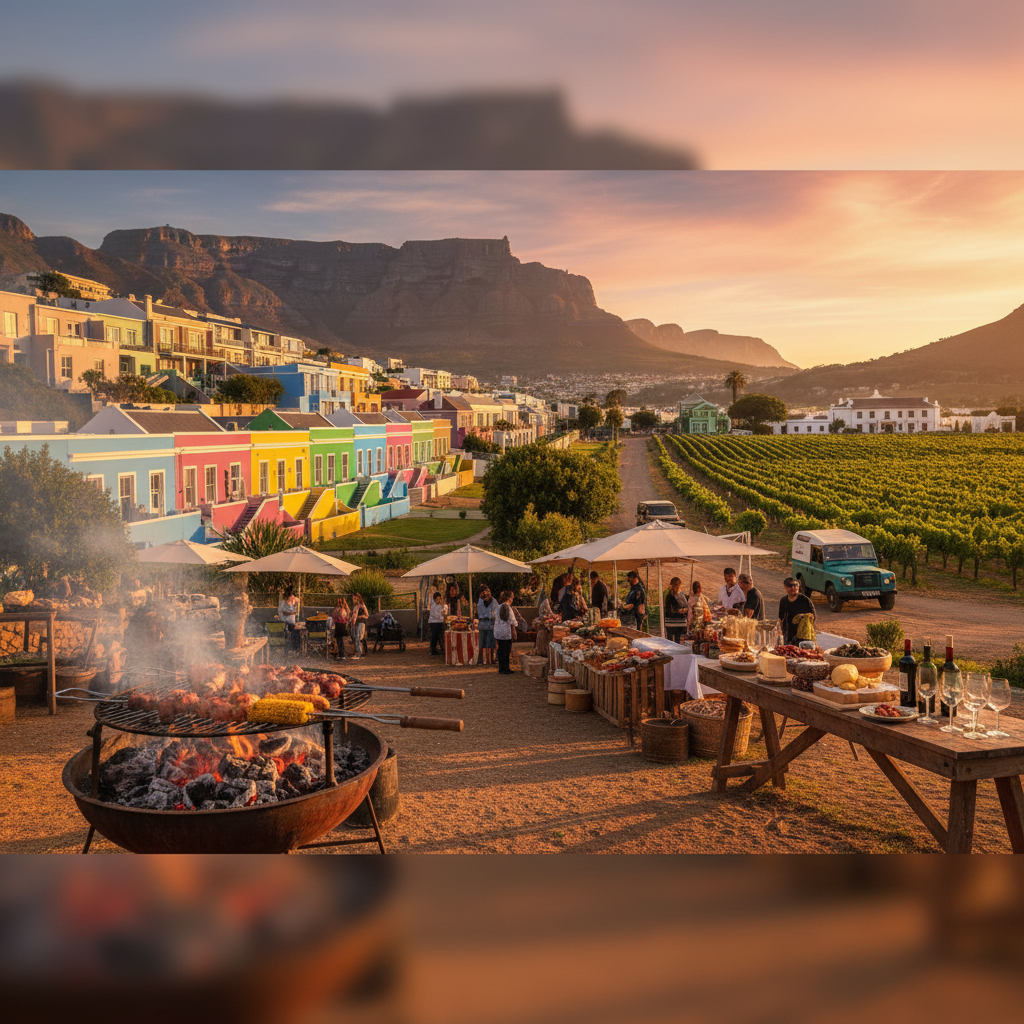
Cape Town Food & Wine: A 4-Day Culinary Journey for Gourmands
Savor Cape Town's vibrant food scene on a 4-day culinary adventure. Discover braai culture, Cape Malay flavors, and world-class Winelands. Your taste buds will thank you!
- Duration: 4 Days
- Estimated Budget: $1,200–$2,500
- Best Time to Visit: November-February (summer) for warm weather, or March-May (autumn) for pleasant temperatures and harvest season in the Winelands.
- Destination: Cape Town, South Africa
Cape Town isn't just a city with a view; it's a gastronomic playground where every meal tells a story, from the smoky traditions of a braai to the aromatic spices of Bo-Kaap. For food and wine lovers, this city offers an unparalleled, and surprisingly affordable, journey through diverse culinary landscapes that will leave you craving more.
The moment you step into the Old Biscuit Mill in Woodstock on a Saturday morning, a symphony of aromas greets you: Ethiopian injera mingling with the sweet spice of Cape Malay rotis, the rich scent of artisan cheeses, and the crisp notes of local wines. This isn't just a market; it's a vibrant, bustling microcosm of South Africa's diverse culinary landscape, a place where local producers and passionate foodies converge. You'll navigate through stalls overflowing with fresh produce, discover unique handcrafted goods, and taste your way through an array of international and indigenous dishes, all set against the backdrop of a beautifully restored industrial complex. It's an essential first stop for anyone looking to dive deep into the city's food culture.
Is it possible to truly understand the soul of a South African braai without experiencing it firsthand? Here's the reality: while many places offer grilled meat, a braai is a cultural institution, a communal gathering centered around fire, conversation, and shared joy, far beyond a simple barbecue. It's about the specific cuts of meat, the slow cooking over wood coals, the accompanying chakalaka and pap, and the convivial atmosphere that binds friends and family. Leif will guide you to establishments that capture this authentic spirit, ensuring you don't just eat a meal, but participate in a cherished tradition, understanding the nuances that make it uniquely South African.
Food and wine travelers spend their afternoons exploring the historic streets of De Waterkant, discovering hidden gems and iconic eateries. You'll find yourself sipping rooibos tea at Origin Coffee Roasting, a celebrated spot for its expertly prepared beverages and vibrant atmosphere, before venturing to a nearby deli for a taste of authentic biltong. Later, you might indulge in the delicate flavors of pan-Asian cuisine at Haiku, or savor classic European dishes at Café Paradiso, all while soaking in the charming Cape Dutch architecture. The rhythm of Cape Town for a food enthusiast means a delightful progression of tastes, from casual local snacks to sophisticated dining experiences, all within easy reach.
Welcome to Cape Town: A Taste of Bo-Kaap and Braai Culture
Arrive at Cape Town International Airport (CPT), clear customs, and transfer to your accommodation in the city center. Settle in and get ready to explore!
This allows for a smooth transition into your Cape Town adventure without feeling rushed. You'll have time to freshen up before diving into the city's culinary delights.
Head to the vibrant Bo-Kaap neighborhood for a walking tour, admiring the brightly colored houses and soaking in the unique Cape Malay culture.
The Bo-Kaap offers a feast for the eyes and a deep dive into a distinct culture that has shaped Cape Town's culinary identity. It's an essential introduction to the city's heritage.
Experience authentic Cape Malay cuisine at Biesmiellah Restaurant, a local institution known for its traditional dishes.
This is where you'll taste the true flavors of Cape Malay cooking – milder, sweeter curries with hints of apricot and cinnamon that are unlike anything else. It's a culinary journey into history.
Stroll through the charming De Waterkant neighborhood, known for its Cape Dutch architecture and boutique shops.
De Waterkant provides a beautiful contrast to the Bo-Kaap, showcasing another facet of Cape Town's architectural beauty and offering a relaxed atmosphere for an afternoon walk.
Indulge in a traditional South African braai experience at The Hussar Grill in Rondebosch.
This is your introduction to braai culture, which is more than just a barbecue; it's a social ritual. The Hussar Grill offers a refined take on this beloved tradition, with perfectly grilled meats.
Leif's Tip: Embrace the local pace today. Don't rush your meals, especially at Biesmiellah, where the food is prepared with love and tradition. Allow yourself to get lost in the colorful streets of Bo-Kaap and the historic charm of De Waterkant – that's where the real magic happens.
Between navigating the vibrant, sometimes overwhelming, array of food stalls at the Neighbourgoods Market, deciphering the subtle differences in a Cape Malay curry, and choosing the perfect wine estate in the sprawling Winelands, planning a food and wine trip to Cape Town can feel like a delicious but daunting task. You might wonder if you're truly experiencing the authentic 'braai culture' or just eating grilled meat, or if that charming little restaurant in Bo-Kaap is a tourist trap or a genuine local gem. The sheer volume of choices, coupled with the desire to avoid generic experiences and truly immerse yourself in the local culinary scene, is where most travelers get stuck. This isn't just about finding good food; it's about understanding the stories, the traditions, and the people behind each dish, and that's a level of insight a generic search engine can't provide.
Say you're standing in the bustling heart of Gugulethu, the smoky aroma of a traditional braai filling the air, and you're not sure how to navigate Mzoli's — a legendary spot that's more an experience than a restaurant. Leif has already anticipated this. Your itinerary will guide you step-by-step: how to choose your meat from the butchery, what sides to order, where to find a spot to sit, and even the local etiquette for bringing your own drinks. You'll know exactly what to expect, transforming what could be a confusing situation into an exhilarating dive into local culture. Or perhaps you're in Franschhoek, overwhelmed by the dozens of world-class wineries; Leif will have curated a selection perfectly tailored to your taste, ensuring you visit estates that offer both exceptional wine and a unique, memorable experience, far beyond the typical tourist trail.
You'll arrive in Cape Town with a culinary roadmap that feels like it was crafted by a local friend, not a generic algorithm. Instead of spending precious hours researching, you'll be savoring a perfectly spiced Cape Malay curry in a vibrant Bo-Kaap eatery, or clinking glasses of award-winning Sauvignon Blanc amidst the stunning vineyards of Stellenbosch. The difference is feeling completely at ease, knowing every meal, every market visit, and every wine tasting has been thoughtfully chosen for its authenticity and excellence. Arriving in South Africa with every gastronomic detail already handled means you can simply relax, indulge your senses, and truly taste the heart and soul of this incredible city.
Best Time to Visit Cape Town, South Africa
Cape Town's summer (November to February) offers the best weather for outdoor dining and Winelands visits, though it's also peak tourist season.
Autumn (March to May) and Spring (September to October) provide pleasant temperatures, fewer crowds, and still excellent conditions for food and wine experiences.
Avoid mid-winter (June to August) if you prefer sunny days, as it can be rainy and cooler, impacting outdoor market and braai experiences.
For the Neighbourgoods Market, aim for a clear Saturday morning, as it's an open-air venue and best enjoyed without rain.
Getting Around Cape Town, South Africa
While central Cape Town is walkable, consider ride-sharing apps like Uber or Bolt for convenience, especially when traveling to restaurants or between neighborhoods.
For your Winelands day trip, hiring a private driver or joining a small group tour is highly recommended so everyone can enjoy the wine tastings responsibly.
Public transport is limited for tourists; MyCiTi buses cover some routes but are not ideal for extensive exploration or late-night dining.
If you plan to visit Mzoli's in Gugulethu, it's best to go with a local friend or arrange a reputable taxi service for safety and ease of navigation.
What to Pack
- Comfortable walking shoes for exploring markets and city streets.
- Layers of clothing, as Cape Town weather can change quickly from sunny to breezy.
- A light jacket or sweater for cooler evenings, even in summer.
- Sunscreen, a hat, and sunglasses for protection, especially during Winelands tours.
- A reusable shopping bag for market finds at Neighbourgoods.
- An adapter for South African Type M power outlets.
- A camera to capture the vibrant food and scenery.
- An empty stomach and an adventurous palate!
Money-Saving Tips
- Take advantage of the favorable exchange rate; USD/EUR travelers will find Cape Town incredibly affordable for dining out.
- Explore the Neighbourgoods Market for delicious and budget-friendly meals that offer a taste of local and international flavors.
- Many restaurants offer excellent lunch specials that are often more affordable than dinner, allowing you to experience top-tier cuisine for less.
- Look for local craft beer and wine at supermarkets rather than solely relying on restaurant markups, especially if you're staying in self-catering accommodation.
- Consider splitting larger dishes or ordering a variety of appetizers to share, which is a great way to sample more without overspending.
Local Insights
- A 'braai' is more than just a barbecue; it's a social event and a cultural institution in South Africa. It's about gathering with friends and family, often for hours, with the food being just one component.
- When visiting Mzoli's, embrace the lively, informal atmosphere. It's an authentic township experience, so be prepared for crowds, loud music, and a very casual setting. Don't forget your own drinks!
- Cape Malay cuisine is distinctly different from Indian curry; expect milder, sweeter, and more aromatic flavors with influences from Malaysian and Indonesian spices.
- Biltong is the quintessential South African snack. Don't confuse it with jerky; it's typically thicker, cured differently, and comes in various cuts and spices. Try a few different kinds!
- Tipping is customary in South Africa, usually around 10-15% for good service in restaurants. For car guards (who watch your car in parking lots), a small amount (R5-R10) is appreciated.
Frequently Asked Questions
What's the main difference between a South African braai and a typical barbecue?
A braai is more than just cooking meat over coals; it's a deeply ingrained social ritual in South Africa. It's about the communal gathering, the specific cuts of meat (often boerewors, lamb chops, or steak), the use of wood or charcoal (never gas), and the relaxed, extended social event surrounding the fire. It's a cultural institution, whereas a barbecue in many other countries is primarily a cooking method.
What should I expect from Cape Malay cuisine in Bo-Kaap?
Cape Malay cuisine is a unique blend of Indonesian, Malaysian, and East African flavors, brought to Cape Town by slaves and political exiles. Expect aromatic, often milder curries than Indian varieties, with a focus on sweet and sour notes, often incorporating fruits like apricots, and spices like cinnamon and cardamom. Don't miss dishes like bobotie, koeksisters (syrup-soaked doughnuts), and boeber (a sweet milk pudding).
Is it better to visit Stellenbosch or Franschhoek for a Winelands day trip?
Both are excellent, but Franschhoek is often considered the 'food capital' of South Africa, boasting several world-renowned restaurants and a more boutique, French-inspired feel. Stellenbosch is larger, with more universities and a wider variety of wine estates. If your primary focus is exceptional dining experiences alongside wine tasting, Franschhoek might be your top choice, but both offer stunning scenery and superb wines.
What local snacks or drinks should I definitely try?
Beyond the braai, you must try biltong, a cured, dried meat snack similar to jerky but with a distinct flavor profile (often spiced with coriander). Also, sample rooibos tea, a naturally caffeine-free herbal tea indigenous to South Africa, known for its earthy, slightly sweet taste. You'll find both readily available at markets and delis across the city.
What's the best way to experience Neighbourgoods Market?
Go early on a Saturday morning to avoid the biggest crowds, and arrive hungry! Wander through all the stalls before making your choices. It's best to try a variety of smaller dishes from different vendors rather than committing to one big meal. Bring cash for some smaller vendors, though most accept cards. Embrace the lively atmosphere and be prepared to stand while you eat.
Are there vegetarian or vegan options readily available in Cape Town's food scene?
Absolutely! Cape Town is quite progressive when it comes to dietary preferences. While traditional braai culture is meat-heavy, many restaurants, especially in areas like the V&A Waterfront, Woodstock, and the CBD, offer excellent vegetarian and vegan menus. The Neighbourgoods Market, in particular, has a fantastic array of plant-based options from various cuisines.
How can I make sure I'm getting an authentic Cape Malay experience in Bo-Kaap?
To ensure authenticity, seek out smaller, family-run establishments within the Bo-Kaap neighborhood itself. Look for places that are cash-only and don't serve alcohol, as this is often a sign of a true local experience. Engaging with the locals and asking for recommendations can also lead you to hidden gems. Biesmiellah Restaurant on Wale Street is a renowned, authentic choice.