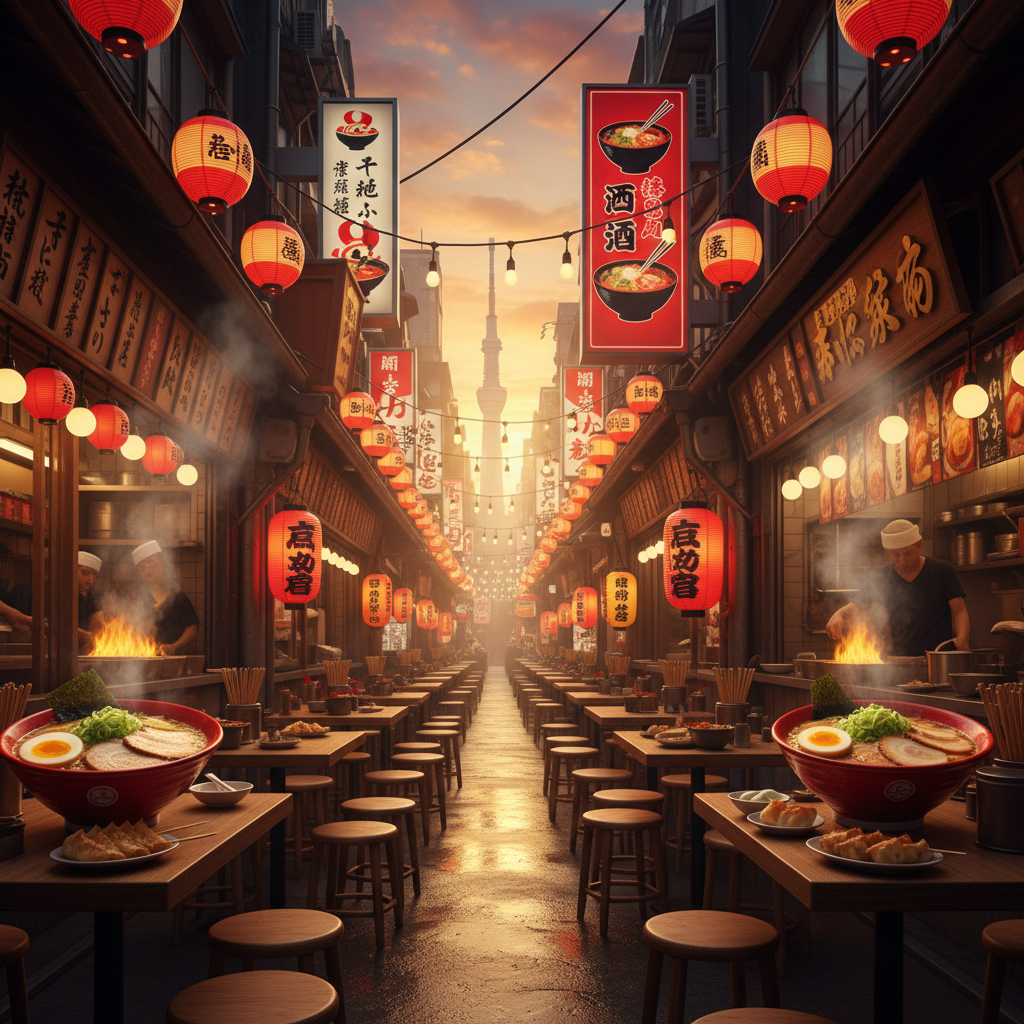
Tokyo Food & Ramen Culture: A 4-Day Culinary Deep Dive
Uncover Tokyo's unparalleled food scene over 4 days, from Michelin-starred ramen to hidden izakayas and depachika delights. This guide is for serious food travelers.
- Duration: 4 Days
- Estimated Budget: $120–$240
- Best Time to Visit: March-May and October-November for pleasant weather and seasonal ingredients.
- Destination: Tokyo, Japan
Tokyo boasts more Michelin stars than any other city on earth, a testament to its relentless pursuit of culinary perfection. This guide cuts straight to the chase, routing you through the city's best ramen shops, sushi counters, bustling izakayas, and incredible depachika basement food halls, leaving the typical tourist trail behind.
Stepping into the vibrant, narrow alleys of Golden Gai in Shinjuku, you're immediately enveloped in a world of tiny, themed bars, each no bigger than a closet, where a handful of regulars and adventurous newcomers squeeze in for intimate conversations over sake and shochu. This isn't just a drinking district; it's a social labyrinth, a testament to Tokyo's ability to create intensely personal experiences amidst its vast urban sprawl. It’s here, tucked away from the neon glare of the main thoroughfares, that you truly feel the pulse of local life, discovering hidden culinary gems and forging unexpected connections, proving that Tokyo's magic often lies in its most unassuming corners.
How do you navigate the sheer volume of incredible dining options without feeling overwhelmed or missing out on the truly exceptional? Tokyo's culinary scene is famously deep, with countless establishments ranging from humble street stalls to multi-starred temples of gastronomy. The challenge isn't finding good food, but rather discerning the truly authentic, the hidden gems, and the places that align with your specific tastes and budget, especially when many of the best spots are tucked away on upper floors of unassuming buildings or in basements. Knowing how to prioritize and where to focus your gastronomic energy is key to unlocking the city's edible treasures without succumbing to decision fatigue.
Evenings in Tokyo for the food-focused traveler often involve a delightful progression from a steaming bowl of ramen in a bustling Shibuya lane to a meticulously crafted sushi omakase in a quiet Ginza counter, followed by late-night yakitori skewers under the train tracks in Yurakucho. You'll find yourself not just eating, but engaging in a sensory journey, observing the precise movements of a sushi chef, savoring the rich broth of a ramen master, and soaking in the convivial atmosphere of an izakaya. It’s a continuous exploration, moving from one distinct culinary experience to the next, each meal telling a part of Tokyo's rich food story.
Fish, Tsukemen, and Ginza's Culinary Underground
Witness the iconic tuna auction at Toyosu Market, a bustling spectacle of commerce and tradition.
This is a truly unique cultural experience, showcasing the heart of Tokyo's seafood industry. It's an early start, but absolutely worth it for the energy and scale.
Explore the vibrant Tsukiji Outer Market, a labyrinth of stalls offering fresh seafood, street food, and kitchenware.
After the auction, Tsukiji offers a more hands-on culinary adventure, with countless opportunities to taste fresh ingredients. It's the perfect place to grab a traditional Japanese breakfast.
Dive into the ramen scene at Tokyo Station's Ramen Street, featuring a curated selection of Tokyo's best ramen shops.
This underground haven offers a convenient way to sample different styles of ramen from renowned establishments. It's a perfect introduction to Tokyo's diverse ramen culture.
Wander through the upscale Ginza district, famous for its luxury boutiques and hidden culinary treasures.
Beyond the designer stores, Ginza is a prime location for experiencing Tokyo's refined food culture. It's a great place for people-watching and soaking in a different side of the city.
Descend into the basement food halls (depachika) of Isetan or Mitsukoshi department stores in Ginza.
These culinary playgrounds are an absolute must-see, offering an astonishing array of gourmet foods, bento boxes, and sweets. It's a feast for the senses and a great place to pick up unique souvenirs.
Leif's Tip: Embrace the early start on your first day! Getting to Toyosu Market for the tuna auction is an unforgettable experience and sets the tone for a deep dive into Tokyo's food scene. Remember to wear comfortable shoes, as you'll be doing a lot of walking and standing.
Tokyo has over a hundred distinct neighborhoods, and knowing which ones offer the best culinary experiences for your specific tastes is the difference between a generic tourist meal and an unforgettable gastronomic adventure. It's not just about finding a restaurant; it's about understanding the rhythm of each district – where to find the bustling yakitori alleys, the serene sushi counters, or the hidden cafes that only locals frequent. The sheer volume of choices, coupled with language barriers and the often-unassuming exteriors of world-class eateries, can make planning feel like an impossible task. Many travelers end up sticking to well-trodden paths, missing out on the truly authentic flavors that define Tokyo's food scene. This is precisely where Leif steps in, cutting through the noise to deliver a curated, deeply personalized itinerary.,Say you're standing in the vibrant streets of Kagurazaka, known for its elegant French-Japanese bistros, but you're not sure which one offers the perfect blend of ambiance and innovative cuisine without breaking the bank. Leif would have already anticipated this, guiding you to a specific, highly-rated spot like 'La Kagu' for a delightful lunch, complete with an insider tip on their seasonal specials or a nearby traditional sweet shop for dessert. Or perhaps you're craving a specific type of ramen, like the rich tonkotsu broth, but want to avoid the long lines at the most famous spots. Leif would direct you to a lesser-known but equally exceptional establishment in a different part of the city, ensuring a delicious and stress-free experience, complete with directions and ordering advice.,You'll arrive in Tokyo knowing exactly where to find that perfect bowl of tsukemen, that exquisite piece of sushi, or that lively izakaya experience, all tailored to your preferences. Instead of wasting precious time researching or wandering aimlessly, you'll be confidently navigating the city's culinary landscape, savoring every bite with the knowledge that you're experiencing the best of what Tokyo has to offer. The difference is feeling like a seasoned local, effortlessly moving from one delicious discovery to the next, with every meal a highlight. This preparation means your journey through Tokyo's food culture will be a seamless, mouth-watering adventure, leaving you with incredible memories and a profound appreciation for its gastronomic artistry. [Your First Trip to Asia Will Define Every Trip After It. Here's Where to Start.](https://askleif.com/blog/your-first-trip-to-asia-will-define-every-trip-after-it)
Best Time to Visit Tokyo, Japan
Spring (March-May) for pleasant weather and cherry blossoms, though it's peak tourist season.
Autumn (September-November) offers comfortable temperatures and beautiful fall foliage, ideal for walking between food spots.
Avoid Golden Week (late April-early May) and Obon (mid-August) as many locals travel, and some businesses may close or be extremely busy.
Winter (December-February) is great for ramen and hot pot, with fewer crowds and crisp, clear days.
Getting Around Tokyo, Japan
Purchase a Suica or Pasmo IC card immediately upon arrival for seamless travel on all trains and subways; it's rechargeable and works for vending machines too.
Tokyo's public transport is incredibly efficient and punctual; Google Maps is your best friend for navigating routes and timings.
Most food spots are within walking distance of a subway or train station, so comfortable shoes are a must.
Taxis are expensive and generally unnecessary unless you're out late when trains stop running around midnight.
What to Pack
- Comfortable walking shoes (you'll be doing a lot of exploring on foot).
- A portable power bank for your phone (Google Maps and food research will drain your battery).
- An empty stomach and an adventurous palate!
- A small notebook and pen to jot down restaurant names or new discoveries.
- A reusable shopping bag for depachika purchases.
- Layers of clothing, as temperatures can vary between indoor and outdoor, and throughout the day.
- A good quality camera to capture all the deliciousness.
Money-Saving Tips
- Embrace lunch sets (teishoku) at high-end restaurants; you can often experience Michelin-starred cuisine for a fraction of the dinner price.
- Seek out 'ramen ticket machines' outside ramen shops; ordering this way is common and often slightly cheaper than table service.
- Utilize convenience stores (konbini) like 7-Eleven, FamilyMart, and Lawson for affordable, high-quality snacks, drinks, and even full meals.
- Look for 'happy hour' specials at izakayas, often advertised with signs outside, for discounted drinks and small plates.
- Tap water is safe to drink, so carry a reusable bottle to avoid buying bottled water constantly.
Local Insights
- Slurping your noodles loudly is a sign of enjoyment and appreciation for the chef in Japan.
- Always wait to be seated in restaurants, even if it looks empty, and never seat yourself.
- Tipping is not customary in Japan and can even be considered rude; excellent service is expected.
- Carry a small amount of cash, as many smaller ramen shops and izakayas still prefer or only accept cash.
- When dining at a counter, especially for sushi or ramen, engage with the chef if they seem open to it – it can enhance your experience.
Frequently Asked Questions
Is it possible to eat well in Tokyo on a budget?
Absolutely! Tokyo offers incredible value for money, especially for food. Ramen, udon, soba, and tempura sets can be enjoyed for under 1,500 JPY. Even high-quality sushi can be found at reasonable prices during lunch at many establishments. Convenience stores (konbini) also offer surprisingly delicious and fresh meals. Your daily budget of 3,000-6,000 JPY for food is very achievable for a fantastic culinary experience.
Do I need to make reservations for restaurants?
For popular or high-end restaurants, especially sushi omakase or Michelin-starred establishments, reservations are essential and often need to be made weeks or even months in advance. Many smaller ramen shops and izakayas operate on a first-come, first-served basis, but be prepared for queues. For a truly seamless experience, reserving ahead for key meals is highly recommended.
What's the etiquette for eating ramen or sushi?
For ramen, it's perfectly fine, and even encouraged, to slurp your noodles – it's a sign of enjoyment! Finish your soup if you can. For sushi, eat nigiri with your hands (not chopsticks) if possible, and dip the fish side into soy sauce, not the rice. Don't mix wasabi into your soy sauce unless specifically offered. Enjoy each piece quickly after it's served for optimal taste.
How do I navigate menus if I don't speak Japanese?
Many restaurants, especially in tourist-friendly areas, will have English menus or picture menus. For ramen shops, you often order from a vending machine with pictures. Google Translate's camera function is incredibly helpful for deciphering menus. Don't be afraid to point at what others are eating or use simple gestures. Most Japanese restaurant staff are very accommodating.
What's a 'depachika' and how do I best experience it?
A 'depachika' is the basement food hall of a department store, a true foodie paradise. Think Isetan or Mitsukoshi in Ginza. They offer an incredible array of gourmet foods, from exquisite bentos and pastries to fresh produce and international delicacies. Go in the late afternoon for samples, or just before closing for discounted items. It's a fantastic place to pick up gifts or a high-quality picnic.
Is it rude to take photos of food or in restaurants?
Generally, taking photos of your food is widely accepted. However, be discreet and avoid using flash, especially in smaller, more intimate settings. For chefs or other diners, always ask permission before taking their photo. In some high-end sushi restaurants, photography might be discouraged or restricted to your own dishes only. Always be respectful of the atmosphere and other patrons.
What are some lesser-known food experiences I should try?
Beyond ramen and sushi, delve into the world of 'yoshoku' (Western-influenced Japanese cuisine like omurice or tonkatsu), explore the local 'shotengai' (shopping streets) for street food snacks, or seek out 'kissaten' (traditional Japanese coffee houses) for a retro experience. Don't miss the unique curry scene in Shimokitazawa or the soba noodles in Hamacho for a taste of everyday Tokyo.