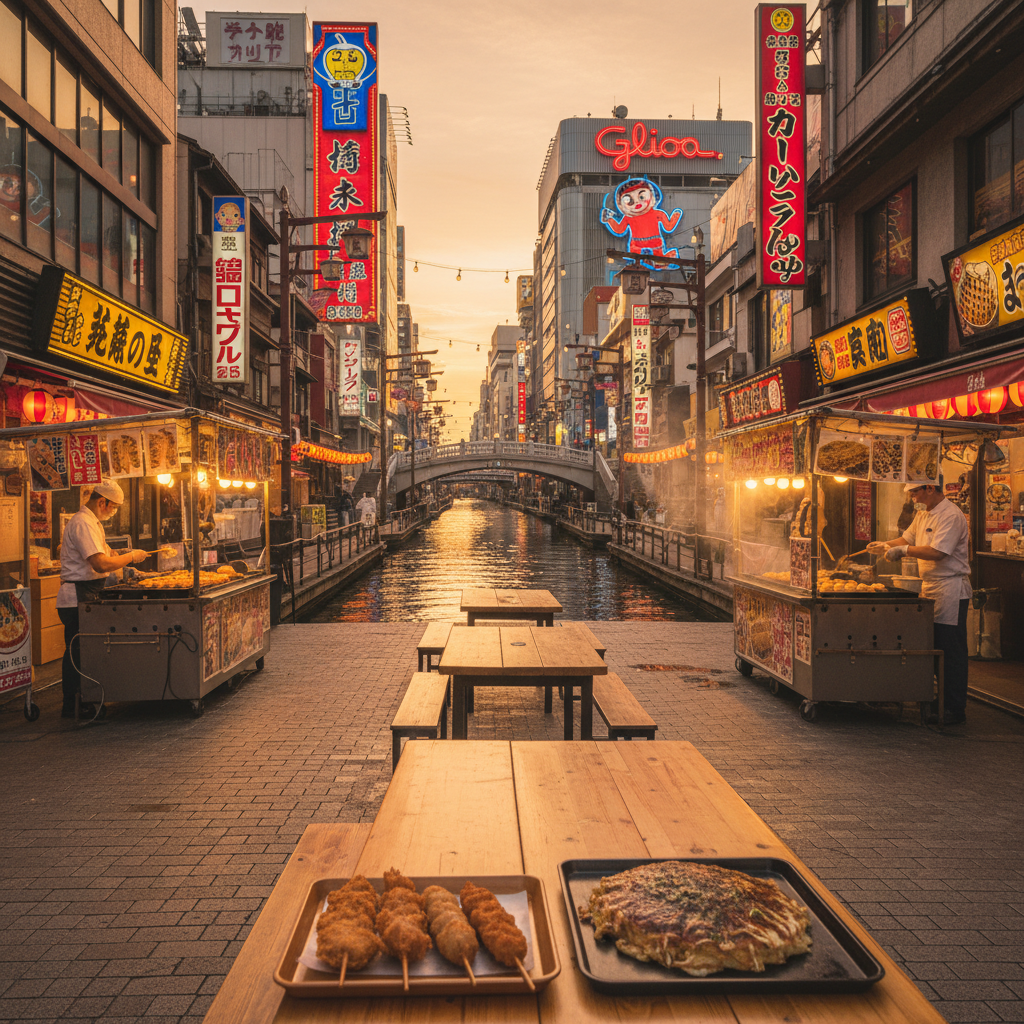
Osaka Foodie Adventure: 4 Days of Takoyaki, Okonomiyaki & Dotonbori Delights
Dive into Osaka's legendary food scene with this 4-day culinary guide. Savor takoyaki, okonomiyaki, kushikatsu, and explore the iconic Dotonbori food circuit.
- Duration: 4 days
- Estimated Budget: $800–$1,500
- Best Time to Visit: March-May and October-November for pleasant weather and vibrant festivals.
- Destination: Osaka, Japan
Can you truly taste a city? In Osaka, the answer is a resounding 'yes,' especially when your mission is to devour its iconic street food. This 4-day itinerary plunges you fork-first into the heart of Japan's kitchen, where every corner offers a new, unforgettable bite, from sizzling takoyaki to savory okonomiyaki.
Shinsekai, with its retro charm and the towering Tsutenkaku Tower, offers a delightful step back in time, perfectly embodying Osaka's playful spirit. This district is a fantastic starting point for any food adventure, where the air hums with the promise of delicious discoveries around every corner. You'll find yourself drawn into lively alleyways, past glowing lanterns and the inviting aromas of street-side stalls, each one a testament to the city's deep love affair with food. It’s a place where the past and present mingle, creating an atmosphere that’s both nostalgic and vibrantly modern, setting the stage for an unforgettable culinary journey.
Is it possible to truly experience Osaka's legendary food scene without getting overwhelmed by choice? Absolutely. The reality is that while the options are vast, the city's culinary landscape is remarkably organized around specific specialties and districts. Knowing where to find the best examples of each dish, and understanding the local etiquette for ordering and enjoying them, transforms a potentially daunting task into a delightful exploration. This guide cuts through the noise, directing you to the hidden gems and local favorites, ensuring every bite is authentic and every meal is a highlight, rather than a gamble.
Food pilgrims spend their evenings weaving through the bustling covered arcades, sampling a dizzying array of local delicacies from passionate vendors. You'll find yourself lingering at small, standing-room-only counters, sharing laughs with locals over sizzling plates, and discovering new flavors that challenge your palate in the best possible way. The rhythm of this city for a food-focused traveler means a continuous cycle of eating, exploring, and anticipating the next culinary delight, from savory pancakes to deep-fried skewers, all while soaking in the vibrant energy of Japan's culinary capital.
Welcome to Osaka: Dotonbori's Delicious Depths
After checking into your hotel, take a leisurely stroll through the vibrant Dotonbori area, soaking in the energetic atmosphere and iconic neon signs.
This initial walk is crucial for getting your bearings and feeling the pulse of Osaka's most famous entertainment district. It's sensory overload in the best way, setting the stage for your culinary adventure.
Dive straight into Osaka's street food scene with your first taste of takoyaki at Creo-Ru Dotonbori, a popular spot known for its perfectly spherical octopus balls.
Takoyaki is the quintessential Osaka street food, and Creo-Ru offers a fantastic introduction with a variety of toppings. It's a delicious and fun way to kick off your food journey.
Experience the thrill of a Dotonbori River Cruise, offering unique perspectives of the illuminated billboards and bustling crowds from the water.
Seeing Dotonbori from the river provides a different vantage point of the iconic Glico Man sign and other landmarks. It's a relaxing break from walking and offers great photo opportunities.
Embark on a culinary exploration of Hozenji Yokocho, a charming, narrow alleyway reminiscent of old Osaka, filled with traditional restaurants and bars.
This atmospheric alley offers a stark contrast to the neon-lit Dotonbori, providing a glimpse into Osaka's historical charm. It's perfect for a pre-dinner drink or a light snack in a serene setting.
Savor your first authentic okonomiyaki at Mizuno, a Michelin Bib Gourmand restaurant famous for its fluffy, savory pancakes cooked right in front of you.
Mizuno is a Dotonbori institution, and their okonomiyaki is legendary, offering a truly authentic and delicious experience. It's a must-try for any food lover in Osaka.
Leif's Tip: Upon arrival, purchase an ICOCA card at the airport or any major station. This rechargeable smart card makes navigating Osaka's public transportation a breeze and can also be used for purchases at many convenience stores and vending machines, saving you time and hassle.
Osaka has countless tiny eateries, each specializing in just one or two dishes, and knowing which ones are truly exceptional versus merely good can feel like finding a needle in a haystack. The sheer volume of choice, coupled with potential language barriers when trying to decipher menus or ask about ingredients, can easily lead to decision fatigue or, worse, a missed culinary gem. Many first-time visitors stick to the most obvious, tourist-heavy spots, inadvertently bypassing the authentic, hole-in-the-wall establishments where the real magic happens. This is precisely where the value of a meticulously crafted itinerary shines, cutting through the overwhelming options to deliver you straight to the most delicious, authentic, and memorable food experiences Osaka has to offer, ensuring every meal is a discovery.
When you're standing in the bustling Kuromon Ichiba Market, wondering which vendor offers the freshest uni or the most perfectly grilled scallop, Leif has already highlighted the exact stall you need to visit. Say you want to try a specific regional sake that pairs perfectly with your kushikatsu, but you're not sure where to find it – Leif's guide will point you to a local izakaya renowned for its selection. You land in Osaka, pull up Leif, and within seconds you know not just where to eat, but the specific dish to order, the best time to go to avoid crowds, and even a little bit of the history behind the establishment, transforming a simple meal into a rich cultural immersion.
You'll arrive in Osaka knowing exactly which hidden alleyway leads to the legendary takoyaki stand, where the okonomiyaki sizzles with generations of tradition, and which unassuming bar serves the crispiest kushikatsu. Instead of wandering aimlessly, hoping to stumble upon something good, you'll navigate the city's culinary landscape with confidence, savoring every bite with the knowledge that you're experiencing the very best. The difference is the pure joy of discovery without the anxiety of planning, allowing you to fully immerse yourself in the flavors and vibrant atmosphere of Japan's kitchen. Arriving in Osaka with your personalized food map already done means your only task is to eat, explore, and enjoy.
Best Time to Visit Osaka, Japan
Spring (March to May) offers pleasant weather for walking between food stalls and cherry blossoms as a bonus.
Autumn (September to November) provides comfortable temperatures and beautiful fall foliage, perfect for culinary exploration.
Avoid summer (July and August) if you're not a fan of heat and humidity, which can make street food hopping less enjoyable.
Winter (December to February) can be chilly, but it's a great time to enjoy hot street food like takoyaki and oden.
Getting Around Osaka, Japan
Osaka's subway system is incredibly efficient and will be your best friend for navigating between food districts; consider a daily pass.
The JR Loop Line connects many key areas, including Shin-Osaka Station and Universal City, and is covered by the Japan Rail Pass.
Walking is often the best way to explore specific food neighborhoods like Dotonbori and Shinsekai, allowing you to stumble upon hidden gems.
Taxis are readily available but can be expensive; save them for late-night returns or when carrying heavy shopping bags.
Consider an ICOCA or Pasmo card for seamless tap-and-go travel on all trains and buses; they're rechargeable and convenient.
What to Pack
- Comfortable walking shoes are an absolute must; you'll be on your feet exploring food stalls for hours.
- A portable power bank to keep your phone charged for maps, photos, and translating menus.
- A small, foldable bag for any food souvenirs or treats you pick up along the way.
- Light layers, as indoor restaurants can be air-conditioned while street food areas are open-air.
- An umbrella or light rain jacket, especially during spring and autumn, as sudden showers can occur.
- Hand sanitizer and wet wipes for quick clean-ups after enjoying messy (but delicious!) street food.
- A Japanese phrasebook or translation app to help with ordering and asking questions about ingredients.
- Loose-fitting clothing for maximum comfort after indulging in all the amazing food.
Money-Saving Tips
- Look for lunch specials (teishoku) at restaurants, which often offer great value compared to dinner prices.
- Embrace street food! Takoyaki, okonomiyaki, and kushikatsu are delicious, filling, and generally very affordable.
- Utilize convenience stores (konbini) like 7-Eleven or FamilyMart for cheap snacks, drinks, and even full meals.
- Consider purchasing a Kansai Thru Pass if you plan on visiting surrounding areas like Kyoto or Nara, as it covers multiple train and bus lines.
- Many smaller, local eateries are cash-only, so always have some yen on hand to avoid ATM fees.
Local Insights
- It's common to stand and eat street food in Osaka, especially around Dotonbori, but avoid eating while walking. Find a spot to stand or sit.
- Don't be afraid to try small, unassuming eateries; often, these are where you'll find the most authentic and delicious local dishes.
- Tipping is not customary in Japan and can even be considered rude; excellent service is expected as standard.
- Many restaurants display plastic food models (sampuru) in their windows, making it easy to choose even if you don't speak Japanese.
- When ordering kushikatsu, remember the cardinal rule: never double-dip your skewer into the communal sauce pot!
Frequently Asked Questions
What's the best way to get around Osaka for a food tour?
Osaka's public transportation, especially its subway system, is incredibly efficient and the best way to navigate between food districts. Consider purchasing an ICOCA card for seamless travel. Many food spots are also within walking distance of major stations.
Are there vegetarian or vegan options available in Osaka's street food scene?
While traditional Osaka street food is heavily meat and seafood-based, there are increasing options for vegetarians and vegans, especially in more modern eateries. Look for vegetable tempura, some types of okonomiyaki (ask for no meat/seafood), and newer plant-based restaurants that cater to dietary needs. Always be clear about your dietary restrictions using a translation app if necessary.
How much should I budget for food per day in Osaka?
For a dedicated food tour, you can enjoy excellent street food and casual restaurant meals for around 4,000-7,000 JPY per person per day. This allows for multiple snacks, a couple of substantial meals, and drinks. Fine dining would, of course, increase this budget significantly.
Is it customary to tip in Osaka?
No, tipping is not customary in Japan and can sometimes even be considered rude or confusing. The listed price is what you pay. Excellent service is simply part of the culture.
What's the difference between Osaka-style and Hiroshima-style okonomiyaki?
Osaka-style okonomiyaki mixes all ingredients (cabbage, batter, meat/seafood) together before grilling, resulting in a fluffy pancake. Hiroshima-style layers its ingredients, often including yakisoba noodles and a fried egg, creating a more structured, multi-layered dish. Both are delicious, but distinctly different experiences.
Can I drink alcohol with street food in Osaka?
Absolutely! It's very common to enjoy a cold beer (nama-biru) or sake with your street food. Many street stalls and small eateries will offer alcoholic beverages. Just be mindful of local drinking customs and avoid public intoxication.
What's the best time of year to visit Osaka for a food trip?
Spring (March-May) and Autumn (September-November) offer pleasant weather, perfect for walking between food stalls and enjoying outdoor dining. Summer can be hot and humid, while winter is cooler but still manageable. The food scene is vibrant year-round, so any season works.