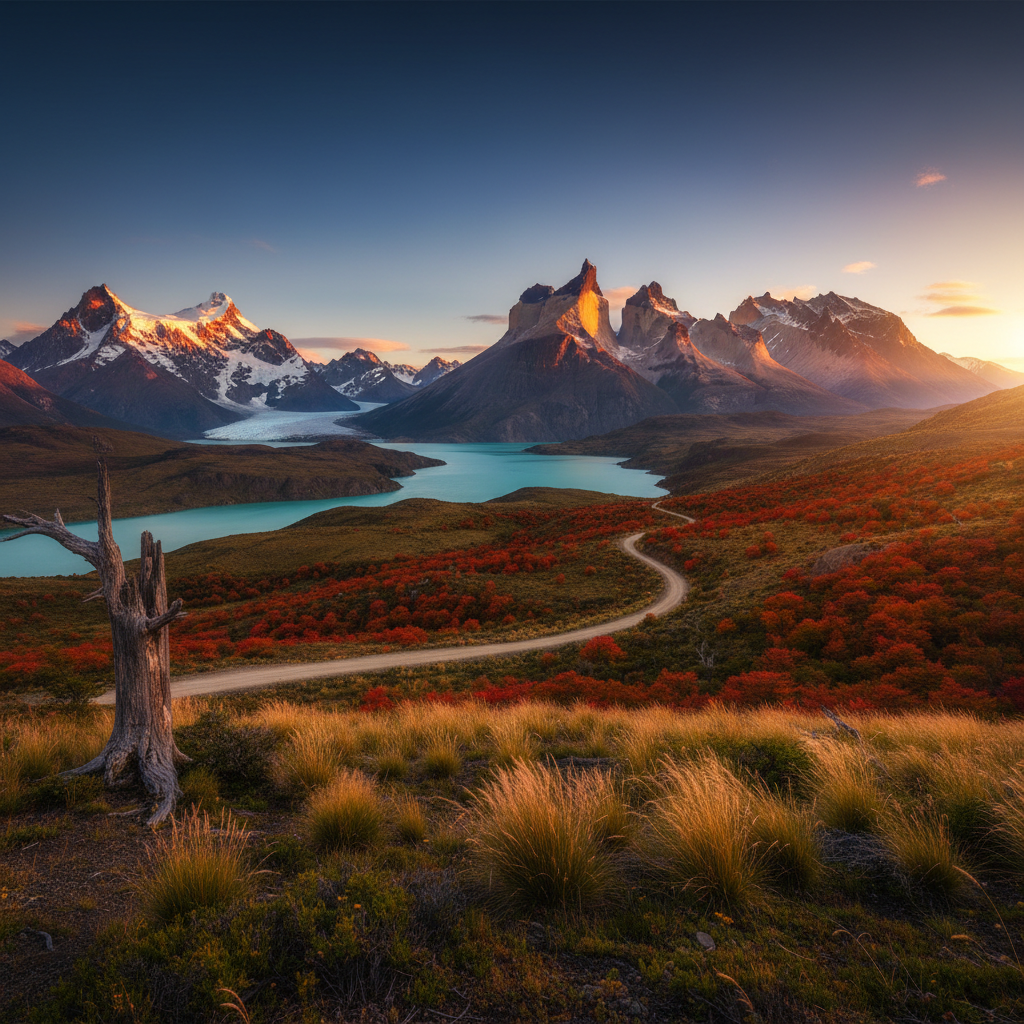
Patagonia 10-Day Road Trip: Torres del Paine, El Calafate & Carretera Austral
Embark on an epic 10-day Patagonia road trip through Chile & Argentina, exploring Torres del Paine, Perito Moreno, Fitz Roy, and the Carretera Austral.
- Duration: 10 Days
- Estimated Budget: $2,000–$9,000
- Best Time to Visit: November-March for hiking and best weather (austral summer). January-February for peak conditions. Avoid April-October.
- Destination: Patagonia, Chile & Argentina
<p><em>Planning a trip to Buenos Aires or Argentina? Read our <a href="/blog/buenos-aires-argentina-complete-travel-guide">complete Buenos Aires travel guide</a> for everything you need to know before you go — neighborhoods, food, tango, football, and the practical details that make the difference.</em></p> Beyond the granite spires of Torres del Paine and the icy expanse of Perito Moreno Glacier, a different adventure awaits. This 10-day road trip isn't just about seeing the iconic sights like Torres del Paine and Perito Moreno; it's about the freedom of the open road, the dramatic landscapes unfolding around every bend, and the thrill of discovering the wild heart of South America. If you crave independence, breathtaking scenery, and a journey that's as much about the drive as the destination, this is your itinerary. 📖 **Read our full destination guide:** The City That Has the Andes for a Skyline and Patagonia for a Backyard
Patagonia isn't just a destination; it's a pilgrimage for road trippers, a place where the wild heart of South America beats strongest. This 10-day adventure offers more than just glimpses of the Carretera Austral's famed fjords and forests; it's about feeling the wind whip across the steppe, hearing the thunder of glaciers, and discovering the raw, untamed beauty that defines this legendary land. Get ready to swap cityscapes for some of the most dramatic mountain and ice landscapes on Earth.
This itinerary is crafted for those who crave the thrill of discovery, and the satisfaction of earning those breathtaking views. You'll navigate gravel roads, cross international borders, and witness the stunning marble caves of Puerto Río Tranquilo from your car window, with opportunities to stretch your legs on world-class trails. It's a journey that promises not just photographs, but profound memories of a landscape that will forever change you.
From the historic charm of Punta Arenas to the trekking mecca of El Chaltén, and with an optional dive into the rugged Carretera Austral, this road trip is designed to immerse you in the diverse wonders of Chilean and Argentine Patagonia. Prepare for an epic drive, where every turn reveals a new vista, every stop offers a fresh perspective, and every moment is an invitation to connect with the wild spirit of Patagonia.
Punta Arenas: Where History and Penguins Meet at the End of the World
Arrive at Punta Arenas (PUQ) and pick up your rental car. Head directly to your hotel to check in and drop off your luggage.
Punta Arenas is your gateway to Chilean Patagonia and the starting point for this incredible road trip. Getting settled early allows you to maximize your exploration time.
Explore the Cementerio Municipal, a surprisingly beautiful and historic cemetery. Wander among the ornate mausoleums of Patagonia's wealthy wool barons.
This isn't just any cemetery; it's a testament to the region's rich history and the fortunes built here. The architecture and stories behind the mausoleums are truly unique.
Visit the Nao Victoria Museum, home to full-size replicas of historic ships like Magellan's Victoria and Darwin's Beagle. Step aboard and imagine life at sea centuries ago.
This museum offers a fascinating glimpse into the age of exploration and the pivotal role Punta Arenas played. The scale of the replicas is impressive and brings history to life.
Drive up to Mirador La Cruz for the best panoramic views of Punta Arenas and the Strait of Magellan. It's the perfect spot for photos.
The sweeping vistas from Mirador La Cruz provide a fantastic orientation to the city and its dramatic coastal setting. On a clear day, you can see Tierra del Fuego across the strait.
Embark on a boat tour to Magdalena Island to witness a colony of over 120,000 Magellanic penguins. This is a seasonal activity, available from November to March.
Walking among thousands of penguins in their natural habitat is an unforgettable Patagonian experience. It's a chance to see these incredible creatures up close and observe their behaviors.
Leif's Tip: Upon arrival, make it a priority to visit a local supermarket to stock up on snacks, water, and any personal items you might need for the road. While towns have stores, having essentials on hand will save you time and hassle, especially on longer driving days. Also, embrace the ever-changing Patagonian weather by always having layers ready!
Navigating the intricate logistics of a multi-country Patagonian road trip, especially when it involves crossing borders between Chile and Argentina, securing appropriate vehicle insurance for both nations, and understanding the varying road conditions from paved highways to the gravel of the Carretera Austral, can quickly become overwhelming. You're not just choosing a route; you're deciphering ferry schedules for lakes like General Carrera, ensuring your rental car has the necessary paperwork for international travel, and pinpointing the best spots to refuel in remote areas where gas stations are few and far between. Leif eliminates this planning headache, meticulously mapping out your journey, handling the details of border crossings, and ensuring you have all the practical information needed for a smooth, stress-free adventure across these dramatic landscapes.
Drive, should a sudden Patagonian windstorm close a section of the Ruta 40, Leif instantly recalibrates, offering an alternative scenic route towards El Chaltén. Should a sudden Patagonian windstorm close a section of the Ruta 40, Leif instantly recalibrates, offering an alternative scenic drive towards El Chaltén, complete with updated accommodation options and a new hiking recommendation for Laguna de los Tres that accounts for the altered conditions. You're never left scrambling for information or wondering what to do next; Leif anticipates the unpredictable nature of this region and provides seamless, intelligent solutions, allowing you to fully immerse yourself in the awe-inspiring vistas rather than worrying about the next turn.
The crisp, clean air, carrying the scent of coihue forests and glacial meltwater, fills your lungs as you gaze upon the granite spires of Torres del Paine, a view earned not by chance, but by thoughtful preparation. This isn't just about seeing the sights; it's about feeling the profound connection to one of the world's last wild frontiers, knowing every turn, every stop, and every experience has been carefully curated for your exploration. You arrive at each vista point, each charming town, each remote lodge, not with questions, but with a sense of excited anticipation, ready to embrace the grandeur of Patagonia because every detail has been expertly handled for you.
Best Time to Visit Patagonia, Chile & Argentina
November to March is the austral summer and the ideal time for hiking, with longer daylight hours and more stable (though still unpredictable) weather.
January and February offer the warmest temperatures, but also the highest crowds and prices. Book everything well in advance!
Shoulder seasons (late October/early November and late March) can offer fewer crowds and slightly lower prices, but be prepared for colder weather and potential trail closures.
Avoid April to October if possible; many facilities close, and the weather can be harsh with strong winds and snow.
Getting Around Patagonia, Chile & Argentina
Renting a high-clearance vehicle is highly recommended, especially for the gravel roads in Torres del Paine and the Carretera Austral extension. A 4x4 isn't strictly necessary but provides more comfort and peace of mind.
Always keep your gas tank full when driving between towns, especially on Ruta 40 and the Carretera Austral, as gas stations can be few and far between.
For the Chile-Argentina border crossing at Cerro Castillo/Cancha Carrera, have all vehicle rental documents, your passport, and immigration forms readily accessible. It can take 1-2 hours.
Driving is on the right side of the road in both Chile and Argentina. Be prepared for strong crosswinds, especially on open stretches of highway.
What to Pack
- Layered clothing, including moisture-wicking base layers, insulating mid-layers (fleece/down), and a waterproof/windproof outer shell.
- Sturdy, waterproof hiking boots with good ankle support are essential for the varied terrain and unpredictable weather.
- A warm hat, gloves, and a neck gaiter are crucial, even in summer, as temperatures can drop quickly, especially at higher elevations.
- Sunscreen (SPF 30+), sunglasses, and a wide-brimmed hat to protect against intense Patagonian sun, even on cloudy days.
- A small, lightweight daypack for hikes, along with a reusable water bottle and snacks.
- A portable power bank for charging electronics, as outlets can be scarce, especially in more remote accommodations or during long drives.
- Binoculars for wildlife viewing – condors, guanacos, and huemul deer are common sightings.
Money-Saving Tips
- Consider staying in hostels like Erratic Rock in Puerto Natales or América del Sur in El Calafate for a more budget-friendly lodging option, especially if traveling solo.
- Pack your own snacks and some non-perishable food items from larger supermarkets (like in Punta Arenas or El Calafate) to reduce meal costs on the road and during hikes.
- Look for 'menú del día' or 'almuerzo ejecutivo' specials at restaurants during lunchtime; these often offer a good value multi-course meal.
- Carry USD cash, as some smaller establishments, especially estancias or remote shops, may offer better rates for cash or not accept cards at all. Always have small denominations for tips and incidentals.
Local Insights
- Patagonia's weather is notoriously unpredictable; locals say you can experience all four seasons in a single day. Always carry extra layers, even if the morning starts sunny.
- The best light for photography is often at sunrise and sunset. Plan your hikes to be at iconic viewpoints like Laguna de los Tres or the Base of the Towers during these golden hours.
- Always greet locals with a friendly 'Hola' or 'Buenos días/tardes.' A little Spanish goes a long way, especially in smaller towns.
- Be mindful of 'siesta' hours, especially in smaller towns in Argentina, where many businesses may close in the afternoon.
- Respect wildlife by keeping a safe distance and never feeding animals. Patagonian condors are magnificent but should be observed from afar.
Frequently Asked Questions
Do I need a 4x4 vehicle for this road trip?
While not strictly mandatory, a high-clearance vehicle (like an SUV) is strongly recommended, especially for the gravel roads within Torres del Paine National Park and the Carretera Austral extension. You'll appreciate the extra clearance and comfort.
How long does the border crossing between Chile and Argentina take?
The Cerro Castillo/Cancha Carrera border crossing, which you'll use, is generally one of the more efficient ones, typically taking 1-2 hours. Always have your passport, vehicle registration, and rental car documents (including permission to cross borders) readily available.
What's the best time of year for this road trip?
The austral summer, from November to March, is ideal for hiking and road tripping, with the longest daylight hours and most facilities open. January and February offer the best weather, though they are also the busiest. Avoid April-October due to colder temperatures, strong winds, and many closures.
Is it safe to drive in Patagonia?
Yes, driving in Patagonia is generally safe, but conditions can be challenging. Roads can be gravel, unpaved, and windy, especially in Torres del Paine and on Ruta 40. Always drive defensively, be aware of wildlife (guanacos, rheas), and carry extra water and a full tank of gas, as services can be sparse between towns.
Can I do the W Trek if I only have 10 days for this road trip?
A full W Trek typically requires 4-5 days, which is difficult to fit into this 10-day road trip that covers multiple regions. If you're keen on experiencing parts of the W, I recommend focusing on day hikes like the Base of the Towers (Day 3) and possibly Valle del Francés (Day 4) as separate excursions from Puerto Natales or within the park, rather than attempting the full multi-day trek.
What kind of clothing should I pack for Patagonia?
Patagonia's weather is famously unpredictable, often experiencing all four seasons in a single day. Layering is key! Pack a windproof and waterproof outer shell, a warm fleece or down jacket, quick-drying hiking pants, sturdy waterproof hiking boots, a hat, gloves, and sunglasses. Even in summer, temperatures can drop significantly.
Should I book accommodations and car rental in advance?
Absolutely! For peak season (November-March), you should book accommodations 6-12 months in advance, especially for popular hotels and refugios within Torres del Paine. Car rentals, particularly those allowing international crossings, also sell out quickly. Early booking ensures you get your preferred options and often better rates.