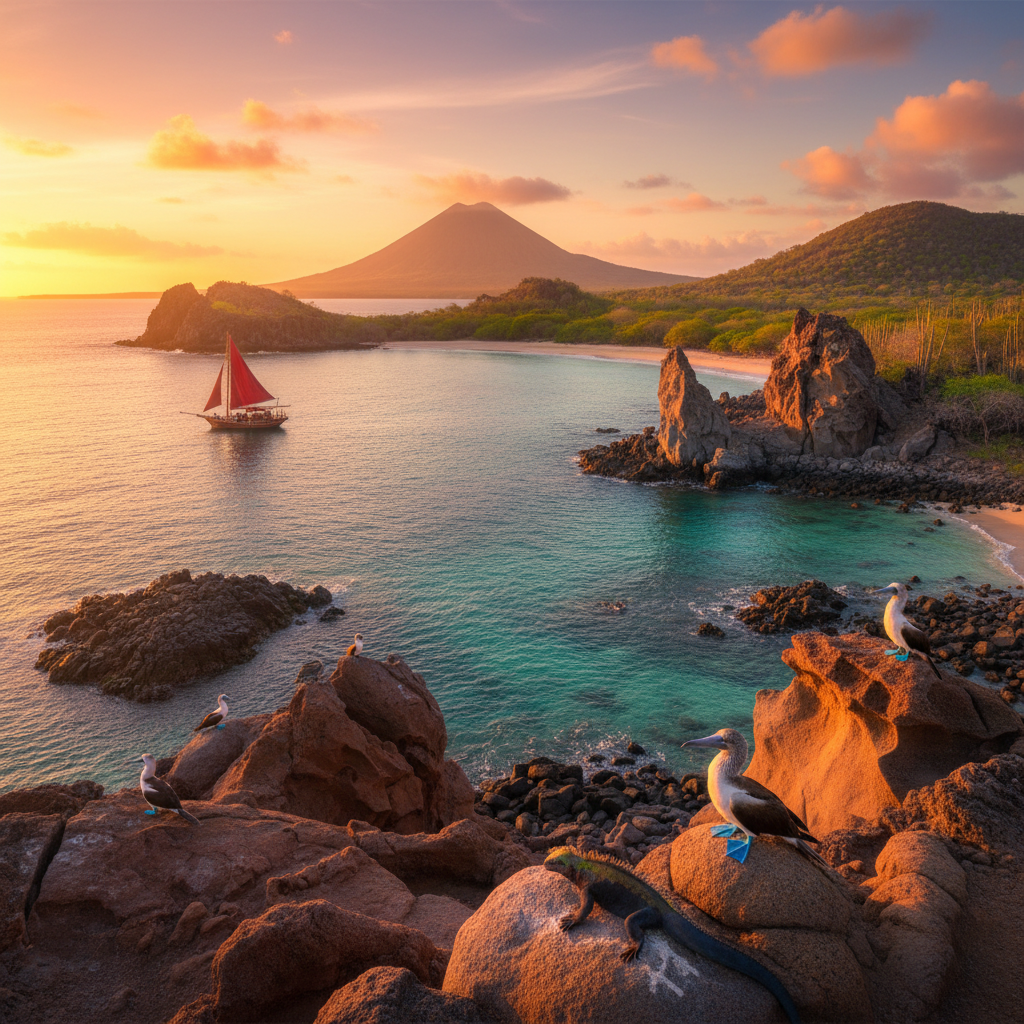
7-Day Galápagos Islands Adventure: Your Ultimate Wildlife Encounter
Dive into a 7-day Galápagos Islands adventure! Discover unique wildlife, pristine landscapes, and unforgettable experiences in this iconic destination.
- Duration: 7 days
- Estimated Budget: $4,000–$8,000
- Best Time to Visit: December-May for warm, wet season with calm seas; June-November for cooler, dry season with more active marine life.
- Destination: Galápagos Islands, Ecuador
The Galápagos Islands are a living laboratory, a place where evolution is on full display and wildlife roams without fear. This is your chance to connect with nature on a profound level, witnessing species found nowhere else on Earth in their untouched habitats. It's an unparalleled journey into the wild heart of our planet. 📖 **Read our full destination guide:** The City That Sits on the Equator, Under a Volcano, at the Edge of the Cloud Forest — and Still Gets Overlooked
On the volcanic shores of the Galápagos Islands, you'll find yourself in every direction an archipelago where evolution is a living, breathing spectacle! This isn't just a destination; it's an immersive journey into a world untouched by time, where unique wildlife roams freely and the natural beauty will leave you breathless. Prepare for an adventure that will redefine your understanding of nature.
On Santa Cruz Island, you'll find yourself instantly captivated by the unique wildlife, watching giant tortoises lumber through volcanic landscapes, and spotting blue-footed boobies performing their comical mating dance. watching giant tortoises lumber through volcanic landscapes, and spotting blue-footed boobies performing their comical mating dance. Each island offers its own distinct charm and a cast of incredible creatures you won't find anywhere else on Earth. This trip promises daily discoveries and unforgettable encounters.
This guide is your compass to navigating the wonders of the Galápagos, ensuring you experience its magic responsibly and deeply. From stunning volcanic vistas to vibrant underwater worlds, get ready to explore one of the planet's most extraordinary natural laboratories. Discover the unique marine iguanas of Fernandina Island and the blue-footed boobies of Española.
Arrival in Paradise: From Mainland to Santa Cruz
Fly from mainland Ecuador (Guayaquil or Quito) to Baltra Island (GPS airport) in the Galápagos. This is your gateway to the archipelago.
This flight is your official entry into one of the world's most unique ecosystems. The anticipation builds as you soar over the Pacific towards these volcanic islands.
Upon arrival at Baltra Airport, you'll pay the Galápagos National Park entrance fee and then take a short bus ride to the Itabaca Channel.
This is a necessary step to enter the National Park, and the journey across the channel offers your first glimpse of the stunning turquoise waters.
Cross the Itabaca Channel by ferry, a quick and scenic ride, connecting Baltra to Santa Cruz Island.
This short ferry ride is often your first close encounter with Galápagos wildlife, with marine iguanas and blue-footed boobies sometimes visible from the boat.
Take a taxi from the Itabaca Channel to Puerto Ayora, the main town on Santa Cruz Island. Enjoy the changing landscapes from arid zones to lush highlands.
This taxi ride provides a fantastic introduction to Santa Cruz's diverse ecosystems, showcasing the island's unique flora and fauna even before you reach town.
Check into your hotel in Puerto Ayora and then take a leisurely stroll along Charles Darwin Avenue, the town's main waterfront street.
This walk is perfect for soaking in the local atmosphere, spotting sea lions on benches, and getting your bearings in this charming port town.
Leif's Tip: Upon arrival, take a deep breath and embrace the slower pace of island life. Don't rush to do too much on your first day; instead, focus on settling in, observing the immediate surroundings, and letting the magic of the Galápagos wash over you. Hydrate constantly, as the equatorial sun is intense.
Navigating the intricate web of permits, protected zones, and limited visitor sites in the Galápagos is a significant hurdle for any traveler, let alone for a null journey. Understanding which islands require specific access, how to secure a reputable naturalist guide, or even discerning the best times to visit particular wildlife hotspots without disrupting delicate ecosystems can quickly become overwhelming. You might find yourself sifting through countless regulations, trying to decipher boat schedules that aren't always readily available online, or worrying about inadvertently choosing a tour operator that doesn't prioritize conservation. This complexity often leads to missed opportunities or, worse, unintended environmental impacts. Leif cuts through this noise, providing clarity and ensuring your null adventure aligns perfectly with both your desires and the islands' strict conservation mandates.
Giant tortoises lumbering through volcanic landscapes demand a travel plan as unique as their ancient lineage. Leif anticipates these very questions. Instead of scrambling for last-minute information or settling for a generic excursion, your personalized itinerary seamlessly guides you. It might suggest a specific, less-trafficked path to Rancho Primicias for an intimate tortoise encounter, or pinpoint a quiet cove near Tortuga Bay where you can observe marine life in peace, complete with precise directions and recommended timings to avoid peak crowds, ensuring your null experience is both authentic and deeply personal.
The salty air, thick with the cries of seabirds and the distant lapping of waves against volcanic rock, feels different when you know exactly where you're headed and why. You arrive in the Galápagos not with a sense of trepidation about what you might miss, but with a profound confidence, knowing every moment of your null journey has been thoughtfully curated. There’s no second-guessing whether you’ve chosen the right island for a particular wildlife sighting, or if your boat trip truly offers the best chance to spot a hammerhead shark. This preparation allows you to fully immerse yourself in the raw, untamed beauty of the archipelago, experiencing its unique magic without the distraction of logistical worries. Your Galápagos adventure, crafted by Leif, is ready to unfold.
Best Time to Visit Galápagos Islands, Ecuador
December to May: This is the warm, wet season. The water is warmer and calmer, making it ideal for snorkeling and diving. You'll see more green vegetation and land birds nesting.
June to November: The cool, dry season. The water is cooler and choppier, but marine life is more active due to the Humboldt Current. This is prime time for seeing whales, dolphins, and sea lions.
For a balance of both, consider shoulder months like May or December, where you can experience aspects of both seasons.
Avoid major holidays like Christmas, New Year's, and Easter if you prefer fewer crowds and potentially lower prices.
Getting Around Galápagos Islands, Ecuador
The primary way to explore the Galápagos is via a live-aboard cruise. This is by far the most efficient and comprehensive way to see multiple islands and remote sites.
If you opt for island hopping, inter-island ferries (lanchas) connect Santa Cruz, San Cristóbal, and Isabela. Book tickets a day in advance, as they can fill up.
Taxis are readily available on the main islands (Santa Cruz, San Cristóbal) for getting around towns or to specific sites like El Chato Tortoise Reserve.
Bicycles are a fantastic way to explore smaller islands like Floreana or even parts of Isabela. Many hotels offer rentals.
What to Pack
- Reef-safe sunscreen (essential for protecting marine life)
- Wide-brimmed hat and sunglasses
- Lightweight, quick-drying clothing (long sleeves for sun protection)
- Swimsuit or two
- Comfortable walking shoes/sandals (for land excursions)
- Water shoes or sturdy sandals (for wet landings)
- Reusable water bottle
- Small backpack for day trips
Money-Saving Tips
- Consider an island-hopping trip with day tours from a base island like Santa Cruz or San Cristóbal instead of a full live-aboard cruise, which can be significantly more expensive.
- Book your Galápagos flights from mainland Ecuador (Guayaquil or Quito) well in advance, as prices can fluctuate wildly.
- Eat at local 'almuerzo' (lunch) spots or 'comedores' for delicious and affordable meals, especially in Puerto Ayora or Puerto Villamil.
- Bring your own reusable water bottle and refill it. Bottled water can add up, and many cruises and hotels offer filtered water.
- Negotiate prices for souvenirs at local markets, but always be respectful and fair.
Local Insights
- Always maintain a respectful distance from wildlife (at least 6 feet or 2 meters). Never touch or feed the animals.
- Listen carefully to your naturalist guide. They are a wealth of knowledge and ensure your safety and the preservation of the islands.
- Practice 'leave no trace' principles. Pack out everything you pack in, and dispose of waste properly.
- Be prepared for varying weather. The Galápagos can be sunny one moment and cloudy or rainy the next, even in the dry season.
- Learn a few basic Spanish phrases. While many guides speak English, showing effort to speak the local language is always appreciated.
Frequently Asked Questions
What's the best time to visit the Galápagos Islands?
The Galápagos is a year-round destination, but generally, December to May offers warmer, wetter weather with calmer seas, ideal for snorkeling and diving. June to November is cooler and drier, with more active marine life due to nutrient-rich waters, though seas can be choppier.
Do I need a cruise, or can I do island hopping?
Both are excellent options! Cruises offer comprehensive itineraries and cover more remote islands, while island hopping (staying in hotels and taking day trips) provides more flexibility and a chance to experience local life. Your choice depends on your budget and preferred travel style.
What unique wildlife can I expect to see?
Prepare for an incredible array! You'll likely encounter giant tortoises, marine iguanas, blue-footed boobies, frigatebirds, Galápagos penguins, sea lions, and various shark and ray species while snorkeling. Each island offers slightly different endemic species.
What should I pack for a trip to the Galápagos?
Pack light, breathable clothing, swimwear, a wide-brimmed hat, sunglasses, reef-safe sunscreen, insect repellent, sturdy walking shoes, water shoes, a reusable water bottle, and a good camera with waterproof capabilities. Don't forget any personal medications!
Is a guide required for visiting the islands?
Yes, by law, all visitors must be accompanied by a certified Galápagos National Park Naturalist Guide when visiting protected areas. This ensures your safety and helps preserve the delicate ecosystem.
What are the entry requirements and fees?
You'll need a valid passport. Upon arrival in Ecuador, you'll pay a Transit Control Card fee (currently $20 USD). Upon arrival in the Galápagos, you'll pay the National Park entrance fee (currently $100 USD for adults, $50 for children, subject to change). Make sure to have cash for these.
How can I minimize my environmental impact during my visit?
Always stay on marked trails, maintain a respectful distance from wildlife, never feed animals, avoid bringing single-use plastics, use reef-safe sunscreen, and support local, sustainable businesses. Follow all instructions from your naturalist guide.