The Country That Runs on Motorbikes, Pho, and an Energy That Has No Name
Destination: Vietnam
Category: destination-guide
Hanoi: The City That Has Been Getting Away With It for a Thousand Years
Hanoi is not a city that tries to impress you. It is a city that simply exists — dense, layered, occasionally maddening, and completely unlike anywhere else on earth. The Old Quarter is the heart of it: 36 streets, each historically named for the trade it specialised in (Silk Street, Paper Street, Tin Street, Coffin Street), now a labyrinth of narrow lanes packed with street food vendors, motorbike repair shops, silk tailors, and guesthouses that occupy buildings so narrow they are called "tube houses." The oldest of these buildings are four and five storeys tall and barely four metres wide — built this way to minimise the street frontage that was taxed by the metre.
The food in Hanoi is the reason to come, and it begins at breakfast. Pho — the beef noodle soup that has become Vietnam's most famous export — is a Hanoi invention, and the version you eat here bears almost no resemblance to the watered-down interpretations you have had elsewhere. The broth is clear and deep, simmered for hours with charred ginger and onion and star anise and cinnamon, the beef paper-thin and barely cooked by the heat of the soup, the herbs fresh and abundant. You eat it at a plastic stool on the pavement, at a table that comes up to your shins, surrounded by locals who have been eating at this particular spot for twenty years. The bill is rarely more than two dollars.
Bun cha is the other essential Hanoi dish — grilled pork patties and pork belly served in a sweet-sour broth with rice noodles and a mountain of fresh herbs. It is the dish that Barack Obama and Anthony Bourdain ate together at a plastic table in Hanoi in 2016, an image that went around the world and captured something true about the city: that its greatest pleasures are found at street level, not in restaurants with tablecloths. Our Hanoi Food Lover's Guide: 4 Days of Pho, Bun Cha & Street Food Delights maps every essential bite.
Beyond the food, Hanoi rewards the walker who gets lost. The Hoan Kiem Lake at the centre of the city is where Hanoians come to exercise at dawn — tai chi practitioners, badminton players, people walking backwards (a traditional health practice) — and where the red Huc Bridge leads to the Ngoc Son Temple on a small island in the lake. The Temple of Literature, built in 1070 as Vietnam's first university, is a series of courtyards and pavilions that feel genuinely ancient in a way that many "ancient" sites do not. The Ho Chi Minh Mausoleum — where the embalmed body of Vietnam's revolutionary leader lies in state — is one of the most surreal experiences in Southeast Asia: a Soviet-style granite monument in the middle of a tropical city, where Vietnamese families queue for hours to file past in silence.
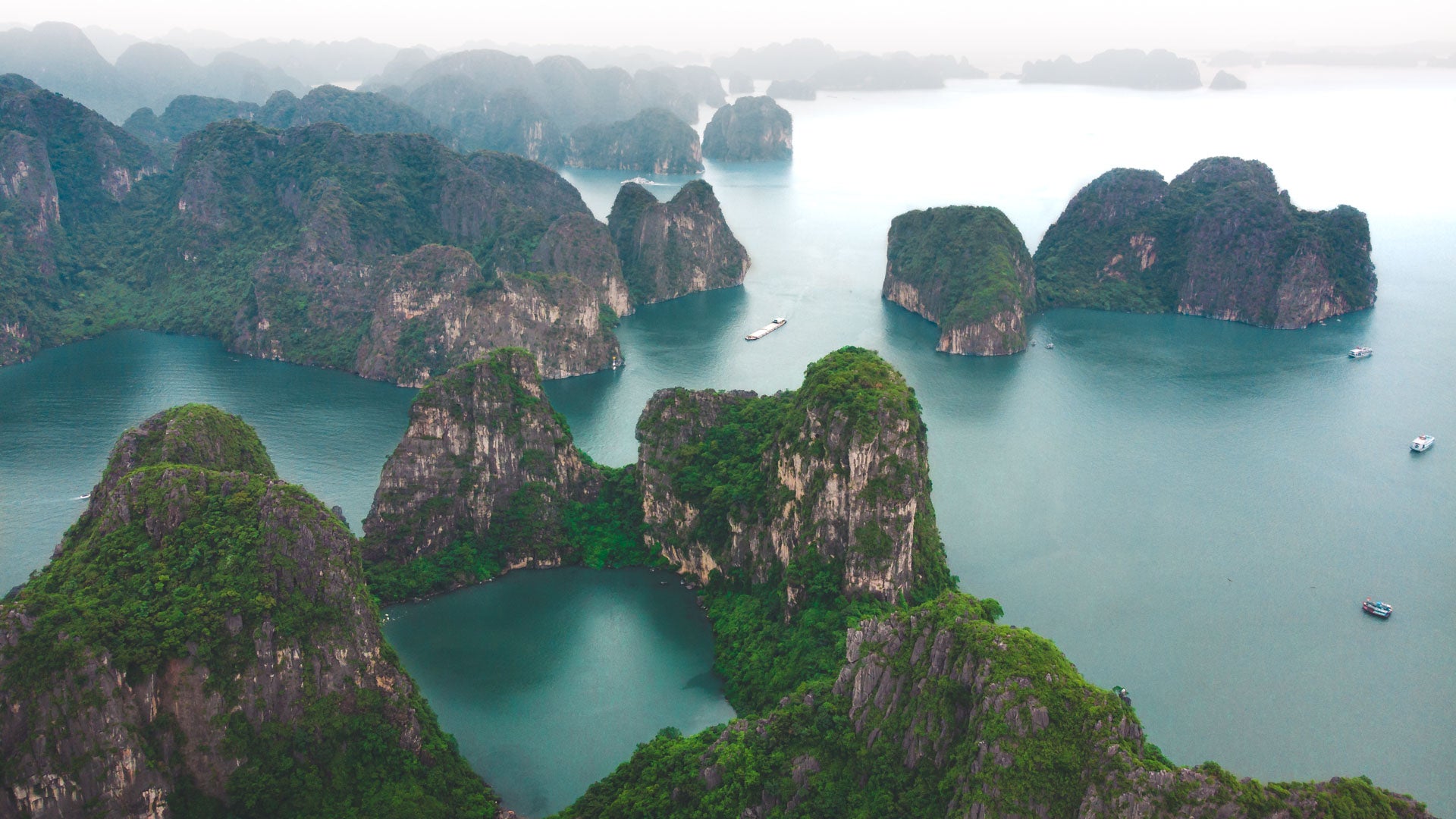
Halong Bay is three hours from Hanoi by road, and it is one of the most spectacular natural environments on earth. Nearly 2,000 limestone karst islands rise from the emerald water of the Gulf of Tonkin, their vertical faces draped in jungle, their bases hollowed by millennia of wave action into caves and grottos. The standard way to see it is on an overnight cruise — and the standard advice is to spend the extra money on a better boat, because the difference between a budget junk and a mid-range vessel is the difference between a crowded, diesel-smelling experience and something genuinely magical. Wake up at dawn when the mist is still in the valleys between the karsts and the water is absolutely still and you will understand why this place has been a UNESCO World Heritage Site since 1994. Our Hanoi & Halong Bay 5-Day Adventure covers the cruise selection, the caves worth visiting, and the kayaking routes that take you away from the tour boat crowds.
The Road South: What Happens Between the Two Cities
Vietnam is best understood as a journey, not a destination. The country's geography — that long, narrow strip between the mountains and the sea — means that travelling it from north to south (or south to north) is the natural way to experience it, and the places in between the two major cities are often the most extraordinary.
Sapa sits in the far northwest, near the Chinese border, at an altitude of 1,600 metres in the Hoang Lien Son mountain range. The terraced rice paddies here — carved into the hillsides by the Hmong and Dao ethnic minority communities over centuries — are among the most beautiful agricultural landscapes in the world. In September and October, when the rice is ripe, the terraces turn gold and the effect is genuinely breathtaking. The trekking here is world-class: multi-day routes through villages where the way of life has changed little in generations, where women in traditional indigo-dyed clothing carry loads that would defeat most hikers, where the food is simple and extraordinary and nothing like what you eat in the cities. Our Sapa Adventure: 3-Day Trekking & Culture Guide is the essential starting point for planning the trek.
Hue is the former imperial capital of Vietnam, a city of palaces and pagodas and royal tombs strung along the Perfume River. The Imperial Citadel — a walled complex modelled on Beijing's Forbidden City, built in the early 19th century — was heavily damaged during the Tet Offensive in 1968 and has been under restoration ever since. What remains is haunting: vast courtyards, ceremonial gates, the ruins of the Forbidden Purple City where the emperor lived, all of it overgrown in places and preserved in others in a way that feels more honest than a fully restored monument. The royal tombs outside the city — each one a complex of pavilions, lakes, and gardens built by the emperor during his own lifetime — are among the most beautiful funerary architecture in Asia.
The food in Hue is its own chapter. The city has a culinary tradition that is distinct from both Hanoi and Saigon — more complex, more spiced, more influenced by the royal court that once demanded elaborate presentation. Bun bo Hue, the spicy beef noodle soup that is Hue's answer to Hanoi's pho, is one of the great dishes of Vietnamese cuisine and almost impossible to find well-made outside the city. Banh khoai, the crispy stuffed pancake, and com hen, a rice dish with tiny clams from the Perfume River, are the other essentials.
Da Nang is the beach city — a modern, rapidly developing coastal city with a long white sand beach, a clutch of excellent seafood restaurants, and the Marble Mountains (five limestone hills riddled with caves and temples) just to the south. It is also the gateway to the Hai Van Pass, one of the most spectacular coastal drives in Southeast Asia: a mountain road that climbs to 496 metres above sea level, with views of the South China Sea on one side and forested mountains on the other, before descending into the ancient town of Hoi An. Our Romantic Da Nang for Couples: A 3-Day Enchanting Escape covers the beach, the mountains, and the best seafood in the city.
Hoi An: The Town That Stopped Time (and Made It Beautiful)
Hoi An is the most beautiful town in Vietnam, and it knows it. The Ancient Town — a UNESCO World Heritage Site — is a perfectly preserved 15th-century trading port where Japanese, Chinese, and Vietnamese architectural influences blend in a streetscape of yellow-washed buildings, wooden shopfronts, and covered bridges that has changed almost nothing in four centuries. At night, the town is lit by hundreds of silk lanterns in every colour, their reflections shimmering in the Thu Bon River, and the effect is so impossibly picturesque that it feels like a film set. It is not a film set. It is a real town where real people live, and the fact that it has survived intact while every other historic Vietnamese town was bombed or bulldozed or simply fell apart is a minor miracle.
The food in Hoi An is exceptional even by Vietnamese standards. Cao lau — thick rice noodles with pork and greens, served with crispy rice crackers, made with water drawn specifically from the ancient Cham wells in the surrounding countryside — is a dish that cannot be authentically replicated anywhere else in the world. White rose dumplings, filled with shrimp and shaped like flowers, are made by a single family who has held the recipe for generations. Banh mi, the Vietnamese sandwich that is arguably the greatest street food invention in history — a French baguette filled with pâté, cold cuts, pickled vegetables, fresh herbs, and chilli — is better in Hoi An than anywhere else, including the famous Banh Mi Phuong that Anthony Bourdain called the best he had ever eaten. Our Hoi An Food Lover's Guide: 4 Days of Cao Lau, Banh Mi & Ancient Town Delights is the definitive eating map.
Beyond the food, Hoi An is a town for wandering. The Japanese Covered Bridge — built in 1593, still standing, still beautiful — is the most photographed structure in Vietnam after Halong Bay. The Assembly Halls built by the Chinese merchant communities in the 17th and 18th centuries are extraordinary: incense-thick, red-lacquered, full of offerings and ancestor tablets and the kind of atmosphere that makes you feel the weight of centuries. The tailors of Hoi An are famous throughout Southeast Asia — you can have a suit or a dress made to measure in 24 hours for a fraction of what it would cost anywhere else, and the quality is genuinely excellent if you choose the right shop.
An Bang Beach, 4 kilometres from the Ancient Town, is where you go when you need to decompress from the beauty overload. A long, quiet stretch of sand with a handful of beach bars and restaurants, it is the kind of beach that used to exist everywhere in Southeast Asia before the developers arrived, and it still feels like a secret even though it isn't. Our Hoi An for Couples: 5-Day Romantic Escape to Vietnam's Lantern City builds the full Hoi An experience into a week that also takes in the countryside, the cooking classes, and the bicycle rides through rice paddies that are the best way to understand the landscape around the town.
Ho Chi Minh City: The South, the Energy, the Contradiction
Saigon — the name that everyone still uses, regardless of what the government calls it — is the opposite of Hanoi in almost every way. Where Hanoi is ancient and layered and slightly melancholy, Saigon is young and loud and relentlessly forward-moving. The average age in Ho Chi Minh City is 30. The skyline changes every year. The coffee shops are full of people working on laptops at midnight. The food scene is the most exciting in Southeast Asia, and the street food is the best argument for eating at plastic stools on the pavement that has ever been assembled in one city.
The War Remnants Museum is the most important thing to do in Saigon, and also the most difficult. It is a museum dedicated to the American War — what the Vietnamese call the conflict that Americans call the Vietnam War — and it does not soften its account. The photographs, many of them taken by international journalists, document the reality of what happened with a directness that is genuinely hard to look at. It is not an anti-American museum in the simplistic sense — it is a museum about what war does to people, and it is essential viewing for anyone who wants to understand the country they are travelling through. Allow two hours and do not rush it.
The Cu Chi Tunnels, 70 kilometres northwest of the city, are the underground network built by the Viet Cong during the war — 250 kilometres of tunnels, some of them three levels deep, containing hospitals, kitchens, meeting rooms, and weapons factories, all of it invisible from the air. You can crawl through a section of the tunnels (they have been widened slightly for tourists, but they are still claustrophobic in a way that makes the historical reality viscerally clear) and the experience is unlike anything else in Vietnam. Our Ho Chi Minh City Solo Travel: 4-Day War History & Street Food Adventure covers both the museum and the tunnels alongside the city's extraordinary food scene.
The food in Saigon deserves its own paragraph. Banh mi is everywhere and excellent. Com tam — broken rice with grilled pork, a fried egg, and pickled vegetables — is the definitive Saigon breakfast, eaten at street stalls that open at 6 AM and sell out by 9. Hu tieu — a clear pork broth noodle soup with a lighter, sweeter profile than Hanoi's pho — is the southern answer to the north's obsession. And the coffee culture here is extraordinary: Vietnamese iced coffee (ca phe sua da), made with dark robusta beans and sweetened condensed milk over ice, is one of the great beverages of the world, and the egg coffee (ca phe trung) — a Hanoi invention that has spread south — is a warm, custardy, deeply strange and deeply delicious thing that you will think about for years. Our Ho Chi Minh City Food Guide: 4 Days of Saigon Street Food Delights maps every essential eat in the city.
The Mekong Delta, two hours south of Saigon, is where the Mekong River fans out into nine branches before reaching the sea, creating a landscape of canals, floating markets, rice paddies, and fruit orchards that is completely unlike anything else in Vietnam. The floating markets — Cai Rang is the most famous — operate from dawn, boats piled high with produce, the sellers hanging samples of their goods from poles above the bow so buyers can identify what they are selling from a distance. It is a trading system that has operated the same way for centuries and is slowly disappearing as roads improve and supermarkets arrive. Go now. Our Mekong Delta Adventure: 3-Day Floating Markets & River Life Exploration is the guide for doing it properly.
The Practical Details That Will Make Your Vietnam Trip
When to go: Vietnam's climate is complicated by its length. The north (Hanoi, Sapa, Halong Bay) has four distinct seasons — the best time is October through April, when it is cool and dry. The central region (Hue, Da Nang, Hoi An) has its own weather pattern — October and November bring heavy rain and occasional flooding, while February through August is dry and warm. The south (Ho Chi Minh City, Mekong Delta) has a dry season from December through April and a wet season from May through November. The practical upshot: there is no single "best time" for the whole country, but November through March is generally the safest window for a north-to-south trip.
How long to spend: A minimum of two weeks to do the country any justice — three weeks is better. The classic route runs Hanoi → Halong Bay → Hue → Da Nang → Hoi An → Ho Chi Minh City, with optional detours to Sapa in the north and the Mekong Delta in the south. Domestic flights are cheap (often under $30) and save significant time on the longer legs. Our Vietnam Country Itinerary: 5 Days North to South is the starting point for first-timers who want a compressed overview before committing to a longer trip.
Visas: Most nationalities can obtain an e-visa online before arrival, valid for up to 90 days. The process is straightforward and takes 3 business days. Check the official Vietnam Immigration Portal for current requirements — the rules have changed several times in recent years and the information on third-party sites is often out of date.
Money: Vietnam uses the Vietnamese dong (VND). The exchange rate makes the currency feel like Monopoly money — you will be paying 50,000 VND for a bowl of pho and 500,000 VND for a hotel room — but the cost of living is genuinely low. Budget travelers can live well on $30-40 per day. Mid-range travelers spending $60-80 per day will eat extremely well, stay in comfortable guesthouses, and take the occasional taxi without thinking about it. ATMs are widely available in cities; carry cash in smaller towns.
Getting around: Grab (the Southeast Asian equivalent of Uber) works in all major cities and is the safest and most transparent way to take a taxi. Overnight trains between cities are comfortable, affordable, and a genuinely enjoyable way to travel — the Hanoi to Hue sleeper train, in particular, is one of the great train journeys in Asia. Motorbike rental is available everywhere and is the most liberating way to explore the countryside, but requires genuine riding experience and a healthy respect for Vietnamese traffic.
What Vietnam Does to You
There is a particular kind of traveler who goes to Vietnam expecting to be moved by the history — the war, the tunnels, the museums — and comes back having been moved by something else entirely. By the woman who has been making the same bowl of bun cha at the same corner in Hanoi for thirty years. By the fisherman on Halong Bay who has lived on his boat his entire life and whose children go to school by rowing a small boat to the floating school in the bay. By the tailor in Hoi An who measures you by eye and produces a perfectly fitting shirt in four hours. By the 22-year-old in Saigon who speaks four languages, runs a coffee shop, studies engineering at night, and has plans for the next decade that make your own ambitions feel modest.
Vietnam is a country that has survived everything — invasion, colonisation, war, famine, ideological upheaval — and has emerged from all of it with its culture intact, its food extraordinary, its people possessed of an energy and optimism that is genuinely contagious. It is not an easy country to travel. The traffic is real. The heat is real. The language barrier is real. But it is, for many travelers, the trip that divides their lives into before and after.
Plan your Vietnam trip with Ask Leif. Whether you start in the north with our Hanoi Solo Travel: 5 Days of Old Quarter Chaos & Halong Bay Adventure, explore the romantic heart of the country with our Hoi An for Couples: A Romantic 3-Day Itinerary with Lanterns & Tailored Style, or dive straight into the south with our 4-Day Ho Chi Minh City Family Adventure: History, Tunnels & Street Food Fun — the itinerary that changes everything is waiting.