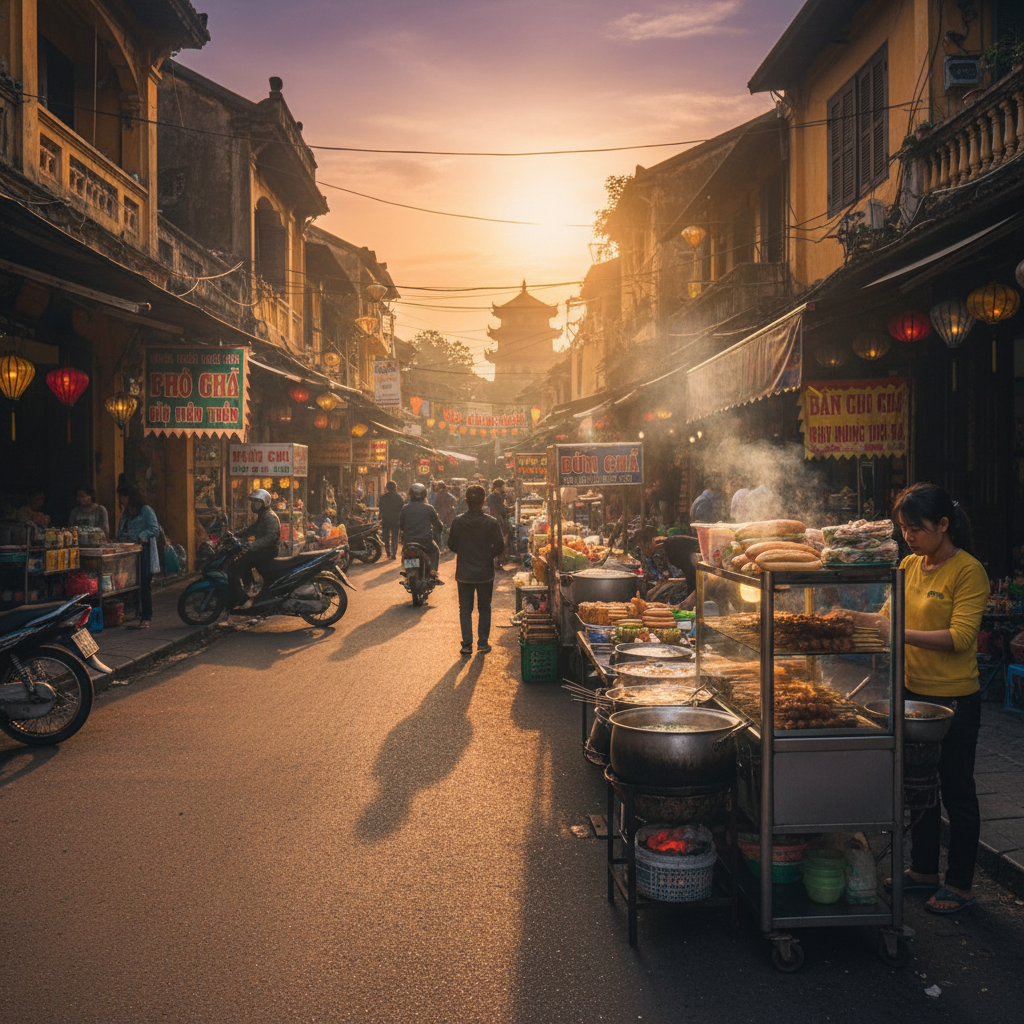
Hanoi Food Lover's Guide: 4 Days of Pho, Bun Cha & Street Food Delights
Savor Hanoi's legendary street food scene over 4 delicious days. This guide takes you beyond the tourist traps to the best pho, bun cha, banh mi, and hidden culinary gems.
- Duration: 4 Days
- Estimated Budget: $120–$320
- Best Time to Visit: October-April (cool and dry)
- Destination: Hanoi, Vietnam
Hanoi is not just a city; it's a living, breathing culinary museum where every alleyway whispers tales of generations-old recipes. Here, the food is distinctly northern Vietnamese—subtle, herb-heavy, and deeply seasonal—making it the most exciting street food destination in Southeast Asia for any true food lover. 📖 **Read our full destination guide:** Hanoi Doesn't Perform for You. It Just Continues Being Itself.
The moment you step into the bustling lanes around Hang Be Street, the air itself becomes a symphony of aromas: the sweet char of grilling pork, the pungent tang of fermented shrimp paste, and the delicate perfume of fresh herbs. This isn't just a street; it's a living, breathing culinary stage where generations of vendors have perfected their craft. Here, you'll find tiny, unassuming stalls that have been serving the same iconic dish for decades, each bowl a testament to tradition and an invitation to savor the true essence of Vietnamese cooking. It's a place where the history of the city is told through its flavors, and every bite offers a deeper understanding of its rich cultural tapestry.
How do you navigate the sheer volume of incredible food stalls without getting overwhelmed or missing out on a hidden gem? Here's the reality: Hanoi's food scene is so dense and authentic that simply wandering can lead to amazing discoveries, but for a truly focused culinary journey, a little insider knowledge goes a long way. The key is to understand the rhythm of the city's eating habits – some of the best spots are morning-only affairs, while others come alive as the sun sets. Knowing when and where to find the most iconic dishes, and how to spot a genuinely beloved local spot versus a tourist trap, transforms a good meal into an unforgettable experience.
Food lovers spend their mornings weaving through the vibrant aisles of Nghia Tan Market, where the freshest produce, exotic spices, and live seafood create a sensory explosion. You'll find yourself sipping strong, sweet iced coffee at a tiny plastic table, observing the daily rituals of local life unfold around you, before diving into a bowl of steaming noodles from a vendor who’s been there longer than you’ve been alive. Afternoons might involve a hunt for a specific regional delicacy, perhaps a lesser-known dessert or a unique savory pancake, followed by a leisurely stroll through a quieter, residential district, observing how food is prepared and shared in everyday homes.
Aromatic Arrivals: Pho, Egg Coffee & Old Quarter Street Eats
Kick off your Hanoi culinary adventure with the most iconic dish: Pho. Head straight to Pho Gia Truyen, a legendary spot known for its rich, clear broth and tender beef.
This is where pho began, and this specific stall is revered for its authentic, no-frills approach to the national dish. It's a true taste of Hanoi's culinary heritage.
After your pho, wander through the bustling streets of the Old Quarter, letting your senses guide you. Explore the narrow lanes and soak in the vibrant atmosphere.
The Old Quarter is the heart and soul of Hanoi, a living museum where each street historically specialized in a single trade. It's the perfect place to feel the pulse of the city.
For lunch, dive into the world of Banh Mi 25. This popular spot consistently serves up some of the best banh mi sandwiches in Hanoi, with a variety of fillings to choose from.
Banh mi is a delicious fusion of Vietnamese and French culinary traditions, and Banh Mi 25 has perfected the art. It's a quick, satisfying, and incredibly flavorful meal.
Indulge in a quintessential Hanoi experience: Egg Coffee at Cafe Giang. This historic cafe is credited with inventing the creamy, rich beverage in 1946.
Egg coffee is a unique and surprisingly delicious Hanoi specialty. Cafe Giang offers an authentic, cozy atmosphere to enjoy this iconic drink, a true taste of local innovation.
As dusk settles, immerse yourself in the lively atmosphere of the Hanoi Night Market (Friday-Sunday only). Sample various street food delights from the numerous stalls.
The Night Market is an accessible and exciting way to experience Hanoi's diverse street food scene, perfect for first-timers. It's a feast for the senses with endless options.
Leif's Tip: Upon arrival, purchase a local SIM card (Viettel is excellent) immediately at the airport. Having data will be invaluable for navigating the Old Quarter's labyrinthine streets, translating menus, and finding those hidden culinary gems. You'll thank me when you're not lost and hangry!
The part of Vietnam that catches food lovers off guard isn't the exotic ingredients or the bustling markets — it's the sheer, overwhelming volume of choice, and the subtle nuances between seemingly similar dishes. How do you distinguish a truly exceptional bowl of phở from a merely good one, or find the bun cha stall that locals swear by, hidden down a narrow alleyway? Between deciphering handwritten menus, navigating language barriers, and understanding the unspoken rules of street food culture, Hanoi can feel like a culinary labyrinth before you even arrive. This isn't just about finding a place to eat; it's about unlocking the city's gastronomic secrets, ensuring every bite is an authentic, memorable experience, and avoiding the tourist traps that dilute the true flavor of this incredible destination. That's precisely where Leif steps in, transforming potential confusion into a confident culinary adventure.
Say you're craving a specific, regional delicacy, perhaps a piping hot bowl of bún thang, a complex chicken and egg noodle soup that's a true Hanoian specialty, but you're not sure where to find an authentic, generations-old establishment. You pull up Leif, and within seconds, you have a curated recommendation for a hidden gem on Hàng Hòm Street, complete with opening hours, price estimates, and an insider tip about ordering the extra fried shallots. Or perhaps you've just finished a cooking class near Trúc Bạch Lake and want to explore a local wet market for unique spices, but aren't sure which one offers the best selection without being overly touristy. Leif guides you to Chợ Châu Long Market, detailing what you can expect to find and even suggesting a nearby vendor for an afternoon snack of chè (sweet dessert soup) that perfectly complements your market exploration.
You'll arrive in Vietnam knowing exactly where to find the crispest bánh rán (fried donuts), the most aromatic phở cuốn (fresh pho rolls), and the most authentic chả cá (turmeric fish). Instead of wandering aimlessly, hoping to stumble upon a culinary treasure, you'll navigate the city's vibrant food scene with the confidence of a seasoned local. The difference is savoring every spoonful of a perfectly balanced bún ốc (snail noodle soup) at a tiny, unassuming stall, rather than settling for a mediocre meal at an overpriced restaurant. Arriving in Hanoi with your gastronomic roadmap already laid out means your taste buds are primed for an unforgettable journey, ready to dive deep into the heart and soul of Vietnamese cuisine from your very first bite.
Best Time to Visit Hanoi, Vietnam
October-April: This is Hanoi's cool and dry season, making it perfect for exploring the street food scene without excessive heat or rain.
Avoid June-August: These months are hot and humid, often exceeding 35°C, which can make extended street food adventures uncomfortable.
Early mornings are best for markets and certain pho stalls: To experience the Dong Xuan Market at its most vibrant or enjoy Pho Gia Truyen before the crowds, plan for early starts.
Evenings are ideal for street food circuits: The Old Quarter truly comes alive with food stalls and night markets as the sun sets, offering a different culinary vibe.
Weekends for the Night Market: If you want to experience the bustling Night Market on Hang Dao Street, plan your trip to include a Friday, Saturday, or Sunday evening.
Getting Around Hanoi, Vietnam
Walk everywhere in the Old Quarter: Many of the best food stalls are within close proximity, and walking allows you to discover hidden gems and soak in the atmosphere.
Use Grab (the Southeast Asian Uber/Lyft equivalent) for longer distances: It's affordable, reliable, and you can pay cash or link a card. Perfect for getting to places like Bun Cha Huong Lien or cooking classes.
Motorbike taxis are adventurous but haggle: For a truly local experience, hop on a xe om (motorbike taxi), but always agree on the price beforehand to avoid overpaying.
Cyclos are charming for short distances: These three-wheeled bicycle taxis are a fun way to see the Old Quarter, but negotiate the fare firmly before you get in.
Be mindful of traffic: Hanoi's traffic can be chaotic, especially on motorbikes. Always be aware of your surroundings when walking or crossing streets.
What to Pack
- Lightweight, breathable clothing: Essential for comfort, even in the cooler months, as you'll be doing a lot of walking and eating outdoors.
- Comfortable walking shoes: You'll be on your feet exploring markets and street food stalls for hours.
- Small backpack or cross-body bag: To keep your essentials secure and easily accessible while navigating busy streets.
- Reusable water bottle: Stay hydrated, especially in the humidity, and reduce plastic waste.
- Hand sanitizer and wet wipes: Invaluable for street food adventures, as facilities might not always be readily available.
- Portable charger: Your phone will be working overtime for navigation, photos, and translating menus.
- Light rain jacket or umbrella: Even during the dry season, unexpected showers can occur.
- Sunscreen and a hat: Protection from the sun is always a good idea, even when it's not scorching hot.
Money-Saving Tips
- Embrace street food: It's not only the most authentic culinary experience but also the most budget-friendly. Most dishes are under $3 USD.
- Drink local beer (Bia Hoi): This fresh, cheap draft beer is a Hanoi institution and significantly cheaper than bottled beers or cocktails.
- Bargain respectfully at markets: While food prices are generally fixed at stalls, you can often negotiate for other goods at Dong Xuan Market.
- Buy snacks from local vendors: Instead of convenience stores, grab fresh fruit or local pastries from street vendors for cheaper, more authentic treats.
- Consider a cooking class as an activity and a meal: Many classes include a market tour and the food you prepare, offering both an experience and a delicious, cost-effective meal.
- Use local SIM cards for data: Affordable and essential for navigation and Grab, saving you from expensive roaming charges.
Local Insights
- Eat where the locals eat: Look for stalls bustling with Vietnamese patrons – that's usually a sign of good, authentic food.
- Don't be afraid to sit on plastic stools: These low seats are a quintessential part of the Hanoi street food experience.
- Learn a few basic Vietnamese phrases: 'Xin chào' (hello), 'Cảm ơn' (thank you), and 'Ngẵn quá' (delicious!) will go a long way.
- Be open to new flavors and textures: Hanoi's cuisine is diverse and some dishes might be unfamiliar, but that's part of the adventure!
- Observe before you order: Watch how locals eat a dish – what condiments they add, how they mix it – to get the full experience.
- Carry small denominations of Vietnamese Dong: Many street vendors prefer exact change, and it makes transactions smoother.
Frequently Asked Questions
Is it safe to eat street food in Hanoi?
Absolutely! Hanoi's street food is generally very safe. Look for stalls with high turnover, where food is cooked fresh to order, and where locals are eating. Don't be afraid to try new things, but trust your gut. If a place looks questionable, move on to the next. The sheer volume of delicious and hygienic options means you'll never be short of choices.
What's the best way to get around to different food spots?
For navigating the narrow, bustling streets of the Old Quarter, walking is often the best and most immersive way to explore. For slightly longer distances, Grab (the Southeast Asian equivalent of Uber) is readily available for both cars and motorbikes, offering a convenient and affordable option. Taxis are also plentiful, but always ensure they use a meter.
How much should I expect to pay for a meal?
One of the joys of eating in Hanoi is its incredible affordability. A typical street food dish like pho or bun cha will cost between $1.50 - $3 USD. Even at a mid-range restaurant, a full meal might only set you back $5 - $10 USD. Fine dining experiences will naturally be more, but still excellent value compared to Western prices.
Do I need to speak Vietnamese to order food?
While knowing a few basic phrases like 'xin chào' (hello) and 'cảm ơn' (thank you) is always appreciated, it's not strictly necessary. Many vendors in popular food areas understand basic English, and pointing at menu items or other diners' plates is a perfectly acceptable way to order. Google Translate can also be a lifesaver for more complex requests.
Are there vegetarian or vegan options available?
Yes, Hanoi has a growing number of vegetarian and vegan options, especially in the Old Quarter. Many street stalls can adapt dishes by omitting meat, and there are dedicated chay (vegetarian) restaurants. Look for 'phở chay' (vegetarian pho) or 'bún đậu mắm tôm chay' (vegetarian vermicelli with tofu and shrimp paste substitute). Be specific about 'không thịt' (no meat) or 'không nước mắm' (no fish sauce) if needed.
What are some essential food etiquette tips for Hanoi?
Eat with chopsticks and a spoon (for broth). Slurping noodles is common and even a sign of enjoyment! Don't stick your chopsticks upright in your bowl, as this resembles incense in an offering and is considered bad luck. It's also customary to share dishes, especially in groups, and to pour tea for others at the table before yourself.
What's the best way to handle spicy food if I'm sensitive?
Northern Vietnamese cuisine is generally less spicy than its central or southern counterparts, but chilies are often available on the side. If you're sensitive, you can ask for 'không cay' (no chili) when ordering, or simply avoid adding the chili paste or fresh chilies provided. Most dishes are flavorful enough without the extra heat.