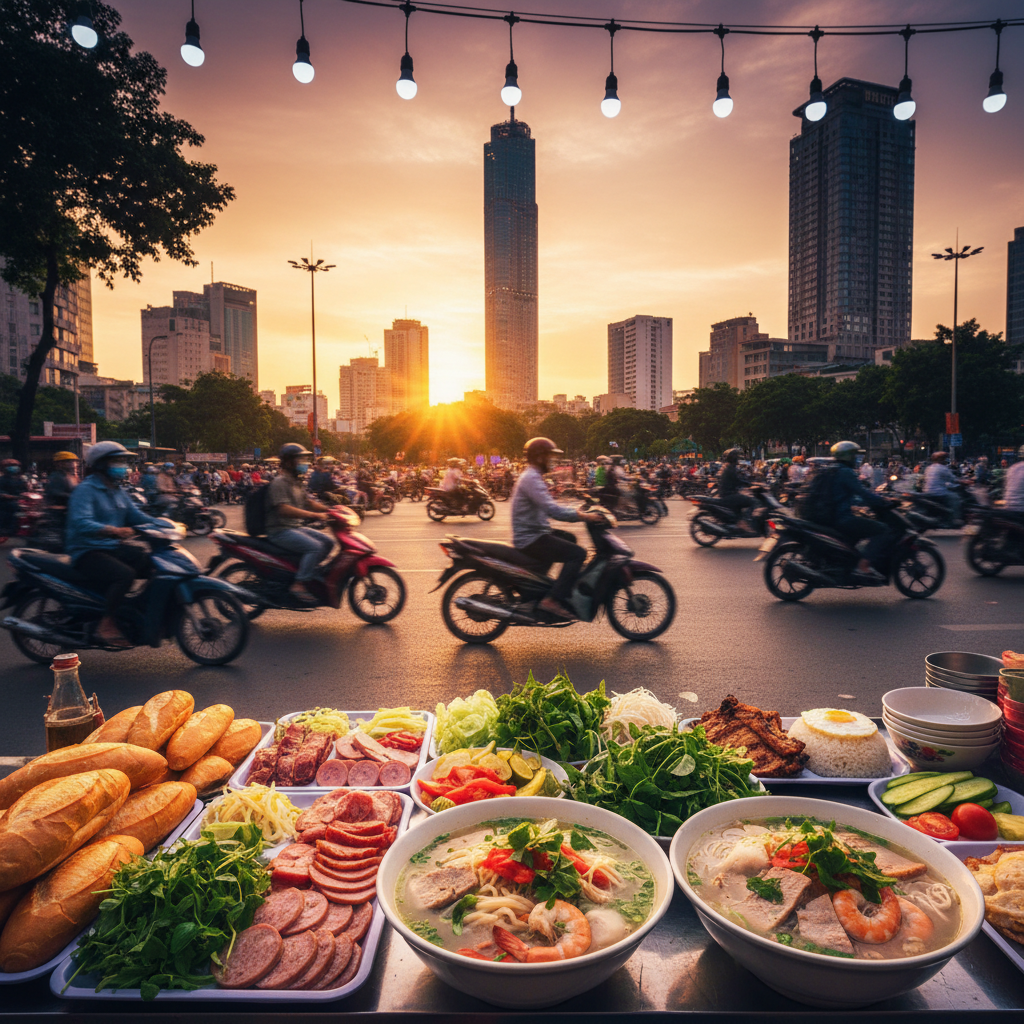
Ho Chi Minh City Food Guide: 4 Days of Saigon Street Food Delights
Dive into Ho Chi Minh City's vibrant street food scene with this 4-day guide. Savor banh mi, hu tieu, com tam, and more in Saigon's culinary heart.
- Duration: 4 Days
- Estimated Budget: $140–$360
- Best Time to Visit: December-April (dry season)
- Destination: Ho Chi Minh City (Saigon), Vietnam
The aroma of grilled pork and simmering broth is the true soundtrack of Ho Chi Minh City, a metropolis where food isn't just sustenance—it's a 24/7 obsession. This guide is your passport to Saigon's legendary street food circuit, from the iconic banh mi to the soul-satisfying hu tieu, ensuring every bite is an authentic taste of the city's diverse culinary heritage.
The moment you step into the vibrant chaos of a morning market like Tan Dinh, your senses are immediately overwhelmed in the best possible way. The air hums with the chatter of vendors, the sizzle of street food, and the intoxicating perfume of fresh herbs, exotic fruits, and roasting meats. This isn't just a place to buy groceries; it's a living, breathing culinary theater where generations of Saigonese have sourced their ingredients and grabbed a quick, delicious bite. You'll see locals expertly haggling for plump prawns or vibrant chilies, then settling down on tiny plastic stools for a steaming bowl of noodle soup, perfectly showcasing the city's deep connection to its food culture.
Is navigating the sheer volume of street food options overwhelming for a first-time visitor? Absolutely, it can be. With thousands of stalls and eateries, knowing where to find the truly exceptional, authentic dishes versus tourist traps is a genuine challenge. The key isn't to try everything, but to focus on the specialties each district excels at and to observe where the locals are congregating. Look for the busiest stalls, often indicated by long lines or packed tables, especially during peak meal times. These are usually the spots that have perfected their craft over decades, offering consistent quality and flavor that keeps the community coming back for more.
Food lovers spend their evenings weaving through the lantern-lit alleys of District 4, where the aroma of grilled seafood and simmering broths fills the balmy air. You'll find yourself pulling up a tiny plastic stool at a bustling open-air eatery, surrounded by families and friends sharing plates of succulent grilled scallops with peanuts and spring onions, or a crispy pancake bursting with fresh ingredients. The rhythm of dining here is communal and unhurried, encouraging you to savor each bite and soak in the lively atmosphere. It's an immersive experience, where the boundaries between kitchen and street blur, and every corner promises a new, delectable discovery.
A Taste of Saigon: Broken Rice, Banh Mi & Street Food Immersion
Kick off your culinary adventure with the quintessential Saigon breakfast: Com Tam, or broken rice. This dish features grilled pork, a fried egg, and various toppings over fluffy broken rice.
Com Tam is a beloved local staple, offering a perfect introduction to the city's rich flavors. It's hearty, satisfying, and deeply ingrained in Saigon's food culture.
Experience the legendary Banh Mi Huynh Hoa, a sandwich that perfectly encapsulates Saigon's fusion of French and Vietnamese culinary traditions. Expect a queue, but it moves quickly!
This isn't just any banh mi; it's a loaded, flavorful masterpiece unique to Saigon. It's a must-try for its rich pate, cold cuts, fresh herbs, and crispy baguette.
Dive into the vibrant atmosphere of Ben Thanh Market, exploring the perimeter for street food stalls and local snacks. While the inside is touristy, the surrounding streets offer authentic bites.
This iconic market is a sensory overload of sights, sounds, and smells. It's a fantastic place to observe daily life and sample small, traditional treats.
Recharge with a classic Vietnamese iced coffee, Cafe Sua Da, at Trung Nguyen Legend Cafe. It's the perfect pick-me-up after a busy morning of eating and exploring.
Vietnamese coffee is world-renowned, and Cafe Sua Da is its most famous iteration. It's a strong, sweet, and incredibly refreshing drink that's integral to local culture.
Conclude your day with an immersive street food circuit, sampling various dishes from local vendors. This is where Saigon truly comes alive after dark.
The street food scene is the heart and soul of Saigon's culinary identity. It's an opportunity to try a diverse range of dishes in a lively, authentic setting.
Leif's Tip: Wear comfortable shoes and be ready to walk! Saigon's best food is often found down bustling alleys and on busy street corners. Embrace the organized chaos and don't be afraid to try new things – that's where the real magic happens.
Between navigating the labyrinthine alleys of District 10, deciphering menus written only in Vietnamese script, and knowing which street food stall has the freshest ingredients and the most authentic flavor, Ho Chi Minh City can feel overwhelming before you even arrive. It's not just about finding a place to eat; it's about finding *the* place – the one that has perfected its recipe over decades, the one where the locals queue up, the one that embodies the true culinary soul of Saigon. Without insider knowledge, you risk settling for tourist-trap imitations or missing out on the hidden gems that make this city a food lover's paradise. This is precisely where Leif steps in, transforming potential confusion into a seamless, delicious adventure.
Say you're craving the most succulent grilled pork skewers (nem nuong) you've ever tasted, but you're not sure which bustling street corner in District 5 offers the real deal. You land in Ho Chi Minh City, pull up Leif, and within seconds you have a pinpointed recommendation for a legendary stall on Trieu Quang Phuc Street, complete with its operating hours, approximate cost, and a little note about their secret dipping sauce. Leif doesn't just give you a list; it provides context, an insider tip on the best time to go to avoid the longest queues, and even a suggestion for a nearby dessert spot to cleanse your palate. It's like having a local food expert whispering recommendations directly into your ear, guiding you through the city's culinary landscape with confidence.
You'll arrive in Ho Chi Minh City knowing exactly where to find the crispiest banh xeo, the richest hu tieu, and the most aromatic com tam, all without a moment of hesitation or uncertainty. Instead of aimlessly wandering, you'll be confidently navigating to the city's most celebrated eateries and hidden street food havens, savoring every authentic bite. The difference is feeling completely immersed in the local food scene, tasting the true flavors of Saigon, and creating unforgettable culinary memories, rather than just ticking off a list. Arriving in Ho Chi Minh City with your personalized Leif guide already done means your taste buds are in for the adventure of a lifetime, from your very first breakfast to your late-night street snack.
Best Time to Visit Ho Chi Minh City (Saigon), Vietnam
December to April offers dry, sunny weather, perfect for exploring street food stalls without worrying about rain.
Avoid May to November if possible; daily afternoon downpours can interrupt your food adventures and make getting around less pleasant.
The cooler months of December and January are ideal for comfortable walking and outdoor dining experiences.
Early mornings are best for market visits and enjoying a traditional Vietnamese breakfast before the heat sets in.
Getting Around Ho Chi Minh City (Saigon), Vietnam
Grab (the Southeast Asian equivalent of Uber) is your best friend for getting around; it's cheap, reliable, and you can pay cash or link a card.
For short distances, consider a GrabBike for a quick and authentic Saigon experience, weaving through traffic like a local.
Walking is fantastic for exploring specific food districts like District 1 or Cholon, allowing you to stumble upon hidden gems.
Taxis are readily available, but ensure they use a meter or agree on a price beforehand to avoid overcharging (Vinasun and Mai Linh are reputable).
What to Pack
- Lightweight, breathable clothing (cotton, linen) is essential due to the city's heat and humidity.
- Comfortable walking shoes or sandals are a must for navigating bustling markets and street food areas.
- A small umbrella or light rain jacket, even in the dry season, for unexpected showers or sun protection.
- A portable power bank for your phone, as you'll be using it for navigation, photos, and Grab.
- Hand sanitizer and wet wipes are invaluable for street food adventures.
- A reusable water bottle to stay hydrated; many cafes and restaurants offer refills.
- Sunscreen and a wide-brimmed hat to protect yourself from the strong tropical sun.
Money-Saving Tips
- Embrace street food! It's not only the most authentic culinary experience but also incredibly budget-friendly, with meals often costing just a few dollars.
- Drink local coffee (cafe sua da) from street vendors rather than international chains for a delicious and cheaper caffeine fix.
- Negotiate prices at markets (Ben Thanh, Binh Tay) for non-food items, but for food, prices are generally fixed and very low.
- Consider staying in a guesthouse or boutique hotel outside of District 1 for more affordable accommodation options without sacrificing quality.
- Take advantage of GrabBike for solo travel; it's significantly cheaper than a car and often faster in traffic.
Local Insights
- Don't be afraid to try food from small, unassuming street stalls; often, these are where you'll find the most authentic and delicious dishes.
- Learn a few basic Vietnamese phrases like 'Xin Chao' (hello), 'Cam On' (thank you), and numbers for ordering; locals appreciate the effort.
- Observe how locals eat; for example, banh xeo is typically eaten by tearing off a piece, wrapping it in lettuce with herbs, and dipping it in nuoc cham.
- Vietnamese dining is often communal; don't be surprised if you share a table with strangers, especially at popular street food spots.
- Be open to new flavors and textures; Saigon's cuisine is a vibrant tapestry of sweet, sour, salty, and spicy, often all in one dish.
Frequently Asked Questions
What's the best way to get around Ho Chi Minh City for a food tour?
For an authentic street food experience, a Grab motorbike is your best friend. It's affordable, navigates traffic easily, and allows you to hop between stalls quickly. For longer distances or when you're tired, Grab cars are readily available. Walking is great for exploring specific neighborhoods like Cholon or the alleys of District 3, but the city is large, so mix and match your transport.
Is it safe to eat street food in Ho Chi Minh City?
Generally, yes, it's very safe and highly recommended! The key is to look for stalls with high turnover, where food is cooked fresh to order and ingredients aren't sitting out for long. Observe where locals eat; if a place is packed, it's usually a good sign of quality and hygiene. Stick to cooked foods and bottled water, and you'll be fine.
What are some must-try drinks besides coffee?
Beyond the iconic cafe sua da, definitely try fresh fruit smoothies (sinh to), especially avocado or mango. Sugarcane juice (nuoc mia) is incredibly refreshing, often served with a kumquat. For something unique, try pennywort juice (nuoc rau ma), a surprisingly delicious and healthy green drink. And don't forget fresh coconut water straight from the coconut!
How do I communicate my order if I don't speak Vietnamese?
Many popular street food vendors in tourist areas will have some English speakers or picture menus. For smaller stalls, pointing is perfectly acceptable! Learning a few key phrases like 'Cam on' (thank you) and 'Mot' (one) can go a long way. Google Translate's camera function is also a lifesaver for deciphering menus.
What's the typical cost of a street food meal?
Street food in Ho Chi Minh City is incredibly affordable. A bowl of hu tieu or a banh mi will typically cost between $1.50 - $3 USD. Even a more elaborate dish like banh xeo might be $4-6 USD. You can eat like royalty for a fraction of what you'd spend in many other major cities.
Are there vegetarian or vegan options easily available?
Yes, absolutely! Look for 'Com Chay' (vegetarian rice) or 'Pho Chay' (vegetarian pho) signs. Many Buddhist temples have vegetarian restaurants attached, and there are numerous dedicated vegetarian eateries throughout the city. Most street food vendors can also adapt dishes if you ask for 'khong thit' (no meat) or 'khong ca' (no fish).
What's the best way to experience a local market for food?
Go early in the morning, around 7-9 AM, when the markets are most vibrant and bustling. Don't be afraid to wander down smaller aisles. Engage with vendors (even if just with a smile and a nod), and try small samples if offered. Many markets have food courts or surrounding stalls where you can grab a fresh breakfast or snack right after your exploration.