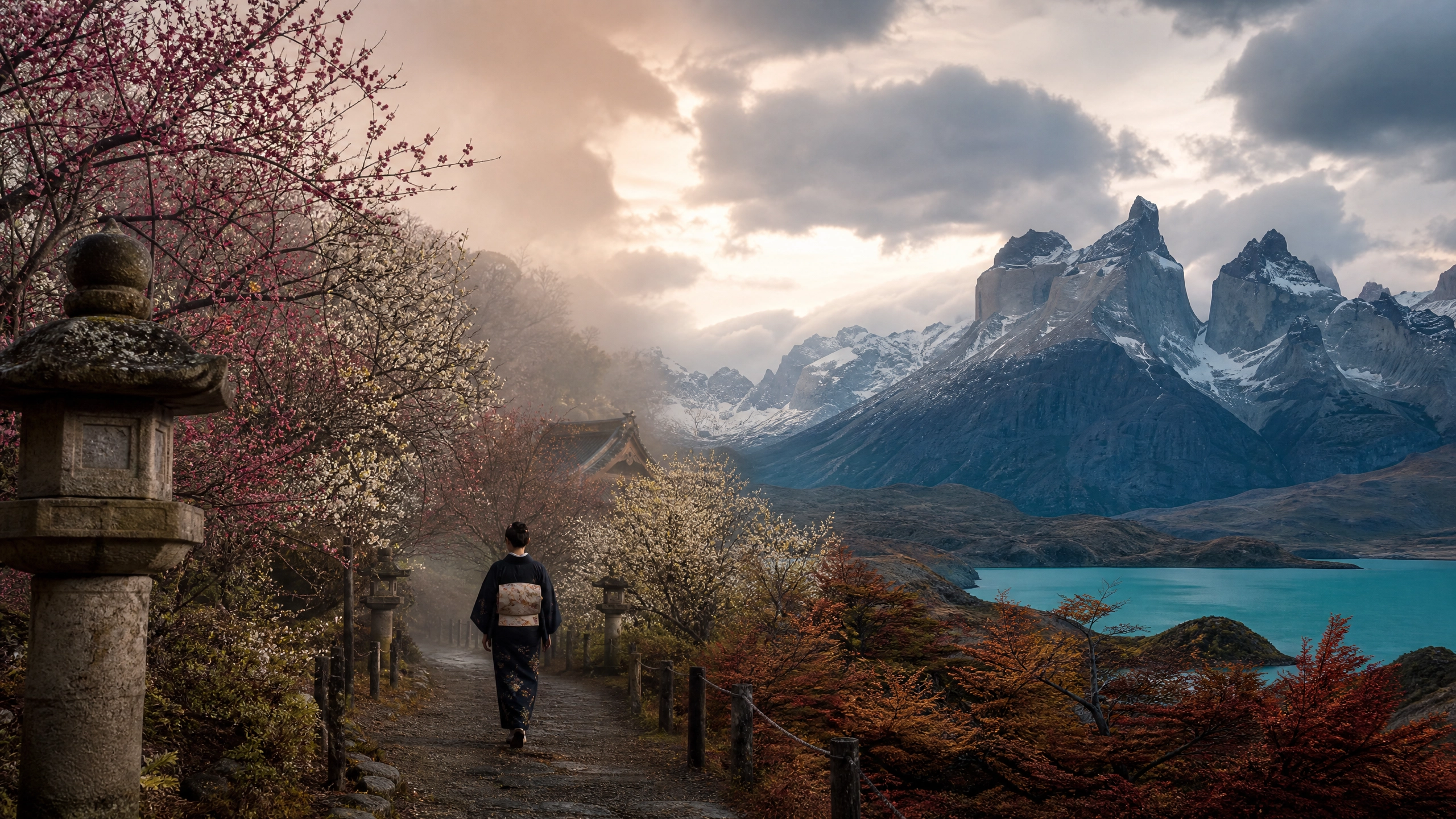
March Is Not the Month Before the Best Season. It Is the Best Season.
Destination: Global
Category: Travel Tips
Most travelers treat March as a planning month. They spend it booking April. They scroll through accommodation calendars for late spring, they read the "best time to visit" sections of travel guides that all say the same thing — spring, ideally April or May — and they set their departure dates for the moment the season officially begins. They are not wrong, exactly. April is good. May is good. But they have made a category error about what "best" means.
The best time to visit a destination is not when the season is most famous. It is when the specific phenomenon that makes the destination extraordinary is at its peak — and when the number of people who have figured this out is still small enough that you can actually experience it. March is the month when those two conditions align across six destinations on four continents. The plum blossoms in Kyoto. The orange blossom smell in Seville. The lenga beech autumn color in Patagonia. The last walkable weeks in Rajasthan before the heat arrives. The Atlas Mountains in their only month of simultaneous snow, flowers, and full rivers. Lisbon before the summer turns it into the most beautiful performance in Europe.
These are not consolation prizes for missing the peak. They are the peak. The travelers who understand this book March. Everyone else books April and wonders why the photographs look nothing like what they expected.
Kyoto: The Blossoms That Bloom Before Anyone Is Watching
The cherry blossom season in Kyoto is one of the most photographed natural events on earth. It is also, in late March and early April, one of the most crowded. The Philosopher's Path canal walk becomes a slow procession of photographers. Maruyama Park fills before dawn. The Fushimi Inari torii gates — normally a 2-kilometer mountain walk — become a queue. The photographs are extraordinary. The experience of taking them is not.
March Kyoto is the city before the annual performance begins. And the specific phenomenon that March offers is not a lesser version of the cherry blossoms — it is a different event entirely. The Kitano Tenmangu shrine plum garden contains 1,500 plum trees that bloom in mid-March, three to four weeks before the first cherry blossom opens. The white and red varieties peak simultaneously in the garden's eastern section, producing a color density that rivals anything the cherry blossom season delivers — and the garden is visited almost exclusively by Japanese locals and the small number of travelers who know to look for it. The shrine's tea house offers a formal tea ceremony under the blossoms exclusively during the plum festival period, a ritual that disappears when the plum season ends and doesn't return until the following year.
The Fushimi Inari gates in mid-March at 5am are a different place than the Fushimi Inari gates in April at 10am. The mountain trail above the main torii cluster — the section that most visitors never reach because the lower gates consume the available time and energy — is genuinely empty at dawn in March. The specific quality of early spring light through 10,000 vermillion gates on a mountain that is otherwise silent is not something that exists in any other month.
The late March food calendar adds a dimension that the cherry blossom season misses entirely. The mountain vegetables that appear in kaiseki menus only in early spring — the fukinotō butterbur sprout tempura that is available for exactly three weeks in March and that disappears before the main tourist surge arrives — are the specific flavors of the season. Most spring visitors to Kyoto eat the same menus that summer visitors eat. March visitors eat the menus that Kyoto's chefs prepare for themselves.
The Philosopher's Path in late March has something that April cannot offer: the first cherry blossoms on the canal walk, visible from the northern end near Ginkaku-ji, appearing before the main Maruyama Park peak. Ten days of first blossoms on a path that is not yet crowded. The photographs look identical to April. The experience of taking them does not.
If you're planning a Kyoto trip around the plum blossom window, the Kyoto 5-Day Couples Guide covers the Kitano Tenmangu area and the Philosopher's Path routing in detail, and the Kyoto 4-Day Food Guide covers the specific kaiseki restaurants that offer the seasonal mountain vegetable menus in March.
Seville: The City Before It Belongs to the World
Where Kyoto rewards the traveler who arrives before the famous event, Seville rewards the traveler who arrives before the famous month. April in Seville hosts the Feria de Abril — one of the most celebrated festivals in Europe — and the Semana Santa Easter processions, both of which produce the most crowded and most expensive week in the city's annual calendar. The hotels triple in price. The streets fill. The city performs.
March Seville is the city before the performance. And the specific phenomenon that makes March extraordinary in Seville is not the absence of crowds — it is the azahar. In late March, Seville's 40,000 orange trees flower simultaneously. The smell is not ambient. It is overwhelming in the specific way that only happens when a city has been planted with a single species at a density that no other European city has attempted. The Plaza de Santa Cruz in the Barrio Santa Cruz combines jasmine from the private garden walls with azahar from the street trees in a concentration that photographers have described as the smell of Seville made physical. This is not a metaphor. It is a specific olfactory event that exists for approximately two weeks in late March and that disappears before the Feria crowds arrive.
The Triana neighborhood in March operates at its working pace rather than its tourist pace. The covered market on the west bank of the Guadalquivir — the market that the tourist circuit bypasses in favor of the more famous Mercado de Triana — has a pescadera section where the fishmongers who supply the city's restaurants work before the market opens to retail customers at 9am. The specific activity of watching Seville's professional kitchen supply chain operate is not available in April when the same market fills with visitors before the fishmongers have finished their first delivery.
The Alcázar palace in March is a different building than the Alcázar in summer. The Jardín de la Danza — the least-visited quadrant of the garden, containing flowering trees that peak in late March — is accessible without the summer queue. The specific combination of Moorish architecture and early spring flowering in a garden that most Alcázar visitors never find is the March version of a monument that everyone visits but almost no one sees correctly.
The Calle Betis riverside strip in Triana on a Sunday afternoon in March is occupied by Sevillanos rather than tourists. The specific montadito culture — the small open-faced sandwiches that are the local alternative to the tourist-facing tapas circuit — is available at its authentic price point rather than its festival price point. March is when Seville's extraordinary everyday life is most visible.
The Seville 4-Day Couples Guide covers the Barrio Santa Cruz and Triana routing, and the Seville 4-Day Food Guide covers the specific market and tapas bar sequence that works best in the pre-festival season.
Morocco's Atlas Mountains: The Landscape That Only Exists Now
If Seville in March is the city before its most famous month, the Atlas Mountains in March are a landscape that has no equivalent in any other month and that almost no traveler plans around. The High Atlas in March contains a specific visual that photographers from across Morocco make the journey to capture and that appears in almost none of the English-language travel content about Morocco: snow on the summits, rivers running at peak volume from the snowmelt, and valley floors covered in almond and cherry blossoms simultaneously. The combination of white peaks, white flowers, and full rivers is a March-only phenomenon. It is gone by April when the snowmelt is complete and the blossoms have fallen.
The Imlil valley in mid-March sits at 1,740 meters in the High Atlas, the base village for Mount Toubkal climbers. In March, the trail to the Toubkal summit is accessible with crampons but before the summer trekking season begins — the specific window when the mountain is achievable but not yet managed. The gîte culture of the valley — Berber families hosting trekkers in the same rooms they use themselves, the same meals they eat, the same morning light through the same windows — operates at its most authentic in March before the summer circuit transforms it into a managed experience.
The Aït Benhaddou kasbah in March is surrounded by the specific green of the Draa Valley after winter rains — a green that summer's aridity eliminates entirely. The UNESCO World Heritage ksar that has appeared in Game of Thrones and Gladiator is visited by tour buses from Marrakech year-round, but the March version of the surrounding valley is a different landscape than the ochre dust of summer. The specific visibility of the snow-capped Atlas peaks from Marrakech's rooftops in March — a visibility that summer's heat haze eliminates entirely — means that the city and the mountains exist in the same visual frame for exactly this season.
The almond blossom festival in the villages of the Draa Valley — typically in February but sometimes extending into early March depending on the winter calendar — produces simultaneous white waves across the almond groves that create a landscape unlike anything else in North Africa. The specific villages where the almond groves bloom in the greatest density are not on the tourist circuit. They are on the road between Marrakech and the Atlas, visible from the window of a car that is going somewhere else.
The Morocco 10-Day Road Trip Guide covers the Marrakech-to-Atlas routing and the Draa Valley section, and the Marrakech 4-Day Couples Guide covers the city base for Atlas day trips.
Patagonia: The Last Good Month Before the Season Closes
The Atlas Mountains in March are at their most extraordinary. Patagonia in March is at its most beautiful — and most urgently available. Patagonia operates on a tourism calendar that most travelers don't know exists. The peak season runs from December through February — the Southern Hemisphere summer — and the shoulder season is March, when the trekking conditions are still excellent, the summer winds have stabilized, and the lenga beech trees have begun to turn gold and red across the valley floors and hillsides of Torres del Paine.
The lenga beech autumn color in March is the specific phenomenon that separates March Patagonia from any other month. The deciduous southern beech trees turn from green to gold to red across the entire park, and the specific trail sections on the W trek where the color concentration is highest — the Valle del Francés mirador, the approach to the Grey Glacier, the base of the Torres themselves — produce a landscape that the summer photographs don't capture. The combination of autumn color and the granite towers is the most dramatic landscape photograph available in Patagonia, and it exists only in March.
The meteorological reality of March in Torres del Paine is measurable: March winds average 40% lower than January and February. The specific implication for the camping and trekking experience is the difference between tenting in 80kph gusts and tenting in conditions that are merely challenging rather than genuinely dangerous. The W trek refugios that sell out in December and January have availability in March. The price differential between peak and March shoulder season for the same accommodation is significant and consistent.
The El Chaltén trekking scene on the Argentine side of the Fitz Roy massif is less visited than Torres del Paine year-round and is at its most accessible in March. The Laguna de los Tres trail to the base of Fitz Roy in early morning March light — the specific combination of autumn color framing the granite towers at dawn — is the photograph that most Patagonia visitors are trying to take and that most of them don't get because they arrive in January when the light and the color are both wrong.
The Patagonia Argentina 10-Day Adventure Guide covers the El Chaltén and Fitz Roy routing, and the Torres del Paine 5-Day Adventure Guide covers the W trek logistics and the specific March timing for refugio booking.
Rajasthan: The Desert Before the Heat
Where Patagonia in March is the last good month before the season closes, Rajasthan in March is the last good month before the heat makes everything theoretical. Rajasthan is India's most visited state and its most seasonal destination. The summer months — April through September — bring temperatures that make outdoor exploration genuinely dangerous, with Jaisalmer and Jodhpur regularly exceeding 45 degrees Celsius. November through February is peak season with the corresponding crowds and prices. March is the specific window between the comfortable peak season and the impossible summer — warm enough that the desert light is at its most golden, cool enough that the forts and palaces are walkable through the afternoon, and thin enough on tourist numbers that the Amber Fort outside Jaipur can be approached without the summer queue of 2,000 people.
The Holi festival in Rajasthan — typically falling in March — is the specific cultural event that makes March the most vivid month in the state's calendar. The Holi celebrations in Jaipur's old city are more intense and more community-centered than the festival in Delhi or Mumbai. The specific Elephant Festival at Jaipur's Chaugan stadium, which historically coincides with Holi, has become one of the most photographed events in Rajasthan. March is when Rajasthan's most extraordinary festival calendar aligns with its most comfortable weather window.
The Amber Fort at 7am in March is a different monument than the Amber Fort at 10am in any month. The specific early morning light on the amber-colored sandstone that gives the fort its name — accessible at opening before the day visitor buses from Jaipur arrive at 9am — and the Sheesh Mahal mirror palace inside the fort that requires angled light to activate its reflective surfaces are both March-morning-specific experiences. The fort that appears in every Rajasthan photograph is available in its most extraordinary form for approximately two hours each morning in March before the heat and the crowds arrive simultaneously.
The specific March food calendar in Rajasthan adds a dimension that the peak season misses. The ker sangri bean and berry combination — the desert plant pairing that appears in Rajasthani cuisine only after the winter rains — is on menus in March and gone by April. The daal baati churma preparation in March uses the winter ghee that local dairy producers have been clarifying since October. The Pushkar lake in March — the sacred lake that hosts one of India's most important pilgrimage circuits — is visited by the devotional community rather than the festival crowd that arrives in November.
The Rajasthan 7-Day Golden Triangle Guide covers the Jaipur-Jodhpur-Jaisalmer routing with the Amber Fort morning timing, and the Jaipur 4-Day Couples Guide covers the Holi festival logistics and the specific old city routing for the celebrations.
Lisbon: The City at Its Most Liveable
Rajasthan in March is the last good month before the heat. Lisbon in March is the city at its most liveable before it becomes the city at its most visited — and the distinction matters more in Lisbon than almost anywhere else in Europe.
Lisbon appeared in the January post for a different reason. January Lisbon is about the city returning to its inhabitants after the tourist season. March Lisbon is about the city in transition — the mimosa trees that turn the hills yellow in February are finishing, the jacaranda trees that turn the city purple in May haven't started, and the specific March window between those two flowering seasons produces the city's most pleasant climate: 18 degrees Celsius, low humidity, long evenings, and a visitor number that hasn't yet reached the summer surge. March is the version of Lisbon that combines the January authenticity argument with the spring energy argument.
The Feira da Ladra flea market at Campo de Santa Clara in March attracts the Lisbon antique dealer community who avoid the summer tourist circuit. The specific section of colonial-era objects from Angola and Mozambique — reflecting Lisbon's 500-year trading history — appears only when the professional dealers rather than the tourist vendors are present. The Tuesday and Saturday market in March is a different market than the same market in July.
The LxFactory Sunday market in Alcântara in March is occupied by the local design community rather than tourists. The repurposed industrial complex that hosts Lisbon's most interesting weekly market is, in March, the place where the city's creative community goes on Sunday mornings. By June it is the place where visitors go to find the city's creative community, which has largely moved elsewhere.
The neighborhood restaurants in Mouraria and Intendente that don't take reservations in summer because they're always full have tables available in March. The specific cataplana seafood stew that appears on menus in March — using the winter clams that disappear when the water warms in May — is the March-specific dish that the summer menu doesn't offer. Lisbon in March is the city that Lisboetas eat in, not the city that visitors photograph.
The Lisbon 4-Day Couples Guide covers the Mouraria and Intendente neighborhood routing, and the Lisbon 4-Day Food Guide covers the cataplana and the specific market sequence that works best in the pre-summer season.
The March Travel Calendar: When to Go for Each Destination
The six destinations on this list don't suggest a single routing — they span four continents and serve different travel styles. What they share is a specific March timing window that determines whether the phenomenon you came for is at its peak or already past it.
Kyoto: The plum blossom peak at Kitano Tenmangu is mid-March, typically the 10th–20th depending on the winter temperature. The first cherry blossoms on the Philosopher's Path appear in the final week of March. The kaiseki mountain vegetable menus are available from the first week of March through the end of the month.
Seville: The azahar orange blossom peak is late March, typically the 20th–31st. The Semana Santa and Feria de Abril crowds begin arriving in the first week of April. The window between the azahar peak and the festival surge is approximately one week — book late March specifically.
Morocco's Atlas Mountains: The snow-flower-river combination peaks in mid-March when the snowmelt is running but the valley blossoms haven't yet fallen. The almond blossom festival in the Draa Valley villages extends into early March in years with a late winter. The Imlil valley trekking window is the entire month of March.
Patagonia: The lenga beech autumn color begins in early March and peaks in mid-to-late March. The wind reduction from the summer peak is consistent throughout the month. The W trek refugio availability is best in the first two weeks of March before the shoulder season fills. The El Chaltén Laguna de los Tres trail is best in early March for the clearest morning light.
Rajasthan: The Holi festival date changes annually — check the specific date for your travel year. The Amber Fort morning window (7–9am) is available throughout March. The ker sangri seasonal dishes are on menus from late February through March. The heat begins to build in the final week of March in Jaisalmer and Jodhpur — plan the desert cities for early-to-mid March.
Lisbon: The entire month of March works. The Feira da Ladra market is every Tuesday and Saturday. The LxFactory market is every Sunday. The cataplana clam season runs through March. The city's most pleasant walking weather — 16–20 degrees, low humidity — is consistent throughout the month.
The Exclusion Argument: Why the Obvious March Choices Aren't Here
Ireland and St. Patrick's Day produce the most crowded version of Dublin, Cork, and Galway available in any month. The thesis of this post is that March's value is in reduced crowds and authentic local life. St. Patrick's Day is the specific event that inverts that argument most completely. Including it would be including the exception that disproves the rule.
Thailand and Southeast Asia in March are at their hottest and most crowded before the April-May monsoon. Bangkok and Chiang Mai in March regularly exceed 38 degrees Celsius. The beaches are at their peak visitor numbers. These destinations belong on the January post — where the cool dry season peak applies — not here.
European beach destinations in March are too cold for beach tourism and too early for the cultural festivals that define summer. The Mediterranean coast in March is the specific version of those destinations that serves neither the beach traveler nor the cultural traveler. They appear on the April and May posts where the shoulder season argument is stronger.
The exclusion of these destinations is not a judgment on their quality. It is a judgment on their March quality specifically. The thesis is not that these are bad destinations. It is that March is not when they are at their best — and that the six destinations on this list are.
Planning Your March Trip
The six destinations on this list serve different travel styles and different budgets. Kyoto and Lisbon are the most accessible for first-time international travelers — both have excellent infrastructure, English-language navigation, and a range of accommodation options from budget to luxury. Seville is the most underrated value destination in Europe in March, with accommodation prices that reflect the pre-festival shoulder season rather than the April surge. Morocco's Atlas Mountains require a Marrakech base and either a guided day trip or a multi-day trekking arrangement through one of the Imlil valley gîtes. Patagonia requires the most logistical planning — the W trek refugio booking opens in October for the following March, and the most popular sections sell out before December. Rajasthan is the most time-sensitive in terms of within-month planning — the heat builds from west to east through March, and the desert cities should be scheduled for early in the trip.
For any of these destinations, the AskLeif itinerary builder will generate a day-by-day March plan calibrated to the specific phenomena described above — the plum blossom timing in Kyoto, the azahar window in Seville, the Holi festival date in Rajasthan. The budget-conscious traveler will find that March is the highest-value month across all six destinations — Seville before the Feria price surge, Patagonia before the peak-season refugio rates, Lisbon before the summer accommodation premium.
Kyoto blooms early. Seville breathes. The Atlas exists only now. Patagonia turns. Rajasthan glows. Lisbon lives.
Six verbs. Six March dimensions. Each irreplaceable by any other month. The travelers who book April will have a good trip. The travelers who book March will have the specific trip — the one where the phenomenon they came for was at its peak, the crowds hadn't arrived yet, and the city or the mountain or the desert was still, for a few more weeks, the place that belonged to the people who knew when to look.
That window closes in April. It opens again next March.