London, UK: The City That Never Lets You Leave the Same Person You Arrived
Destination: London, UK
Category: Destination Guides
London, UK: The City That Never Lets You Leave the Same Person You Arrived
There's a particular moment that happens to almost everyone on their first full day in London. You come up from the Tube — maybe at Westminster, maybe at London Bridge — and the city hits you all at once. The scale of it. The noise. The fact that a red double-decker bus is somehow sharing the road with a man in a bowler hat, a group of schoolchildren in matching blazers, and a delivery cyclist who appears to be moving at the speed of light. You stand there, slightly stunned, and think: I'm going to need more than a week.
You're right. You will.
London is not a city you conquer. It's a city you negotiate with — a sprawling, contradictory, endlessly surprising place that has been reinventing itself for two thousand years and shows absolutely no signs of stopping. It is simultaneously the most visited city in Europe and one of the most misunderstood. Most first-time visitors come for the postcard version: Big Ben, the Tower of London, Buckingham Palace, a pint in a pub that looks like it was built when Shakespeare was still alive. And those things are worth doing — genuinely, without irony. But if you leave London having only checked those boxes, you've missed the city entirely.
This is the guide that gets you past the postcard.
Why London Hits Different
Let's start with the thing that separates London from every other major European capital: it is not one city. It is dozens of villages that were slowly swallowed by an expanding metropolis, each of which retained its own personality, its own architecture, its own particular way of being. Notting Hill feels nothing like Shoreditch. Brixton feels nothing like Mayfair. Hackney Wick feels nothing like Chelsea. And none of them feel anything like the City of London, the ancient "square mile" at the heart of it all, where Roman walls still stand behind glass in the lobbies of investment banks.
This is a city of 37 percent foreign-born residents, where over 300 languages are spoken, where a single street can contain a Michelin-starred restaurant, a century-old pie-and-mash shop, a Vietnamese bánh mì counter, and a Nigerian suya grill. The food scene alone — which was once the punchline of every European joke about British cooking — is now legitimately one of the best on the planet. London has more Michelin stars than any other city in the UK. It has Borough Market, which has been feeding Londoners since the 13th century. It has Maltby Street Market, which the food world discovered about a decade ago and still hasn't managed to ruin. It has Brick Lane, which smells like cardamom and diesel and ambition.
It also has free museums. All of them. The British Museum, the Natural History Museum, the Victoria and Albert Museum, the National Gallery, the Tate Modern, the Science Museum — free, every day, no reservation required. This is not a small thing. In a city where a round of drinks can cost you £40, the fact that you can spend an entire day inside one of the greatest collections of human art and history ever assembled and pay exactly nothing is remarkable. London is, in this specific way, extraordinarily generous.
The Neighborhoods: Where London Actually Lives
The City and the South Bank
The oldest part of London sits on the north bank of the Thames, where the Romans built Londinium in 43 AD. The City of London — the "square mile" — is a financial district during the week and a ghost town on weekends, but it contains some of the most extraordinary architecture in the world. St. Paul's Cathedral, Christopher Wren's masterpiece, took 35 years to build and survived the Blitz when everything around it burned. The Triforium Tour — a lesser-known option that takes you up a floating spiral staircase into the dome itself — gives you a view of the nave from above that most visitors never see. Across the river, the South Bank is London's cultural spine: the Tate Modern (a former power station turned art museum), the Globe Theatre (a faithful reconstruction of Shakespeare's original), the Southbank Centre, and a riverside walk that on a summer evening is one of the finest places to be in Europe.
Shoreditch and East London
East London is where London's creative energy concentrates. Shoreditch is the epicenter — vintage shops, concept restaurants, street art by artists who've since become famous, and a nightlife scene that starts late and ends later. Brick Lane, running through the heart of it, is London's curry corridor and its vintage market street simultaneously. On Sundays, the entire area transforms into one enormous outdoor market. Hackney Wick, just east of the Olympic Park, has reinvented itself as a hub for live music and inventive restaurants in postindustrial spaces. Dalston and Clapton are where younger Londoners actually live — less polished, more interesting, with the kind of neighborhood cafés and corner pubs that haven't been designed for Instagram.
Notting Hill and West London
Notting Hill is the neighborhood that the 1999 Hugh Grant film both immortalized and slightly misrepresented. The pastel-colored townhouses are real. The Portobello Road Market — one of the world's great antiques markets, running every Saturday — is real. The sense that you've wandered into a film set is also, unfortunately, real. But push past the tourist-facing sections and you find a genuinely lovely neighborhood with excellent restaurants, ivy-clad pub gardens, and the kind of quiet residential streets that make you briefly consider whether you could afford to move here. (You cannot.)
Brixton and South London
Brixton is London's Afro-Caribbean heart, and it is one of the most vibrant neighborhoods in the city. Brixton Market — a covered Victorian market hall — is a food destination in its own right, with stalls selling jerk chicken, Jamaican patties, Ethiopian injera, and some of the best coffee in London. The Electric Brixton is a legendary music venue. Peckham, just east, has become one of the most talked-about neighborhoods in Europe, with a rooftop bar scene, independent galleries, and a food market (Rye Lane Market) that locals guard jealously.
Hampstead and North London
Hampstead Heath is 790 acres of ancient woodland and meadow sitting on a hill above the city, with views of the skyline from Parliament Hill that are worth the walk alone. The neighborhood around it — Georgian streets, literary history (Keats, Shelley, and Dickens all lived nearby), and the kind of pubs that have been serving the same regulars for decades — is as close to a village as London gets. Primrose Hill, just south, is where the pastel townhouses and ivy-clad gardens reach their peak form, and where the hill itself offers what many consider the best view of the London skyline.
What to Actually Do (Beyond the Obvious)
The obvious things — Tower of London, Buckingham Palace, the London Eye — are obvious for a reason. Do them, especially if it's your first time. But here's what else deserves your time:
Sir John Soane's Museum is one of the strangest and most wonderful places in London. A Regency townhouse preserved exactly as the architect left it in 1837, every surface covered in art, antiquities, and architectural drawings. Free entry. Noon tours daily. The kind of place that makes you feel like you've stumbled into someone's extraordinary private world.
Ye Olde Mitre is a pub that has been hiding in a narrow alley off Hatton Garden since 1546. You will walk past the entrance at least twice before you find it. Inside: low ceilings, real ale, and a fossilized cherry tree trunk that, according to legend, Elizabeth I once danced around. It closes on weekends, which only adds to its mystique.
The Barbican Conservatory is a secret tropical garden inside a Brutalist landmark. 1,500 tropical plants in a massive greenhouse on the top floor of the Barbican Centre, open only on Friday evenings and Sundays. Most Londoners have never been. It is extraordinary.
Kenwood Ladies' Bathing Pond on Hampstead Heath is Europe's only natural swimming pond for women, open year-round, and has been a gathering place for artists, poets, and wild swimmers for over a century. Cold, beautiful, and completely unlike anything else in the city.
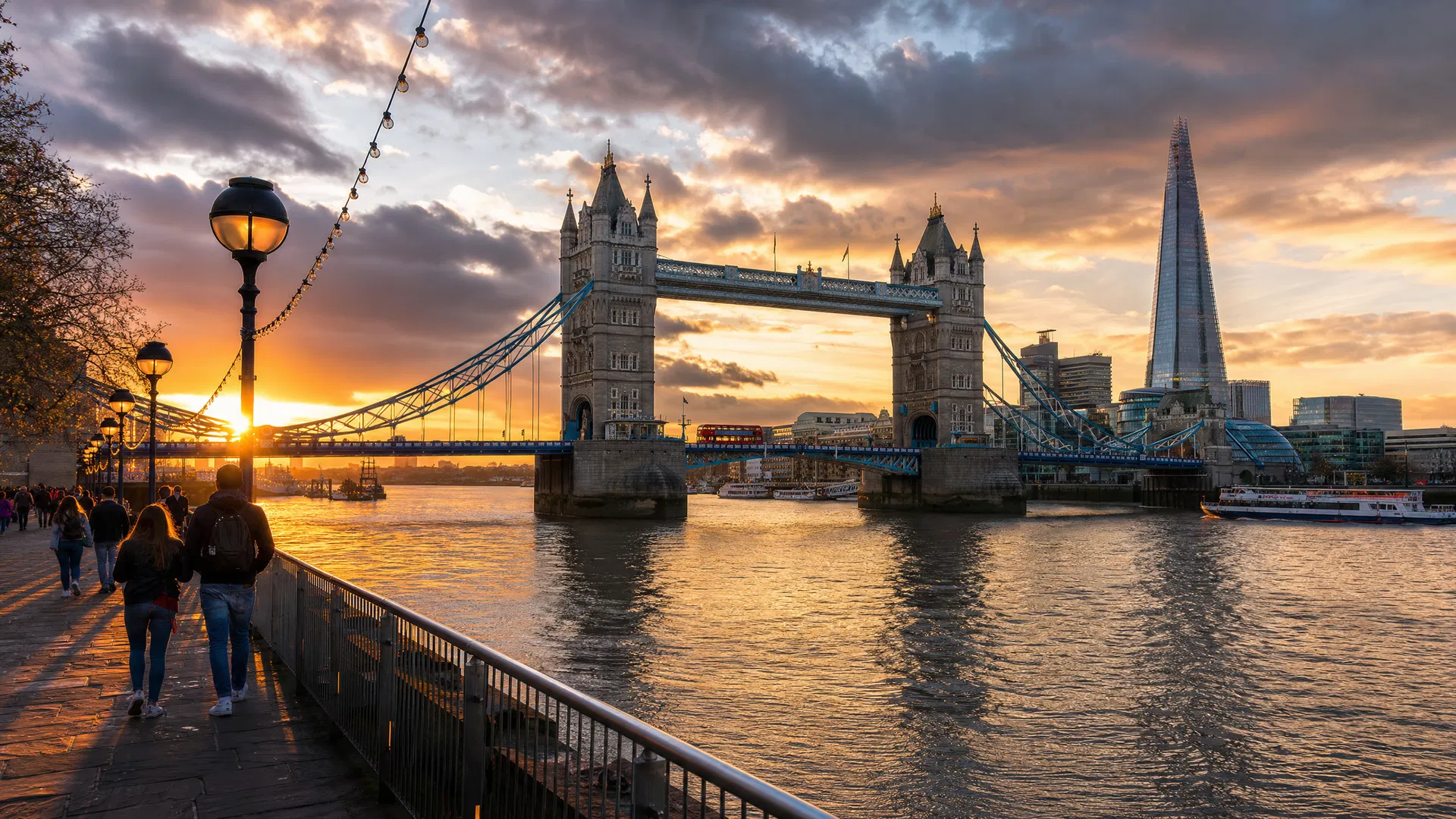
The Thames Clipper is the most underrated way to see London. The Uber Boat service runs from Putney in the west to Barking in the east, stopping at Battersea, Westminster, Tate Modern, Tower Bridge, and Greenwich. It costs about £5.60 one way. The views of the city from the water — St. Paul's, the Shard, Tower Bridge, the Gherkin — are better than from any tourist bus.
Highgate Cemetery is one of the most atmospheric places in London: a Victorian garden cemetery with overgrown paths, elaborate tombs, and Karl Marx's grave. The East Cemetery requires a guided tour; the West Cemetery is free to explore independently.
The Regent's Canal walk from Little Venice to Camden takes about an hour and passes through some of the most quietly beautiful parts of London — willow-shaded towpaths, narrowboats, Victorian warehouses, and the back of London Zoo. It ends at Camden Market, which is chaotic and wonderful and will take another hour to escape.
The Food: London's Greatest Redemption Arc
For most of the 20th century, British food was a punchline. Then, somewhere around the 1990s, London decided to become one of the great food cities of the world, and it has not looked back.
Borough Market, under London Bridge, has been feeding the city since the 13th century. On a Friday or Saturday morning, it is the best place in London to eat: Kappacasein's toasted cheese sandwich (a cult object), Brindisa's chorizo rolls, the raclette stall, the Ethiopian injera, the Portuguese custard tarts. Arrive hungry. Leave incapacitated.
Maltby Street Market, a few minutes' walk from Borough, is what Borough Market was before it became famous. A narrow railway arch alley, open on weekends, with a rotating cast of small-batch producers and street food vendors. Less crowded. More interesting. The kind of place that food writers discover and then feel slightly guilty about writing about.
Brick Lane on a Sunday morning is a full sensory experience: the curry houses are already open, the vintage market is in full swing, the bagel shops (open 24 hours, cash only) are selling salt beef bagels for £4, and the street art changes every few weeks. The Beigel Bake at the northern end of the street has been open since 1974 and has a queue that never fully disappears.
For a proper sit-down meal, Rasa on Stoke Newington Church Street serves dishes from India's Kerala region — creamy, meatless, and completely unlike the tikka masala you'll find everywhere else. For something more traditionally British, St. John in Clerkenwell is the restaurant that put nose-to-tail cooking on the map. For a Sunday roast done properly, find a pub in a residential neighborhood — not a tourist area — and order the beef.
The Pubs: A Separate Category Entirely
London's pub culture deserves its own section because it is genuinely unlike anything else in the world. Not the tourist pubs near the major attractions — those are fine but unremarkable. The pubs worth finding are the ones that have been in the same building for 200 years, that have a landlord who knows every regular by name, that serve a proper pint of bitter from a hand pump, and that feel like the social center of a neighborhood rather than a bar that happens to be old.
A few that earn their reputation: The Lamb in Bloomsbury, with its Victorian snob screens (small rotating glass panels that let drinkers see the bar without being seen — a relic of class anxiety). The Seven Stars behind the Royal Courts of Justice, tiny and perfect. The Prospect of Whitby in Wapping, which claims to be the oldest riverside pub in London (1520). The Grapes in Limehouse, which Dickens wrote about and which has a back terrace that hangs over the Thames.
One rule that Reddit will tell you and that is absolutely true: don't have fish and chips in a London pub. Have them from a proper chip shop, preferably not in central London, and eat them standing up. The pub is for the pint. The chip shop is for the chips.
Getting Around: The Tube, the Bus, and the Boat
The London Underground — the Tube — is the fastest way to move between neighborhoods and runs from early morning until around midnight (later on weekends). Tap in and out with a contactless card or phone; cash is no longer accepted. Fares start at £2.70 and cap daily, so you'll never pay more than a set amount no matter how many journeys you take.
The bus is slower but better for seeing the city. The upper deck of a double-decker on a clear day is one of the great free experiences in London. Route 15 (now a heritage route) runs a Routemaster bus from Trafalgar Square to Tower Hill. Route 11 passes Westminster, St. Paul's, and Liverpool Street. Sit upstairs, at the front, and watch the city go by.
One practical note that Reddit travelers consistently flag: don't take the Tube from the airport with heavy luggage. The stairs and narrow platforms are brutal with large suitcases. Take a cab or the Heathrow Express to Paddington instead. And avoid the Tube entirely during rush hour (7–9am, 5–7pm) if you can help it — it is not a pleasant experience.
When to Go
Spring (March–May) is the best time to visit London. The weather is mild, the parks are in bloom, the crowds haven't peaked, and the city feels genuinely alive. The Chelsea Flower Show in May is a major draw. April and May are when London looks like it was designed by a set decorator.
Summer (June–August) is peak tourist season, which means crowds, higher prices, and the occasional genuinely hot day that the city is completely unprepared for (the Tube in August is not for the faint-hearted). That said, the long evenings — it stays light until 10pm in June — are extraordinary, and the outdoor music festivals and events are worth the trade-off.
Autumn (September–October) is underrated. The crowds thin, the light turns golden, and the city's cultural calendar kicks into high gear. The London Design Festival in September is one of the best events of the year.
Winter (November–February) is cold, dark, and wet, but London does Christmas better than almost anywhere. The lights on Oxford Street and Regent Street go up in November. Winter Wonderland in Hyde Park runs through January. Kew Gardens launches its winter light trail. And the museums, galleries, and theaters are as good in January as they are in July — which is to say, extraordinary.
Practical Things Worth Knowing
The Oyster card vs. contactless: You don't need an Oyster card anymore. Any contactless bank card or phone payment works on all TfL transport and caps at the same daily maximum. If you're visiting from the US, check that your card doesn't charge foreign transaction fees.
Tipping: Not mandatory in London the way it is in the US. In restaurants, 10–12.5% is standard if service isn't already included (check the bill — many places add a service charge automatically). In pubs, you don't tip; you can offer to buy the bartender a drink if they've been particularly good. In taxis, rounding up is appreciated.
The weather: It rains in London. Not constantly, not dramatically, but persistently. Pack a waterproof layer. Waterproof shoes will save your trip. This is not negotiable.
Walking distances: London neighborhoods look close on a map and are often not. The distance from Westminster to Shoreditch feels walkable until you're halfway there. Use the Tube or bus for anything more than a mile or two, especially at the end of a long day.
Free things: The major national museums are free. Most parks are free. Many galleries are free. The Changing of the Guard at Buckingham Palace is free (check the schedule — it doesn't happen every day). Walking along the South Bank, through Borough Market, across Tower Bridge — all free. London rewards the traveler who is willing to walk and look.
Day Trips Worth Taking
London is also an excellent base for day trips. Bath — a UNESCO World Heritage city of Georgian architecture and Roman baths — is 90 minutes by train from Paddington. Oxford and Cambridge are both under an hour. The Cotswolds — the honey-stone villages and rolling hills that define the English countryside in the popular imagination — are accessible by train to Moreton-in-Marsh or Kingham. Brighton, on the south coast, is an hour from Victoria and has a beach (pebble, not sand, but the sea is the sea).
Further afield, Liverpool — two hours by train from Euston — is one of the most underrated cities in England: the Beatles, the football, the waterfront, and a food and music scene that punches well above its weight. York, three hours north, is a medieval walled city with a cathedral so large it took 250 years to build.
The Honest Assessment
London is expensive. A pint of beer costs £6–8 in most pubs. A sit-down dinner for two at a mid-range restaurant will run £60–100 with drinks. Hotel rooms in central London are not cheap. The Tube adds up. This is the reality of visiting one of the most expensive cities in the world.
But London also has more free world-class experiences per square mile than anywhere else on earth. You can spend a week here and spend almost nothing on entertainment if you're strategic about it. The museums alone — the British Museum's Elgin Marbles and Rosetta Stone, the Natural History Museum's blue whale skeleton, the V&A's fashion and design collections, the Tate Modern's permanent collection — would take weeks to see properly. The parks are free. The markets are free to browse. The architecture is free to look at. The street life is free to participate in.
London rewards the curious. It punishes the passive. Come with a plan, but be willing to abandon it when you turn a corner and find something you weren't expecting — because in London, that happens constantly, and it is always worth stopping for.
Plan Your London Trip with Leif
London has nine dedicated itineraries on Ask Leif, built for every type of traveler. Whether you're coming for the first time and want to see everything, or you're returning and want to go deeper, Leif builds your day-by-day plan around your dates, your budget, and how you actually travel.
- 5-Day London City Break: The Ultimate Urban Adventure Guide — The essential first-timer's itinerary covering the landmarks, the neighborhoods, and the things most guides miss.
- London for Couples: 5-Day Romantic Getaway with Theatre & Hidden Pubs — Notting Hill, the South Bank at night, West End theatre, and the pubs that don't appear on any tourist map.
- London Family Adventure: 5-Day Itinerary with Harry Potter & Museums — Built for families with kids, covering the Natural History Museum, the Harry Potter Studio Tour, and everything in between.
- London with Kids: The Complete Family Travel Guide — A longer, deeper family guide for a full week in the city.
- London Solo Travel: 5-Day Museums, Markets & Pubs Itinerary — For the solo traveler who wants to move at their own pace and find the city's edges.
- Solo London: 5-Day Unforgettable Adventure Beyond the Tourist Trail — A second solo guide that goes deeper into East London, the canal walks, and the neighborhoods most visitors never reach.
- London Food & Culture: A 4-Day Culinary Journey from Borough Market to Brick Lane — For the traveler who plans their trip around what they're going to eat.
- London on a Budget: 5 Days of Free Museums, Markets & Pubs for £60/Day — Proof that you can do London properly without spending a fortune.
- 5-Day London Couples Travel Guide: Romantic Notting Hill, Kew Gardens & South Bank — A second couples guide with a different focus: Kew Gardens, the river, and the quieter romantic corners of the city.
And if you want to make London the anchor of a wider England trip, Ask Leif also has guides for Bath, Oxford, Cambridge, the Cotswolds, Cornwall, the Lake District, Liverpool, Manchester, and York — so you can build the full England trip, not just the London chapter.
Tell Leif where you're going, how long you have, and what kind of traveler you are. The rest takes about 60 seconds.