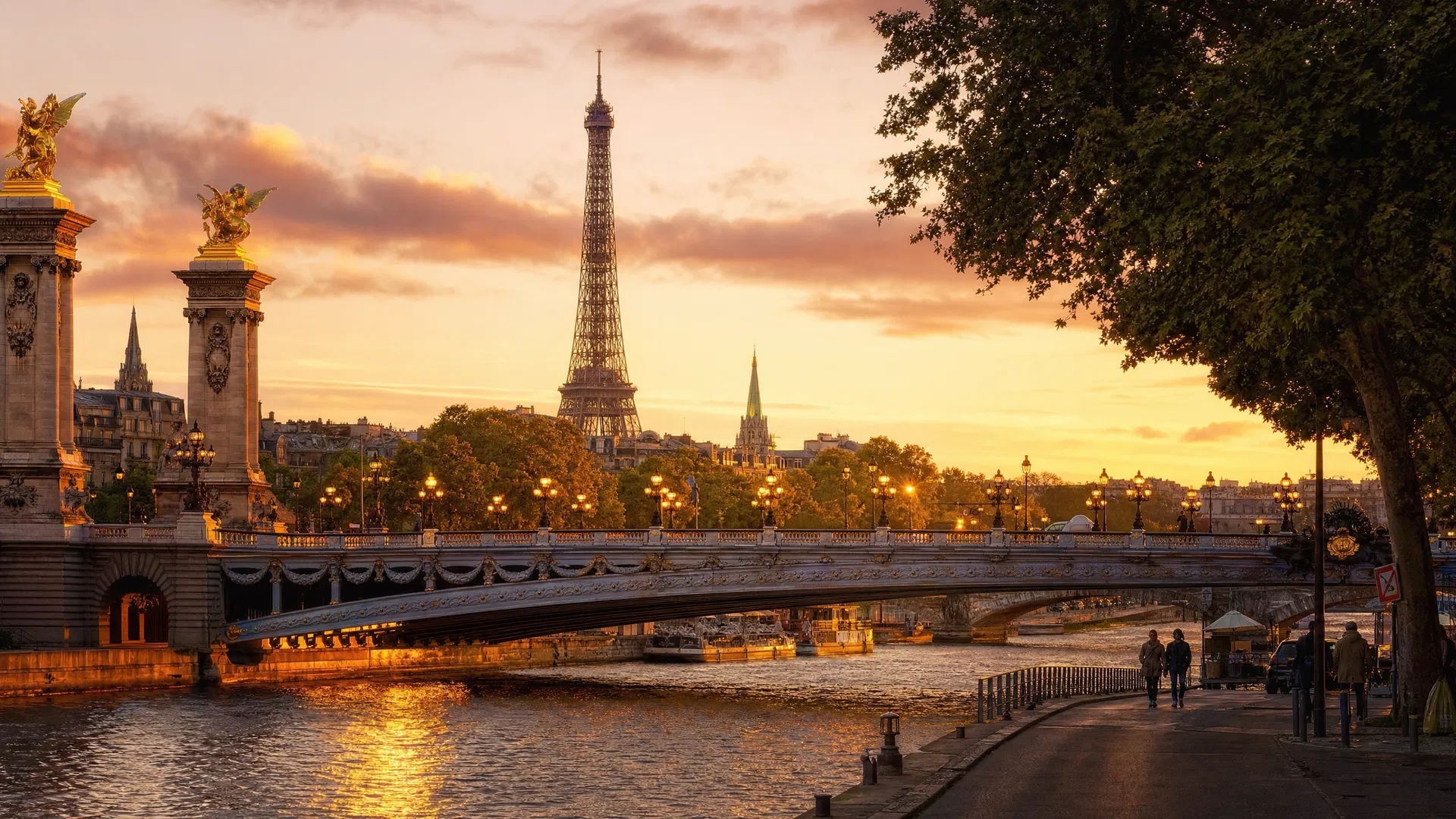
Paris, France: What Nobody Tells You Before Your First Trip
Destination: Paris, France
Category: Destination Guides
Paris, France: The City That Ruins Every Other City for You
There is a specific kind of grief that happens when you leave Paris. Not the dramatic, movie-version grief — no one is running through Charles de Gaulle airport in the rain. It's quieter than that. It's the moment you're back home, sitting in a perfectly acceptable café, drinking a perfectly acceptable coffee, and something feels slightly wrong. The light is different. The chairs are too comfortable. The waiter brought the check without being asked. You realize, with a dull ache, that you've been ruined.
Paris does this to people. It has been doing it for centuries.
The city is not perfect — and we'll get to that, because the honest version of Paris is more interesting than the postcard version. But it is, by almost any measure, the most fully realized city on earth. It is a place that has spent 2,000 years deciding exactly what it wants to be, and it has largely succeeded. The food, the architecture, the light, the pace, the particular way a Parisian can make you feel simultaneously unwelcome and utterly charmed — it all adds up to something that no other city has quite managed to replicate.
This is the guide for people who want the real thing.
The Paris Nobody Tells You About
Let's start with the part most travel guides skip: Paris is harder than it looks.
The city is physically demanding in ways that catch visitors off guard. The Métro — beautiful, efficient, color-coded — has almost no escalators. You will carry your luggage up and down steep, narrow staircases at every transfer. The cobblestones that look so charming in photographs will destroy your feet by day two. The distances between things that look close on a map are, in practice, a 25-minute walk. Paris is a city built for walking, and it will test your commitment to that idea daily.
The social rules are real. Saying bonjour when you enter any shop, café, or business is not optional — it is the minimum required acknowledgment that you understand you are in someone else's space. The Reddit community of Paris travelers is unanimous on this point: the single most effective thing you can do to improve your experience in Paris is to say bonjour when you walk in and bonne journée when you leave. Not because Parisians are unfriendly — they are not, as a rule — but because the greeting signals that you are a person, not a tourist processing unit. The difference in how you are treated is immediate and significant.
The other thing nobody tells you: Paris is not expensive if you know how to use it. The museums — the Louvre, the Musée d'Orsay, the Centre Pompidou, the Musée de l'Orangerie — are free on the first Sunday of every month. The parks are free always. The Seine is free. The carafe d'eau — tap water — is legally required to be provided free at any restaurant that serves food. A formule lunch at a neighborhood bistro (entrée + plat + dessert) runs €15–20 and is often the best meal you'll eat all day. Paris rewards people who pay attention.
The Neighborhoods: Twenty Arrondissements, Twenty Different Cities
Paris is organized into 20 arrondissements that spiral outward from the center like a snail shell. The first arrondissement contains the Louvre. The 20th contains Père Lachaise cemetery and Belleville. Everything in between is a different city.
Le Marais (3rd and 4th arrondissements)
The Marais is where medieval Paris survived Haussmann's 19th-century renovation of the city, which is why it still has narrow streets, Renaissance hôtels particuliers, and the Place des Vosges — the oldest planned square in Paris, built in 1612, still one of the most beautiful public spaces in Europe. It is also the center of Paris's Jewish community, with excellent falafel on Rue des Rosiers, and the heart of the city's LGBTQ+ neighborhood. On a Sunday morning, when the rest of Paris is quiet, the Marais is alive — the covered market at Marché des Enfants Rouges (the oldest covered market in Paris, 1615) is packed, the galleries are open, and the coffee is very good.
Montmartre (18th arrondissement)
Montmartre sits on a hill above the city, and the climb to the top — past the vineyard, past the artists' studios, past the small square where Picasso and Modigliani once argued about painting — is worth every step. The Sacré-Cœur basilica at the summit is a pilgrimage site and a tourist magnet simultaneously; the view from the steps at sunset, looking out over the whole of Paris, is one of those moments that justifies the entire trip. The neighborhood below — the real Montmartre, away from the Place du Tertre with its tourist-trap portrait artists — is a village of steep streets, ivy-covered walls, and the kind of wine bars that open at noon and close when the last person leaves.
Saint-Germain-des-Prés (6th arrondissement)
Saint-Germain is where the myth of Paris was largely invented. Sartre and de Beauvoir wrote at Les Deux Magots. Hemingway drank at the Café de Flore. James Baldwin lived on Rue de Seine. The neighborhood has been expensive and slightly self-conscious about its literary history for decades now, but it still has the best bookshops in Paris (Shakespeare and Company, just across the river in the 5th, is the most famous; the smaller shops on Rue de Buci are better), the best fromagers, and a particular quality of afternoon light that makes you understand why painters kept coming back.
Belleville and the 20th arrondissement
Belleville is where Paris is actually happening right now. A historically working-class neighborhood that absorbed waves of Jewish, Chinese, and North African immigration throughout the 20th century, it has become one of the most genuinely diverse and creatively alive parts of the city. The street art is extraordinary. The food — Vietnamese bánh mì, Sichuan hot pot, Tunisian brik, Yemeni honey cake — is some of the best in Paris. The bars stay open late and don't care what you're wearing. Rue de la Roquette and Rue Oberkampf, just to the south in the 11th, are where younger Parisians actually go out.
The 7th arrondissement and the Left Bank
The 7th is where the Eiffel Tower lives, and it is also where Paris is at its most formally beautiful. The Hôtel des Invalides, the Musée Rodin (in a garden that is itself worth the entrance fee), the Musée d'Orsay in a converted train station — all within walking distance of each other. The 7th is quiet in the evenings, expensive, and home to more embassies than restaurants. But the Rue Cler market street, a few blocks from the tower, is one of the best food shopping streets in the city: the cheese shop, the wine merchant, the butcher, the fishmonger, all within 200 meters of each other.
What to Actually Do (And What to Skip)
Do the Eiffel Tower — but do it right. The tower itself is extraordinary up close in a way that photographs don't capture. Book the summit tickets in advance (they sell out weeks ahead in summer), go at dusk, and watch the city turn gold below you. The light show at night — every hour on the hour — is genuinely magical and completely free to watch from the Champ de Mars.
The Musée d'Orsay over the Louvre, every time. The Louvre is the greatest art museum in the world and it will take you three days to see it properly. The Musée d'Orsay — Impressionism, Post-Impressionism, Monet, Renoir, Van Gogh, Degas, all in a converted Beaux-Arts train station — can be done in a focused four hours and will leave you more moved than anything in the Louvre. Go on a weekday morning. The Reddit consensus is unanimous: Musée d'Orsay first.
The Palais Royal gardens are one of the great secrets of central Paris. A few steps from the Louvre, enclosed by colonnaded arcades, with a garden that is somehow always quieter than it should be. Daniel Buren's striped columns in the courtyard are a contemporary art installation that has been controversial since 1986 and is now beloved. The arcades contain some of the most interesting small shops in Paris — antique toy soldiers, vintage stamps, specialist bookshops, a restaurant that has been serving the same menu since 1784.
Père Lachaise Cemetery is one of the most extraordinary places in Paris and is treated by most tourists as a Jim Morrison pilgrimage site. Morrison's grave is there, yes, and it is surrounded by a small crowd of people who look like they're waiting for something. But Père Lachaise also contains the graves of Chopin, Proust, Oscar Wilde (whose tomb is covered in lipstick kisses), Édith Piaf, Molière, and Balzac. It is 110 acres of elaborate Victorian funerary architecture, ancient trees, and the kind of silence that cities rarely achieve. Go on a weekday afternoon.
The Covered Passages are a pre-Haussmann Paris that survived by accident. The Galerie Vivienne, the Passage des Panoramas, the Passage Jouffroy — 19th-century shopping arcades with glass roofs, mosaic floors, and a slightly dreamlike quality. Most tourists never find them. They are five minutes from the Grands Boulevards and feel like a different century.
The Food: Where to Eat in a City That Takes Eating Seriously
Paris does not have a food scene. Paris is a food scene. The distinction matters.
The croissant question is the first thing to get right. A good croissant — properly laminated, with visible layers, slightly honeyed on the outside, yielding in the middle — is one of the great pleasures of being alive. A bad croissant, which is what you get at most tourist-facing cafés, is a disappointment that sets the wrong tone for the day. The best croissants in Paris come from small neighborhood boulangeries, not from famous names. Look for the Meilleur Ouvrier de France designation (a gold-and-blue collar on the baker's uniform) or simply follow the queue. If there's a queue at 8am, the croissants are worth it.
Bistro lunch is the best-value meal in Paris. The formule — a fixed-price lunch menu — is how working Parisians eat in the middle of the day, and it is how you should eat too. For €15–22, you get a starter, a main, and often a glass of wine or a dessert. The quality is consistently higher than dinner at the same price point because lunch is when the kitchen is cooking for locals, not tourists. Go to a bistro in a residential neighborhood — the 11th, the 15th, the 18th — not in the tourist zones.
The markets are non-negotiable. The Marché d'Aligre in the 12th is the best food market in Paris that most visitors never find: a covered hall and an outdoor market running simultaneously, with the best prices in the city and a wine bar that opens at 8am. The Marché Bastille on Thursday and Sunday mornings is larger and more famous. The Marché des Enfants Rouges in the Marais is the oldest and most atmospheric. All three are worth a morning.
For a proper sit-down experience, the brasseries of the Grands Boulevards — Brasserie Lipp in Saint-Germain, Le Grand Véfour in the Palais Royal, Bouillon Chartier near the Opéra — are institutions that have been feeding Paris for over a century. Chartier in particular is extraordinary: a Belle Époque dining room with 320 seats, waiters in long white aprons, and a menu of classic French dishes at prices that haven't changed much since the 1990s. The queue is long. Go anyway.
The Café: A Separate Philosophy
The Parisian café is not a coffee shop. It is not a place to work on your laptop for three hours while nursing a single flat white. It is a place to sit, to watch, to exist in public without agenda.
The ritual is specific: you order at the bar (cheaper than table service), you take your café — a small, strong espresso — standing or sitting, you do not rush, you do not apologize for taking up space. If you sit at a terrace table, you can stay as long as you like. No one will bring you the check until you ask for it (l'addition, s'il vous plaît). This is not rudeness — it is respect for your time and your right to sit undisturbed.
The best café experience in Paris is not at Les Deux Magots or the Café de Flore, both of which are beautiful and expensive and full of people photographing themselves. It is at a neighborhood café in the 11th or the 18th, where the zinc bar is worn smooth, the patron knows everyone's order, and the afternoon light comes through the windows at exactly the right angle. Sit there. Order a demi (half-pint of draft beer) or a kir (white wine with blackcurrant liqueur). Watch Paris go by.
Planning Your Trip: Where the Guides Come In
The shape of your Paris trip depends entirely on who you are and who you're traveling with — and that's where the planning gets interesting.
If you're coming for the first time and want to cover the essential ground without missing anything, our 5-day first-timer's itinerary builds a logical route through the city that hits the Eiffel Tower, the Marais, Montmartre, and the Musée d'Orsay without feeling like a forced march. It's designed for people who want to see the city properly, not just collect landmarks.
Traveling as a couple? Paris is, genuinely, one of the great romantic cities — not because of the clichés, but because it is a city that rewards slow attention, and slow attention is what couples do best. The 5-day couples' itinerary focuses on the experiences that work best for two: a morning at the Musée Rodin's sculpture garden, an afternoon in Saint-Germain, a dinner reservation that requires advance planning, a walk along the Seine after dark.
Coming solo? Paris is one of the best cities in the world to travel alone — the café culture is built for solitary people, the museums are better experienced without someone asking when you're going to be done, and the city rewards the kind of wandering that's only possible when you're accountable to no one's schedule but your own. The 4-day solo guide leans into that: the covered passages, the smaller museums, the neighborhoods that don't make the top-ten lists, the jazz clubs that the Reddit thread mentioned and that most first-timers miss entirely.
Watching the budget? Paris has a reputation for being expensive that is partly deserved and partly a function of eating in the wrong places and paying for things that are free. The 5-day budget guide is built around the €80/day reality: free museums on the right days, market lunches instead of restaurant lunches, the Métro instead of taxis, and the discovery that the best things in Paris — the parks, the river, the architecture, the simple act of sitting in a café and watching the city — cost almost nothing.
Bringing the family? Paris with kids is genuinely wonderful and genuinely chaotic in equal measure. The city has more to offer children than most parents expect — the Cité des Sciences et de l'Industrie in the 19th is one of the best science museums in Europe, the Luxembourg Gardens has a puppet theater that has been running since 1933, and the Eiffel Tower is, for a child, one of the most legitimately impressive things on earth. The 5-day family itinerary paces the trip for mixed ages, with the right balance of iconic stops and breathing room.
And if food is the reason you came — if the croissant question and the bistro lunch and the market morning are the whole point — the 5-day food and culture guide is built for you. It is organized around eating: the best boulangerie in each neighborhood, the market schedule, the bistro lunch, the cheese shop, the wine bar, the late-night crêpe. It is, in our opinion, the best way to understand Paris, because Paris is ultimately a city that expresses itself through what it puts on the table.
Getting Around: The Métro, the Bus, and Your Feet
The Paris Métro is one of the great urban transit systems in the world. Fourteen lines, 302 stations, running from 5:30am to 1:15am on weekdays and until 2:15am on weekends. Buy a carnet of ten tickets (cheaper per ride than individual tickets) or use a contactless card. The app to use is Citymapper — not Google Maps, not Apple Maps, both of which have been known to fail on Paris transit routing. Citymapper gives step-by-step instructions for every mode of transport and is consistently accurate.
The bus is slower but better for seeing the city. Line 69 runs from the Eiffel Tower through Saint-Germain, across the Seine, through the Marais, and out to Père Lachaise — essentially a guided tour of Paris for the price of a Métro ticket. Sit on the right side going east.
The Vélib' bike-share system is excellent and underused by tourists. The city has invested heavily in cycling infrastructure over the past decade, and Paris is now genuinely bikeable in a way it wasn't ten years ago. For a flat city (mostly — Montmartre is the exception), a bike is often faster than the Métro for medium distances and infinitely more enjoyable.
One practical note that every Paris traveler eventually learns: do not take a taxi from Charles de Gaulle to central Paris during rush hour. The journey can take two hours and cost €80. Take the RER B train to Châtelet-Les Halles (45 minutes, €11.80) or the Orlybus from Orly (30 minutes, €9.50). The trains are clean, direct, and reliable.
When to Go
Spring (April–June) is Paris at its best. The chestnut trees are in bloom along the boulevards, the café terraces are full, the light is extraordinary, and the city feels like it's been waiting all winter to show off. May is the sweet spot: warm enough for terrace dining, not yet crowded with summer tourists, and the Luxembourg Gardens are in full bloom.
Summer (July–August) is peak tourist season, which means queues, higher prices, and the fact that many Parisians actually leave the city in August (the grandes vacances is a real phenomenon — some neighborhood restaurants and shops close entirely). That said, the Paris Plages — artificial beaches along the Seine, installed every summer — are genuinely fun, and the long evenings are extraordinary.
Autumn (September–October) is the most underrated time to visit. The summer crowds are gone, the light turns golden, the café terraces are still warm enough to use, and the city feels like it belongs to itself again. The rentrée — the return from summer holidays — brings a particular energy to Paris in September: new exhibitions, new restaurant openings, the sense that the city is starting something.
Winter (November–February) is cold, grey, and occasionally magical. The Christmas markets are genuine (not the manufactured versions you find elsewhere in Europe), the museums are uncrowded, and Paris in the rain — which is how you'll spend at least some of your time — has a quality that no other season can replicate. Bring a good coat and low expectations for the weather, and you'll be rewarded.
The Practical Things Nobody Puts in the Guidebook
Water: Ask for une carafe d'eau at any restaurant. It is free, it is tap water, it is perfectly safe, and it will save you €4–6 per person per meal. Restaurants are legally required to provide it.
Tipping: Not required, not expected, occasionally appreciated. A small rounding-up of the bill is fine. The American-style 20% tip is not a thing in France and will confuse your server.
Language: The "Parisians are rude about English" reputation is largely outdated. Most people in service industries speak enough English to help you. The key is to try French first — even badly — before switching to English. Bonjour, parlez-vous anglais? ("Hello, do you speak English?") opens more doors than walking in and immediately speaking English.
Pickpockets: Real, particularly around the Eiffel Tower, the Sacré-Cœur, and on the RER B from CDG. Use a money belt or a front pocket for your phone and wallet. Don't let anyone put a bracelet on your wrist.
Sunday: Paris is quieter on Sundays than almost any other major city. Many shops are closed. The Marais and the Champs-Élysées are exceptions. Plan accordingly — Sunday is a good day for parks, museums (free on the first Sunday of the month), and long lunches.
The Thing About Paris
There's a line that gets attributed to various people — Hemingway, Fitzgerald, someone else who spent too much time in a Saint-Germain café — that Paris is a moveable feast. The idea is that the city goes with you. That once you've been there, you carry it.
It's a bit much, as a sentiment. But it's also, annoyingly, true.
Paris is the city that makes you reconsider what a city can be. Not because it's perfect — it isn't, and the Parisians will be the first to tell you so, at length, with considerable passion. But because it has decided, with absolute conviction, what it values: beauty, food, conversation, the right to sit in a café for two hours without being asked to leave, the idea that public space belongs to everyone and should be treated accordingly. These are not small things. In a world that is increasingly optimized for efficiency and throughput, Paris remains stubbornly committed to the idea that the point of a city is to be lived in.
Go. Stay longer than you planned. Come back.
And when you're ready to build the actual itinerary — the one that fits your dates, your budget, your travel style, and the specific version of Paris you want to experience — Leif will have it ready in 60 seconds.