Istanbul: The City That Belongs to No One — and Everyone at Once
Destination: Istanbul
Category: destination-guides
The Geography That Made Everything Possible
Before you can understand Istanbul, you have to understand the Bosphorus. This narrow strait — barely 700 meters wide at its narrowest point — connects the Black Sea to the Sea of Marmara and ultimately to the Mediterranean. For the entirety of human history until very recently, it was the only maritime route between those bodies of water. Every ship carrying grain from the Black Sea, every merchant moving silk from Persia, every navy projecting power across the eastern Mediterranean had to pass through Istanbul's front door.
That geography made Istanbul the wealthiest, most strategically important city on earth for most of recorded history. It also made it the most fought-over. The city has been conquered, sacked, rebuilt, and reconquered more times than almost anywhere else on the planet. Each civilization that held it left something behind — a church converted to a mosque converted to a museum, a palace built on the foundations of an older palace, a neighborhood named after the merchants who once lived there and still carries the echo of their language.
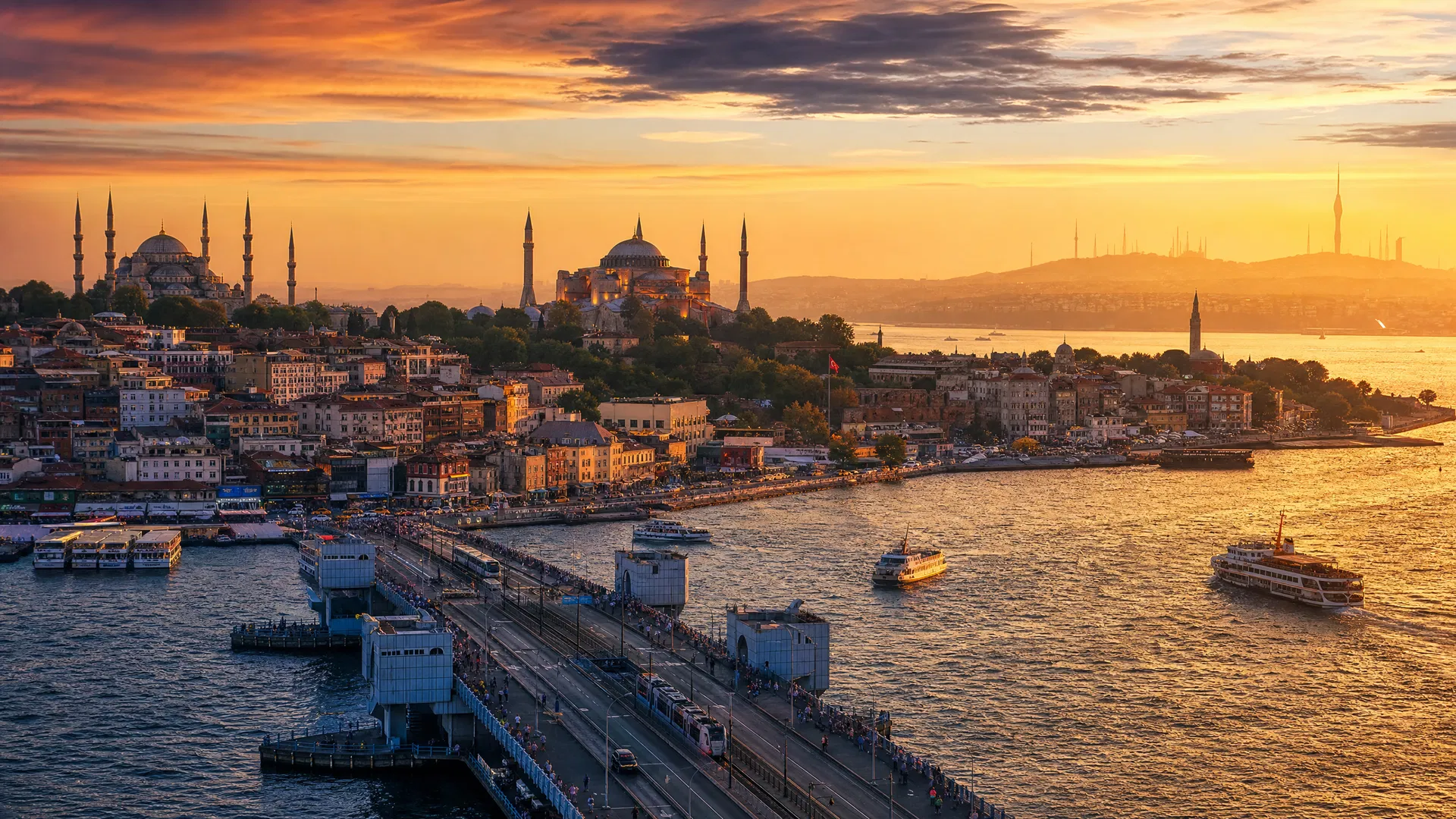
The Bosphorus today is still one of the world's great spectacles. Watching the tankers and container ships move through it while the domes and minarets of the old city rise on one side and the modern towers of the Asian shore rise on the other is one of those experiences that makes you feel the weight of history in a way that no museum can replicate. Take the public ferry. Not the tourist boat — the public ferry, the one the locals use to commute. It costs almost nothing, it runs constantly, and the view from the water is the best introduction to Istanbul that exists.
The Old City: Where Three Thousand Years Live in One Square Mile
Sultanahmet — the old city, the historic peninsula — is where most first-time visitors spend most of their time, and for good reason. The density of significant history here is almost absurd. Within a ten-minute walk of each other, you have the Hagia Sophia, the Blue Mosque, Topkapı Palace, the Hippodrome, the Basilica Cistern, and the Grand Bazaar. Any one of these would be the centerpiece attraction of most cities. Here they're neighbors.
The Hagia Sophia is the one that stops people cold. Built in 537 AD by the Emperor Justinian, it was the largest building in the world for nearly a thousand years. The dome — 55 meters high, 31 meters in diameter — appears to float, held up by nothing, lit by a ring of windows that flood the interior with light. It has been a cathedral, a mosque, a museum, and a mosque again. The layers of history are literally visible: Byzantine mosaics peeking out from behind Ottoman calligraphy, the names of the four caliphs hanging in enormous medallions above the Christian nave. It is one of the few buildings on earth that genuinely deserves the word "awe-inspiring." Go early — the crowds by mid-morning are significant, and the scaffolding currently inside (ongoing restoration) is easier to ignore when you're not fighting for space.
The Blue Mosque — officially the Sultan Ahmed Mosque — sits directly across the Hippodrome from the Hagia Sophia, close enough that the two buildings seem to be in conversation. The interior is covered in more than 20,000 hand-painted Iznik tiles in shades of blue that shift with the light. It is still an active mosque, which means it closes for prayer five times a day and requires modest dress from visitors — both of which are worth respecting, not just tolerating. The experience of being inside a working mosque of this scale, surrounded by worshippers, is something that a museum can never replicate.
Topkapı Palace is where the Ottoman sultans lived and ruled for nearly four centuries, and it is enormous — not a single building but a complex of courtyards, pavilions, treasuries, and the famous Harem. The Imperial Treasury alone contains the Topkapı Dagger, the Spoonmaker's Diamond (one of the largest in the world), and the Throne of Nadir Shah. Allow at least half a day. The views of the Bosphorus from the palace gardens are among the best in the city.
The Grand Bazaar is the oldest and largest covered market in the world — 61 covered streets, more than 4,000 shops, and somewhere between 250,000 and 400,000 visitors per day. It is chaotic, overwhelming, and absolutely worth it. The trick is to not go with a shopping agenda. Go to wander. Go to look at the architecture — the painted vaulted ceilings, the hans (caravanserais) tucked behind the main corridors, the tea boys weaving through the crowds with trays of çay. If you do want to buy something, know that the first price quoted is not the real price, and that walking away is always an acceptable negotiating tactic.
One block from the Grand Bazaar is the Spice Bazaar (Mısır Çarşısı), which is smaller, more manageable, and frankly more useful. The dried fruits, nuts, spices, Turkish delight, and lokum here are the real thing — not the tourist-grade stuff. This is where Istanbul's home cooks shop. Buy saffron, buy sumac, buy pomegranate molasses. You will use all of it.
The Basilica Cistern is one of Istanbul's most underrated experiences. Built in the 6th century to supply water to the Great Palace of Constantinople, it's a vast underground chamber supported by 336 columns, many of them repurposed from earlier Roman structures. The two columns at the far end rest on carved Medusa heads — one upside down, one on its side, placed that way deliberately to neutralize the mythological power of the gaze. It is eerie and beautiful and unlike anything else in the city. The recent renovation has added some theatrical lighting that divides opinion, but the space itself is extraordinary.
Beyoğlu and Galata: The Modern Heart
Cross the Galata Bridge from the old city and you enter a different Istanbul. Beyoğlu — the neighborhood that climbs the hill from the Bosphorus waterfront up to Taksim Square — has been the cosmopolitan, international, bohemian quarter of the city for centuries. Venetians, Genoese, Greeks, Armenians, Jews, and Levantine traders all made their homes here, and the architecture reflects that history: baroque churches next to Ottoman mosques next to art nouveau apartment buildings next to neoclassical consulates.
The spine of Beyoğlu is İstiklal Caddesi — Independence Avenue — a three-kilometer pedestrian boulevard that runs from Taksim Square down to Galata. More than a million people walk it every day. It is loud, crowded, full of shops and restaurants and street musicians and the occasional political demonstration. The vintage red tram that runs its length is more symbol than transport at this point, but it's worth riding once just for the photograph.
The real Beyoğlu is in the side streets. Cihangir, the neighborhood that slopes down from İstiklal toward the Bosphorus, is where Istanbul's artists, writers, and foreign residents have always lived. The streets are steep and cobbled, the buildings are slightly unkempt in the way that suggests character rather than neglect, and the cafes are the kind where you can sit for three hours with a single coffee and nobody will ask you to leave. It is one of the most genuinely pleasant neighborhoods to simply exist in that exists anywhere in Europe.
Galata — the neighborhood around the medieval Genoese tower at the bottom of the hill — has been through several reinventions in the last decade. It's now a mix of antique dealers, independent bookshops, specialty coffee roasters, and the kind of restaurants that take reservations three weeks out. The Galata Tower itself offers the best panoramic view of the old city and the Bosphorus, though the lines can be long — go at sunset, and book tickets in advance.
Karaköy, the waterfront neighborhood at the base of Galata, is where the city's food scene has been quietly exploding for the last decade. The old wholesale fish market has been replaced by a cluster of restaurants, wine bars, and specialty food shops that would feel at home in any major European capital. Karaköy Güllüoğlu — one of the oldest baklava shops in the city — is here, and it is not to be missed. Get the pistachio, get the kaymak on the side, and eat it standing up at the counter the way locals do.
Balat and Fener: The Neighborhood That Rewrites Your Expectations
On the western shore of the Golden Horn, about twenty minutes from the Grand Bazaar by tram and foot, sits Balat — a former Jewish quarter that has become one of Istanbul's most photographed and most genuinely interesting neighborhoods. The streets are steep and narrow, the houses are painted in faded colors that look like they were chosen by someone who had very strong opinions about ochre and turquoise, and the whole place has the quality of a neighborhood that has survived several different eras without quite belonging to any of them.
The honest caveat, echoed by locals and recent visitors alike: Balat has become somewhat touristy in recent years. The colorful stairs on Merdivenli Yokuş are now a full-on Instagram destination, and some of the coffee shops have the slightly manufactured quality of places that exist to be photographed rather than inhabited. But go early in the morning, before the crowds arrive, and the neighborhood reveals itself differently — the old men playing backgammon outside the tea house, the cats sleeping on the warm stone steps, the smell of bread from the bakery that has been there since before anyone can remember.
Adjacent to Balat is Fener, the Greek Orthodox quarter, home to the Ecumenical Patriarchate of Constantinople — still the spiritual center of Eastern Orthodox Christianity, still here in Istanbul, still operating in a neighborhood that has been Greek since before the Ottoman conquest. The Chora Church (Kariye Mosque), a short walk away, contains some of the finest Byzantine mosaics in existence — better preserved and less crowded than the Hagia Sophia, and genuinely overwhelming in their detail and beauty. If you have any interest in Byzantine art, this is not optional.
Kadıköy: The Asian Side That Changes Everything
Most first-time visitors to Istanbul spend all their time on the European side. This is understandable and also a mistake. The ferry across the Bosphorus to Kadıköy — the main neighborhood on the Asian shore — takes about twenty minutes and costs almost nothing, and it deposits you in a completely different city.
Kadıköy is where Istanbul's young, creative, educated class lives and eats and drinks. It is less touristy than Beyoğlu, more local, and arguably better for food. The market area around Kadıköy İskelesi is one of the great sensory experiences of the city — fishmongers, cheese shops, spice vendors, pickle sellers, and the kind of produce that makes you realize how much of what you buy at home is a pale imitation. The neighborhood of Moda, just south of the market, is where the city gets genuinely quiet and residential — tree-lined streets, seafront promenades, the kind of cafes where the regulars know each other's names.
For food, the Reddit consensus and the local consensus align: Kebapçı İskender İskenderoğlu in Kadıköy is the place to eat Iskender kebab — the dish of thinly sliced döner over pide bread, drenched in tomato sauce and brown butter poured tableside, with yogurt on the side. The family that owns this restaurant is the family that invented the dish. The bread is made fresh from a sourdough starter. It is expensive by Istanbul standards and worth every lira.
The Food: Why Istanbul Deserves Its Own Culinary Pilgrimage
Istanbul's food culture is one of the great underappreciated stories in global gastronomy. The city sits at the intersection of the Mediterranean, the Middle East, and Central Asia, and its cuisine reflects three thousand years of absorbing, adapting, and perfecting the best of all of them. It is not "Turkish food" in the generic sense that most Western restaurants represent it. It is something far more specific, far more layered, and far more worth seeking out.
Start with breakfast. The Turkish breakfast — kahvaltı — is one of the world's great meals, and Istanbul takes it seriously. A proper spread includes olives, white cheese, tomatoes, cucumbers, honey, clotted cream (kaymak), eggs cooked multiple ways, simit (sesame-crusted bread rings), börek (flaky pastry filled with cheese or spinach), and multiple types of jam, all served with endless glasses of strong black tea. This is not a quick meal. This is a two-hour event. The neighborhoods of Cihangir and Kadıköy have the best breakfast spots; look for places with outdoor seating and a line of locals waiting.
The street food is its own education. Simit — the sesame bread ring sold from carts all over the city — is the everyday bread of Istanbul, eaten for breakfast, as a snack, at any hour. Balık ekmek — grilled mackerel in bread, sold from boats moored under the Galata Bridge — is one of the city's iconic street foods and one of those things that tastes inexplicably better eaten standing on the waterfront than it would anywhere else. Midye dolma — mussels stuffed with spiced rice, sold from street carts, eaten by squeezing lemon over them and eating them standing up — is something you will either love immediately or need to be talked into. Be talked into it.
Kokoreç — spiced and grilled lamb intestines, minced and served on bread — is the adventurous choice that locals eat with great enthusiasm and tourists approach with justified caution. Try it. Lahmacun — thin crispy flatbread topped with spiced minced meat, rolled up with fresh parsley and a squeeze of lemon — is the street food that will make you question every pizza you've ever eaten. Menemen — scrambled eggs with tomatoes and green peppers — is the breakfast dish that will ruin you for ordinary eggs.
For sit-down dining, the city has a range that spans from neighborhood meyhanes (taverns where the food comes in waves of small plates and the raki flows freely) to a growing collection of serious restaurants. Istanbul now has multiple Michelin-starred restaurants, but the more interesting story is the mid-range: places like Çiya Sofrası in Kadıköy, which serves regional Anatolian dishes that you cannot find anywhere else in the city, or the lokanta culture — simple lunch restaurants that serve a rotating menu of home-style dishes from a steam table, where you point at what you want and pay almost nothing.
Baklava is not a dessert here. It is a food group. Karaköy Güllüoğlu is the reference point — the pistachio baklava, the walnut, the fıstıklı sarma (thin layers of pastry rolled around pistachios). Künefe — shredded phyllo dough filled with soft cheese, soaked in syrup, served hot — is the dessert that most visitors don't know about and immediately become obsessed with. Dondurma — Turkish ice cream, made with mastic and salep, with a chewy, elastic texture unlike any other ice cream — is sold from carts by vendors who will perform an elaborate routine of pretending to give it to you and then pulling it away before you can grab it. This is not annoying. It is genuinely entertaining.
Drink tea. Constantly. Turkish tea — çay — is served in small tulip-shaped glasses, strong, without milk, with sugar on the side. It is offered everywhere: in shops, in carpet stores, in offices, by strangers. Accepting it is not a commitment to buy anything. It is a social ritual, and participating in it is one of the small ways you can signal that you are a traveler rather than a tourist.
The Hammam: The Experience You Shouldn't Skip
The Turkish bath — hamam — is one of Istanbul's oldest institutions, and going to one is not a tourist activity. It is a genuine cultural experience that has been part of daily life in this city for six hundred years. The ritual is simple: you enter, you sweat in the hot room (sıcaklık), an attendant scrubs you with a kese (exfoliating mitt) that will remove what feels like an entire layer of skin, you get a foam massage, and you emerge feeling like a new person. The whole process takes about an hour and a half.
The historic hammams in Sultanahmet — Çemberlitaş Hamamı (1584, designed by Mimar Sinan) and Cağaloğlu Hamamı (1741, one of the last great Ottoman hammams built) — are the most architecturally significant and the most tourist-friendly. They are also more expensive than neighborhood hammams. If you want a more local experience, ask your hotel for a recommendation in their neighborhood. The experience is essentially the same; the price and the crowd are different.
Day Trips Worth Taking
The Princes' Islands (Adalar) — a cluster of nine islands in the Sea of Marmara, reachable by ferry from Kabataş in about an hour — offer something Istanbul proper cannot: quiet. Cars are banned on the main islands; transport is by horse-drawn carriage or bicycle. The largest island, Büyükada, has Victorian-era wooden mansions, a hilltop monastery with views across the sea, and a pace of life that feels like a different century. Go on a weekday if possible; summer weekends bring half of Istanbul with you.
Edirne — the former Ottoman capital, two and a half hours from Istanbul by bus — is home to the Selimiye Mosque, which Mimar Sinan considered his masterpiece (he built it after the Süleymaniye, when he was in his eighties, and said he had finally surpassed the Hagia Sophia). It is one of the great buildings of the Islamic world and sees a fraction of the visitors that Istanbul's mosques receive. The city also has excellent liver kebab, if that matters to you.
Bursa — the first Ottoman capital, two hours by ferry and bus — has the Green Mosque and Green Tomb (both genuinely stunning), the original Iskender kebab restaurant (the Bursa branch of the family that invented the dish), and a covered bazaar that predates the Grand Bazaar in Istanbul. It is a full day trip and worth every minute.
Practical Notes for First-Timers
Getting around: Istanbul's public transport system is genuinely excellent and genuinely confusing until you understand it. The Istanbulkart — a rechargeable transit card — works on the metro, tram, bus, and ferry, and makes everything dramatically cheaper than paying per ride. Get one at the airport. The tram line T1 connects the airport area to Sultanahmet and Karaköy and is the most useful single line for tourists. The ferry system is the most pleasant way to move between the European and Asian sides.
Taxis: Use Uber or the official BiTaksi app. Street taxis in Istanbul have a well-documented history of taking tourists on scenic routes and running meters creatively. This is not universal, but it's common enough that the apps — which show you the route and the price in advance — are worth the slight premium.
Mosques: Dress modestly. Women should cover their hair and shoulders; men should cover their knees. Most mosques provide scarves and coverings at the entrance if you don't have them. Remove your shoes. Be quiet. These are active places of worship, not museums, and treating them as such is both respectful and, frankly, part of the experience.
When to go: April through June and September through November are the ideal windows — mild temperatures, manageable crowds, and the city at its most beautiful. July and August are hot, humid, and extremely crowded. December through February is quiet and cheap, with occasional cold rain, but the city has a melancholy beauty in winter that some travelers prefer.
The lira: Turkey's currency has been volatile in recent years, which means Istanbul is currently extraordinary value for visitors paying in dollars or euros. A full dinner at a good restaurant, a ferry ride, a hammam, a day of museum tickets — the total cost of a day in Istanbul is a fraction of what the equivalent would cost in Paris, London, or Rome. This will not last forever.
The Istanbul Guides: Plan Your Trip with Leif
Whether you're planning a romantic escape along the Bosphorus, a solo adventure through the bazaars, a family trip through Byzantine history, or a deep dive into one of the world's great food cities, Ask Leif has a guide built specifically for your trip style.
Our 5-Day Istanbul Couples Guide covers romantic Istanbul — rooftop dinners with Bosphorus views, private hammam experiences, sunset ferry rides, and the neighborhoods where the city slows down enough to feel intimate.
For first-timers who want to see everything that matters, the 5-Day Istanbul City & Culture Guide is the essential itinerary — Hagia Sophia, Topkapı, the Grand Bazaar, Beyoğlu, a Bosphorus cruise, and the Asian side, all sequenced to make sense of the city's geography.
Traveling on a tight budget? The 5-Day Istanbul Budget Guide proves that Istanbul on $45 a day is not only possible but genuinely excellent — the city's best experiences (the mosques, the ferries, the street food, the markets) cost almost nothing.
For the food-obsessed, the 4-Day Istanbul Food & Culture Guide is a culinary deep dive: the Spice Bazaar, the Kadıköy market, the best meyhanes, the baklava shops, the breakfast culture, and the street food that defines the city.
Solo travelers will find everything they need in the 5-Day Solo Istanbul Guide — practical logistics, the best neighborhoods for solo exploration, and the experiences that are better alone than in a group.
And for families, the 5-Day Istanbul Family Guide maps out a week that keeps kids genuinely engaged — the Basilica Cistern (always a hit), the ferry rides, the palace kitchens, the dondurma vendors, and the neighborhoods where the city's energy is infectious rather than overwhelming.
The Last Thing
Istanbul is the kind of city that people fall into rather than visit. The expat who came for a week and stayed for a year. The traveler who booked a return flight before the first trip was over. The writer who has been trying to describe it accurately for decades and keeps failing.
"It takes more than a lifetime to understand Istanbul," a local told one writer who moved there by accident and never quite left. That's not a warning. That's an invitation.
The city has been the center of the world before. It has the confidence of a place that knows its own worth and doesn't need to prove it to you. It will not perform for you. It will not simplify itself for your convenience. It will hand you a glass of tea, point you toward something extraordinary, and wait to see if you're paying attention.
You should be paying attention.
Ready to start planning? Let Leif build your Istanbul itinerary — personalized to your travel style, your budget, your dates, and the things that actually matter to you. No two itineraries are ever the same.