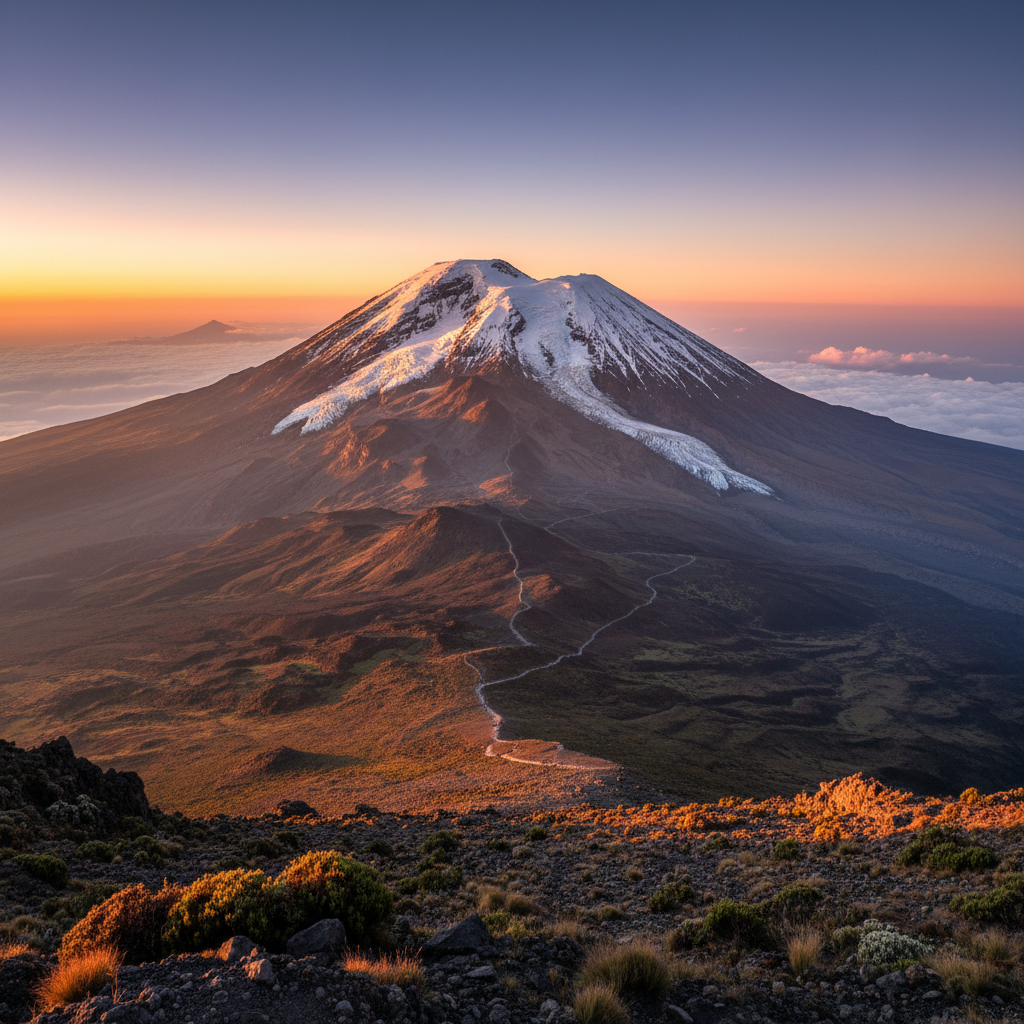
Mount Kilimanjaro Lemosho Route: 7-Day Summit Trek to Uhuru Peak
Conquer Africa's highest peak on the Lemosho Route with this 7-day Mount Kilimanjaro summit trek guide. Experience glaciers, diverse ecosystems, and the roof of Africa.
- Duration: 7 Days
- Estimated Budget: $2,500–$4,500
- Best Time to Visit: January-March and June-October (dry seasons for best visibility and trail conditions)
- Destination: Mount Kilimanjaro, Tanzania
Reaching the roof of Africa is a profound personal achievement, and the Lemosho Route on Mount Kilimanjaro offers the most scenic and safest path to Uhuru Peak. This 7-day trek is designed for those who dream of standing above the clouds, providing optimal acclimatization and breathtaking views that make every challenging step worth it.
The moment you step into the dense, emerald embrace of the rainforest on the western flank, near the Londorossi Gate, a profound sense of wilderness envelops you. Here, the air is thick with the scent of damp earth and exotic flora, and the calls of blue monkeys echo through the canopy. This initial immersion isn't just a walk; it's a sensory awakening, a gentle introduction to the mountain's living ecosystem. You'll traverse ancient paths shaded by towering trees, where the sunlight filters through in dappled patterns, creating a cathedral-like atmosphere. It’s a stark contrast to the barren summit, underscoring the incredible biodiversity you’ll witness over the coming days, preparing your mind and body for the journey ahead.
Should you be concerned about the physical demands of reaching such a monumental height? Here's the reality: while Kibo's summit is indeed a formidable challenge, the Lemosho Route is specifically designed to mitigate the risks associated with rapid ascent. Unlike faster, more direct paths, this route prioritizes a gradual climb, allowing your body crucial time to adapt to thinning air. It's less about raw athletic prowess and more about endurance, mental fortitude, and a steady, deliberate pace. Your guides will constantly remind you to go "pole pole" (slowly, slowly), a mantra that becomes your most valuable tool against altitude sickness, ensuring a safer and more enjoyable journey to the top.
Travelers attempting this incredible feat spend their days navigating a constantly evolving landscape, from the lush lower slopes to the stark, lunar-like upper reaches. You'll find yourself marveling at the sudden appearance of giant groundsels, unique to this alpine environment, standing like sentinels against the vast sky. Evenings are spent in communal tents, sharing stories and hot meals under a blanket of stars so bright they feel within reach, far from any light pollution. The rhythm of the climb means early starts, steady trekking, and profound moments of quiet contemplation as you witness the world unfurl beneath you, culminating in the pre-dawn push towards the ultimate goal.
Rainforest Immersion: From Lemosho Glades to Big Tree Camp
Meet your trekking team at the Lemosho Gate, where you'll register and have a final gear check before starting your adventure.
This is your official entry point to Kilimanjaro, setting the stage for the incredible journey ahead. It's a moment of anticipation and excitement as you prepare to step into the wilderness.
Begin your trek through the lush rainforest from Lemosho Glades (2,100m). The trail is gentle, winding through dense vegetation.
The rainforest section of Lemosho is incredibly beautiful and a stark contrast to the higher, barren landscapes you'll encounter later. It's a gentle introduction to the physical demands of the trek.
Enjoy a packed lunch prepared by your trekking crew at a scenic spot within the rainforest.
This is your first taste of the delicious and surprisingly varied meals your crew will prepare throughout the trek. It's also a good opportunity to rest and refuel before continuing.
Continue your ascent towards Big Tree Camp, a steady climb through increasingly giant heather and ancient trees.
The change in vegetation as you gain altitude is fascinating, with some trees draped in moss, creating an almost mystical atmosphere. This section helps you settle into the rhythm of trekking.
Arrive at Big Tree Camp (2,780m), nestled within the rainforest, where your tents will be set up and dinner will be prepared.
This is your first night sleeping on the mountain, providing a sense of accomplishment and a chance to experience the tranquility of the rainforest at night. The camp offers basic but comfortable facilities.
Leif's Tip: Embrace the 'pole pole' mantra from the very first step. It's not a race, and a slow, steady pace is your best friend for acclimatization and conserving energy for the days ahead. Also, drink more water than you think you need; staying hydrated is paramount.
Between navigating the myriad of licensed operators, understanding the nuances of their inclusions, and deciphering the critical differences in guide quality, planning a Kilimanjaro ascent can feel like a climb in itself before you even set foot on the mountain. How do you discern a truly reputable company from one that cuts corners, potentially jeopardizing your safety and summit success? What about the hidden costs, the essential gear you might overlook, or the best way to prepare your body for such a monumental physical challenge? These aren't just logistical hurdles; they're fundamental questions that can make or break your expedition, and that's precisely where Leif steps in. We cut through the noise, providing clarity and confidence for every step of your journey.
You land in Moshi with your gear packed and your summit permit confirmed, but the moment you pull on your rented boots and feel that slight heel slip, the doubt sets in — Leif already anticipated this. Leif already anticipated this. Your personalized itinerary includes a detailed packing checklist curated specifically for the Lemosho Route's varied conditions, alongside recommendations for pre-trek acclimatization walks around the town or nearby coffee plantations to get your body moving. It even suggests a visit to a local gear shop for last-minute checks or rentals, ensuring you're fully equipped and confident before you even reach the park gate, turning potential last-minute anxieties into assured preparedness.
You'll arrive at the Lemosho trailhead knowing exactly what to expect, not just from the trail, but from your own body and mind. Instead of a vague sense of apprehension, you'll feel a profound sense of readiness, a quiet confidence that comes from meticulous preparation. The crisp mountain air will feel invigorating, the rustle of the rainforest leaves a welcoming sound, and the distant silhouette of the peak a tangible goal, not an intimidating unknown. Arriving at the first camp, surrounded by the vastness of the African wilderness, with every detail handled, means you can simply focus on the incredible journey ahead, fully present and ready to embrace the challenge.
Best Time to Visit Mount Kilimanjaro, Tanzania
January-March: Cooler, drier, and less crowded than the peak season, offering clear views and generally stable weather. Perfect for a more serene climb.
June-October: This is the dry season, making it the most popular time to trek. Expect more trekkers but excellent visibility and generally good trail conditions.
Avoid April-May and November-December: These are the heavy rainy seasons, making trails muddy, visibility poor, and increasing the risk of cold and discomfort.
Consider the full moon: Many operators offer climbs timed with the full moon, which can make the early morning summit push incredibly atmospheric and easier to navigate.
Book well in advance: Especially for the dry season, reputable operators get booked up quickly. Aim to secure your spot at least 6-9 months ahead.
Getting Around Mount Kilimanjaro, Tanzania
Fly directly into Kilimanjaro International Airport (JRO): This is the most convenient gateway, located close to Moshi and Arusha, where most treks begin.
Arrange airport transfers with your trekking operator: Most reputable operators include transfers from JRO to your pre-trek hotel in Moshi or Arusha, simplifying your arrival.
Consider internal flights if coming from other parts of Tanzania: Precision Air and Coastal Aviation offer reliable connections from Dar es Salaam or Zanzibar to JRO.
Don't underestimate travel time: If connecting through major hubs like Amsterdam or Addis Ababa, factor in potential delays and allow for at least a full day of travel to reach JRO.
Local taxis are available in Moshi/Arusha: For exploring the towns pre/post-trek, agree on a fare before starting your journey, or ask your hotel to arrange a trusted driver.
What to Pack
- High-quality down jacket: This is non-negotiable for the summit push, as temperatures can drop to -20°C. Don't rely on multiple fleeces.
- Waterproof and windproof outer shell: Essential for protection against rain in the rainforest and strong winds on the upper slopes.
- Thermal base layers (top and bottom): Merino wool or synthetic are best for warmth and wicking moisture away from your skin.
- Headlamp with extra batteries: Crucial for early morning starts, navigating camp at night, and especially for the dark summit push.
- Trekking poles: Absolutely mandatory for stability, especially on the steep descents, reducing strain on your knees.
- High-altitude sunscreen (SPF 50+) and lip balm with SPF: The sun at altitude is incredibly intense, even on cloudy days.
- Gaiters: To keep scree, dust, and moisture out of your boots, especially on the descent.
- Liner gloves and heavy, waterproof mitts: Layering your hand protection is key to preventing frostbite on summit night.
Money-Saving Tips
- Choose a reputable mid-range operator: While tempting, avoid the cheapest operators as they often cut corners on safety, equipment, and porter welfare. A good value operator like Altezza Travel offers excellent service without the premium price tag of some others.
- Bring your own trekking gear if possible: Renting gear in Moshi can be an option, but quality varies. If you have your own well-fitting boots and warm layers, you'll be more comfortable and save on rental costs.
- Budget for tips: Tipping your guide, assistant guides, porters, and cook is customary and expected. Factor this into your overall budget, as it can be a significant amount (typically $200-$300+ per climber).
- Buy snacks and personal items in Moshi: Prices for things like energy bars, toiletries, and any last-minute essentials will be much cheaper in town than at the airport or on the mountain.
- Consider a group trek: Joining an organized group trek rather than a private one can often reduce individual costs, as fixed expenses are shared among more people.
Local Insights
- Embrace "Pole Pole": This Swahili phrase for "slowly, slowly" is the mantra of Kilimanjaro. Your guides will repeat it constantly, and it's the single most important piece of advice for successful acclimatization and summiting.
- Hydrate relentlessly: Drink far more water than you think you need, even when you don't feel thirsty. Dehydration exacerbates altitude sickness. Aim for 3-5 liters per day.
- Listen to your body and your guides: Be honest about any symptoms of altitude sickness. Your guides are highly experienced in recognizing and managing these issues; their advice is paramount.
- Learn a few Swahili phrases: "Jambo" (hello), "Asante sana" (thank you very much), and "Hakuna Matata" (no worries) will go a long way in building rapport with your crew.
- Prepare for basic facilities: While your crew will do an amazing job, expect simple tent accommodations, basic toilet facilities (often private toilet tents for your group), and no showers on the mountain. Embrace the wilderness experience!
Frequently Asked Questions
How fit do I need to be to climb Kilimanjaro via the Lemosho Route?
You don't need to be an elite athlete, but a good level of cardiovascular fitness is essential. Regular hiking, running, or cycling for at least 3-4 months prior to your trek will prepare your body for sustained effort at altitude. Mental resilience is equally important, as the climb is as much a mental challenge as a physical one.
What kind of food can I expect on the mountain?
Operators provide surprisingly good and plentiful meals. Expect a mix of local and international cuisine, designed to be high in carbohydrates for energy. Porridge, toast, and fruit for breakfast; soup, sandwiches, or hot lunch for midday; and a hearty dinner with rice, pasta, chicken, or beef, plus vegetables. Vegetarian and vegan options are usually available if requested in advance.
Is altitude sickness a major concern, and how is it managed?
Altitude sickness (AMS) is a real risk, but the Lemosho Route's longer duration helps with acclimatization. Guides are trained to recognize symptoms and will monitor your health closely. Drinking plenty of water, maintaining a slow pace, and considering Diamox (after consulting your doctor) are key preventative measures. In severe cases, descent is the only cure.
What is the best time of year to climb Kilimanjaro?
The best times are generally the dry seasons: January to March and June to October. These months offer clearer skies and more moderate temperatures, increasing your chances of a successful summit and better views. However, be prepared for cold temperatures, especially at night and during the summit push, regardless of the season.
What is the tipping etiquette for guides and porters?
Tipping is customary and a significant part of their income. A general guideline is $20-25 per day for the head guide, $15-20 per day for assistant guides, $10-15 per day for the cook, and $8-12 per day for porters. It's usually done as a group at the end of the trek, often in a ceremony at the final camp.
Do I need special equipment, or can I rent it?
You'll need specific high-altitude gear, including a warm sleeping bag, down jacket, thermal layers, and waterproof outer shells. Many reputable operators offer rental services for key items like sleeping bags, trekking poles, and warm jackets, which can be a cost-effective option if you don't climb frequently.
How much water should I drink daily on the trek?
Hydration is critical for acclimatization. Aim to drink 3-5 liters of water daily. Your support team will provide boiled and filtered water at camps. Carry a water bottle and a hydration bladder so you can sip frequently throughout the day, even when you don't feel thirsty.