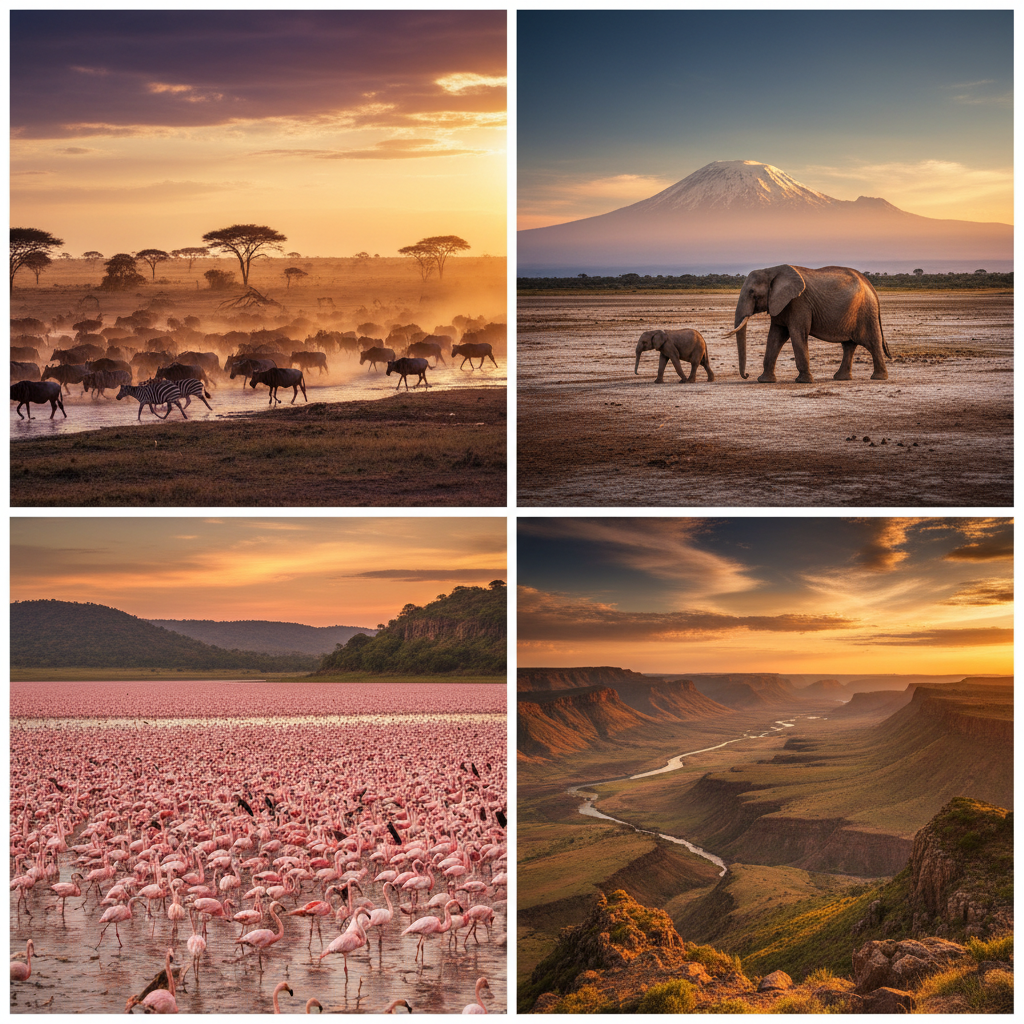
Kenya Safari Circuit: 7-Day Classic East Africa Adventure
Experience the ultimate 7-day Kenya Safari Circuit. Witness the Great Migration, elephants of Amboseli, and flamingos of Lake Nakuru on this classic East Africa adventure.
- Duration: 7 Days
- Estimated Budget: $4,500–$15,000
- Best Time to Visit: July-October for the Great Migration; June and November for excellent game viewing with fewer crowds and lower prices.
- Destination: Kenya Safari Circuit
The Classic Safari Circuit in Kenya is the quintessential East African wildlife experience, delivering an unparalleled journey through the continent's most iconic landscapes. From the thundering hooves of the Great Migration in the Masai Mara to the majestic elephants beneath Kilimanjaro in Amboseli, this itinerary packs a lifetime of safari dreams into one unforgettable week. It's the perfect choice for first-timers and seasoned adventurers alike, offering a comprehensive taste of Kenya's diverse ecosystems and abundant wildlife.
The moment you step into the vast plains of Ol Pejeta Conservancy, you understand the profound connection between conservation and the safari experience. This region, a vital sanctuary for the last northern white rhinos, offers a poignant glimpse into efforts to protect endangered species. Beyond the iconic rhinos, you'll encounter chimpanzees at the Sweetwaters Chimpanzee Sanctuary, a haven for rescued primates, and witness the stunning backdrop of Mount Kenya. It's an area that rewards travelers seeking a deeper, more meaningful engagement with Africa's wildlife, far from the typical tourist trails, offering both breathtaking beauty and a powerful message of hope and resilience.
Should you opt for a road transfer or a domestic flight between reserves? Here's the reality: while the scenic drive through the Great Rift Valley offers a chance to see local life and diverse landscapes, it can be long and arduous, especially on unpaved sections. Flying, though pricier, maximizes your time in the parks, allowing for more game drives and less travel fatigue. For this classic circuit, balancing a few strategic flights, particularly between Nairobi and the Mara, with a comfortable road journey for shorter distances like Nakuru to Amboseli, often provides the best of both worlds, ensuring you arrive refreshed and ready for adventure.
Your mornings in the conservancies often begin before dawn, with the crisp air carrying the scent of acacia and dust. You'll find yourself bundled in a safari vehicle, binoculars at the ready, as the sun paints the sky in hues of orange and pink. The rhythm of a safari means quiet observation, tracking paw prints in the dirt, and listening for the alarm calls of birds that signal a predator nearby. Later, a bush breakfast under a sprawling fig tree offers a moment of reflection, followed by more exploration, perhaps a visit to a local community, before returning to your lodge as the heat of the day settles in.
Nairobi Arrival: Elephants, Giraffes & Colonial Charm
Arrive at Jomo Kenyatta International Airport (NBO), clear customs, and meet your pre-arranged transfer to your hotel.
Starting your safari adventure smoothly means having your arrival logistics handled. You'll be tired from your journey, so a seamless transfer is key.
Visit the David Sheldrick Wildlife Trust, an elephant orphanage dedicated to rescuing and rehabilitating orphaned elephants.
Witness the incredible work being done to protect Kenya's majestic elephants. It's an emotional and inspiring experience to see these babies up close.
Head to the Giraffe Centre to hand-feed endangered Rothschild giraffes.
This is a unique opportunity to interact directly with these gentle giants. It's a fun and educational experience for all ages.
Enjoy a delightful dinner at The Talisman in Karen, known for its eclectic menu and charming garden setting.
The Talisman offers a fantastic introduction to Nairobi's culinary scene with delicious, fresh ingredients in a relaxed atmosphere. It's a local favorite for a reason.
Return to your hotel for a restful night, preparing for the adventure ahead.
After a long journey and an exciting afternoon, a good night's sleep is essential to fully enjoy the safari days to come. You'll want to be fresh for the Mara!
Leif's Tip: Even though you're excited, resist the urge to pack too much into your arrival day. Focus on getting settled, enjoying a couple of key experiences, and getting a good night's sleep. Your body will thank you when you're spotting lions in the Mara tomorrow!
The part of planning a multi-park safari that catches travelers off guard is not just the sheer number of choices for lodges or the best time for wildlife viewing, but the intricate dance of logistics between these incredible, yet remote, locations. How do you seamlessly transition from the vast plains of the Mara to the volcanic landscapes of Lake Nakuru, and then to the iconic backdrop of Mount Kilimanjaro in Amboseli, without losing precious safari time to complicated transfers or unexpected delays? This is where most travelers get stuck, trying to piece together flights, road transfers, and park entry times while ensuring a consistent, high-quality experience. Leif cuts through this complexity, transforming potential headaches into a smooth, flowing adventure tailored just for you, ensuring every moment is spent soaking in the magic, not stressing over the details.
When you're timing an evening drive at Lake Nakuru around the leopards that work the forested sections near Baboon Cliff, the difference between a sighting and a miss comes down to knowing which hour they typically emerge — and that's exactly the kind of intelligence Leif builds into your schedule. Leif already planned for it. Your personalized itinerary would highlight the prime viewing areas around Baboon Cliff or the forested sections, suggesting the optimal time for an evening drive, based on local guide insights and seasonal patterns. Or perhaps you're wondering which Maasai village visit offers the most authentic cultural exchange in Amboseli, avoiding overly commercialized experiences. Leif's recommendations would guide you to a community known for its genuine hospitality and traditional practices, ensuring your interaction is meaningful and respectful, rather than a fleeting photo opportunity.
Instead of arriving in East Africa with a stack of printouts and a vague sense of what's next, you'll step off the plane at Jomo Kenyatta International Airport with a clear, concise, and exciting plan for your Kenyan adventure. The difference is feeling the anticipation build as you know exactly where you're going, what you'll see, and that every detail, from your bush plane connection to your lodge check-in, has been meticulously arranged. You'll experience the thrill of your first game drive in the Masai Mara, the awe of seeing rhinos up close at Lake Nakuru, and the majestic sight of elephants against Kilimanjaro in Amboseli, all unfolding effortlessly. Your journey through Kenya's iconic landscapes will be a story of wonder and discovery, not a test of your travel planning skills. Let Leif craft that unforgettable narrative for you.
Best Time to Visit Kenya Safari Circuit
July to October for the Great Migration in the Masai Mara, but expect higher prices and more crowds.
June and November are excellent shoulder seasons, offering fantastic game viewing with fewer tourists and 30-40% lower prices.
January to March is also wonderful for wildlife viewing, as the dry season concentrates animals around water sources.
Avoid April and May if possible, as these are the long rainy season months, which can make roads challenging and game viewing less predictable.
Getting Around Kenya Safari Circuit
Flying between parks (especially Nairobi to Mara) saves significant travel time and fatigue; SafariLink and AirKenya are reliable operators.
Always request a 4x4 Land Cruiser for game drives, even if it costs a bit more; minibuses are less comfortable and capable on rough terrain.
If driving between parks, be prepared for varying road conditions; some sections are well-paved, while others are rough murram roads.
For transfers within Nairobi, use reputable taxi services like Uber, Bolt, or arrange through your hotel to ensure safety and fair pricing.
What to Pack
- Lightweight, breathable clothing in neutral colors (khaki, olive, brown) to blend in and avoid attracting insects.
- A wide-brimmed hat, sunglasses, and high-SPF sunscreen are essential for protection from the equatorial sun.
- Insect repellent with DEET, especially for evenings and early mornings.
- A good quality telephoto lens (300mm minimum) for your camera, plus extra batteries and memory cards.
- Comfortable walking shoes or sandals for evenings at the lodge, and closed-toe shoes for game drives.
- A dust-proof bag or cover for your camera equipment, as the Mara can be very dusty.
- Binoculars are a must-have for spotting distant wildlife and enhancing your viewing experience.
- A light jacket or fleece for cool mornings and evenings, as temperatures can drop significantly.
Money-Saving Tips
- Consider traveling during the shoulder seasons (June, November) to save significantly on accommodation and safari packages.
- Opt for a mid-range safari package that combines some flying with road transfers to balance cost and comfort.
- Book your safari well in advance, especially for peak season, to secure better rates and availability.
- Inquire about all-inclusive packages that cover park fees, accommodation, meals, and game drives to avoid hidden costs.
- While tipping is customary, set a budget for it ($15-20 per person per day for your guide is standard) and stick to it.
Local Insights
- Always ask for permission before taking photos of local people, especially Maasai, and be prepared for them to ask for a small fee.
- Learn a few basic Swahili phrases like 'Jambo' (hello), 'Asante' (thank you), and 'Hakuna Matata' (no worries) – it's appreciated.
- Be respectful of local customs and traditions, particularly when visiting Maasai villages; dress modestly and follow your guide's advice.
- Tipping is an important part of the local economy; tip your safari guide, lodge staff, and porters for good service.
- Stay hydrated by drinking plenty of bottled water, especially during game drives in the heat.
Frequently Asked Questions
What's the best time of year to experience the Great Migration in the Masai Mara?
The Great Migration typically arrives in the Masai Mara between July and October, with the dramatic river crossings usually occurring in late July to September. However, wildlife viewing is excellent year-round, and the 'green season' (November-May) offers lush landscapes, fewer crowds, and often better photographic light, even without the migration spectacle.
Are there any health precautions I should take before a Kenya safari?
Yes, it's crucial to consult your doctor about necessary vaccinations (e.g., Yellow Fever, Hepatitis A/B, Tetanus) and malaria prophylaxis. Kenya is a malaria-risk area, so antimalarial medication is highly recommended. Also, pack insect repellent, sunscreen, and any personal medications, and stay hydrated with bottled water.
What's the typical group size for a safari, and is it possible to have a private vehicle?
Most safaris operate with small groups, typically 4-7 people per vehicle, allowing everyone a window seat. Many tour operators offer the option to book a private vehicle for an additional cost, which provides more flexibility in terms of game drive timings and locations, ideal for photographers or those seeking a more exclusive experience.
How much luggage can I bring on a safari, especially if taking internal flights?
Internal safari flights, particularly to the Mara, often have strict luggage limits, typically 15-20 kg (33-44 lbs) per person, including carry-on, in soft-sided bags. Hard-shell suitcases are usually not permitted due to space constraints. It's best to pack light and wear layers.
Is it safe to visit Maasai villages, and how should I interact with the local communities?
Visiting a Maasai village can be a rewarding cultural experience, and it is generally safe when arranged through reputable safari operators. Always be respectful of their customs and traditions. Ask permission before taking photos, and be prepared for a small fee or to purchase local crafts, which directly supports the community.
What's the best way to charge electronics while on safari?
Most safari lodges and camps have charging facilities in rooms or communal areas, often using UK-style Type G sockets (240V). However, power can be intermittent in remote areas, and some camps rely on solar power, meaning charging might be limited to certain hours. Bring a power bank and a universal adapter for convenience.
Can I use my drone for photography or videography during the safari?
No, drone usage is generally prohibited in Kenya's national parks and reserves to avoid disturbing wildlife and other visitors. There are strict regulations, and unauthorized drone operation can lead to fines or confiscation. It's best to leave your drone at home for this trip.