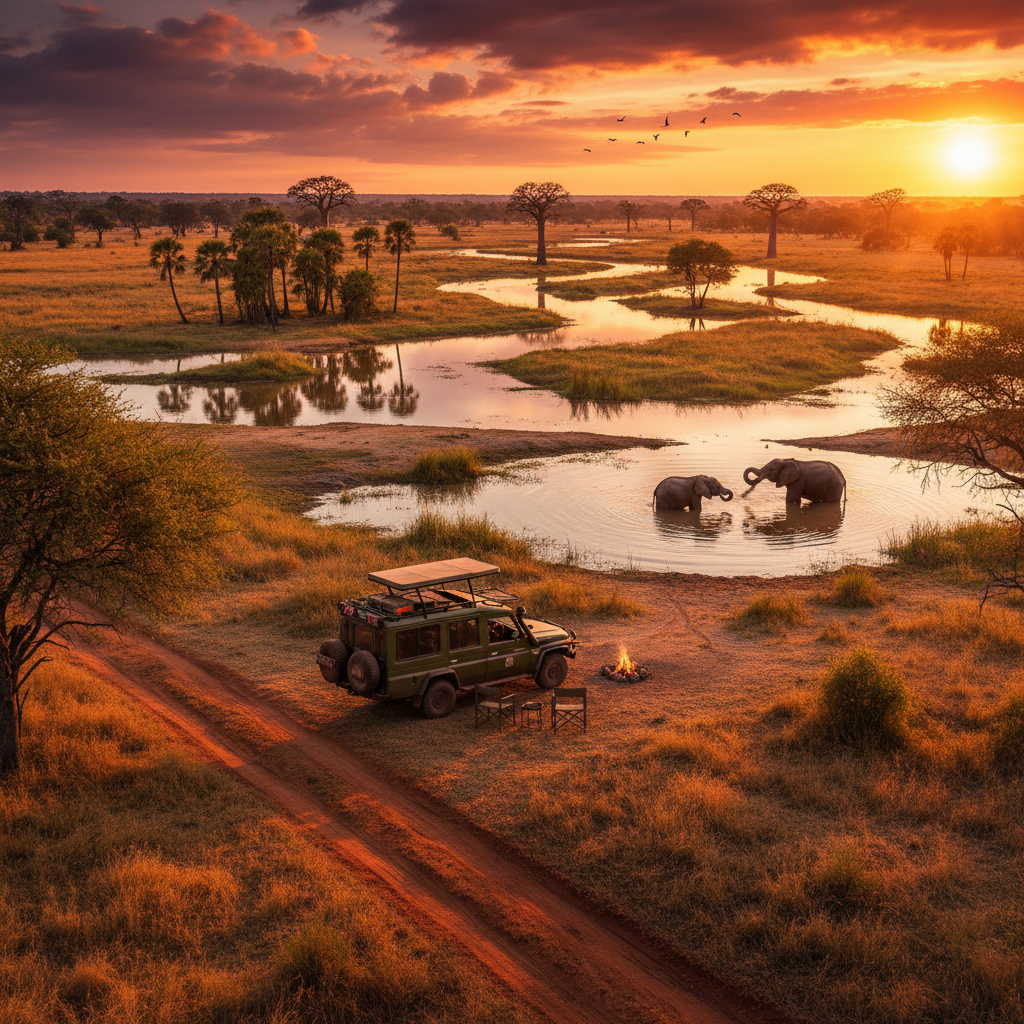
7-Day Budget Botswana Safari: Self-Drive Camping Through Chobe, Moremi & Okavango
Unleash your inner adventurer on a 7-day budget self-drive camping safari through Botswana's Chobe, Moremi, and Okavango Delta. Experience raw wilderness on a shoestring.
- Duration: 7 Days
- Estimated Budget: $1,500–$2,500
- Best Time to Visit: May-October for dry season game viewing; June-August for best Okavango water levels.
- Destination: Botswana
Botswana's vast, untamed landscapes are surprisingly accessible for the adventurous, budget-conscious traveler willing to self-drive and camp. This 7-day itinerary cuts through the noise, guiding you to the heart of Chobe, Moremi, and the Okavango Delta, proving that an epic safari doesn't require a trust fund.
The moment you step into the vast, shimmering expanse of the Makgadikgadi Pans, you understand why Botswana captures the soul. It's not just a salt pan; it's a canvas of infinite sky meeting an endless horizon, where ancient baobab trees stand sentinel and meerkats pop up like curious sentinels. For the self-drive camper, this means nights under a Milky Way so bright it feels within reach, with only the distant call of a jackal breaking the silence. This raw, unfiltered connection to nature is the core of a budget safari here, offering an intimacy with the land that luxury lodges, for all their comforts, simply cannot replicate. It's about the journey as much as the destination, navigating sandy tracks and discovering hidden waterholes on your own terms.
Is it truly possible to experience the magic of the Delta without breaking the bank? Here's the reality: absolutely, if you're willing to embrace the self-drive camping adventure. While many associate the region with exclusive fly-in lodges costing thousands per night, the secret lies in accessing the public campsites within the game reserves. This requires meticulous planning, securing permits months in advance, and a robust 4x4 vehicle, but the reward is unparalleled. You'll wake up to the sounds of the bush, cook your meals under the stars, and have the freedom to explore at your own pace, often encountering wildlife before the first guided tour even begins. It's a hands-on, immersive experience that connects you deeply with the wilderness, proving that luxury is often found in simplicity and freedom.
You'll find yourself navigating sandy two-tracks more than you expect, a testament to the wildness of this corner of Africa. Mornings in the Khwai Concession look like packing up camp as the sun paints the sky in fiery hues, then slowly driving towards a water source, binoculars at the ready. You'll pause for hours, just watching a herd of elephants bathe, or a pride of lions laze in the shade of an acacia. Afternoons are often spent finding a secluded spot for a picnic lunch, listening to the symphony of the bush, before continuing your game drive. Evenings are a ritual of setting up camp, building a fire, and cooking dinner under a canopy of stars, sharing stories of the day's sightings with your fellow adventurers. It's a rhythm dictated by nature, not a schedule.
Maun's Gateway: Prepping for the Wild Frontier
Arrive at Maun International Airport (MUB), clear customs, and pick up your pre-booked 4x4 rental vehicle, ideally a Toyota Land Cruiser or similar, equipped for self-drive safaris.
Maun is the primary gateway to the Okavango Delta and Chobe, making it the perfect starting point for your adventure. Picking up your vehicle here ensures you have the right transport for the rugged terrain ahead.
Head to the Maun Sefalana Hyperstore for a major grocery haul, focusing on non-perishable items, bottled water, and ingredients for simple camp meals.
This is your last chance for a large supermarket shop before heading into remote areas with limited supplies. Stocking up now will save you time and money later.
Visit the Department of Wildlife and National Parks (DWNP) office in Maun to purchase your park entry permits and camping reservations for Moremi and Chobe.
Securing your permits in advance is crucial, as park entry and camping spots, especially in popular areas, can sell out. This ensures a smooth entry into the parks.
Stop by Riley's Garage in Maun for a quick tire pressure check and to top up your fuel tanks. This is the last reliable fuel stop before heading deep into the Delta.
Proper tire pressure is vital for navigating sandy tracks, and a full tank ensures you won't be caught short in remote areas. Better safe than sorry!
Set up camp at Audi Camp, just outside Maun, and get comfortable with your camping gear. This is a practice run before the real wilderness begins.
Audi Camp offers a relaxed setting with good facilities, making it ideal for your first night. It allows you to organize your vehicle and gear without the pressure of a remote campsite.
Leif's Tip: Before leaving Maun, ensure your phone is fully charged and you have offline maps downloaded (like Maps.me or Gaia GPS). Cell service drops off quickly once you leave town, and reliable navigation is paramount for a self-drive safari. Also, inform a trusted contact of your itinerary and expected check-in times at each camp.
The part of Botswana that catches self-drive campers off guard isn't the wildlife — it's the sheer logistical puzzle of navigating its remote wilderness. It's not just about booking a campsite; it's knowing which specific campsite within a vast reserve offers the best chance for a quiet night, or which sandy track is prone to getting swallowed by seasonal floods. Between understanding the often-conflicting advice on tire pressure for deep sand, deciphering cryptic road signs, and ensuring you have enough fuel and water to last days without resupply, planning can feel like a full-time job before you even pack your bags. This is where most travelers get stuck, overwhelmed by the details that stand between them and that dream photo of a leopard. You want an adventure, not an administrative nightmare, and that's precisely the friction Leif smooths away.
The mokoro excursion is the Delta experience most travelers come for — gliding silently through papyrus channels with nothing but birdsong and the occasional hippo snort — but arranging it without a costly lodge package is where most self-drive budgeters get stuck. You land in Maun, pull up Leif, and within seconds you know exactly which local community trust offers authentic, budget-friendly mokoro trips from a specific public access point, complete with GPS coordinates and a trusted contact number. Leif doesn't just tell you to 'find a local guide'; it provides the specific name, the meeting spot at the Nxaraga Lagoon, and even suggests the best time of day for birdwatching. This isn't generic advice; it's the kind of hyper-specific, actionable information that transforms a vague plan into a concrete, unforgettable experience, ensuring you maximize every moment without overspending or getting lost in translation.
Instead of the common anxiety of wondering if you've packed enough water or if your chosen route is passable, you'll feel a profound sense of calm. Arriving at a remote campsite near the Savuti Channel, with your vehicle perfectly prepped and your permits in hand, means the only thing you're worrying about is which lens to use for the sunset. You'll wake up to the roar of lions, not the nagging doubt of what comes next. The difference is the freedom to truly immerse yourself in the wild, knowing every detail, from the best spot to set up your rooftop tent to the nearest emergency contact, has been meticulously handled. This isn't just a trip; it's an unburdened exploration, allowing you to connect with the raw, untamed beauty of Botswana on your own terms, ready for whatever incredible moment the bush reveals next.
Best Time to Visit Botswana
Dry Season (May to October): This is prime wildlife viewing. Water sources are scarce, so animals congregate around rivers and waterholes, making them easier to spot. The weather is generally sunny and dry.
Shoulder Season (April & November): Offers a good balance. Wildlife viewing is still excellent, but there are fewer crowds and slightly lower prices. You might catch the tail end of the rains in November, leading to lush landscapes.
Green Season (December to March): While it's the rainy season, it's also when migratory birds arrive and many animals give birth. The landscapes are incredibly vibrant, and it's the best time for birdwatching. Prices are significantly lower.
For a budget self-drive safari, the shoulder seasons or early dry season (May-June) can be ideal for good wildlife and slightly fewer crowds/costs than peak dry season.
Getting Around Botswana
Rent a reliable 4x4 vehicle with good ground clearance and spare tires. This is non-negotiable for Botswana's sandy, often challenging roads.
Familiarize yourself with basic vehicle maintenance. Knowing how to change a tire or check fluid levels can save you a lot of hassle in remote areas.
Carry extra fuel in jerry cans. Fuel stations are few and far between, especially within the parks. Always fill up when you have the chance.
Download offline maps (like Maps.me or Gaia GPS) and have a physical map as a backup. Cell service is non-existent in many parts of the parks.
Drive slowly and cautiously. Wildlife can appear suddenly, and the roads can be unpredictable with sand, mud, or corrugations.
What to Pack
- Lightweight, neutral-colored clothing (khakis, greens, browns) for game drives.
- A warm jacket or fleece for chilly mornings and evenings, even in the dry season.
- Wide-brimmed hat, sunglasses, and high-SPF sunscreen.
- Insect repellent with DEET or Picaridin (malaria is a risk in some areas).
- Headlamp or flashlight with extra batteries for navigating campsites at night.
- Binoculars (essential for wildlife viewing) and a good camera with a zoom lens.
- Waterproof duffel bags or soft luggage are better for packing in a 4x4.
- First-aid kit, including anti-malarials, pain relievers, and antiseptic.
Money-Saving Tips
- Book campsites well in advance, especially for popular parks like Moremi and Chobe. Last-minute bookings are often more expensive or unavailable.
- Self-cater as much as possible. Buy groceries in larger towns like Maun or Kasane before heading into the parks, where supplies are limited and costly.
- Travel in a group of 2-4 people to split vehicle rental, fuel, and camping fees, which are often per vehicle.
- Bring your own camping gear (tent, sleeping bags, cooking equipment) rather than renting, if feasible. This can save a significant amount.
- Limit extra activities like scenic flights or mokoro trips if strictly on a budget. Focus on the self-drive game viewing, which is already incredible.
Local Insights
- Learn a few basic Setswana phrases like 'Dumela' (hello) and 'Ke a leboga' (thank you). It's always appreciated by locals.
- Respect wildlife at all times. Maintain a safe distance, never feed animals, and avoid making loud noises. This is their home.
- Be mindful of local customs and dress modestly, especially when visiting villages or towns outside the parks.
- Always carry enough water. Dehydration is a real risk in Botswana's climate, even if you're not actively hiking.
- Support local communities by purchasing crafts or goods from reputable local vendors. Bargaining is generally not common or expected in the same way as some other countries.
Frequently Asked Questions
What kind of vehicle do I need for a self-drive safari in Botswana?
You absolutely need a reliable 4x4 vehicle with good ground clearance. Many tracks, especially in Moremi and the Okavango, are deep sand or mud, and river crossings are common. Ensure it has a long-range fuel tank, two spare tires, and recovery gear like a high-lift jack and shovel.
How far in advance do I need to book campsites in the national parks?
For prime campsites within Chobe, Moremi, and the Okavango Delta, you should book at least 9-12 months in advance, especially for peak season (June-October). These sites are limited and fill up very quickly, so early planning is crucial.
Is it safe to self-drive and camp in areas with dangerous wildlife?
Yes, it is generally safe if you follow strict safety protocols. Always stay inside your vehicle during game drives, keep a respectful distance from animals, and never walk around camp after dark. Store all food securely to avoid attracting wildlife, and be aware of your surroundings at all times. Common sense and caution are your best allies.
What are the essential supplies I should bring for a self-drive camping trip?
Beyond your camping gear, you'll need plenty of water (at least 5 liters per person per day), non-perishable food, extra fuel, a reliable satellite phone or two-way radio for emergencies (cell service is non-existent in parks), a first-aid kit, and a good map or GPS with offline capabilities. Don't forget insect repellent and high-SPF sunscreen!
What is the best time of year for a budget self-drive safari in Botswana?
The dry season (May to October) offers the best wildlife viewing as animals congregate around dwindling water sources, but it's also peak season with higher prices and more competition for campsites. The shoulder months (April, November) can offer a good balance of wildlife and fewer crowds, with slightly lower costs.
Are there any specific permits or fees I need to be aware of?
Yes, you'll need park entry fees per person per day, as well as vehicle entry fees per day. If you're crossing borders (e.g., from Namibia or South Africa), you'll also need a valid passport, vehicle registration, and possibly a cross-border permit. Always check the latest requirements before you travel.
What's the best way to handle cooking and food storage while camping?
A sturdy cooler or fridge-freezer is essential. Plan simple, easy-to-cook meals that don't require too many ingredients. Always store food in sealed, animal-proof containers, preferably in your vehicle, especially overnight. Never leave food scraps or rubbish around your campsite as it attracts scavengers and dangerous predators.