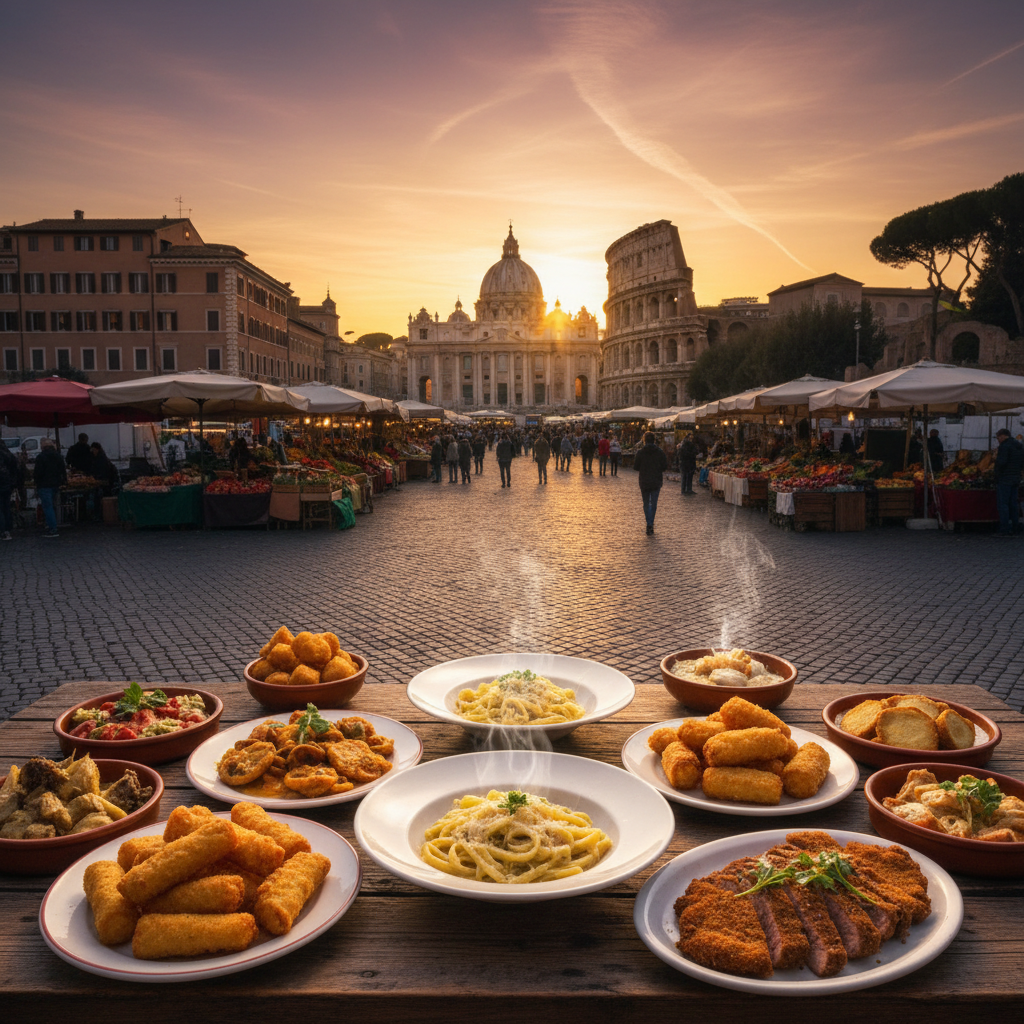
Rome Foodie's Delight: 4-Day Culinary Journey Through Cacio e Pepe & Testaccio
Savor Rome in 4 days with a culinary adventure! Dive into Cacio e Pepe, explore Testaccio Market, and discover the city's rich Jewish-Roman cuisine.
- Duration: 4 days
- Estimated Budget: $1,200–$2,500
- Best Time to Visit: April-June and September-October for pleasant weather and outdoor dining
- Destination: Rome, Italy
Rome isn't just ancient ruins; it's a living, breathing culinary masterpiece, and this 4-day guide is your passport to its most authentic flavors. From the creamy perfection of Cacio e Pepe to the vibrant stalls of Testaccio Market and the unique delights of Jewish-Roman cuisine, prepare for a gastronomic journey that will tantalize your taste buds and deepen your appreciation for Italian food.
The moment you step into Trastevere, the scent of freshly baked pizza and simmering ragu fills the air, instantly transporting you to the heart of Roman culinary tradition. This charming neighborhood, with its cobblestone streets and ivy-clad buildings, is a living testament to the city's enduring love affair with food. Here, family-run trattorias have perfected recipes passed down through generations, offering a taste of authentic Rome far removed from tourist traps. You'll discover hidden gems where nonnas still roll pasta by hand and the wine flows as freely as the conversation. It's an immersive experience that goes beyond just eating; it's about understanding the soul of Roman cooking, one delicious bite at a time, amidst the vibrant tapestry of daily life.
Should you try street food from a vendor or stick to sit-down restaurants? Here's the reality: Rome's street food scene is an absolute must-experience, offering a quick, affordable, and incredibly flavorful way to sample local specialties without committing to a full meal. Think crispy fried artichokes from a market stall, a piping hot slice of pizza al taglio, or a sweet maritozzo for breakfast. However, don't neglect the trattorias and osterias, especially for classic pasta dishes and more elaborate main courses. The trick is to balance both: grab a quick bite from a trusted vendor for lunch, then savor a leisurely dinner in a cozy restaurant. Leif will guide you to the best of both worlds, ensuring you taste the full spectrum of Roman delights.
Evenings in Rome for a food traveler look like a delightful sequence of culinary discoveries. You'll find yourself starting with an aperitivo in a bustling piazza, sipping a Spritz and nibbling on olives and cured meats as the city lights up. From there, it's a short stroll to a chosen eatery, perhaps a rustic osteria in Monti or a refined restaurant near the Pantheon, where you'll dive into plates of carbonara or saltimbocca. Post-dinner, a gelato walk is almost mandatory, perhaps followed by a digestivo in a dimly lit bar. Each night is a chance to explore a different facet of Roman gastronomy, from casual bites to more refined dining, always punctuated by the lively chatter and warm hospitality that defines the Eternal City's food scene.
Arrival in Rome: Cacio e Pepe & Trastevere Charm
Check into your hotel and drop off your bags. Take some time to freshen up and get ready to explore.
Settling in comfortably is key to starting your culinary adventure on the right foot. You'll want to feel refreshed before diving into Rome's vibrant food scene.
Embark on a leisurely stroll through the charming, cobblestone streets of Trastevere, soaking in its bohemian atmosphere.
Trastevere offers a picturesque introduction to Rome's local life, with its narrow alleys and ivy-clad buildings. It's the perfect place to acclimate and feel the city's pulse.
Enjoy an authentic Roman aperitivo at Freni e Frizioni, a popular spot known for its creative cocktails and generous buffet.
Aperitivo is a cherished Italian tradition, and Freni e Frizioni offers a fantastic spread that can double as a light pre-dinner snack. It's a great way to unwind and people-watch.
Indulge in a classic Roman dinner at Da Enzo al 29, famous for its traditional Cacio e Pepe and other Roman specialties.
Da Enzo is a Trastevere institution, celebrated for its authentic, no-frills Roman cuisine and vibrant atmosphere. Their Cacio e Pepe is a benchmark for the dish.
Conclude your evening with a leisurely passeggiata (evening stroll) along the Tiber River, enjoying the illuminated bridges and city views.
A post-dinner walk is a perfect way to digest and absorb the beauty of Rome at night. The views of Castel Sant'Angelo and St. Peter's Basilica from the bridges are breathtaking.
Leif's Tip: Upon arrival, purchase a local SIM card or ensure your international roaming is set up. Google Maps will be your best friend for navigating Rome's intricate streets, finding hidden trattorias, and checking opening hours for all your culinary adventures.
Rome has a dizzying array of dining options, and knowing which tiny doorway leads to a culinary revelation versus a tourist trap can feel like navigating a labyrinth without a map. The sheer volume of choices, from humble pizza al taglio stands to Michelin-starred establishments, means that every meal is a decision point. Add to that the subtle nuances of Roman cuisine – understanding what makes a true Carbonara, or where to find the crispiest supplì – and it’s easy to feel overwhelmed. You might worry about wasting precious vacation meals on mediocre food, or missing out on a truly authentic experience because you didn't know where to look. This is precisely where Leif steps in, cutting through the noise to deliver a curated, unforgettable gastronomic journey. We've done the legwork, so you don't have to, ensuring every bite is a highlight.
Say you're strolling through the charming streets of Campo de' Fiori, the midday sun warming your face, and your stomach starts to rumble. You want something quick, delicious, and authentically Roman, but you're surrounded by dozens of enticing signs. Do you choose the bustling pizzeria, the quiet little sandwich shop, or the deli with tantalizing cured meats in the window? With Leif, you simply pull out your phone, and your personalized itinerary points you directly to a specific 'forno' known for its exquisite pizza bianca, or a hidden 'salumeria' where you can assemble a perfect Roman picnic. Leif doesn't just suggest a neighborhood; it recommends the exact establishment, tells you what to order, and even provides a little history or insider tip about the place, transforming a moment of indecision into a confident, delicious discovery that feels entirely your own.
You'll arrive in Rome knowing exactly where your next incredible meal is coming from, free from the anxiety of endless online searches or disappointing choices. Instead of wandering aimlessly, you'll glide through the city with a sense of purpose, each culinary stop a deliberate and delightful experience. Imagine the satisfaction of savoring a perfectly executed pasta dish in a restaurant cherished by locals, or discovering a sweet treat that only a true Roman would know. The difference is arriving not just as a visitor, but as a culinary explorer, armed with insider knowledge and a personalized roadmap to the city's finest flavors. This isn't just a trip; it's an immersion, a delicious dialogue with Rome's soul, leaving you with memories that linger long after the last bite.
Best Time to Visit Rome, Italy
April to June: Spring offers pleasant weather, fewer crowds than peak summer, and fresh seasonal produce perfect for culinary exploration.
September to October: Autumn brings comfortable temperatures, the grape harvest, and truffle season, ideal for food lovers.
Avoid August: Many local restaurants close for Ferragosto, and the heat can be intense, making outdoor dining less enjoyable.
Weekdays for Markets: For a true local experience at places like Testaccio Market, visit on a weekday morning when it's bustling but not overly crowded.
Getting Around Rome, Italy
Walk Everywhere: Rome is a city best explored on foot, especially when hopping between trattorias and gelaterias. Wear comfortable shoes!
Metro for Longer Distances: The Metro (Lines A, B, and C) is efficient for covering longer distances, such as getting to the Vatican or Colosseum area from Trastevere.
Buses & Trams: For areas not covered by the Metro, Rome's bus and tram network is extensive. Google Maps is excellent for planning routes.
Taxi/Ride-Sharing: Use official white taxis found at designated stands or apps like FreeNow. Avoid unlicensed cabs.
ATAC Tickets: Purchase tickets for public transport at metro stations, tabacchi (tobacco shops), or newsstands. A 24-hour pass can be cost-effective if you plan on using public transport frequently.
What to Pack
- Comfortable Walking Shoes: Essential for navigating Rome's cobblestone streets and extensive food walks.
- Dressy Casual Outfits: Italians dress well, even for casual dining. Pack a few nicer outfits for evening meals.
- Reusable Water Bottle: Stay hydrated, especially when indulging in rich Roman cuisine. Rome has many public drinking fountains ('nasoni').
- Small Backpack or Crossbody Bag: For carrying essentials and any culinary souvenirs, keeping your hands free for eating.
- Portable Charger: Your phone will be working overtime with navigation, photos of delicious food, and restaurant lookups.
- Light Jacket or Cardigan: Even in warmer months, evenings can have a slight chill, especially when dining al fresco.
- Loose-Fitting Clothing: Essential for maximizing comfort after indulging in multiple courses of pasta, pizza, and gelato.
- Basic Italian Phrasebook/App: While many speak English, knowing a few food-related phrases (e.g., 'senza glutine' for gluten-free) is always appreciated.
Money-Saving Tips
- Eat Lunch Like a Local: Opt for a hearty lunch (pranzo) as your main meal, as many restaurants offer more affordable fixed-price menus or daily specials.
- Aperitivo Hour: Take advantage of aperitivo, where you pay for a drink and get complimentary snacks or a small buffet. It's a great way to sample local bites without a full dinner price.
- Drink Tap Water: Rome's tap water is safe and delicious. Carry a reusable bottle and refill it at the 'nasoni' (public fountains) to avoid buying bottled water.
- Avoid Tourist Traps: Steer clear of restaurants directly next to major attractions. Wander a few blocks away for more authentic and often more affordable options.
- Shop at Local Markets: Buy fresh produce, cheese, and cured meats at markets like Testaccio for picnic lunches or snacks, saving on restaurant costs.
Local Insights
- Embrace the 'Slow Food' Philosophy: Meals in Italy are meant to be savored. Don't rush; enjoy the conversation and the food at a leisurely pace.
- Coffee Culture: Order an espresso at the bar for the authentic (and cheaper) Italian experience. Cappuccinos are generally for breakfast only.
- Tipping Etiquette: Tipping is not as common or expected as in other countries. A small tip (a few euros) for excellent service is appreciated, but not mandatory.
- The 'Coperto' and 'Servizio': Some restaurants charge a 'coperto' (cover charge) per person for bread and table service, or a 'servizio' (service charge). This should be listed on the menu.
- Don't Be Afraid to Ask for Recommendations: Engage with your server or local shopkeepers. They often have the best insights into daily specials or hidden gems.
Frequently Asked Questions
What's the best way to find authentic Roman restaurants and avoid tourist traps?
Look for places with handwritten menus, a strong local clientele, and avoid restaurants with aggressive touts outside. Leif specifically curates spots known for their genuine Roman fare, often slightly off the main tourist paths.
Is it customary to tip in Rome, and if so, how much?
Tipping isn't as ingrained as in some other countries. A 'coperto' (cover charge) or 'servizio' (service charge) may be added to your bill. If not, rounding up the bill or leaving a few euros for excellent service is appreciated, but not mandatory.
What are some must-try Roman pasta dishes beyond Cacio e Pepe?
Absolutely try Carbonara (made with guanciale, egg yolks, Pecorino Romano, and black pepper), Amatriciana (guanciale, tomato, Pecorino Romano), and Gricia (guanciale, Pecorino Romano, black pepper – often called 'white Amatriciana').
Are there good options for vegetarians or those with dietary restrictions?
Rome has many vegetarian-friendly dishes, especially vegetable-based pastas like 'pasta e ceci' (chickpea pasta) or 'pasta e fagioli' (bean pasta), and delicious fried vegetables like 'carciofi alla giudia'. Always inform your server about dietary needs; many places are accommodating.
What's the difference between an osteria, trattoria, and ristorante?
Generally, an osteria is the most casual, often serving simple, traditional food and wine. A trattoria is a step up, still informal but with a broader menu. A ristorante is the most formal, offering a more extensive menu and refined service. Leif includes a mix for varied experiences.
How can I learn to make Roman dishes myself while I'm there?
Many culinary schools and local chefs offer hands-on cooking classes focusing on Roman specialties like pasta making or traditional sauces. It's a fantastic way to bring a piece of Rome's culinary magic home with you.
What's the best way to experience Roman coffee culture?
Order an espresso at the bar, drink it quickly while standing, and pay at the cashier first (or after, depending on the bar). Don't ask for a cappuccino after 11 AM – it's considered a breakfast drink. Leif will point you to the best local coffee spots.