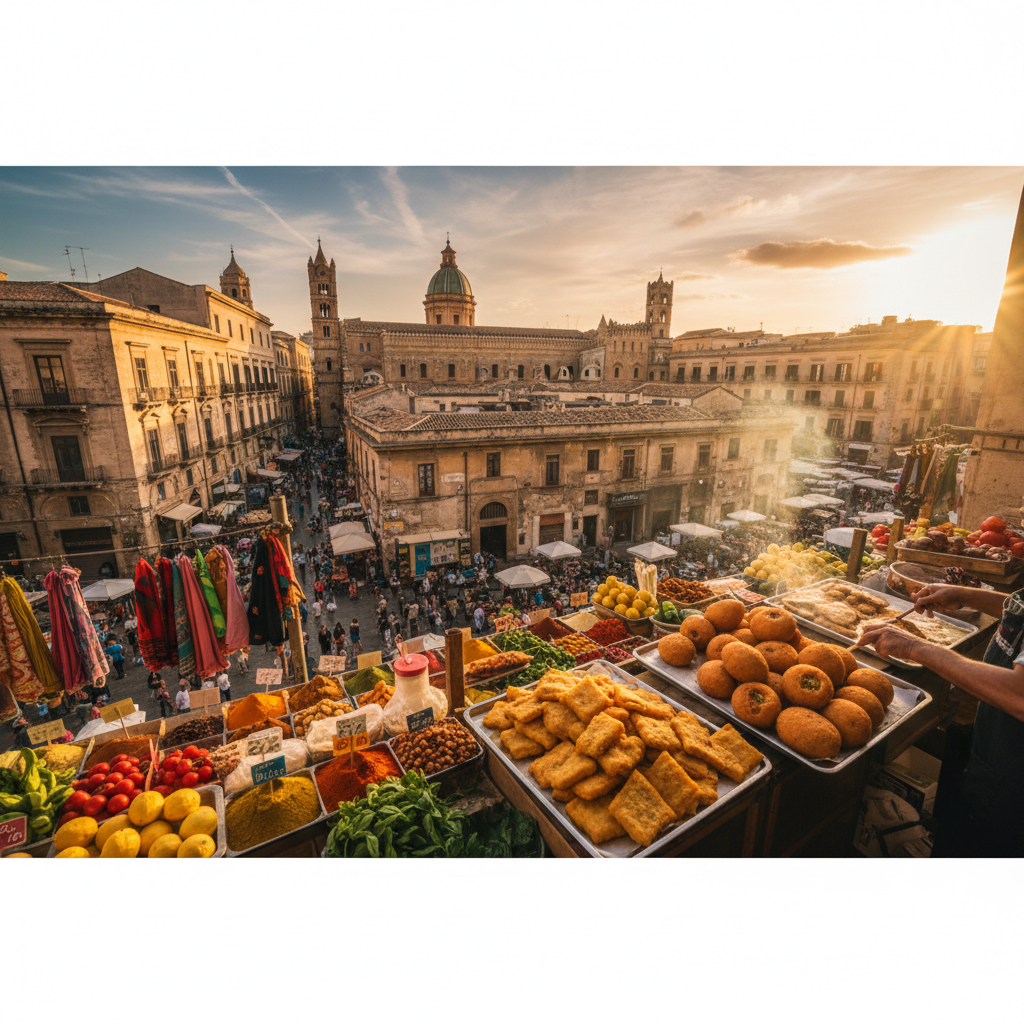
Palermo Foodie Adventure: A 4-Day Street Food Lover's Guide to Sicily's Culinary Capital
Indulge in a 4-day Palermo food tour! Discover Sicily's street food capital, from arancini to Ballarò Market, and savor authentic flavors. Your taste buds will thank you!
- Duration: 4 Days
- Estimated Budget: $800–$1,500
- Best Time to Visit: April-June and September-October for pleasant weather and vibrant market activity.
- Destination: Palermo, Sicily, Italy
<p class="guide-blog-backlink">📖 Planning a trip to Italy? Read our complete <a href="https://askleif.com/blog/italy-travel-guide-which-region-is-right-for-you">Italy Travel Guide: Which Region Is Right for You?</a> — covering Rome, Florence, Venice, the Amalfi Coast, Tuscany, and more.</p> Palermo is a vibrant symphony for the senses, and for food lovers, it's nothing short of a pilgrimage. This ancient city, with its rich history and diverse cultural influences, has cultivated a street food scene that is arguably the best in Italy – a true feast for the adventurous palate. Prepare to be swept away by the aromas and flavors of Sicily's culinary heartland.
Prepare your taste buds, because Palermo isn't just a city; it's a living, breathing, delicious testament to street food culture, a vibrant tapestry woven with centuries of culinary tradition. Forget everything you think you know about Italian food; here, the flavors are bolder, the spices more exotic, and the experience is utterly immersive. Imagine wandering through the bustling Ballarò Market, the air thick with the aroma of sizzling panelle and freshly fried arancini, vendors hawking their wares with a theatrical flair that's as captivating as the food itself. This isn't just about eating; it's about connecting with the soul of Sicily, one delectable bite at a time, where every stall tells a story and every dish is a piece of history.
Your journey into Palermo's street food heart will be an adventure for all your senses. You'll discover that arancini here aren't just rice balls; they're golden-fried masterpieces, often filled with rich ragù, mozzarella, and peas, each a perfect handheld meal. Then there's panelle, crispy chickpea fritters served in a soft sesame bun, a simple yet utterly addictive snack that embodies Palermo's ingenuity. But it doesn't stop there; think sfincione, a thick, spongy pizza-like bread topped with onions, caciocavallo cheese, and anchovies, or the sweet delights of cannoli, filled with creamy ricotta that's a world away from mass-produced versions. Each day will be a curated feast, guiding you to the most authentic, most beloved street food vendors, ensuring you taste the very best of what this culinary capital has to offer.
This isn't a trip for the faint of heart or the picky eater; it's for the true food lover, the adventurous palate eager to dive headfirst into a world of unparalleled flavors. We'll navigate the labyrinthine alleyways, uncover hidden gems, and introduce you to the passionate people behind these iconic dishes. You'll learn the difference between an arancina and an arancino (yes, it matters!), discover the best time to hit the markets for the freshest ingredients, and even pick up a few Italian phrases to charm your way to an extra helping. Get ready to eat, explore, and fall deeply in love with Palermo, the undisputed street food capital of Italy, where every corner holds a new, delicious surprise waiting to be savored.
Palermo's Street Food Symphony: A Ballarò Immersion
Arrive at Falcone-Borsellino Airport (PMO), collect your luggage, and take the Prestia e Comandè bus directly to Palermo Centrale train station.
This is the most convenient and cost-effective way to get from the airport to the city center. It allows you to quickly settle in and start your Palermitan adventure without hassle.
Check into your hotel, drop off your bags, and take a moment to refresh after your journey.
Getting settled is crucial for a smooth start to any trip. It allows you to feel comfortable and ready to explore the city's vibrant food scene.
Begin your culinary exploration with a self-guided stroll through the historic Ballarò Market, one of Palermo's oldest and most vibrant street markets.
Ballarò is a sensory explosion, offering an authentic glimpse into Palermitan life and a treasure trove of fresh produce, spices, and street food. It's the perfect introduction to the city's gastronomic heart.
Indulge in your first arancina experience at a local street food stall within Ballarò. Seek out a vendor frying them fresh on the spot.
Arancine are iconic Sicilian street food, and tasting one hot and crispy from a market stall is an essential part of your food journey. It's a delicious and satisfying snack.
Wander through the narrow streets surrounding Ballarò, soaking in the atmosphere and discovering hidden churches and courtyards.
Beyond the market's hustle, the surrounding Kalsa district offers a rich tapestry of history and local life. It's a great way to digest your arancina and get a feel for the neighborhood.
Leif's Tip: Upon arrival, purchase a local SIM card if your phone plan doesn't cover Italy. Having reliable data will be invaluable for navigating the winding streets of Palermo, checking opening hours, and finding the best street food spots on the fly. Google Maps will be your best friend here!
Navigating Palermo's vibrant street food scene without a local guide can lead to missing out on the true culinary gems, leaving you overwhelmed by choice or, worse, falling into tourist traps serving mediocre fare. You might find yourself staring at a menu written entirely in Sicilian dialect, unsure if you're ordering a delicacy or something entirely different, or wandering aimlessly trying to locate that one legendary arancini vendor tucked away in a narrow alley. Deciphering opening hours for family-run stalls, understanding the best time to visit bustling markets like Capo to avoid peak crowds, and knowing which panelle cart offers the crispiest fritters are challenges that can easily detract from the joy of discovery. This is precisely where Leif steps in, transforming potential frustration into a seamless, delicious adventure tailored just for you.
Ballarò, Palermo's oldest and most vibrant market, is where your immersive four-day street food adventure truly begins. Leif anticipates your cravings, suggesting the perfect moment to try 'pani ca' meusa' (spleen sandwich) from a vendor with decades of experience, ensuring you get the most authentic taste. It's about more than just directions; it’s about understanding the rhythm of the city's food culture, knowing when the fish is freshest at the Mercato del Capo, or which bakery has just pulled a batch of warm 'sfincione' from the oven. Your itinerary adapts, offering alternatives if a particular spot is unexpectedly closed, ensuring your culinary journey remains uninterrupted and utterly delightful.
The rich aroma of frying chickpeas and sweet cannoli fills the air as you confidently stride through Palermo's historic streets, a sense of excited anticipation guiding your steps. You're not just eating; you're experiencing the city through its flavors, understanding the stories behind each dish, and connecting with the passionate vendors who are the custodians of this incredible culinary heritage. Every bite of 'cassata' or sip of 'granita' is infused with the knowledge that you're tasting the very best Palermo has to offer, without any guesswork or wasted moments. You'll leave with a palate full of unforgettable tastes and a deeper appreciation for Sicily's soulful cuisine, eager to recreate the magic of these flavors back home.
Best Time to Visit Palermo, Sicily, Italy
Spring (April-May) and Fall (September-October) offer the most pleasant weather for exploring the markets and streets, avoiding the intense summer heat.
Late May and early June can still be lovely, with fewer crowds than peak summer, but be prepared for warmer temperatures.
Avoid July and August if possible, as it's incredibly hot and many locals leave the city for their own holidays.
The Christmas season (December) brings festive decorations and unique seasonal treats, but some smaller street food vendors might have reduced hours.
For the best market experience, plan your visits for mornings, as this is when the markets are most vibrant and bustling.
Getting Around Palermo, Sicily, Italy
Palermo's historic center is best explored on foot. Many of the best street food spots are within walking distance of each other.
For longer distances or when your feet need a rest, use local buses. Tickets can be purchased at tabacchi shops or on board (though often at a slightly higher price).
Taxis are readily available but can be more expensive. Always agree on a fare before starting your journey, or ensure the meter is used.
Consider using ride-sharing apps like Free Now for convenience and transparent pricing, especially for evening outings.
If you're planning day trips outside the city, the regional train system (Trenitalia) or intercity buses are reliable and affordable options.
What to Pack
- Comfortable walking shoes are non-negotiable; you'll be doing a lot of strolling through markets and cobbled streets.
- Light, breathable clothing like linen or cotton, even in spring or fall, as temperatures can still be warm.
- A small, secure cross-body bag or backpack to keep your valuables safe while navigating crowded markets.
- Sunscreen, sunglasses, and a wide-brimmed hat to protect yourself from the strong Sicilian sun.
- A reusable water bottle to stay hydrated while sampling all the delicious food.
- A portable power bank for your phone, as you'll be using it for navigation and countless food photos.
- A light scarf or shawl for women, useful for entering churches or for cooler evenings.
- An appetite and an open mind for new culinary experiences!
Money-Saving Tips
- Embrace street food! It's not only delicious but also incredibly affordable compared to sit-down restaurants.
- Look for 'tavola calda' establishments for budget-friendly, pre-prepared meals that are often hearty and authentic.
- Buy fresh produce from the Ballarò or Vucciria markets for snacks or simple picnics, saving on restaurant costs.
- Drink local tap water (it's safe) or buy large bottles of water from supermarkets instead of small, expensive ones from kiosks.
- Take advantage of 'aperitivo' deals, where you often get complimentary snacks with your drink purchase in the early evening.
Local Insights
- Don't be afraid to try everything! Palermo's street food scene is diverse, from arancini and panelle to sfincione and stigghiola.
- Engage with the vendors. Many are passionate about their food and happy to share stories, even with limited English.
- Be prepared for a lively, sometimes chaotic, atmosphere in the markets. It's part of the authentic Palermo experience.
- Pace yourself! It's easy to get carried away with all the tempting treats. Try small portions from different vendors.
- Learn a few basic Italian phrases like 'grazie' (thank you), 'per favore' (please), and 'quanto costa?' (how much does it cost?). It goes a long way with locals.
Frequently Asked Questions
What's the best way to experience Palermo's street food markets?
The best way is to go with an empty stomach, an open mind, and comfortable shoes! Start early in the morning (around 9 AM) for the freshest produce and fewer crowds. Don't be afraid to try a little bit of everything, and always observe where the locals are eating – that's usually a sign of quality. Engage with the vendors; a friendly 'Buongiorno' and a smile can go a long way.
Is Palermo street food safe to eat?
Generally, yes, Palermo's street food is very safe. Vendors pride themselves on fresh ingredients and quick turnover. Look for stalls with visible cooking processes, high customer traffic, and clean appearances. Avoid anything that looks like it's been sitting out for too long. Trust your instincts, but don't let fear prevent you from enjoying these incredible culinary traditions.
What's the difference between arancina and arancino?
This is a classic Palermo vs. Catania debate! In Palermo, the rice ball is typically round or pear-shaped and referred to as 'arancina' (feminine, meaning 'little orange'). In Catania and eastern Sicily, they are often conical and called 'arancino' (masculine). Both are delicious, but in Palermo, you'll hear 'arancina' and they're often rounder, filled with ragù, mozzarella, and peas.
What are panelle and how are they typically served?
Panelle are thin, crispy fritters made from chickpea flour, water, and parsley. They are a quintessential Palermitan street food. They're most commonly served hot, sandwiched inside a soft, sesame-seed bun (a 'mafalda' or 'vastedda'), often with a squeeze of lemon. They're simple, savory, and incredibly addictive – perfect for a quick snack on the go.
Are there vegetarian street food options in Palermo?
Absolutely! Palermo is surprisingly vegetarian-friendly, especially when it comes to street food. Panelle (chickpea fritters) are vegetarian, as are crocchè (potato croquettes). Many places offer sfincione without anchovies, and you'll find plenty of fresh fruit, olives, and local cheeses. Just be sure to ask if you're unsure about ingredients.
What's a 'fritto misto' and should I try it?
A 'fritto misto' literally means 'mixed fry' and is a fantastic way to sample a variety of Palermo's fried delights. It typically includes panelle, crocchè, and sometimes even fried vegetables like artichokes or cardoons. It's a must-try for any street food enthusiast, offering a delicious cross-section of local flavors and textures. Just be prepared for a delightful, greasy indulgence!
How much cash should I carry for street food?
While some larger market stalls might accept cards, most smaller street food vendors operate on a cash-only basis. It's always a good idea to carry small denominations (5, 10, 20 Euro notes) as vendors may not always have change for larger bills. For a full day of market hopping and snacking, 20-30 Euros in cash should be sufficient for one person.