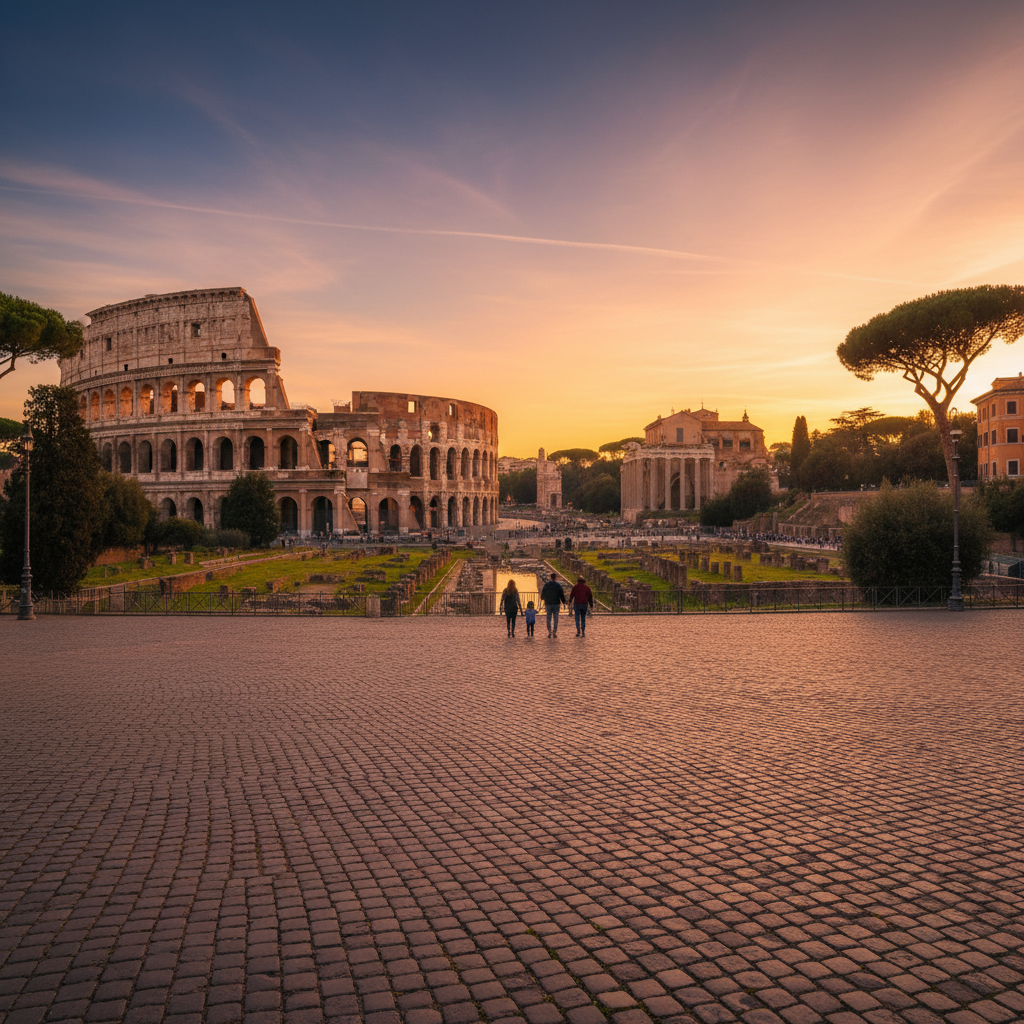
Family-Friendly Rome Itinerary: 5 Days with Kids
The definitive 5-day Rome family itinerary — Colosseum, Vatican, Borghese Gallery, Ostia Antica, and Pompeii day trip. With kids tips, real prices, real logistics.
- Duration: 5 Days
- Estimated Budget: $2,500–$5,000
- Best Time to Visit: April–June and September–October for mild weather and manageable crowds
- Destination: Rome, Italy
Rome is one of those cities that works on multiple levels simultaneously. For adults, it's a layered archaeological and artistic wonder. For kids, it's a place where gladiators were real, where you can throw a coin in a fountain and make a wish, and where gelato is available on every corner. The challenge is pacing — Rome is overwhelming even for adults. With kids, you need a strategy. This 5-day itinerary is built around that reality: one major site per morning, free afternoons, and plenty of gelato.
Rome with kids might sound daunting, a whirlwind of ancient ruins and gelato-fueled meltdowns, but the reality is far more enchanting than you might imagine. Forget the stereotype of a city solely for art historians and romantic couples; Rome is a living, breathing playground for young explorers. The magic isn't just in seeing the Colosseum, but in imagining gladiators through a child's eyes, or discovering hidden fountains in unexpected piazzas. It's a city that effortlessly blends centuries of history with a vibrant, kid-friendly culture, offering a sensory feast that captivates even the shortest attention spans. This isn't just a sightseeing trip; it's an immersive adventure where history comes alive at every turn.
**Who this guide is for:** This guide is crafted for adventurous families with children aged roughly 5-12, eager to immerse themselves in history and culture without sacrificing fun or sanity. You're comfortable with walking, open to spontaneous gelato breaks, and understand that a perfect day might involve more playground time than museum visits. This itinerary is for those who prioritize creating lasting memories over checking every single landmark off a list. If your idea of a vacation is a rigid, adult-centric historical deep dive with no room for kid-centric detours or nap schedules, this guide, with its emphasis on pacing and child-friendly activities, might not be the best fit for your family.
**What makes Rome work for families:** Rome truly shines for families due to its inherent walkability, abundance of open spaces, and a culture that openly embraces children. Our 5-day itinerary is deliberately paced to avoid burnout, incorporating shorter activity blocks, ample park time (Villa Borghese is a lifesaver!), and plenty of opportunities for spontaneous discoveries. The city's history is so grand and tactile that it naturally sparks imagination, making ancient sites like the Roman Forum feel like giant outdoor classrooms rather than dusty museums. The duration is ideal, allowing enough time to see the major highlights without feeling rushed, ensuring there's always room for a midday gelato or a leisurely afternoon exploring a new neighborhood, perfectly accommodating varying energy levels and nap schedules.
**The honest logistics:** Budget-wise, expect to spend around €250-€400 per day for a family of four, covering mid-range accommodation, meals, and attractions, excluding flights. For the best prices and availability, aim to book flights and accommodations 4-6 months in advance, especially if traveling during peak seasons like spring or early autumn. Crucially, pre-book ALL major attractions like the Colosseum, Vatican Museums, and Borghese Gallery online weeks ahead – tickets sell out, and you'll waste precious family time in long lines. A common mistake is underestimating the sheer walking involved; invest in comfortable shoes for everyone and be prepared for cobblestones. Also, don't overschedule; leave plenty of free time for kids to simply be kids in Rome's beautiful piazzas.
Roman Welcome: Pondering Pantheon & Gelato Dreams
Arrive at Leonardo da Vinci–Fiumicino Airport (FCO) and transfer to accommodation in Monti.
Stepping off the plane into Rome's vibrant energy is the first thrill of your Italian adventure. This initial journey sets the tone, transitioning from travel weariness to anticipation of ancient wonders.
Check into accommodation and unpack in Monti.
Settling into your Roman home away from home provides a much-needed moment to regroup and refresh. Unpacking and familiarizing yourselves with your surroundings creates a comfortable base for the days ahead.
Visit the Pantheon (Piazza della Rotonda, Pigna).
Step inside the awe-inspiring Pantheon, a marvel of ancient Roman engineering and design, with its colossal dome and open oculus to the sky. It's a breathtaking, free experience that captivates both adults and children with its sheer scale and historical gravitas.
Gelato tasting at Giolitti (Via degli Uffici del Vicario, 40, Pigna).
Indulge in Rome's iconic sweet treat at one of its oldest and most famous gelaterias, a perfect reward after exploring. The vibrant flavors and creamy texture are an instant hit with kids and a delightful cultural experience for all.
Relaxed stroll through Villa Borghese Gardens (Pinciano).
Unwind in Rome's sprawling and beautiful Villa Borghese Gardens, offering lush greenery, open spaces, and gentle pathways perfect for a post-dinner wander. It's a refreshing escape from the city bustle, allowing kids to stretch their legs and embrace the Roman evening air.
Leif's Tip: Resist the urge to pack too much into your arrival day. Focus on settling in, one iconic sight that doesn't require extensive planning (like the Pantheon), and a true Roman treat. Prioritize flexibility and embrace the slower pace – tired kids (and parents!) will thank you.
Navigating the labyrinthine streets of Trastevere with a stroller, while simultaneously trying to explain the significance of a crumbling aqueduct to an impatient five-year-old, presents a unique set of challenges. You're balancing the desire for deep historical immersion with the very real need for playgrounds, kid-friendly menus, and accessible restrooms. Distinguishing between a genuinely engaging historical tour for young minds and an overly academic lecture, or finding a gelato shop that's not just a tourist trap, requires insider knowledge. This is where Leif steps in, transforming potential logistical headaches into seamless, enriching adventures tailored precisely for your family's pace and interests, ensuring every moment is spent discovering, not stressing.
Pinciano offers a perfect starting point, providing a gentle introduction to Rome's wonders before diving into its historical heart. You then effortlessly transition to a pre-booked, interactive scavenger hunt designed specifically for children within the ancient ruins of the Roman Forum, complete with age-appropriate historical facts and engaging challenges. Leif anticipates your family's needs, from identifying shaded picnic spots near the Circus Maximus for a mid-day break to suggesting specific, less crowded times for visiting the Borghese Gardens, ensuring you maximize enjoyment and minimize meltdowns.
The scent of freshly baked pizza wafting from a trattoria, mingling with the ancient stone of the Colosseum, becomes a memory you carry long after your return. You arrive in Rome feeling not like a tourist, but like an informed explorer, confident in your choices and excited for each day's discoveries. This isn't about rigid schedules; it's about having a flexible framework that empowers you to embrace spontaneous moments, knowing the essential details are already handled. You experience the magic of Rome through your children's wide eyes, creating a shared history that transcends mere sightseeing. Let Leif craft your family's Roman saga, where every cobblestone street tells a story and every gelato break is a cherished moment.
Best Time to Visit Rome, Italy
Alright, let's talk timing for your family Roman adventure. The absolute sweet spot for visiting Rome with kids is definitely **April to early June** or **September to October**. Think glorious spring and early autumn weather – average temperatures hover around 60-75°F (15-24°C), making it perfect for exploring without melting or freezing. The crowds are present, but generally more manageable than the peak summer. Plus, you might catch some lovely spring blooms or the tail end of the grape harvest season, adding an extra layer of charm. Prices for flights and accommodation are also more reasonable than the high summer season.
If those months don't work, **late October to November** or **February to March** can be a good second choice. You'll find significantly fewer crowds, which is a huge plus when navigating with little ones. Temperatures will be cooler, ranging from 45-60°F (7-15°C), so pack layers! While you won't get the vibrant spring or autumn colors, you'll experience a more authentic, local Rome. Just be aware that some attractions might have slightly reduced hours, and there's a higher chance of rain, especially in November. But hey, fewer lines for gelato!
What to avoid? Unless you love sweltering heat, massive crowds, and sky-high prices, steer clear of **July and August**. Rome in the summer can be brutal, with temperatures often soaring above 90°F (32°C). Imagine pushing a stroller through throngs of tourists in that heat – not fun for anyone. Many locals even leave the city during August. Similarly, while Christmas and Easter can be magical, they also bring significant crowds and premium pricing, so weigh that against your family's priorities.
Getting Around Rome, Italy
Getting around Rome with kids is surprisingly manageable, and your primary mode of transport will likely be a combination of walking and the **ATAC public transport system**. This includes buses, trams, and the metro. For convenience, grab a **BIT (Biglietto Integrato a Tempo)** ticket for €1.50, valid for 100 minutes on all modes of transport. For longer stays, consider a **CIS (Carta Integrata Settimanale)** weekly pass for €24.00. You can purchase these at metro stations, tabacchi shops (tobacco stores), and newsstands. While there isn't a specific app for purchasing tickets, Google Maps is excellent for real-time public transport directions and schedules.
Beyond public transport, **taxis** are readily available and can be a lifesaver for tired little legs or late-night returns. Look for official white taxis at designated stands or hail them on the street (they'll have a 'TAXI' sign and a meter). A typical short ride within the city center might cost €10-€20. Ride-sharing apps like **Free Now** (formerly MyTaxi) also operate in Rome. Skip the rental car unless you're planning extensive day trips outside the city; driving in Rome is chaotic, parking is a nightmare, and many central areas are ZTLs (Limited Traffic Zones) that can lead to hefty fines.
When traveling with children, be mindful of **stroller access**. While the metro is generally accessible with elevators at most stations, buses and trams can be more challenging, especially during peak hours. Be prepared to fold your stroller if needed. Car seats are not legally required for taxis in Italy for children over 3 years old, but if you prefer one, you'll need to pre-book a private transfer service that can provide one. For luggage, consider using a luggage storage service like **Stasher** or **Bounce** near major train stations if you have a late flight and want to explore hands-free on your last day.
What to Pack
- Comfortable walking shoes — essential for navigating Rome's cobblestone streets and extensive archaeological sites like the Roman Forum and Colosseum, which can be tough on little feet and adults alike.
- Portable charger/power bank — crucial for keeping phones charged for navigation, taking countless photos of ancient ruins, and entertaining kids with games or videos during museum queues or longer meals.
- Refillable water bottles — Rome has numerous 'nasoni' (public drinking fountains) providing fresh, cool water, perfect for staying hydrated without constantly buying expensive bottled water, especially important for active kids.
- Small backpack or daypack — ideal for carrying snacks, drinks, light jackets, and souvenirs, allowing hands-free exploration of crowded attractions and keeping essentials organized for the whole family.
- Sun hats and sunglasses — Rome's sun can be intense, particularly in open areas like the Colosseum or Palatine Hill, protecting children and adults from sunburn and glare during long days of sightseeing.
- Kids' entertainment (small toys, coloring books) — invaluable for keeping younger children occupied during museum visits, restaurant waits, or while parents enjoy a longer coffee break, preventing meltdowns and enhancing everyone's experience.
Money-Saving Tips
- Purchase a Roma Pass or Omnia Card if you plan to visit multiple major attractions; compare prices carefully based on your family's planned itinerary, as a 72-hour Roma Pass (around €52) includes free entry to two sites and unlimited public transport, which can be a significant saving for a family.
- Pack snacks and drinks for the kids, as buying these frequently at tourist hotspots like the Vatican or Colosseum can quickly add up; a small grocery store (alimentari) offers much cheaper options for picnic lunches or quick bites.
- Utilize Rome's excellent public transport system (bus, tram, metro) instead of taxis; a single 100-minute BIT ticket costs €1.50, and children under 10 travel free on ATAC buses and metro when accompanied by a paying adult, making it very cost-effective for families.
- Look for 'menu turistico' or 'pranzo fisso' deals at trattorias outside the main tourist areas for more affordable and authentic lunch options, often including multiple courses for around €15-25 per person, a much better value than a la carte near major sights.
- Book accommodations with a small kitchenette or at least a refrigerator; this allows you to prepare simple breakfasts or pack lunches, saving a considerable amount compared to eating all meals out, especially with picky eaters.
Local Insights
- Most Roman museums and archaeological sites offer free entry for children under 18 (EU and non-EU citizens), but always check the specific site's policy and be prepared to show passports as proof of age at the ticket counter.
- While queues for major attractions like the Colosseum or Vatican Museums can be notoriously long, families with very young children (often under 2-3 years old, though it varies) may sometimes be able to use a 'fast track' or family entrance; always ask a staff member upon arrival.
- Roman mealtimes are later than many other countries; lunch is typically from 1 PM to 3 PM, and dinner from 7:30 PM onwards, so plan accordingly for hungry kids by having snacks on hand, as many restaurants close between these hours.
- When ordering pizza, know that Romans typically eat individual pizzas with a knife and fork, not by the slice (unless it's 'pizza al taglio' from a bakery), and often prefer simple, classic toppings like Margherita.
- Be aware that many smaller shops and even some restaurants in Rome still prefer cash, especially for smaller purchases; while major credit cards are widely accepted, having some euros on hand is always a good idea for gelato, water, or small souvenirs.
Frequently Asked Questions
What's the best time of year to visit Rome with kids for a 5-day trip?
For a family trip to Rome, late spring (April-May) or early autumn (September-October) are ideal. The weather is pleasantly warm, perfect for exploring without the oppressive summer heat, and the crowds are generally more manageable than in peak summer. Avoid July and August if possible; temperatures can soar above 30°C (86°F), making outdoor sightseeing uncomfortable for little ones, and many locals leave the city, closing some smaller shops and restaurants. Spring offers beautiful blossoms, while autumn brings a lovely golden light to the ancient ruins.
How much should we budget for a 5-day family trip to Rome?
A realistic budget for a 5-day family trip to Rome, excluding flights, would be in the $2,500-$5,000 range. This accounts for mid-range accommodation (a family-friendly apartment or hotel), daily meals (a mix of trattorias, pizza, and gelato), entrance fees for major attractions like the Colosseum and Vatican Museums, and public transport. Factor in around €150-€250 per day for food and activities for a family of four. If you plan on private tours, more upscale dining, or extensive shopping, your budget will lean towards the higher end. Always build in a buffer for unexpected expenses.
What attractions or activities absolutely need to be booked in advance when traveling with kids?
Definitely book your tickets for the Colosseum, Roman Forum, and Palatine Hill well in advance – we're talking weeks, if not months, especially if you want specific time slots or guided tours. The Vatican Museums, including the Sistine Chapel, are another must-book to avoid hours-long queues. Consider booking a family-friendly tour that caters to children, as these often have dedicated entry times. Also, if there's a specific kid-focused activity like a gladiator school experience or a pasta-making class you're keen on, secure those spots early, as they have limited capacity and fill up fast.
What's the best way to get around Rome with children?
Rome's public transport system, ATAC, is generally efficient. The metro is great for longer distances, while buses cover most areas. Consider purchasing a Roma Pass if you plan on using public transport extensively and visiting several museums. However, for shorter distances within the historic center, walking is often the most rewarding way to explore, allowing you to stumble upon hidden gems. With younger children, a sturdy stroller is essential. Taxis are readily available but can be pricey. Ride-sharing apps like Free Now (formerly MyTaxi) are also an option. Avoid driving in Rome; traffic is chaotic, and parking is a nightmare.
What should we pack or prepare specifically for a family trip to Rome?
Comfortable walking shoes are non-negotiable for everyone, especially the kids – Rome is best explored on foot. Pack layers of clothing, as temperatures can fluctuate, and remember modest attire (shoulders and knees covered) for visiting churches and the Vatican. A reusable water bottle is a lifesaver, as there are many public drinking fountains (nasoni) throughout the city. Sunscreen, hats, and small snacks are crucial for keeping energy levels up. Don't forget a portable power bank for phones and cameras. A small first-aid kit with blister plasters and basic medications is also a smart addition.
What are some common mistakes families make when visiting Rome for 5 days?
One common mistake is over-scheduling. Trying to cram too much into each day will lead to tired, grumpy kids (and parents!). Rome is meant to be savored. Another error is not pre-booking major attractions, resulting in wasted time in long lines. Don't rely solely on sit-down restaurants; embrace pizza al taglio (pizza by the slice) and gelato for quick, kid-friendly meals. Also, many families forget to build in downtime, like a visit to a park (Villa Borghese is fantastic) or just relaxing at a cafe. Lastly, underestimating the amount of walking involved can lead to sore feet and meltdowns.
Beyond the Colosseum and Vatican, what's a unique, kid-friendly experience in Rome?
For a truly unique and engaging experience, consider visiting the Centrale Montemartini. It's an old power plant transformed into a museum, showcasing stunning ancient Roman sculptures alongside the original industrial machinery. The contrast is fascinating, and the spacious layout makes it less overwhelming than some of the larger, more crowded museums. Kids often find the massive engines and the juxtaposition of ancient art in an industrial setting incredibly cool. It's a fantastic way to introduce them to Roman history and art from a different, less conventional perspective, offering a memorable and less crowded alternative.