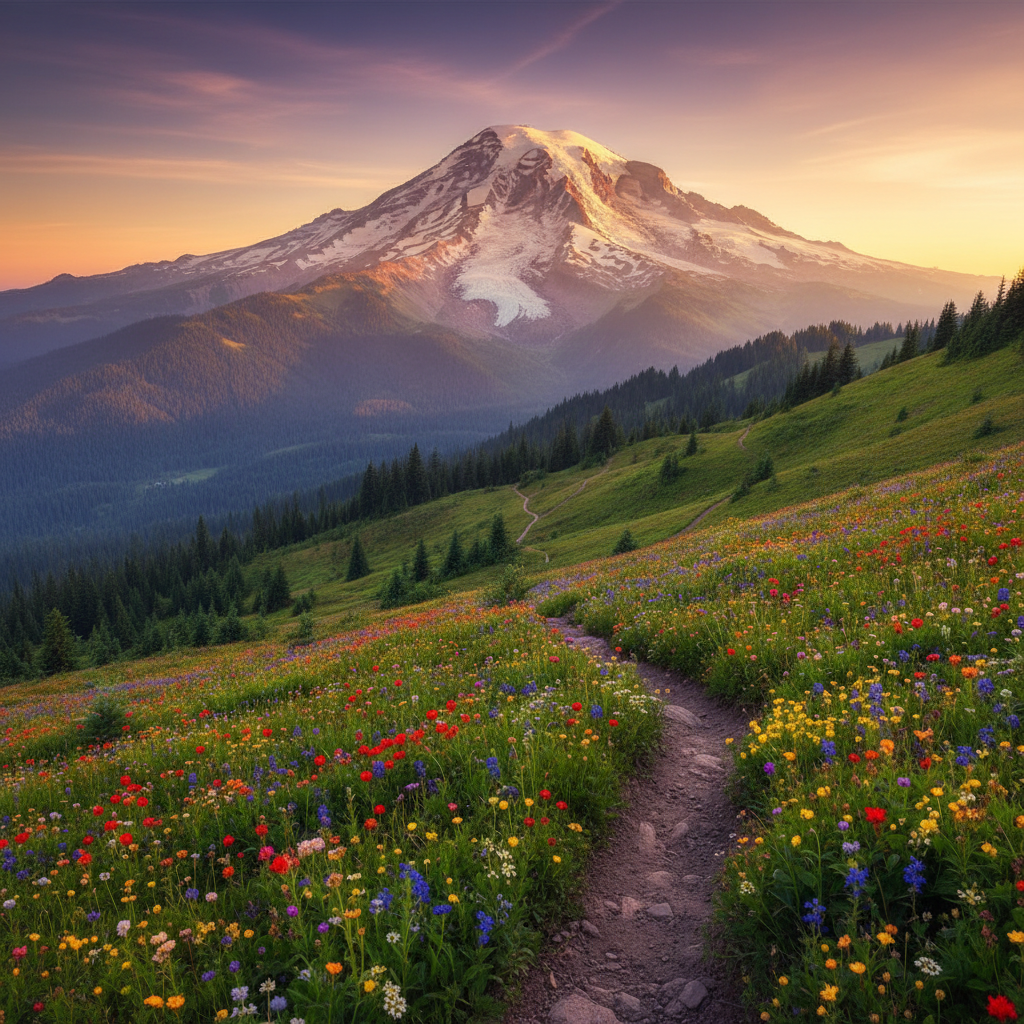
Mount Rainier Adventure: 3-Day Wildflower & Glacier Itinerary from Seattle
Conquer Mount Rainier with this 3-day adventure itinerary! Explore Paradise wildflowers, hike the Skyline Trail, and witness Emmons Glacier from Seattle.
- Duration: 3 Days
- Estimated Budget: $420–$870
- Best Time to Visit: Mid-July to mid-August (peak wildflowers at Paradise); September (fewer crowds, good weather, fall colors). Sunrise road is typically open late June to early October.
- Destination: Mount Rainier National Park, Washington, USA
Mount Rainier isn't just a mountain; it's an active stratovolcano crowned with more glaciers than any other peak in the contiguous U.S. Prepare for an adventure that takes you from vibrant subalpine wildflower meadows to the icy grandeur of ancient glaciers, all against the backdrop of one of North America's most iconic peaks. This guide is your ticket to experiencing the raw, untamed beauty of Rainier, perfect for those who crave dramatic landscapes and exhilarating outdoor exploration.
Mount Rainier National Park is an adventurer's paradise, a place where the mountain truly comes alive. This guide is crafted for explorers eager to witness the majestic Reflection Lake or conquer challenging ascents. Prepare to challenge yourself on iconic hikes and discover hidden gems that reveal the park's wild heart.
You'll delve deep into the park's most spectacular landscapes, from the serene Reflection Lakes offering iconic views of the mountain to the dramatic, glacier-carved terrain of Sunrise. This itinerary ensures you experience the raw power and serene beauty of Mount Rainier, pushing your limits while soaking in some of the most breathtaking scenery in North America. Get ready for an unforgettable journey into the wild.
Beyond the well-trodden paths, this adventure will take you to places where the mountain's majesty is truly felt, from close-up encounters with the massive Emmons Glacier to the unique ecosystem of the Carbon River Rainforest. Each day is designed to maximize your outdoor exploration, leaving you invigorated and inspired by the sheer grandeur of this iconic peak.
Welcome to Paradise: Waterfalls, Glaciers & Historic Charm
Start your adventure at Longmire, the historic heart of Mount Rainier National Park, and explore the Longmire Museum.
This museum offers the best natural history exhibits in the park, providing a fantastic orientation to Rainier's unique ecosystem and history. It's a perfect first stop to understand the grandeur you're about to experience.
Take a leisurely stroll on the Trail of the Shadows, a 0.7-mile loop through an old-growth forest and past bubbling mineral springs.
This easy trail offers a peaceful introduction to the park's diverse flora and fauna, showcasing ancient trees and unique geological features. It's a wonderful way to stretch your legs after the drive and immerse yourself in the forest's tranquility.
Hike the Nisqually Vista Trail, a 1.2-mile loop at Paradise, offering stunning views of the Nisqually Glacier and the mountain.
This is arguably the best easy hike in the park, providing breathtaking close-up views of the glacier and Rainier itself. The interpretive signs along the way beautifully explain the glacier's retreat and its impact on the landscape.
Visit Narada Falls, a spectacular 168-foot waterfall on the Paradise River, just a short walk from the parking area.
Narada Falls is the most accessible waterfall in the park, offering a powerful display of nature's force with minimal effort. The sheer volume of water cascading down is truly impressive.
Explore the Paradise Visitor Center, the best place to get oriented to the park's geology, ecology, and glaciology.
The exhibits here are incredibly well-done, providing a deep understanding of Mount Rainier's formation, its unique ecosystems, and the glaciers that define it. It's an essential stop for anyone wanting to truly appreciate the park.
Leif's Tip: Since this is an arrival day, take it easy and don't try to cram too much in. The drive into the park is scenic, but you'll want to be refreshed for your first explorations. Pack plenty of water and snacks, as services can be limited, and always check the weather forecast – conditions can change rapidly on the mountain!
Navigating the ever-changing weather patterns and diverse trail conditions of Mount Rainier National Park presents a unique set of challenges for even seasoned adventurers. You're not just planning a hike; you're coordinating access to popular trailheads like Paradise and Sunrise, understanding the seasonal opening and closing of roads, and deciphering which wildflower meadows are at their peak bloom. Deciding between a challenging ascent on the Skyline Trail or a more moderate trek to the Emmons Glacier, while also considering day trips to Seattle, requires intricate knowledge of local logistics, permit requirements, and how to avoid peak-hour congestion. Without this insight, you could easily find yourself stuck in traffic, missing a crucial trail window, or arriving at a closed access point. Leif cuts through this complexity, providing a clear, optimized path through Rainier's grandeur.
Longmire Museum’s historical insights are just the beginning; Leif is your ultimate co-pilot for a flawless Mount Rainier expedition. Instead of poring over multiple park maps and weather forecasts, your personalized itinerary seamlessly integrates the best time to tackle the Burroughs Mountain Trail for unparalleled vistas of the mountain's north face, or when to visit the Grove of the Patriarchs to avoid the busiest times. If an unexpected trail closure occurs near Paradise, Leif doesn't just tell you; it instantly suggests an equally breathtaking alternative, perhaps a detour to the less-trafficked but equally stunning Spray Park trail, ensuring your day remains filled with discovery rather than disappointment. This dynamic adaptation means your adventure unfolds effortlessly.
The crisp, pine-scented air at dawn, carrying the distant sound of a cascading waterfall, is your reward for a perfectly planned day. You arrive at each trailhead with a sense of calm and anticipation, knowing that every detail, from the best photo opportunities at Reflection Lake to the optimal time for spotting wildlife in the subalpine meadows, has been meticulously considered. There’s no second-guessing, no frantic last-minute research; just pure, unadulterated immersion in the raw beauty of Mount Rainier. This feeling of prepared exploration, where every turn reveals a new wonder and every moment is maximized, is exactly what Leif delivers, empowering you to truly connect with this magnificent landscape.
Best Time to Visit Mount Rainier National Park, Washington, USA
Mid-July to mid-August is prime for the Paradise wildflowers, a truly unforgettable sight.
September offers a quieter experience with fewer crowds, often excellent weather, and the beginnings of fall colors.
For the Sunrise area, plan your visit between late June and early October when the road is typically open.
If you're dreaming of staying at the historic Paradise Inn, book your room 6-12 months in advance, especially for summer dates.
Getting Around Mount Rainier National Park, Washington, USA
Renting a car is absolutely essential for exploring Mount Rainier National Park; public transport within the park is non-existent.
From Seattle, allow at least 2 hours to reach the Nisqually entrance, heading south on I-5 then SR-706.
Be aware that the White River entrance (leading to Sunrise) is summer-only, so check road conditions before you go.
Parking can be challenging at popular trailheads like Paradise and Sunrise, especially on weekends; arrive early to secure a spot.
What to Pack
- Layers of clothing, as mountain weather can change rapidly from warm sun to cool, damp conditions.
- Sturdy hiking boots with good ankle support are a must for the varied terrain, from paved paths to rocky trails.
- Rain gear (jacket and pants) is crucial, even in summer; showers can materialize quickly.
- Sunscreen, sunglasses, and a wide-brimmed hat to protect against strong alpine sun.
- Plenty of water and snacks, especially if you plan on longer hikes or visiting areas with limited services like Sunrise.
- A camera! You'll want to capture the stunning landscapes and vibrant wildflowers.
- Binoculars for spotting wildlife or getting a closer look at distant glaciers.
- A small backpack to carry your essentials for day hikes.
Money-Saving Tips
- Pack picnics and snacks for your lunches, especially for Day 2 and Day 3, as dining options within the park are limited and can be pricey.
- Consider staying just outside the park in towns like Ashford if the in-park lodging is beyond your budget or fully booked.
- If you plan on visiting multiple national parks within a year, consider purchasing an America the Beautiful pass to save on entrance fees.
- Fill up your gas tank before entering the park; gas stations are scarce and more expensive inside or immediately surrounding the park.
Local Insights
- The 'Paradise' area truly lives up to its name, especially during wildflower season; take your time to wander the lower trails even if you're not doing the full Skyline.
- Don't underestimate the mountain's scale; what looks like a short walk on a map can be a significant elevation gain.
- The Nisqually Glacier is a living, breathing entity; the interpretive signs on the Nisqually Vista Trail offer a fascinating glimpse into its retreat.
- Keep an eye out for marmots and pikas in the rocky areas above the tree line, especially around Panorama Point.
- The reflection of Mount Rainier in Reflection Lakes is best seen early in the morning or late in the evening when the water is calm and the light is soft.
Frequently Asked Questions
What kind of fitness level is required for this adventure itinerary?
This itinerary is designed for active individuals with a good level of fitness. While there are easier options, the core of this adventure involves moderate to strenuous hikes like the Skyline Trail and potentially the Burroughs Mountain Trail, which require stamina and comfort with elevation gains. You'll be covering significant distances on foot, so regular exercise is recommended.
Do I need any special gear for the hikes, especially for the Skyline Trail or Burroughs Mountain?
For the Skyline Trail and Burroughs Mountain, sturdy hiking boots with good ankle support are essential. Bring layers of clothing, as weather can change rapidly, even in summer. A rain jacket, sun protection (hat, sunglasses, sunscreen), plenty of water, and snacks are also crucial. Trekking poles can be very helpful for stability on descents and uneven terrain.
What if I want a more challenging hike than the Skyline Trail, but not as extreme as Camp Muir?
If you're looking for something more strenuous than the Skyline Trail but less committing than Camp Muir, the Burroughs Mountain Trail from Sunrise is an excellent choice. It offers incredible, close-up views of the mountain and Emmons Glacier, with significant elevation gain over its 7-mile round trip. It's a fantastic way to push yourself without needing technical gear.
Is it possible to swim in any of the lakes mentioned, like Louise Lake?
Yes, Louise Lake is known as the best swimming lake in the park. Be prepared for very cold water, even in the height of summer, as it's fed by snowmelt. It's a refreshing dip after a long hike, but definitely not for the faint of heart! Always check for any current park regulations regarding swimming.
How early should I arrive at trailheads like Paradise or Sunrise to find parking?
During peak season (mid-July to mid-August) and on weekends, parking at popular trailheads like Paradise and Sunrise fills up very early, often by 8:00 AM or even earlier. Arriving by 7:00 AM is highly recommended to secure a spot and beat the crowds on the trails. Consider using the park's shuttle services if available, or carpooling.
What are the best options for food within the park for an adventurous traveler?
For an adventurous traveler, packing picnics and trail snacks is highly recommended, especially for Day 2 and Day 3 where you'll be on longer hikes or in areas with limited food services (like Sunrise). The Paradise Inn Dining Room offers a more substantial meal, but for quick, convenient options, plan to bring your own. The Copper Creek Inn near Ashford is excellent for a hearty breakfast before entering the park.
What should I do if I encounter wildlife on the trails?
Mount Rainier is home to diverse wildlife. Always maintain a safe distance and never feed animals. If you encounter larger animals like elk or bears, make noise to let them know you're there and slowly back away. Carry bear spray if you're comfortable, and know how to use it. Store food properly to avoid attracting animals to your campsite or vehicle.