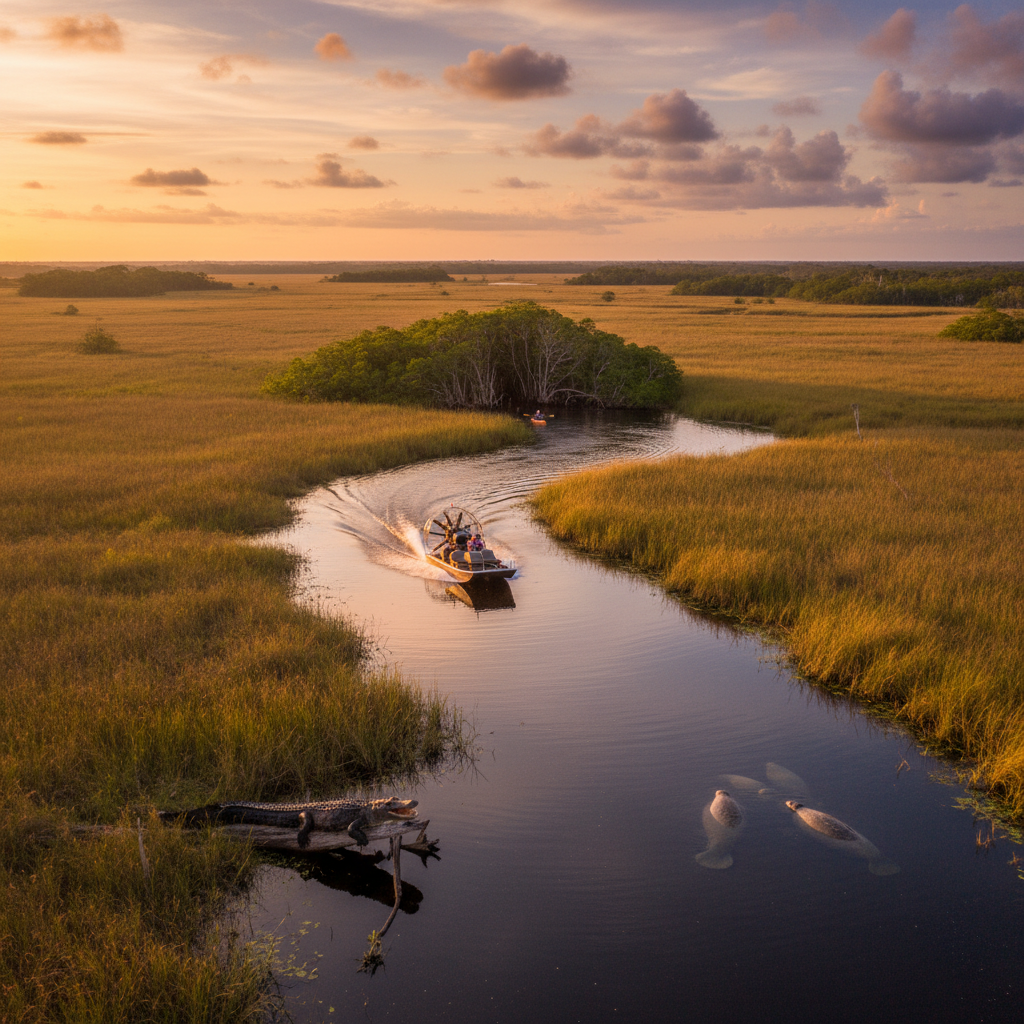
3-Day Everglades Wildlife Adventure: Alligators, Manatees & Mangroves
Dive into a 3-day Everglades wildlife adventure! Explore airboats, alligators, manatees, and kayak through mangroves in Florida's subtropical wilderness.
- Duration: 3 Days
- Estimated Budget: $360–$900
- Best Time to Visit: December-April (dry season)
- Destination: Everglades National Park, Florida, USA
Prepare for an immersive journey into the heart of Florida's wild side. This 3-day adventure guide plunges you deep into the Everglades, a vibrant ecosystem teeming with iconic wildlife like alligators and manatees, offering unparalleled opportunities for exploration by airboat and kayak. Get ready to witness nature's raw beauty in one of the world's most unique wetlands.
Beyond the urban sprawl of South Florida, the Everglades beckons with airboat tours and mangrove tunnels. This isn't just a trip; it's a deep dive into the Everglades, a UNESCO World Heritage Site, International Biosphere Reserve, and Ramsar Wetland, teeming with life. Imagine gliding through sawgrass pra... This isn't just a trip; it's a deep dive into the Everglades, a UNESCO World Heritage Site, International Biosphere Reserve, and Ramsar Wetland, teeming with life. Imagine gliding through sawgrass prairies on an airboat, the wind in your hair, as alligators sun themselves just feet away, or silently paddling through mangrove tunnels, listening to the calls of unseen birds. This adventure is crafted for those who crave genuine encounters with wildlife, from the prehistoric gaze of an American crocodile to the gentle giants of the West Indian manatee. Get ready to swap cityscapes for cypress domes and experience one of the most biodiverse ecosystems on Earth, a place where every turn reveals a new wonder.
The Everglades is a place of raw, untamed beauty, a vast 'river of grass' that defies easy description. Over three days, you'll traverse its diverse landscapes, from the freshwater marshes of Shark Valley, home to an astonishing density of alligators, to the brackish estuaries of the Ten Thousand Islands, where dolphins leap and roseate spoonbills paint the sky pink. We'll put you right in the heart of the action, whether it's kayaking the legendary Nine Mile Pond Canoe Trail, a true paddler's paradise, or embarking on a guided eco-tour that reveals the park's hidden gems. This isn't a passive observation; it's an active exploration, designed to connect you intimately with the 36 threatened species that call this unique wilderness home, including the elusive Florida panther.
This itinerary promises an unparalleled wildlife adventure, focusing on authentic, up-close experiences that highlight the Everglades' incredible biodiversity. You'll gain insider knowledge, learning to spot the subtle signs of wildlife and understanding the delicate balance of this subtropical wilderness. Forget the crowded tourist traps; we're guiding you to the best spots for photography, observation, and genuine connection with nature. From the best time to see manatees to the most rewarding kayaking routes, every detail is considered to maximize your wildlife encounters. Get ready to be captivated by the sheer abundance of life, from the smallest marsh snail to the largest American alligator, in a journey that will leave you with a profound appreciation for this irreplaceable natural treasure.
Alligator Alley: Shark Valley's Wild Welcome
Arrive at Shark Valley Visitor Center, pay your park entrance fee, and prepare for an immersive Everglades experience.
This is your gateway to the heart of the Everglades, where you'll get your first taste of its unique ecosystem. The visitor center offers restrooms, a small gift shop, and crucial information for your day.
Embark on the Shark Valley Tram Tour, a two-hour guided journey along the 15-mile loop road, offering unparalleled alligator viewing.
This narrated tour provides an excellent overview of the Everglades' ecology and guarantees close-up encounters with alligators, wading birds, and other wildlife. It's perfect for getting oriented and spotting creatures you might miss on your own.
Ascend the 65-foot observation tower at the halfway point of the Shark Valley loop for panoramic views of the 'River of Grass.'
From this vantage point, you can truly appreciate the vastness and unique landscape of the Everglades. It's a fantastic photo opportunity and a chance to see the ecosystem from a different perspective.
Drive to the Ernest F. Coe Visitor Center and then head to the Anhinga Trail, a short but incredibly rewarding boardwalk loop.
Often called the best wildlife photography trail in the US, the Anhinga Trail is teeming with alligators, turtles, and a variety of wading birds like anhingas and cormorants. The boardwalk brings you remarkably close to the action.
Explore the Gumbo Limbo Trail, a paved loop through a dense tropical hardwood hammock adjacent to the Anhinga Trail.
This trail offers a stark contrast to the open sawgrass, providing a glimpse into a lush, shaded ecosystem. You'll see ancient gumbo limbo trees, air plants, and perhaps even some smaller reptiles or birds.
Leif's Tip: Hydration is key in the Everglades! Bring plenty of water, more than you think you'll need, especially if you're visiting during the warmer months. Also, pack bug spray – mosquitoes can be relentless, particularly at dawn and dusk, and you don't want them to detract from your incredible wildlife encounters.
Navigating the vastness of Everglades National Park to find genuine wildlife encounters, especially for airboat tours and manatee sightings, presents unique challenges. You'll quickly discover that not all airboat operators offer the same eco-conscious experience, and distinguishing between authentic, small-group tours and larger, less personal operations requires significant research. Furthermore, understanding the seasonal variations for spotting specific wildlife, like the best times for manatees near Flamingo or the optimal conditions for alligator viewing along the Anhinga Trail, can make or break your trip. Without insider knowledge, you might find yourself on a crowded boardwalk during a quiet wildlife period or booking a tour that doesn't align with your desire for responsible, impactful viewing. This is precisely where Leif steps in, cutting through the noise to curate an itinerary that maximizes your chances of incredible, ethical wildlife interactions.
Arrive, and discover a journey meticulously crafted to bypass common travel frustrations. Instead of wondering which airboat company to trust, your personalized plan directs you to a highly-rated, small-group eco-tour operator known for their knowledgeable guides and commitment to conservation, ensuring you experience the "river of grass" responsibly. Later, when you're considering a mangrove kayaking trip, Leif has already factored in the tides and recommended the ideal launch point near Chokoloskee for prime manatee viewing, complete with rental information and safety tips. You won't waste precious daylight searching for reputable outfitters or debating the best route; every detail is meticulously pre-planned, allowing you to focus purely on the adventure unfolding around you.
The warm, humid air, thick with the scent of sawgrass and fresh water, envelops you as you paddle silently through a mangrove tunnel, sunlight dappling through the canopy. This sense of complete immersion, knowing you're exactly where you need to be for an authentic Everglades experience, is the ultimate reward. You'll feel a profound connection to this unique subtropical wilderness, having encountered its iconic alligators, graceful manatees, and vibrant birdlife not by chance, but through a thoughtfully designed journey. With every turn, the park reveals another layer of its untamed beauty, and you'll navigate it with the confidence of a seasoned explorer, ready to embrace the wild heart of Florida.
Best Time to Visit Everglades National Park, Florida, USA
December to April is the dry season, offering cooler temperatures, lower humidity, and fewer mosquitoes, making wildlife viewing exceptional.
During the dry season, water levels recede, concentrating wildlife around remaining water sources, which means more alligator and bird sightings.
Avoid the summer months (May-November) if possible, as it's the wet season with high humidity, frequent thunderstorms, and a notorious mosquito population.
Early mornings and late afternoons are prime times for wildlife activity, regardless of the season, so plan your park visits accordingly.
Getting Around Everglades National Park, Florida, USA
Renting a car is non-negotiable for exploring the Everglades; public transport within the park is non-existent, and attractions are spread out.
Fill up your gas tank before entering the park; there are no gas stations inside, and distances between visitor centers can be significant.
Be aware of speed limits, especially in wildlife crossing zones; panthers and other animals are often active near roads.
Consider a high-clearance vehicle if you plan on exploring any unpaved roads, though most main park roads are paved and well-maintained.
What to Pack
- Lightweight, long-sleeved shirts and pants for sun and insect protection.
- Wide-brimmed hat and sunglasses for relentless Florida sun.
- Plenty of insect repellent (with DEET or picaridin) – mosquitoes are a real factor, especially near water.
- Binoculars for spotting distant birds and other wildlife.
- Waterproof dry bag for kayaking and airboat tours to protect electronics and valuables.
- Reusable water bottle to stay hydrated; water stations are available at visitor centers.
- Sunscreen with high SPF, even on cloudy days.
- Comfortable walking shoes or hiking sandals for boardwalks and trails.
Money-Saving Tips
- Purchase an Everglades National Park entrance pass ($30 per vehicle) which is valid for 7 days and covers all park entrances.
- Pack your own snacks, drinks, and picnic lunches; food options within the park are limited and can be pricey.
- Consider staying at the Everglades International Hostel in Homestead for a budget-friendly lodging option, especially for solo travelers.
- Look for free ranger-led programs and talks at visitor centers for educational experiences without extra cost.
Local Insights
- Always maintain a safe distance from wildlife, especially alligators and crocodiles; never feed them or attempt to approach them.
- Stay on marked trails and boardwalks to protect the fragile ecosystem and avoid unexpected encounters with wildlife.
- The term 'River of Grass' isn't just poetic; it describes the slow, shallow flow of water that defines the Everglades, so appreciate its unique hydrology.
- Be prepared for changing weather; sudden thunderstorms can pop up, even during the dry season, so a light rain jacket is always a good idea.
Frequently Asked Questions
What's the best time of year for wildlife viewing in the Everglades?
The dry season, from December to April, is absolutely the best. Water levels drop, concentrating wildlife around remaining water sources, making sightings of alligators, wading birds, and even manatees much more frequent and easier to spot. Plus, the weather is cooler and there are fewer mosquitoes.
Do I need to worry about alligators while kayaking or airboating?
While alligators are indeed everywhere, they generally avoid humans. On airboat tours, you're elevated and at a safe distance. For kayaking, stick to designated trails like Nine Mile Pond. Always keep a respectful distance, never feed them, and you'll have incredible, safe encounters. Your guides are experts at navigating these waters safely.
Is it possible to see manatees on this trip?
Yes! While not guaranteed, the Flamingo area, especially during cooler months (December-March), offers the best chance. Manatees seek warmer waters, and the canals and Florida Bay near Flamingo are known wintering spots. Keep an eye out during your kayaking and boat tours in that area.
What should I pack for a wildlife adventure in the Everglades?
Think layers, quick-drying clothing, and sun protection. Essential items include a wide-brimmed hat, sunglasses, reef-safe sunscreen, insect repellent (especially for dawn/dusk), a reusable water bottle, binoculars for birdwatching, and a waterproof bag for electronics during water activities. Sturdy closed-toe shoes are a must.
Are there any guided tours available for kayaking or airboating?
Absolutely, and I highly recommend them for a richer experience. For kayaking the Ten Thousand Islands, Everglades Adventures in Everglades City offers excellent guided tours. For airboat tours, there are several reputable operators just outside the park boundaries, offering thrilling and informative rides through the sawgrass. Your itinerary will include specific recommendations.
How accessible is the park for someone with limited mobility?
Many areas are quite accessible. Shark Valley offers a tram tour, and the Anhinga Trail and Gumbo Limbo Trail are boardwalks, making them wheelchair-friendly. Airboat tours are generally accessible, but kayaking requires physical participation. Always check with specific tour operators for their accessibility options.
Can I bring my own kayak or bike into the park?
Yes, you can! Bringing your own kayak allows for more flexibility on trails like Nine Mile Pond. For Shark Valley, you can bring your own bike to cycle the 15-mile loop, which can be a fantastic way to see alligators up close at your own pace, though bike rentals are also available there.