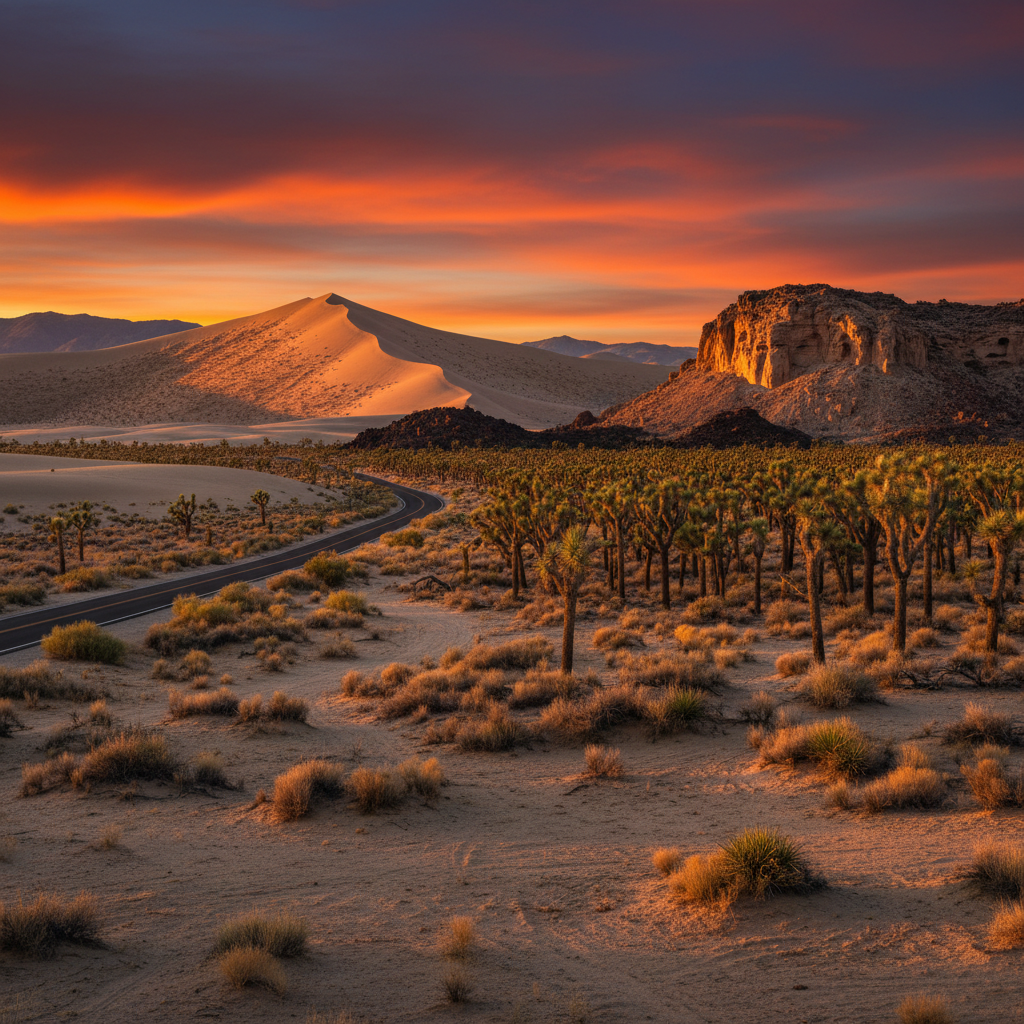
Mojave National Preserve: 2-Day Desert Road Trip - Dunes, Joshua Trees & Lava Tubes
Uncover the Mojave National Preserve on a 2-day desert road trip. Explore singing dunes, vast Joshua tree forests, and ancient lava tubes.
- Duration: 2 Days
- Estimated Budget: $30–$150
- Best Time to Visit: October-April for mild temperatures (50s-70s).
- Destination: Mojave National Preserve, California, USA
Escape the crowds and discover the raw, untamed beauty of Mojave National Preserve. This 2-day road trip is your ticket to a desert adventure, far from the beaten path, where silence reigns and the landscapes tell tales of ancient geological wonders. Get ready to explore a side of California most travelers miss, with vast open spaces and dramatic natural formations waiting around every bend.
Mojave National Preserve, often overlooked, is a hidden gem perfect for a desert road trip. Unlike its bustling neighbors, Joshua Tree or Death Valley, Mojave offers a genuine sense of solitude and vast, untouched landscapes. Imagine driving through expansive Joshua tree forests, hiking towering sand dunes, and exploring ancient lava tubes, all without the crowds.
This two-day adventure is designed to immerse you in the diverse beauty of the Mojave Desert, from the singing sands of Kelso Dunes to the dramatic volcanic formations of Hole-in-the-Wall. You'll discover a unique blend of natural wonders and fascinating history, making for an unforgettable journey through one of California's most underrated national preserves.
Beyond the bustling cities of California lies Mojave National Preserve, a vast expanse... where the stars shine brighter and the silence is profound. With towering dunes, ancient forests, and geological marvels, Mojave National Preserve is an adventurer's paradise, offering an authentic desert experience, from the Kelso Dunes to Hole-in-the-Wall.
Singing Sands and Joshua Tree Giants
Arrive at Kelso Depot Visitor Center, a beautifully restored 1924 Spanish Colonial Revival railroad depot.
This is the architectural gem of the Mojave, offering a glimpse into the region's rich railroad history. It's also your first stop for maps and essential information.
Hike the Kelso Dunes, California's tallest sand dunes, reaching up to 650 feet.
The views from the top are absolutely breathtaking, spanning the vast Mojave landscape. If you're lucky, you might hear the rare 'singing sands' phenomenon as you descend.
Explore the Cima Dome, home to the world's largest Joshua tree forest, and hike the Teutonia Peak Trail.
This perfectly symmetrical granite dome is a stunning natural wonder, and walking among these ancient Joshua trees feels like stepping into another world. The trail offers panoramic views of the forest.
Visit the Mojave Cross, a poignant WWI memorial on a rocky outcrop.
Beyond its historical significance, this site offers incredible views and a moment for quiet reflection. It's a powerful reminder of the preserve's diverse stories.
Head to Sunrise Rock for a spectacular desert sunset.
This is the most famous sunset viewpoint in the preserve, where the Mojave Cross and the Joshua tree forest glow in vibrant orange hues. It's the perfect way to end your day.
Leif's Tip: Before you even set foot in the preserve, make sure your gas tank is full, and you have at least a gallon of water per person. Cell service is virtually non-existent, so download offline maps and any important information beforehand. The desert is beautiful but unforgiving!
Navigating the vast, unpaved roads and often unmarked trails of Mojave National Preserve presents a unique challenge for even seasoned road trippers. You're not just looking for directions; you need to know which routes are suitable for your vehicle, where cell service drops off completely, and how to safely access remote spots like the lava tube caves without getting lost or running out of daylight. Deciphering the best times to visit the Kelso Dunes for optimal 'singing' conditions, or understanding the subtle signs of flash flood danger in washes, requires more than a simple map. It's about having an informed guide who understands the desert's nuances, ensuring your adventure through the Joshua tree forests is exhilarating, not exasperating. This is precisely where Leif shines, transforming potential pitfalls into seamless exploration.
Teutonia Peak Trail offers an immersive experience, but careful planning is key to fully appreciating its unique desert beauty. It factors in the drive time to the remote Teutonia Peak trail, advising on the best parking spots and even suggesting a less-traveled overlook for a panoramic view of the expansive Joshua tree forest, away from any potential crowds. When you're considering a detour to a lesser-known petroglyph site, Leif provides real-time updates on road conditions and advises if a high-clearance vehicle is genuinely necessary, ensuring your journey remains smooth and your discoveries authentic, without any unexpected logistical headaches.
The profound silence of the Mojave, broken only by the wind whispering through the creosote bushes, becomes your companion when you arrive fully prepared. You're not just visiting; you're immersing yourself, knowing exactly when to catch the sunrise painting the Kelso Dunes in fiery hues, or where to find the clearest night skies for stargazing without light pollution. There’s a deep satisfaction in exploring the intricate formations of the lava tubes with confidence, understanding their geological story because your itinerary has prepped you with context, not just coordinates. This sense of calm mastery, of being truly present in one of California's most untamed landscapes, transforms a simple road trip into a deeply personal odyssey. Let Leif guide you to your own desert revelations.
Best Time to Visit Mojave National Preserve, California, USA
Aim for October through April to experience the most comfortable temperatures, typically ranging from the 50s to 70s Fahrenheit.
Avoid visiting during the summer months (June-September) when temperatures frequently exceed 110°F, making outdoor activities dangerous.
Spring (March-April) can offer the bonus of wildflowers, especially after a wet winter, adding vibrant color to the desert landscape.
Weekdays are generally less crowded than weekends, offering a more serene and remote experience in this already quiet preserve.
Getting Around Mojave National Preserve, California, USA
A high-clearance vehicle is highly recommended for exploring Mojave National Preserve, as many roads are unpaved and can be rough.
Ensure your vehicle's gas tank is full before entering the preserve; there are no gas stations within its 1.6 million acres.
Download offline maps or bring physical maps, as cell service is extremely limited to non-existent throughout the preserve.
Plan your driving routes carefully, as distances between attractions can be significant and some roads may require slower speeds.
Consider a 4x4 vehicle if you plan on exploring more remote areas or if there's a chance of inclement weather impacting dirt roads.
What to Pack
- Plenty of water (at least 1 gallon per person per day, more in warmer weather), as there are no reliable water sources in the preserve.
- Sun protection: wide-brimmed hat, sunglasses, and high SPF sunscreen are essential.
- Layers of clothing, including a warm jacket, as desert temperatures can fluctuate dramatically between day and night.
- Sturdy hiking boots with good ankle support for navigating sandy dunes, rocky trails, and uneven terrain.
- A headlamp or flashlight for exploring the lava tube and for navigating after dark, as there's no artificial light.
- First-aid kit, including blister treatment, pain relievers, and any personal medications.
- Snacks and picnic supplies, as food services are non-existent within the preserve.
- Binoculars for wildlife viewing and stargazing; the preserve boasts incredible dark skies.
Money-Saving Tips
- Pack all your meals and snacks, especially picnic lunches, as there are no food services inside the preserve, saving you money and time.
- Consider camping at Hole-in-the-Wall Campground ($15/night) for an authentic and budget-friendly lodging experience within the preserve.
- If staying outside the preserve, Barstow offers more affordable hotel options compared to Nipton, especially for western access.
- Bring your own firewood if you plan on camping and having a campfire, as purchasing it at small desert stores can be pricey.
- Take advantage of the preserve's free entry; unlike many national parks, there is no entrance fee for Mojave National Preserve.
Local Insights
- Embrace the solitude: Mojave National Preserve is genuinely remote. Expect long stretches without seeing other people or cars, which is part of its charm.
- Respect the desert environment: Stay on marked trails, do not disturb wildlife, and pack out everything you pack in (Leave No Trace principles).
- Look for the 'singing' dunes at Kelso: If you're lucky, the unique sand grains will 'boom' or 'sing' as you slide down, a rare acoustic phenomenon.
- Keep an eye out for desert tortoises, especially in the spring. If you see one, admire it from a distance and never touch or move it.
- Stargazing here is phenomenal due to the lack of light pollution; find a safe pull-out away from any headlights and enjoy the celestial show.
Frequently Asked Questions
What's the best time of year to visit Mojave National Preserve?
The best time to visit is from October to April. Temperatures are mild, ranging from the 50s to 70s Fahrenheit, perfect for hiking and exploring. Summers can be brutally hot, often exceeding 110°F, making outdoor activities challenging and potentially dangerous.
Are there any entrance fees for Mojave National Preserve?
No, there are no entrance fees to access Mojave National Preserve. This makes it an incredibly budget-friendly destination for exploring California's desert landscapes.
Where can I find food and water inside the preserve?
There are no food services within Mojave National Preserve, so it's crucial to pack all your meals, snacks, and plenty of water. The Kelso Depot Visitor Center has restrooms and water, but don't rely on finding provisions once you're deep inside the preserve. Barstow or Needles are your best bets for stocking up.
Is cell service available in the preserve?
Cell service is extremely limited and unreliable throughout Mojave National Preserve. Don't count on having a signal. It's best to download maps, trail information, and any other essential documents before you enter the preserve. A satellite messenger or GPS device is recommended for emergencies.
What kind of vehicle do I need for this road trip?
While many main roads are paved, some of the more interesting sights and trailheads, like the Mojave Desert Lava Tube, are accessed via unpaved, well-maintained dirt roads. A high-clearance vehicle is recommended, though a standard sedan can often manage if you drive carefully. Always check road conditions before heading out, especially after rain.
Can I camp inside Mojave National Preserve?
Yes, there are several campgrounds within the preserve. Hole-in-the-Wall Campground is highly recommended for its scenic location amidst volcanic rock formations. Campsites are typically first-come, first-served and cost around $15 per night. There are no hookups, so be prepared for primitive camping.
What should I bring for a desert road trip to Mojave?
Beyond food and water, bring sturdy hiking shoes, layers of clothing (temperatures can fluctuate dramatically), sun protection (hat, sunglasses, sunscreen), a first-aid kit, a flashlight (essential for the lava tube), and a full tank of gas. There are no gas stations within the preserve, so fill up in Barstow or Needles.