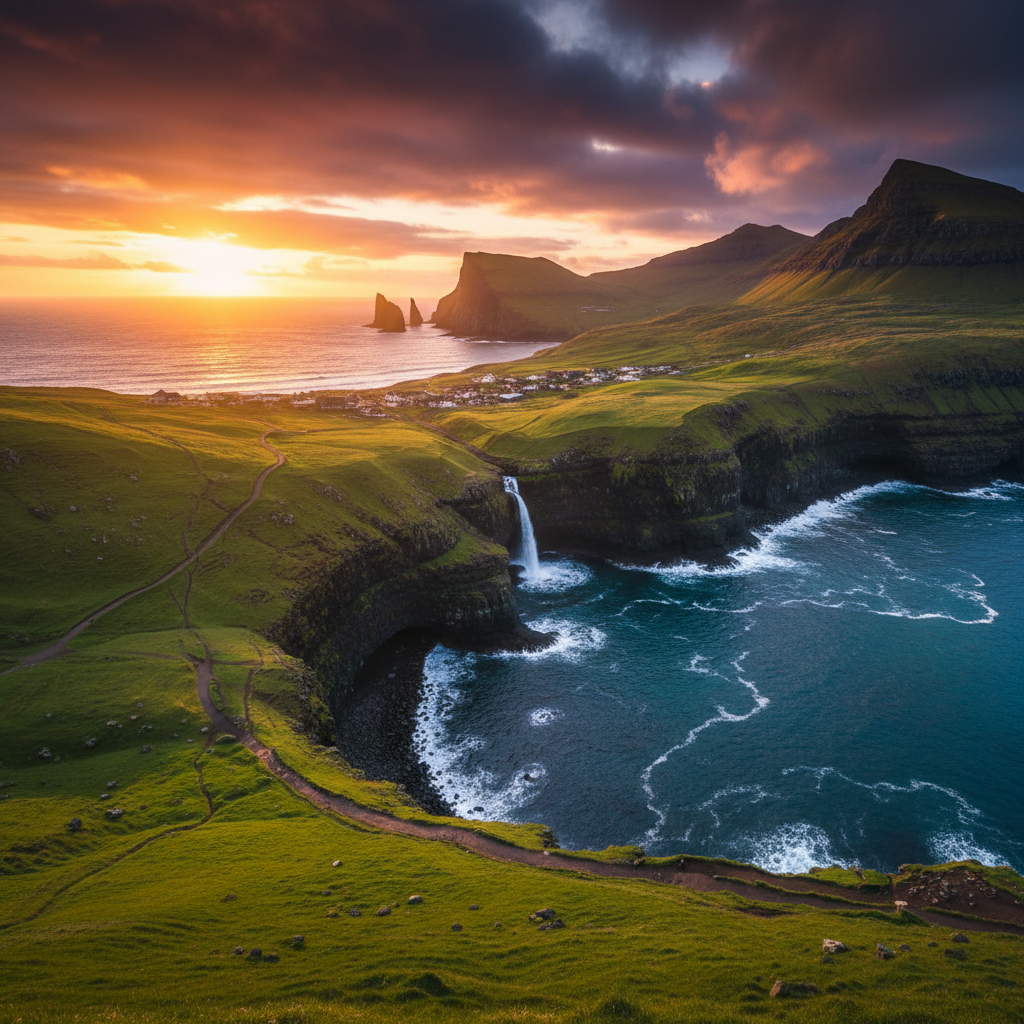
4-Day Faroe Islands Adventure: Hike, Explore & Conquer the Wild North
Sørvágsvatn lake hovering above the Atlantic, the Trælanípa cliff walk, Gásadalur's waterfall into the sea, and a village of 18 people accessible only since 2004.
- Duration: 4 Days
- Estimated Budget: $1,500–$2,500
- Best Time to Visit: June-August for the best hiking weather and longest daylight hours, though May and September offer fewer crowds and vibrant colors.
- Destination: Faroe Islands
The Faroe Islands are calling to the adventurer in you, a rugged archipelago where the wild Atlantic meets towering cliffs and verdant valleys. Now is the time to answer that call, to experience an untouched wilderness that feels like the edge of the world, offering unparalleled hiking and raw, untamed beauty around every fjord. --- *This destination is featured in our curated guide: Not Every Beach Deserves a Passport Stamp. These Do.*
Prepare for an adventure that will awaken your senses and challenge your spirit: the Faroe Islands. This remote archipelago, a tapestry of emerald fjords, dramatic sea stacks, and turf-roofed villages, is a hiker's paradise and a photographer's dream. Forget crowded tourist traps; here, the wild, untamed beauty of nature reigns supreme. You'll navigate winding coastal roads, feel the spray of crashing waves against ancient basalt cliffs, and discover hidden waterfalls cascading into the Atlantic. This isn't just a trip; it's an immersion into a landscape where sheep outnumber people, and the air is so clean it invigorates your very core. Get ready to explore a place where every vista is a postcard, and every turn reveals another breathtaking wonder, leaving you with memories etched deep into your soul.
Our 4-day adventure guide is crafted for those who crave raw, unfiltered nature and seek an active exploration of this Nordic gem. We'll lead you to iconic spots like the Múlafossur waterfall, the vertigo-inducing cliffs of Trælanípa, and the charming village of Gjógv, but we'll also reveal lesser-known trails and viewpoints that only a seasoned traveler would uncover. Imagine kayaking through a silent fjord, hiking to a remote lighthouse, or simply standing in awe as the mist rolls in, transforming the landscape into an ethereal dreamscape. This itinerary balances iconic must-sees with genuine off-the-beaten-path experiences, ensuring you truly connect with the islands' unique spirit. Expect early starts, exhilarating hikes, and evenings filled with the satisfaction of a day well-spent in one of the world's most spectacular settings.
Beyond the stunning scenery, the Faroe Islands offer a profound sense of peace and isolation, a rare commodity in our fast-paced world. You'll encounter a resilient culture, rooted in seafaring traditions and a deep respect for the land. From savoring fresh seafood in a cozy local restaurant to hearing the melodic Faroese language, every interaction adds another layer to your adventure. This guide isn't just about seeing the sights; it's about feeling the islands, breathing their air, and understanding their rhythm. It's for the traveler who wants to return home not just with photos, but with stories of self-discovery amidst unparalleled natural grandeur. Get ready to embrace the wild, the beautiful, and the utterly unforgettable Faroe Islands.
Tórshavn's Timeless Charms and Coastal Whispers
Arrive at Vágar Airport (FAE), pick up your rental car, and begin the scenic drive to Tórshavn, the capital city.
The drive from the airport offers your first breathtaking glimpses of the Faroese landscape, setting the tone for your adventure. It's an essential part of immersing yourself in the islands' unique beauty right from the start.
Explore Tinganes, the historic old town of Tórshavn, characterized by its turf-roofed houses and narrow alleys.
This ancient parliament site dates back to the Viking Age and offers a tangible connection to the Faroe Islands' rich history. It's incredibly picturesque and provides a wonderful introduction to Faroese architecture and culture.
Visit the National Museum of the Faroe Islands (Føroya Fornminnissavn) to delve deeper into the islands' natural and cultural history.
This museum provides crucial context for understanding the Faroese way of life, from its geology and wildlife to its Viking heritage and traditional crafts. It's a perfect way to ground yourself in the local culture.
Stroll along the harbor of Tórshavn, watching the fishing boats and enjoying the fresh sea air.
The harbor is the beating heart of Tórshavn, offering a vibrant atmosphere and a chance to observe daily life. It's a great spot for people-watching and soaking in the maritime charm.
Enjoy a traditional Faroese dinner, focusing on fresh, local ingredients.
Dining out on your first night is an excellent way to savor the unique flavors of the Faroe Islands, from fresh seafood to lamb. It's an essential part of experiencing the local culture.
Leif's Tip: Upon arrival, take a moment to truly breathe in the crisp, clean Faroese air and embrace the quiet beauty around you. Don't rush your first impressions; let the unique atmosphere of the islands wash over you and set the pace for your adventure.
Most visitors to the Faroe Islands underestimate the rapidly changing weather, which can turn a planned hike into a logistical puzzle, or the subtle nuances of navigating single-track roads that often require reversing for oncoming traffic. Deciphering the ferry schedules for the outer islands, understanding local customs in remote villages, or knowing which trails require a local guide versus those you can explore independently, are all significant hurdles. Furthermore, finding authentic local eateries that aren't just catering to the few tourists, or identifying the best spots for birdwatching during specific seasons, demands insider knowledge. These aren't just minor inconveniences; they can genuinely impact your experience. Leif simplifies all of this, providing clarity and confidence for your adventure.
Tinganes, a historic heart, is just one example of how Leif meticulously plans every detail of your Faroe Islands adventure. You're not left scrambling for information or second-guessing your route; instead, you have clear, concise directions for the most efficient way to reach the ferry terminal, complete with estimated travel times and alternative options if the weather shifts unexpectedly. Leif ensures your day flows seamlessly, from the moment you wake up until you're settling in for a well-deserved evening meal, maximizing your time exploring the dramatic landscapes rather than wrestling with logistics.
The crisp, clean air, carrying the scent of salt and damp earth, fills your lungs as you stand overlooking a dramatic fjord, knowing every detail of your journey has been meticulously planned. You feel a profound sense of freedom, unburdened by the usual stresses of travel, because Leif has anticipated your needs and preferences, crafting a path that aligns perfectly with your adventurous spirit. This isn't just about visiting a destination; it's about truly immersing yourself in the raw beauty and unique culture of the Faroe Islands, experiencing its magic without a single worry. Your adventure here is waiting, perfectly organized and ready for you to embrace.
Best Time to Visit Faroe Islands
June to August offers the mildest weather and longest daylight hours, perfect for hiking and exploring.
Late May and early September can still be beautiful with fewer crowds, but expect cooler temperatures.
Avoid winter (November to March) unless you're specifically seeking dramatic, stormy landscapes and don't mind limited daylight and potential travel disruptions.
Puffin season is typically from late April to early September, so if seeing these charming birds is a priority, plan accordingly.
Getting Around Faroe Islands
Renting a car is highly recommended for flexibility and reaching remote trailheads. Book well in advance, especially for automatic transmissions.
The public bus and ferry system (SSL) is reliable and covers many islands, but schedules can be infrequent outside of major routes. Consider a 4-day travel card if relying on public transport.
Tunnels connect many islands, but some require a toll. Factor these costs into your budget or rental car agreement.
Helicopter services are available for inter-island travel but are often fully booked by locals; book far ahead if you want to experience this unique transport.
What to Pack
- Waterproof and windproof outer layers (jacket and pants) are non-negotiable, as weather changes rapidly.
- Warm layers: fleece, wool sweaters, and thermal base layers, even in summer.
- Sturdy, waterproof hiking boots with good ankle support.
- A warm hat, gloves, and a scarf, regardless of the season.
- Swimsuit for hot tubs or hotel pools, a welcome relief after a day of hiking.
- Portable power bank for your phone, as outlets can be scarce on long hikes.
- Camera with extra batteries and memory cards to capture the stunning landscapes.
- Small backpack for day hikes, snacks, and water.
Money-Saving Tips
- Cook some of your meals. Groceries are expensive but eating out is even more so. Look for accommodation with kitchenettes.
- Utilize the free public ferries for inter-island travel where possible, rather than always driving through expensive tunnels.
- Pack snacks and drinks from home or buy them at larger supermarkets like FK or Bónus upon arrival in Tórshavn.
- Consider a Faroe Islands Travel Card for bus and ferry travel if you're not renting a car, as it can be more cost-effective than individual tickets.
- Look for guesthouses or Airbnb rentals, which often provide better value than hotels, especially for longer stays.
Local Insights
- Always greet locals with a friendly 'Hey' or 'Góðan dag' (good day).
- Respect private property and always stick to marked trails. Many areas are privately owned, and straying off paths can disturb sheep or sensitive ecosystems.
- The weather is incredibly unpredictable. Embrace it! Be prepared for all four seasons in a single day and never let a little rain deter you.
- Sheep have the right of way on roads. Drive carefully and be prepared to stop for them.
- Learn a few basic Faroese phrases; while English is widely spoken, locals appreciate the effort. 'Takk fyri' means thank you.
Frequently Asked Questions
What's the best time of year for an adventure trip to the Faroe Islands?
The best time for an adventure trip is typically from June to August. The weather is milder, days are long (with nearly 24 hours of daylight in mid-summer), and most hiking trails are accessible. You'll also have the best chance to see puffins during these months.
Do I need a car to explore the Faroe Islands?
Absolutely, a rental car is essential for an adventure trip. Public transport is limited, and many of the most spectacular viewpoints and trailheads are only accessible by car. Book well in advance, especially for summer travel, as availability can be limited.
What kind of clothing should I pack for an active trip?
Layers are key! Pack waterproof and windproof outer layers (jacket and trousers), warm fleeces or wool sweaters, sturdy waterproof hiking boots, and a warm hat and gloves, even in summer. The weather can change rapidly from sun to rain to fog in a single day.
Are there any specific hiking permits or fees I should be aware of?
While many trails are free, some popular hiking routes, particularly those on private land like the hike to Trælanípa or the Mykines puffin colony, require a fee or a local guide. These fees contribute to trail maintenance and conservation, so it's money well spent. Always check local regulations before heading out.
What's the food scene like, especially for adventurers?
The food scene is surprisingly good, especially if you love seafood! Expect fresh fish, lamb, and root vegetables. For adventurers, pack snacks for hikes, but also look forward to hearty meals at local cafes and restaurants. Don't miss trying ræst kjøt (fermented lamb) or skerpikjøt (wind-dried lamb) for a true Faroese experience.
How challenging are the hikes, and do I need to be an experienced hiker?
Hikes range from easy strolls to challenging climbs. Many iconic trails, like the one to Múlafossur, are relatively easy. However, some, like the hike to Kallur Lighthouse, can be steep and exposed. While you don't need to be an expert, a good level of fitness and experience with uneven terrain is recommended for the more adventurous routes.
Is it safe to hike alone in the Faroe Islands?
Generally, the Faroe Islands are very safe. However, the weather can be unpredictable, and trails can be remote. If hiking alone, always inform someone of your plans, stick to marked trails, and carry a fully charged phone. Consider a local guide for more challenging or remote routes for added safety and insight.