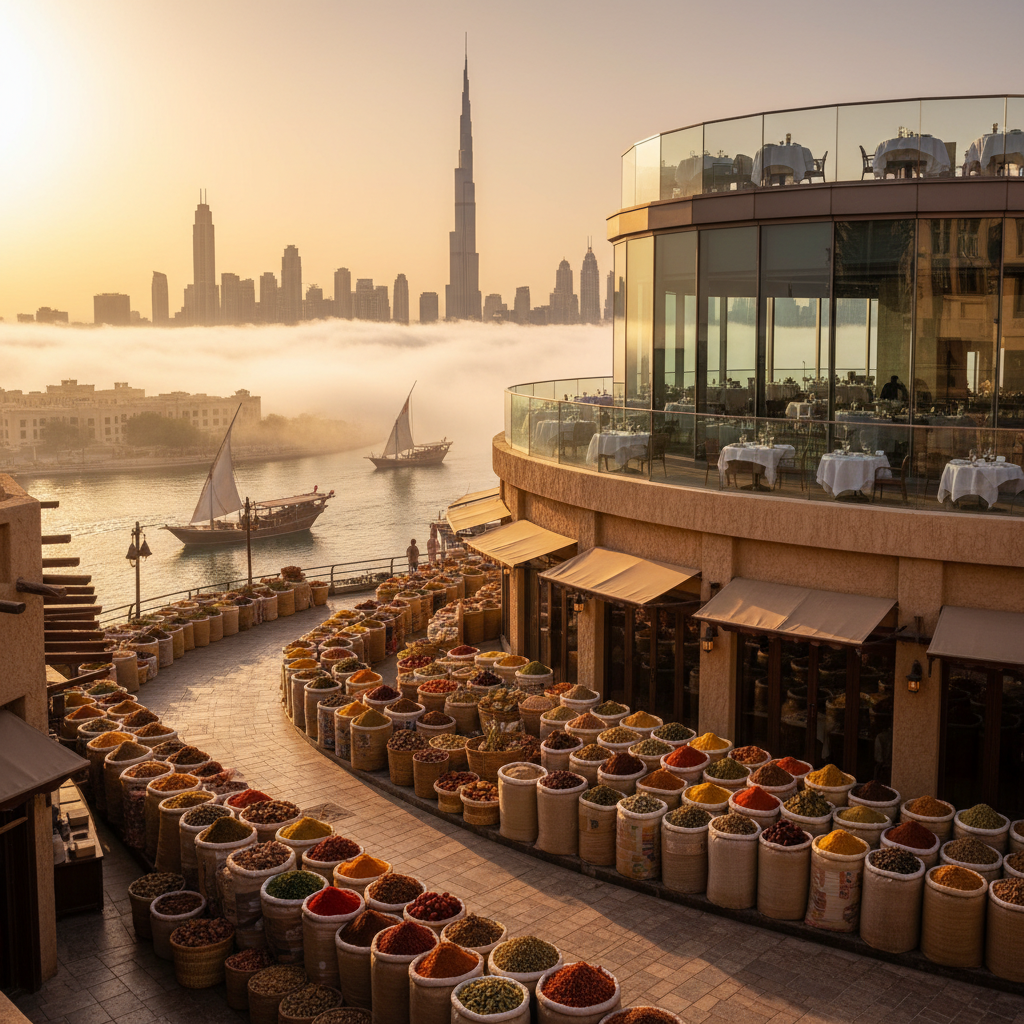
Dubai Food & Culture: A 4-Day Culinary Journey from Souks to Skyscrapers
Savor Dubai's authentic flavors and rooftop dining on a 4-day food and culture trip. Explore Deira's spice souks, Karama's hidden gems, and elevated culinary experiences.
- Duration: 4 Days
- Estimated Budget: $300–$900
- Best Time to Visit: October-April for pleasant outdoor dining weather.
- Destination: Dubai, United Arab Emirates
Dubai's culinary scene is a vibrant tapestry, weaving together ancient traditions from Deira's spice souks with the dazzling heights of modern rooftop dining. This guide unlocks the city's true gastronomic heart, proving that Dubai offers far more than just luxury; it offers a world of flavor waiting to be discovered.
Stepping into the bustling lanes of the historic district near the Creek, you're immediately transported. The aroma of exotic spices, the vibrant hues of textiles, and the distant call of vendors create an intoxicating symphony for the senses. This isn't the Dubai you see on postcards; it's the soul of the city, where generations have traded and dined. You'll find yourself drawn into conversations with shopkeepers offering tiny cups of cardamom-infused tea, eager to share stories as old as the labyrinthine alleys themselves. It's a place where every corner reveals a new flavor, a new scent, a new piece of history, grounding your culinary journey in authentic tradition before you even consider the modern marvels.
Is navigating the city's diverse culinary landscape, from street food to fine dining, genuinely accessible for a first-time visitor? Absolutely, but it requires a roadmap. The sheer scale and variety can be overwhelming, with hidden gems tucked away in residential areas and high-end experiences demanding advance bookings. Knowing which neighborhoods specialize in what cuisine, understanding local dining etiquette, and identifying the best times to visit certain markets are crucial. Without this insight, you might miss out on the city's most authentic flavors or find yourself paying a premium for a less-than-stellar experience. Leif cuts through the noise, guiding you to the heart of Dubai's food culture, ensuring every meal is a discovery.
Food enthusiasts spend their mornings exploring vibrant markets, haggling for saffron and sampling local dates, before hopping aboard a traditional boat for a scenic crossing. Afternoons are dedicated to discovering hidden eateries in residential enclaves, where the city's diverse expatriate communities share their culinary heritage through generations-old recipes. Evenings might involve a sophisticated tasting menu at a restaurant with panoramic city views, or a lively communal meal at an outdoor food festival. This journey is about constant discovery, from the simple perfection of a freshly baked flatbread to the intricate artistry of a Michelin-starred dish, all while soaking in the city's unique blend of tradition and innovation.
A Taste of Old Dubai: Spices, Souks, and Authentic Flavors
Start your culinary adventure in the historic Deira Spice Souk, a sensory overload of aromas and colors. Wander through narrow alleys filled with exotic spices, dried fruits, and traditional remedies.
This is where Dubai's trading history comes alive, offering an authentic glimpse into the city's past as a bustling port. You'll find unique ingredients like Iranian saffron and Omani frankincense.
Just a stone's throw from the Spice Souk, explore the dazzling Gold Souk, home to hundreds of retailers selling an incredible array of gold jewelry. Even if you're not buying, it's a sight to behold.
The sheer volume and variety of gold on display are astounding, showcasing Dubai's reputation as the 'City of Gold'. It's a cultural experience to witness this ancient trade still thriving.
Hop on an abra, a traditional wooden boat, to cross the Dubai Creek from Deira to Bur Dubai. This short, scenic ride offers fantastic views of the old city skyline.
For just 1 AED, it's the most authentic and picturesque way to travel between the two historic districts. It's a quintessential Dubai experience that connects you to the city's maritime heritage.
Indulge in a legendary lunch at Al Ustad Special Kabab, a Dubai institution since 1978. This no-frills spot is famous for its succulent, marinated kebabs.
This restaurant offers a taste of old Dubai that's both delicious and steeped in history, serving generations of loyal customers. It's a true local favorite for authentic Persian-style kebabs.
Wander through the charming Al Fahidi Historical Neighbourhood (Bastakiya), a beautifully preserved area with traditional wind-tower houses and art galleries. Get lost in its labyrinthine alleys.
This is a tranquil escape from the modern city, offering a glimpse into Dubai's architectural and cultural past. It's perfect for a leisurely stroll and appreciating traditional Emirati design.
Experience the vibrant culinary scene of Karama, Dubai's South Asian food corridor. This bustling neighborhood is a treasure trove of authentic and affordable flavors.
Karama is where Dubai's true melting pot of cultures shines through its food, offering an incredible array of Pakistani, Indian, and Filipino dishes. It's a genuine local experience away from tourist traps.
Leif's Tip: Wear comfortable shoes today, as you'll be doing a lot of walking and exploring the narrow, uneven streets of the souks and historical district. Also, keep small denominations of AED handy for abra rides and small purchases.
Dubai has a staggering array of dining options, and knowing which of the thousands of restaurants truly deliver an authentic experience versus a tourist trap is a genuine challenge. The city’s rapid development means new spots open constantly, while hidden gems in older districts remain largely unknown to visitors. Deciphering the best time to visit certain food markets, understanding the nuances of local customs in traditional eateries, or even just navigating the vast distances between culinary hotspots can feel like a full-time job before your trip even begins. Between the sheer volume of choices, the cultural specificities, and the logistical puzzle of getting around, Dubai can feel overwhelming, and that's precisely where most travelers get stuck.
When you're standing in the bustling lanes of Al Seef, wondering where to find the most succulent, slow-cooked lamb or the freshest seafood, Leif has already mapped it out. Say you want to experience a traditional Emirati breakfast but you're not sure which cafe offers the most authentic balaleet and chebab without feeling overly commercial – Leif will guide you to a specific, beloved spot where locals start their day. Or perhaps you're craving the vibrant flavors of South Asia, and Leif directs you to a specific, unassuming eatery in the heart of Karama, known only to those in the know, ensuring you taste the city's true culinary diversity. That moment when you realize you're not just eating, but truly experiencing Dubai's food story – Leif already planned for it.
You'll arrive in the emirate knowing exactly where to find that aromatic saffron, that perfectly spiced biryani, or that breathtaking rooftop view paired with an unforgettable meal. Instead of poring over endless reviews or wandering aimlessly, you'll glide through the city's culinary landscape with confidence, each meal a deliberate, delicious discovery. The difference is savoring a perfectly brewed Arabic coffee in a tranquil courtyard, knowing the history behind each sip, rather than settling for an overpriced, generic latte. Arriving in Dubai with your food journey already curated means every bite is an adventure, every flavor a memory, and every moment an authentic connection to this incredible city.
Best Time to Visit Dubai, United Arab Emirates
October to April offers the most pleasant weather for exploring outdoor markets and dining al fresco, with mild temperatures and clear skies.
Avoid July and August if possible; the extreme heat and humidity can make outdoor food tours and market visits uncomfortable.
Consider visiting during Ramadan for a unique cultural experience, including Iftar tents and special evening meals, but be mindful of daytime fasting.
If Global Village is on your list, ensure your visit falls between October and April, as it's a seasonal attraction.
Weekends in Dubai are Friday and Saturday, so plan your Ripe Market visit for a Saturday morning for the freshest produce and best atmosphere.
Getting Around Dubai, United Arab Emirates
Utilize the Dubai Metro for efficient and air-conditioned travel to many key food districts like Deira, Bur Dubai, and parts of Karama.
Don't miss the iconic abra water taxis for crossing Dubai Creek; it's a cheap (AED 1) and authentic way to connect the old souks.
Taxis and ride-sharing apps (Careem, Uber) are readily available and reasonably priced for areas not directly served by the Metro, especially for evening dining.
For exploring specific neighborhoods like Karama's food streets, walking is often the best way to discover hidden gems and street food stalls.
Consider a Nol card for public transport; it's a rechargeable card for Metro, tram, and bus services, making travel seamless.
What to Pack
- Lightweight, breathable clothing suitable for warm weather, preferably covering shoulders and knees out of respect for local customs.
- Comfortable walking shoes are essential for exploring souks, historical neighborhoods, and food markets.
- A reusable water bottle to stay hydrated, especially when wandering through outdoor areas like the spice souk.
- A small backpack or tote bag for carrying spices, souvenirs, and any food purchases.
- Sunscreen, sunglasses, and a wide-brimmed hat to protect against the strong Dubai sun.
- A portable power bank for your phone to ensure you can take photos and navigate throughout your food adventures.
- A light scarf or shawl for women to cover up when entering religious sites or for added modesty in traditional areas.
- An empty stomach and an adventurous palate – you'll need both for this culinary journey!
Money-Saving Tips
- Embrace street food and local eateries in Deira and Karama; you can enjoy incredibly delicious and authentic meals for under ‘10 per person.
- Opt for set lunch menus at mid-range restaurants; they often offer excellent value compared to dinner prices.
- Share dishes when dining out, especially at South Asian restaurants where portions can be generous, allowing you to try more variety.
- Look for 'business lunch' deals in DIFC for a taste of upscale dining without the full splurge price tag.
- Buy spices and local treats from the souks in Deira; you can haggle a bit and get better prices than in tourist-centric shops.
Local Insights
- Always greet locals with 'Salam Alaikum' (peace be upon you) and use your right hand when eating or passing items.
- Dress modestly, especially when visiting traditional areas like souks and historical neighborhoods; it shows respect for local culture.
- Be open to trying new flavors and cuisines; Dubai's food scene is a melting pot of global influences, particularly from South Asia.
- Friday brunch is a significant social institution; if you plan to partake, book well in advance, especially for popular spots.
- During Ramadan, be mindful of fasting hours; while many restaurants remain open, it's respectful to avoid eating, drinking, or smoking in public during the day.
Frequently Asked Questions
What's the best way to experience authentic Emirati cuisine beyond the tourist spots?
Head to the Al Fahidi Historical Neighbourhood early for breakfast at a traditional cafe like Arabian Tea House, or seek out specific local spots in communities like Al Satwa for dinner. Look for dishes like Harees, Thareed, and Machboos, and don't be afraid to ask locals for their favorite hidden gems.
How can I find the best value for money when dining out in Dubai?
For incredible value, explore the Karama and Bur Dubai neighborhoods. These areas are packed with fantastic, affordable South Asian, Filipino, and Middle Eastern restaurants where you can enjoy a full meal for under €10. Street food stalls in Deira also offer delicious and budget-friendly options.
Is it safe to eat street food in Dubai?
Yes, Dubai has very high hygiene standards. Street food from established vendors, particularly in areas like Deira and Karama, is generally safe and delicious. Look for places with high foot traffic – a good sign of freshness and popularity.
What is the 'Friday brunch' culture, and should I try it?
Friday brunch is a Dubai institution: a lavish, all-you-can-eat-and-drink affair, often lasting 3-4 hours, typically held at hotels. It's a social event and a fantastic way to sample a huge variety of cuisines. While some can be pricey, many offer excellent value for a celebratory experience. It's a must-try for the atmosphere alone!
Are there vegetarian or vegan-friendly food options widely available?
Absolutely. Due to Dubai's diverse population, especially the large Indian community, vegetarian and vegan options are abundant. Many restaurants offer dedicated menus, and traditional Middle Eastern cuisine naturally includes many plant-based dishes like hummus, falafel, and various lentil stews. Just ask!
What's the etiquette for dining in more traditional or local establishments?
Dress modestly, especially in older neighborhoods. It's common to eat with your right hand if no utensils are provided, particularly for communal dishes. Tipping is appreciated but not mandatory (10-15% is standard for good service). Always accept offers of tea or coffee – it's a sign of hospitality.
When is the best time of year to visit Dubai for a food-focused trip, considering outdoor markets and events?
The cooler months from October to April are ideal. This is when outdoor markets like Ripe Market are in full swing, Global Village is open, and comfortable weather allows for al fresco dining and exploring the souks without discomfort. During Ramadan, the city offers unique Iftar experiences, which can be a special cultural highlight.