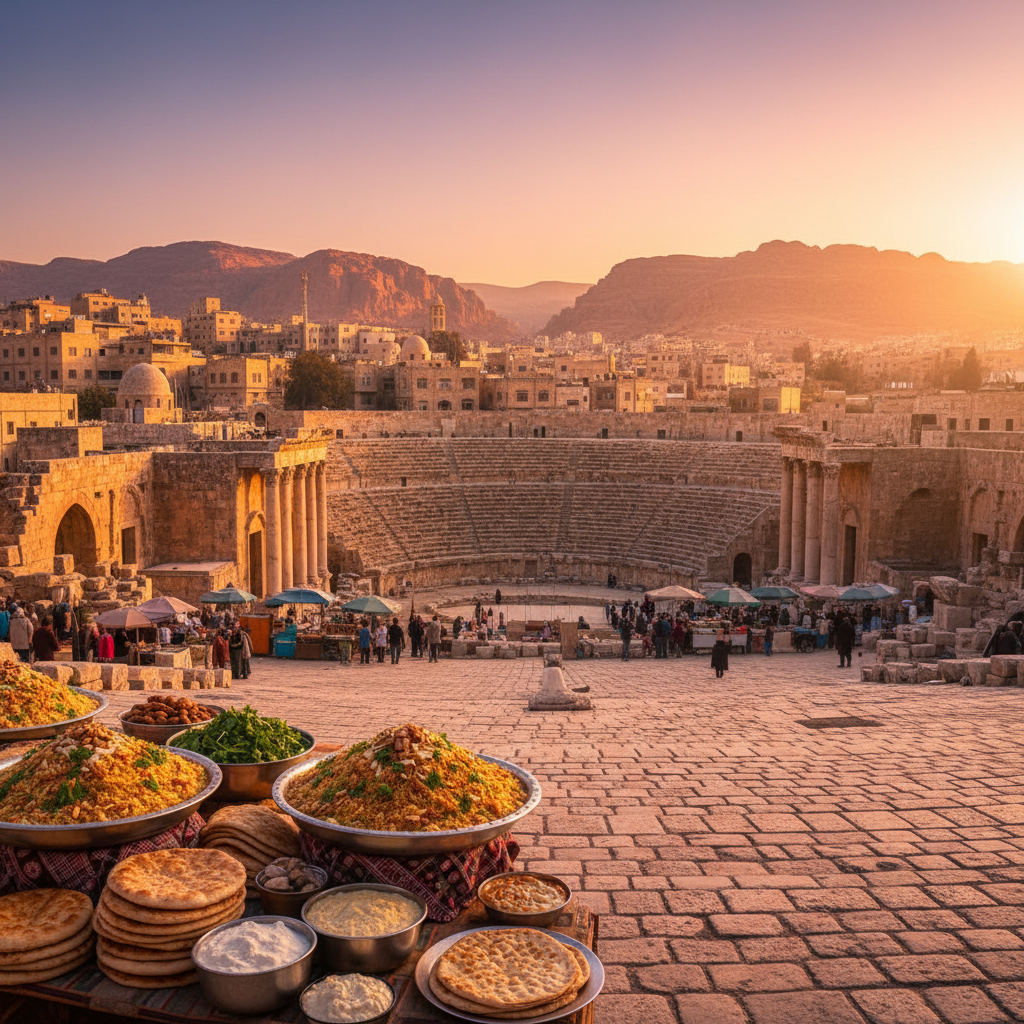
Amman 4-Day History & Food Itinerary: Roman Ruins, Mansaf, & Petra Gateway
Uncover Amman's ancient history and vibrant food scene on this 4-day guide. Explore Roman ruins, savor authentic mansaf, and get ready for Petra and Wadi Rum.
- Duration: 4 Days
- Estimated Budget: $280–$480
- Best Time to Visit: March-May and October-November for ideal weather
- Destination: Amman, Jordan
The aroma of za'atar and fresh bread drifts through the ancient streets of Amman, a city where Roman history meets a culinary journey unlike any other. This guide is your passport to Jordan's heart, blending the grandeur of ancient civilizations with the soulful flavors of its national dishes, all while setting the stage for the wonders of Petra and Wadi Rum.
Jabal Amman is where the city's vibrant past gracefully merges with its contemporary pulse. Strolling through its tree-lined avenues, you'll encounter beautifully preserved Ottoman-era houses now housing chic boutiques and art galleries, alongside bustling local eateries serving up generations-old recipes. It's a neighborhood that rewards travelers who take the time to wander, offering glimpses into daily Jordanian life away from the main tourist thoroughfares. The scent of cardamom coffee often mingles with the aroma of freshly baked bread, inviting you to pause and soak in the atmosphere. This area provides a perfect introduction to Amman's layered identity, where every corner tells a story of cultural evolution and enduring traditions.
Is navigating the city's public transportation system a viable option for most visitors? Here's the reality: while local buses exist, they can be challenging to decipher without Arabic language skills, and routes aren't always clearly marked for tourists. For efficiency and ease, especially when covering significant distances or heading to specific historical sites, ride-sharing apps like Uber and Careem are widely available and incredibly affordable. Taxis are also plentiful, but ensure the meter is running or agree on a fare beforehand. For day trips outside the capital, private drivers or organized tours offer the most convenient and stress-free experience, allowing you to focus on the wonders rather than the logistics of getting there.
History and food enthusiasts spend their mornings delving into the echoes of ancient civilizations at sites like the Roman Nymphaeum, a grand public fountain that once provided water to the city's inhabitants. You'll find yourself tracing the intricate patterns of mosaics in lesser-known churches, or perhaps exploring the fascinating collections at the Jordan Museum, which houses artifacts spanning millennia. Afternoons often involve a deep dive into the local culinary scene, perhaps learning the secrets of preparing a traditional Jordanian dish in a cooking class, or sampling a variety of street food delights from a vendor who has perfected their craft over decades. The rhythm of exploration here seamlessly blends intellectual curiosity with gastronomic pleasure.
Amman's Ancient Heartbeat: Roman Ruins and Falafel Feasts
Start your Amman adventure at the Amman Citadel, perched atop Jabal al-Qal'a, offering panoramic views of the city.
This historic site is a treasure trove of Roman, Byzantine, and Umayyad ruins, including the iconic Temple of Hercules. It provides a fantastic introduction to Amman's layered history and offers breathtaking photo opportunities.
Descend from the Citadel to the Roman Theatre, a magnificent 6,000-seat amphitheater carved into the hillside.
This remarkably preserved Roman structure is still used for cultural events today, giving you a tangible connection to ancient life. It's a testament to Amman's Roman past and an impressive architectural feat.
Wander through Downtown Amman (Al-Balad), the bustling heart of the city, soaking in the vibrant atmosphere.
This is where old Amman comes alive with traditional souks, spice shops, and a genuine local buzz. It's an authentic sensory experience that connects you to the city's daily rhythm.
Explore Books@Cafe on Rainbow Street, a beloved independent bookstore and cafe known for its cozy ambiance and diverse selection.
This iconic spot is more than just a bookstore; it's a cultural hub and a great place to relax, grab a coffee, and people-watch. It offers a glimpse into Amman's contemporary intellectual and artistic scene.
Stroll down Rainbow Street, Amman's bohemian and trendy neighborhood, known for its charming cafes, art galleries, and historic homes.
Rainbow Street offers a delightful contrast to the ancient sites, showcasing modern Amman's vibrant cultural pulse. It's perfect for an evening walk, discovering local crafts, and enjoying the lively atmosphere.
Leif's Tip: Purchase the Jordan Pass before you arrive; it covers your visa fee and entry to over 40 sites, including the Citadel and Roman Theatre, saving you significant money and hassle. Also, wear comfortable shoes today, as you'll be doing a lot of walking up and down hills!
The part of Jordan that catches travelers off guard is often the sheer depth of its ancient heritage, far beyond the well-known sites – not just the grand Roman structures, but the layers of Nabataean, Byzantine, and Umayyad history that whisper from every stone. Trying to piece together a coherent narrative, ensuring you hit the optimal times to avoid crowds at iconic landmarks, and knowing which local eateries offer truly authentic flavors versus tourist traps, can be a daunting task. Then there's the logistical dance of coordinating day trips to remote desert landscapes or the ancient rose city, understanding the nuances of the Jordan Pass, and navigating cultural etiquette around food. It’s a rich tapestry, but without a clear thread, it can feel overwhelming before you even begin. This is precisely where a tailored itinerary becomes your indispensable guide, transforming potential confusion into seamless discovery.
Say you're eager to witness the grandeur of the Roman Theater at its most evocative, bathed in the soft glow of the early morning sun, but you're not sure how to get there before the tour buses descend. Leif already has you covered. Your personalized plan will detail the exact time to depart from your hotel, provide clear instructions for a local taxi or ride-share, and even suggest a nearby spot for a traditional Jordanian breakfast afterward, ensuring you experience the site in tranquility and then immediately dive into the city's culinary heart. Or perhaps you're standing in front of a menu, wondering which mezze dishes are truly unique to the local palate beyond the usual hummus and falafel – Leif's recommendations will guide you to maqluba or musakhan, explaining their origins and why they're a must-try, ensuring every meal is an adventure.
You'll arrive in the Hashemite Kingdom knowing exactly when to visit the ancient ruins of Jerash for the best light, where to find the most succulent mansaf prepared the traditional way, and how to respectfully engage with the local culture. Instead of fumbling with maps or endlessly scrolling for restaurant reviews, you'll glide through your days with a sense of purpose and discovery, every moment optimized for your interests. The difference is feeling the ancient stones beneath your feet at a quiet moment, savoring a dish that tells a story, and experiencing the genuine warmth of Jordanian hospitality, all without a single moment of stress about planning. Arriving in this captivating land with every detail thoughtfully arranged means you can simply immerse yourself in the history, the flavors, and the unforgettable encounters that await.
Best Time to Visit Amman, Jordan
Spring (March-May) and Autumn (September-November) offer the most pleasant weather, with warm days and cool evenings, perfect for exploring.
Avoid summer (June-August) when temperatures can soar above 35°C, making outdoor activities like Petra challenging.
Winter (December-February) can be chilly, especially in Amman and Petra, with occasional rain and even snow in higher elevations, but fewer crowds.
For Petra, early morning visits (6 AM) are crucial year-round to avoid crowds and experience the Treasury in the best light.
Consider visiting during Ramadan for a unique cultural experience, but be aware that many restaurants may be closed during the day.
Getting Around Amman, Jordan
In Amman, taxis are plentiful and affordable; always insist on the meter or negotiate a price before starting your journey.
For longer distances, like day trips to Petra or Wadi Rum, consider hiring a private driver or joining an organized tour for convenience and local expertise.
The JETT bus service offers comfortable and reliable transportation between major cities like Amman, Petra (Wadi Musa), and Aqaba.
Renting a car is an option for more independent exploration, but be prepared for sometimes chaotic city driving and ensure you have international driving permits.
Within downtown Amman (Al-Balad), walking is the best way to explore the Roman Theatre, Citadel, and souks, but be ready for hills.
What to Pack
- Comfortable walking shoes are essential, especially for exploring ancient sites and the rugged terrain of Petra and Wadi Rum.
- Lightweight, breathable clothing (linen, cotton) for warm days, but also layers for cooler evenings, especially in spring and autumn.
- A modest scarf or shawl for women to cover shoulders when visiting religious sites or for added warmth.
- Sunscreen, a wide-brimmed hat, and sunglasses are crucial for protection against the strong Jordanian sun.
- A reusable water bottle to stay hydrated; tap water is generally safe for brushing teeth but bottled water is recommended for drinking.
- A small backpack for day trips to carry essentials like water, snacks, and a camera.
- A portable power bank for your phone, especially during long days of sightseeing and photography.
- Swimwear if you plan to visit the Dead Sea or your hotel has a pool.
Money-Saving Tips
- The Jordan Pass is an absolute must-buy; it covers your visa fee and entry to over 40 sites, including Petra, saving you a significant amount.
- Eat like a local at street food stalls and traditional restaurants like Hashem in Downtown Amman for delicious and budget-friendly meals.
- Negotiate prices when shopping in souks, but always do so respectfully and with a smile.
- Consider staying in guesthouses or smaller boutique hotels, especially outside of Amman, for more authentic experiences and better value.
- Utilize local buses or shared taxis for intercity travel if you're on a very tight budget, though they can be less comfortable than JETT buses.
Local Insights
- Jordanians are incredibly hospitable; don't be surprised if you're offered tea or coffee, it's a sign of welcome.
- Always use your right hand when eating or passing food, especially when sharing a mansaf, as the left hand is considered unclean.
- Dress modestly, particularly outside of modern areas like Rainbow Street, to show respect for local customs.
- Learn a few basic Arabic phrases like 'Shukran' (thank you) and 'Marhaba' (hello); locals appreciate the effort.
- Tipping is customary for guides, drivers, and restaurant staff; a small amount goes a long way and is always appreciated.
Frequently Asked Questions
What is the best way to get around Amman for a history and food focused trip?
For exploring Amman's diverse neighborhoods and historical sites, ride-sharing apps like Uber and Careem are highly recommended for their convenience and affordability. Taxis are also readily available, but always confirm the use of a meter or agree on a price beforehand. For day trips to Petra or Wadi Rum, private drivers or organized tours are the most practical options, ensuring a smooth and informative journey.
Is it easy to find vegetarian or vegan food in Jordan?
Absolutely! Jordanian cuisine is rich in vegetarian and vegan options. Dishes like falafel, hummus, foul medames, mutable, and various salads are staples. Many restaurants, especially those specializing in mezze, will have extensive plant-based choices. Don't hesitate to ask for 'nabati' (vegetarian) or 'vegani' (vegan) options; Jordanians are generally very accommodating.
How much should I budget for food per day in Amman?
For a history and food focused trip, you can comfortably budget around €15-€25 per day for food in Amman. This allows for a mix of delicious street food, casual local restaurants, and perhaps one nicer meal. If you plan on indulging in more upscale dining experiences, adjust your budget accordingly. Many local eateries offer excellent value for money.
What is the dress code for visiting historical and religious sites?
When visiting mosques or religious sites, both men and women should dress modestly. Women should cover their heads, shoulders, and knees, and men should wear long trousers. For other historical sites like the Roman Theatre or Citadel, comfortable clothing is fine, but it's always respectful to dress conservatively, covering shoulders and knees, especially for women.
Is tap water safe to drink in Amman?
While some locals drink tap water, it's generally not recommended for tourists. It's best to stick to bottled water, which is widely available and inexpensive throughout the city. Many hotels provide complimentary bottled water in rooms. Staying hydrated is crucial, especially during warmer months.
What's the best time of year to visit Amman and the surrounding historical sites?
The ideal times to visit Amman and Jordan's historical sites are spring (March to May) and autumn (September to November). During these months, the weather is pleasantly mild, perfect for exploring ruins and enjoying outdoor activities. Summers can be very hot, and winters can be cool with some rain, especially in Amman.
Can I use credit cards widely, or should I carry cash?
Major credit cards are accepted in most hotels, larger restaurants, and supermarkets in Amman. However, for smaller local eateries, street food vendors, souks, and for tips, cash is essential. It's always a good idea to carry a mix of Jordanian Dinars (JOD) and your credit cards. ATMs are widely available.