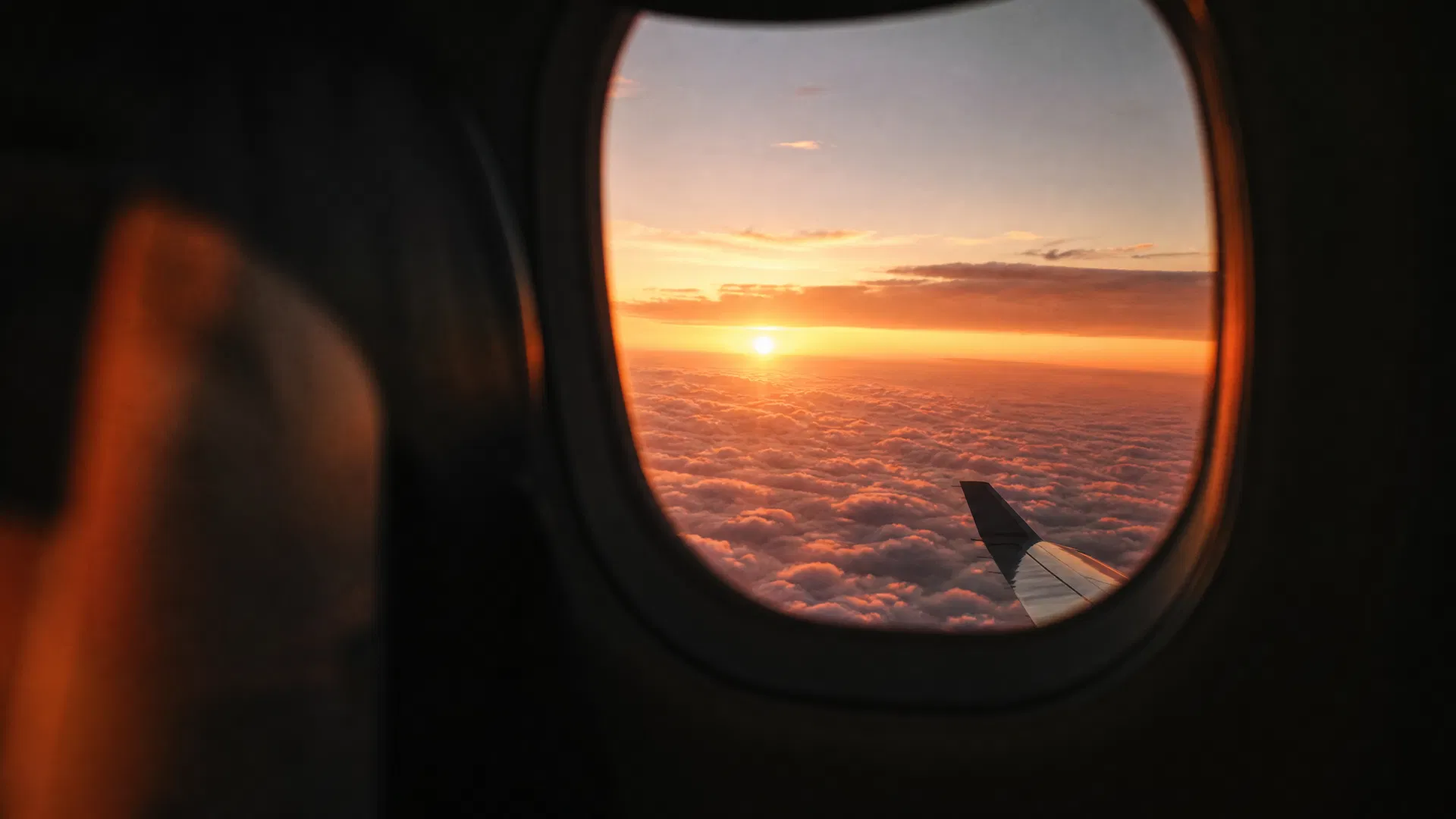
The Cities Worth Losing Three Days To.
Destination: Global
Category: variant
Every long-haul flight comes with the same implicit question, and it starts before you even book: is this worth it?
Not worth it in the abstract sense of whether the destination is good. Of course it's good. Every destination is good. The question is more specific than that. Is this worth the jetlag — the first day when you can't stay awake past 7pm, the second day when you wake at 3am and lie in the dark calculating what time it is at home, the third day when you're almost functional but still not quite yourself? Is this worth the cost, the hours in a pressurized tube, the specific disorientation of arriving somewhere and not knowing what time your body thinks it is?
Most travel content answers this question with photographs. Here is the temple at sunrise. Here is the market in full color. Here is the view from the hill. The photographs are not wrong. But they are not an argument. They are evidence that the destination exists and that it is beautiful. Beautiful is not the same as worth it.
This post is an argument. The six cities on this list are not here because they are beautiful. Every beautiful city is not worth the jetlag. They are here because each one offers a specific experience that cannot be approximated by anything within a reasonable flight from wherever you are — a specific cultural encounter, a specific relationship between place and human civilization, a specific physiological alignment between the state of jetlag and the state the city requires. In each case, the long-haul flight is not the price you pay to access the experience. It is the preparation for it.
The thesis is specific: these are the cities where you stop resenting the jetlag on the second day because what you're standing inside is worth every hour of it. Not because the photographs are good. Because the argument is.
Tokyo: The City That Makes the Jetlag Irrelevant
Tokyo is the only major city in the world where the jetlag works in your favor, and this is the specific reason it leads this list.
The phenomenon is this: you arrive in Tokyo from London or New York or Los Angeles, and on the first night you fall asleep at 9pm and wake at 4am, wide awake, disoriented, unable to return to sleep. In any other city this is the jetlag working against you — you've lost the morning, you'll be useless by afternoon, the day is already compromised. In Tokyo, waking at 4am is not a liability. It is an access pass to the version of the city that most visitors never see.
The Tsukiji outer market opens its stalls by 5am, and the specific approach that most visitors miss is not from the Ginza direction — the tourist approach — but from the Shimbashi side, where the wholesale flower market occupies a covered corridor that operates from 3am and is winding down by the time the fish stalls are at full production. Walking through 200 meters of cut flowers in near-darkness at 4:30am, the smell of chrysanthemum and lily overwhelming the salt air from the bay, is not an experience that appears in any Tokyo guidebook because it requires the specific physiological state of being awake at 4:30am in a city you arrived in 36 hours ago.
The Senso-ji temple in Asakusa is open 24 hours. The tourist crowds arrive at 9am and peak at noon. The jetlagged visitor who walks through the Kaminarimon gate at 5:30am, when the incense smoke from the main hall drifts through the empty forecourt and the only other people present are the elderly Japanese residents who have been coming here every morning for forty years, accesses a version of the temple that the rested visitor cannot. The rested visitor sees Senso-ji. The jetlagged visitor experiences it.
The specific 4am food protocol: Yoshinoya, the beef bowl chain that opened its first 24-hour location in 1973, is the correct 4am Tokyo meal not because it is the best food in the city but because eating a hot meal at 4am in Tokyo — rice, beef, miso soup, the specific warmth of a meal that has been cooking since the previous afternoon — accelerates circadian adjustment faster than the standard advice of staying awake until local bedtime. The science here is real: eating at local meal times, even when your body insists it is 2pm, is one of the most effective jetlag interventions available. Tokyo's 24-hour food infrastructure makes this possible in a way that no other city does.
And then there is Golden Gai, the 200-bar neighborhood in Shinjuku where each bar seats between five and eight people and the bartenders have been pouring drinks to the same regulars since before some of those regulars were born. Golden Gai at 4am is not the same as Golden Gai at midnight. At midnight it is full of tourists who read about it in a guidebook. At 4am it is the industry workers — the chefs who finished their shifts at 2am, the musicians who played their last set at 3am, the insomniacs, and the jetlagged travelers who don't know they've stumbled into the most interesting three hours of the Tokyo day. The bartender at Bar Albatross, the three-story establishment that has been operating since 1974, does not ask where you're from at 4am. She pours your drink and you sit in the specific silence of a city that has been awake all night and is not yet ready to become the city that the tourists will see in four hours.
Tokyo wakes you. That is its jetlag argument, and it is irreplaceable.
The AskLeif Tokyo solo guide and Tokyo food guide build the 4am infrastructure into the daily structure — not as a footnote but as the organizing logic of the first two days.
Marrakech: The City That Times You Perfectly
Where Tokyo proves that jetlag can be an asset by synchronizing you with the dawn culture, Marrakech proves something different and equally specific: that the jetlag from the most common long-haul origin points accidentally produces the correct relationship with the city's rhythm.
The medina of Marrakech does not operate on Western time. The souks don't fully open until 10am. The restaurants don't serve dinner until 7pm at the earliest. The Djemaa el-Fna — the great square at the center of the medina, the UNESCO-listed gathering place that has been operating as a public performance space since the 11th century — doesn't reach its full intensity until after 9pm, when the Moroccan families arrive after dinner and the storytellers and musicians and food vendors are all operating simultaneously at maximum production.
A traveler arriving from New York carries a 6-hour time difference. Their body wakes at what it considers 4am, which is 10am Marrakech time — exactly when the souks are opening. They're hungry for dinner at what feels like 1pm, which is 7pm Marrakech time — exactly when the food stalls in the Djemaa el-Fna are setting up. They're at their most alert at what their body considers 4pm, which is 10pm Marrakech time — exactly when the square reaches its peak intensity and the jetlagged American visitor is, accidentally, perfectly synchronized with the city's most important hour.
The specific Marrakech detail that no competitor content addresses: the adhan, the Islamic call to prayer, structures the city's day in five intervals that have nothing to do with the Western clock. Fajr, the dawn prayer, sounds before sunrise — typically between 4:30 and 5:30am depending on the season. The jetlagged visitor who wakes at what their body considers 3am is waking at Fajr time in Marrakech, and the specific sound of the muezzin from the Koutoubia Mosque drifting through the medina in the pre-dawn quiet is the least touristy and most specific experience the city produces. The medina at Fajr time — the bakers pulling the first bread from their wood-fired ovens, the water carriers beginning their rounds, the specific smell of charcoal and argan oil and jasmine that the daytime heat has not yet burned off — is the Marrakech that the 10am tourist never accesses.
The Jardin Majorelle opens at 8am. For the first hour, the garden — the cobalt-blue Art Deco villa surrounded by bamboo and cacti and the specific blue that Yves Saint Laurent's foundation has maintained since acquiring it in 1980 — is visited almost exclusively by the hotel guests whose jetlag has delivered them there before the day tour buses arrive. The blue of Majorelle is most saturated in the specific morning light before 10am. By 11am, the garden is crowded and the light is overhead and the blue is still beautiful but it is no longer the specific blue that Majorelle painted in 1924 and that Saint Laurent described as the most important color he had ever seen. The jetlagged visitor who arrives at 8am sees that blue. The rested visitor who arrives at 11am sees a garden.
Marrakech times you. That is its jetlag argument, and it requires the specific time difference from the Americas that no amount of deliberate adjustment would produce more efficiently.
The AskLeif Marrakech solo guide and Marrakech couples guide cover the medina's temporal architecture — which hours belong to which experiences, and how to structure the days around the city's actual rhythm rather than a Western approximation of it.
Buenos Aires: The City Where the Jetlag Is the Correct Preparation
Where Marrakech times the jetlagged visitor accidentally, Buenos Aires does something more extreme: it requires the specific physiological state that long-haul jetlag produces, and no amount of local adjustment would replicate it.
Buenos Aires operates on the most extreme version of the late-night social schedule available in any major city on earth. Dinner begins at 9pm at the earliest. More commonly at 10 or 11pm. The milongas — the social tango dances that are the city's most specific cultural institution — don't reach their peak quality of dancing until 2am, when the best dancers arrive. The boliches, the nightclubs, don't fill until 3am. A traveler arriving from London with a 4-hour time difference has a body that thinks 11pm is 7pm, that thinks 2am is 10pm, that thinks 3am is 11pm — exactly the correct relationship with Buenos Aires's social schedule. Their body is not fighting the city's rhythm. It is, accidentally, synchronized with it in a way that no locally-adjusted person would be on their first visit.
The specific Buenos Aires detail that competitor content consistently misses: the 2am parrilla culture. The most serious asado in Buenos Aires happens after midnight, when the serious eaters who have been drinking malbec since 10pm are ready for meat. La Brigada in San Telmo, the restaurant that has been operating since 1985 and that the Argentine food press consistently identifies as the standard for traditional parrilla, does its best service between 1am and 3am — not because the kitchen is better at that hour but because the chef's timing peaks there, the fire has been burning for six hours, and the specific clientele at that hour are the people who understand what they're eating. The jetlagged visitor from London whose body thinks it's 9pm is, at 1am Buenos Aires time, in exactly the correct state to be at La Brigada.
The milonga culture for the jetlagged visitor is even more specific. Salon Canning on Scalabrini Ortiz Avenue — one of the oldest and most respected milonga venues in the city — reaches its peak quality of dancing between 1am and 3am. Argentine tango culture requires a social warming-up period: the early hours of a milonga are for the beginners and the tourists, the later hours for the serious dancers who have been dancing for decades and who don't arrive until the room has reached the specific temperature and energy that serious tango requires. The jetlagged visitor from New York whose body thinks midnight is 7pm arrives at Salon Canning at midnight, watches the room warm up, and is present for the 1am shift when the quality of dancing changes completely. The rested visitor who tries to stay awake until 1am is fighting their body. The jetlagged visitor is not.
And then there is the Confitería Ideal on Suipacha Street, which has been serving the post-milonga crowd since 1912. It opens at 6am specifically for the people whose night ended at 5am — the dancers, the musicians, the kitchen workers, and the jetlagged travelers who have been awake since 3am and are now watching the Buenos Aires dawn arrive over the Río de la Plata. The medialunas — the Argentine croissants, smaller and sweeter than the French version, baked fresh at 4am — are the correct end to a Buenos Aires night. The Confitería Ideal at 6am is the city at its most honest: no performance, no tourism, just the people who were awake all night eating breakfast in a room that has been doing this for 112 years.
Buenos Aires schedules you. That is its jetlag argument, and it is the most socially specific argument on this list.
The AskLeif Buenos Aires solo guide and Buenos Aires food guide cover the late-night infrastructure — the milonga timing, the parrilla sequence, the specific neighborhoods where the city's night culture is most accessible to the first-time visitor.
Kyoto: The City That Delivers You to the Correct State of Mind
Where Buenos Aires schedules the jetlagged visitor into the city's social rhythm, Kyoto does something more philosophical and harder to articulate: it delivers the visitor to the specific contemplative state that the city requires, and the jetlag is the delivery mechanism.
The specific Kyoto experiences that are most profound — the dawn temple visits, the Philosopher's Path walk in the early morning before the day-trippers arrive from Osaka, the specific quality of attention that the moss gardens of Saihō-ji require — all demand a quietness of mind that the rested, well-adjusted, fully-functional tourist cannot easily access. The specific disorientation of being awake at 4am in Kyoto, uncertain what day it is, unclear what time your body thinks it is, existing in a temporal suspension between your home time and local time — produces the specific suspension of ordinary mental categories that Zen Buddhism has been trying to produce through meditation for 1,200 years. The jetlag delivers the beginner's mind that the city's cultural architecture was designed for.
The Fushimi Inari shrine — the 10,000 vermillion torii gates that climb the mountain south of the city — is the most photographed site in Kyoto and one of the most photographed sites in Japan. The daytime experience is beautiful and crowded and produces the specific frustration of trying to have a contemplative experience in a location that 10,000 other people are also trying to have a contemplative experience in. The pre-dawn experience is different in kind, not just in degree. Walking through the torii gates at 4:30am — the gates glowing faintly in the darkness, the mountain trail lit only by the lanterns at each shrine station, the sound of the city replaced by the sound of the mountain — while jetlagged, disoriented, uncertain whether you are fully awake or still dreaming, produces the specific altered state that the Shinto pilgrimage tradition was designed to produce. The gates are the same gates. The experience is not the same experience.
The Ryoan-ji rock garden — the most famous dry garden in Japan, fifteen stones arranged in raked gravel in a configuration that no viewer has ever been able to fully see at once — opens at 8am. The specific reason to be there at 8am is not just the absence of crowds. It is that the contemplative state the garden requires — the specific quality of attention that allows you to sit with the garden's deliberate incompleteness without reaching for an explanation — is most available in the first 30 minutes after opening, when the light is still low and the raked gravel holds the shadows of the stones at an angle that changes as you watch. The jetlagged visitor who arrives at 8am after waking at 4am has been awake for four hours in a state of temporal suspension. They are, accidentally, in the correct state to sit with a rock garden that has been asking the same unanswerable question since 1499.
The Nishiki Market at 9am — the covered shopping street known as Kyoto's kitchen, where the city's restaurants have been sourcing their ingredients since the Muromachi period — is a different market from the Nishiki Market at noon. At 9am the vendors are finishing their professional sourcing, the stalls are at their most fully stocked, and the specific vendors who will engage with the solo visitor who arrives before the tourist rush — the tofu maker who has been making the same silken tofu since his father taught him, the pickled vegetable seller who will explain the specific fermentation process for each variety if you ask and have time to listen — are available in a way they are not when the market is at capacity.
Kyoto quiets you. That is its jetlag argument, and it is the most philosophically specific argument on this list.
The AskLeif Kyoto solo guide and Kyoto couples itinerary built around the dawn temple hours build the dawn temple visits and the pre-crowd timing into the daily structure as the organizing logic of the first two days, not as optional additions.
Istanbul: The City That Has Always Been Between
Where Kyoto quiets the jetlagged visitor into the contemplative state the city requires, Istanbul does something geographically and philosophically unique: it is the only city on earth that exists on two continents simultaneously, and the between-ness of that geography is the correct resonance for the between-ness of jetlag.
The Bosphorus strait runs through the middle of Istanbul. The European side and the Asian side are two ferry minutes apart and two completely different urban experiences — the European side carries the weight of 2,700 years of imperial history, the Asian side carries the specific domestic energy of a city that lives rather than performs. For the jetlagged traveler who exists between two time zones, between sleep and waking, between the person they were before the flight and the person adjusting to the destination, Istanbul is the correct city. It has been negotiating the between-ness for its entire existence. It does not ask you to choose a side.
The specific Istanbul detail that competitor content consistently misses: the Galata Bridge fishermen. Since the 1940s, the men who fish from the Galata Bridge have been setting up their lines at 4am, before the commuter traffic begins, before the tourist boats start running, before the city performs itself for visitors. The specific view from the Galata Bridge at 6am — the European skyline to the west with the Süleymaniye Mosque catching the first light, the Asian shore to the east still in shadow, the Bosphorus running between them in the specific grey-gold of early morning — is most available to the jetlagged visitor who is awake at this hour without trying. The fishermen don't speak to you unless you speak to them first. But they are there, and they have been there every morning for eighty years, and their presence is the specific proof that the city's most important moments happen before the tourists arrive.
The Grand Bazaar — the Kapalı Çarşı, the covered market that has been operating continuously since 1461 — opens at 8:30am. For the first 30 minutes, it operates almost entirely for the professional buyers who are resupplying their stocks: the restaurant owners, the textile merchants, the jewelers who need specific components. This pre-tourist-hour is when the bazaar most closely resembles the 1461 original market that the tourist version has been overlaying for 200 years. The specific vendors who will negotiate seriously, who will show you the back room where the better inventory is kept, who will make you tea and talk about the history of their family's stall — these conversations happen at 8:30am, not at 11am when the tour groups arrive.
The Asian side at dawn is the most underused Istanbul experience available. The ferry from Eminönü to Kadıköy costs 7 Turkish lira and crosses the Bosphorus in 20 minutes. The Kadıköy morning market — the one the restaurant chefs use, not the tourist-facing market — is operating at full production by 7am. The specific crossing at dawn, watching the European skyline recede and the Asian shore approach while the city's morning commuters drink tea from tulip glasses on the ferry deck, produces the most complete available experience of Istanbul's geographic duality. You are between continents, on the water, in the specific light of a city that has been between everything for 2,700 years. The jetlag that makes you feel between — between sleep and waking, between your home time and local time — is the correct emotional state for this crossing.
The Turkish breakfast tradition — kahvaltı, the morning meal that deploys 20 to 30 small dishes simultaneously — is the most effective jetlag recovery food protocol available in any city on this list. The specific reason is physiological: eating small quantities of many things over a 90-minute period activates multiple sensory and metabolic responses simultaneously in a way that a single large meal does not. The specific kahvaltı at Van Kahvaltı Evi in Cihangir — the restaurant that has been serving the traditional Van-style breakfast since 2007 and that the Istanbul food press consistently identifies as the standard — is the correct first meal in Istanbul not because it is the best breakfast in the city but because the 90-minute ritual of working through 25 small dishes while the morning light comes through the windows is the specific reset the jetlagged body requires.
Istanbul between-es you. That is its jetlag argument, and it is the most geographically specific argument on this list.
The Istanbul solo itinerary structured around the Bosphorus crossing and Asian side morning and Istanbul couples itinerary with the Grand Bazaar pre-crowd timing cover the Bosphorus crossing, the Asian side morning market, and the Grand Bazaar timing — all built around the specific hours when Istanbul is most itself.
Cape Town: The City That Justifies the Flight Within the First Hour
Where Istanbul between-es you over days, Cape Town justifies the flight within the first hour of arrival, and this is the most immediate and most visually complete argument on this list.
Cape Town requires the longest flights available from the most common traveler origin points. Eleven hours from London. Seventeen hours from New York. Fourteen hours from Sydney. It is the destination that most completely tests the "is this worth it" question because the flight is among the most demanding available. And Cape Town answers the question faster than any other city on this list — not over days, not through accumulated experience, but in the specific moment when the plane descends through the cloud layer on approach to Cape Town International and Table Mountain appears below you, rising from the ocean, flat-topped and impossible, the city spread across its base and the Atlantic on one side and the Indian Ocean on the other.
That view from the plane is not the argument. It is the preview. The argument begins when you arrive.
The specific Cape Town detail that competitor content consistently misses: the Table Mountain cable car opens at 8am, and the summit at 8:15am — before the "tablecloth" of cloud that covers the mountain by 10am on most days — is the only reliable window for the unobstructed view. The jetlagged visitor who wakes at 5am and queues at 7am is accidentally in the correct position to see the view that afternoon visitors often miss entirely. The specific light at 8:15am on the summit — the Atlantic to the west, the Indian Ocean to the east, the Cape Peninsula stretching south toward Cape Point, the city below still in morning shadow — is the view that justifies the 17-hour flight from New York in a single moment. It does not require days of accumulated experience. It requires being awake at 5am, which the jetlag provides for free.
The Bo-Kaap neighborhood — the Cape Malay community on the slopes below Signal Hill, whose painted houses in pink and yellow and green have been photographed by every visitor to Cape Town — has a specific Saturday morning food culture that no travel content addresses. The Cape Malay community's home cooks sell their specific koesisters — the Cape Malay version, spiced with cardamom and cinnamon and soaked in syrup, entirely different from the Afrikaner version — and their specific bredie stews from their homes on Wale Street and Chiappini Street. This informal market has been occurring since the 1970s and is not advertised anywhere. The jetlagged visitor who is awake at 7am on a Saturday and walks up the hill from the city center will find it. The visitor who sleeps until 10am will not.
The Constantia wine estate — the oldest wine estate in the Southern Hemisphere, established in 1685 by Simon van der Stel, the first Governor of the Cape Colony — opens at 9am. The specific Klein Constantia Vin de Constance sweet wine that Napoleon had shipped to St. Helena during his exile, that Jane Austen mentioned in Sense and Sensibility, that Charles Dickens referenced in The Mystery of Edwin Drood — is most available for tasting in the first two hours after opening, before the tour bus arrivals that begin at 11am. The jetlagged visitor who arrives at 9am drinks the wine that Napoleon drank in exile in a cellar that has been producing it since 1685, in a valley that is 45 minutes from the city center and that looks nothing like Africa and nothing like Europe and exactly like itself.
The Chapman's Peak Drive — the coastal road blasted from the cliff face between 1915 and 1922, the 9-kilometer stretch between Hout Bay and Noordhoek that is one of the most dramatic coastal roads in the world — is best driven at 7am before the tourist traffic begins. The specific baboon troop that has claimed the Chapman's Peak lookout point as their territory is most visible in the early morning before the human traffic displaces them. The jetlagged visitor who drives Chapman's Peak at 7am, with the Atlantic below and the cliff above and a troop of baboons occupying the viewpoint, is experiencing Cape Town in the specific state that the city's geography was designed to produce: the feeling that you have arrived somewhere that has no equivalent anywhere on earth.
Cape Town justifies you. That is its jetlag argument, and it is the most immediate and most visually complete argument on this list. The flight is the most demanding. The arrival is the most immediate justification.
The AskLeif Cape Town solo guide and Cape Town couples guide build the Table Mountain timing, the Bo-Kaap morning, and the Chapman's Peak approach into the first day's structure — because in Cape Town, the first day is the argument.
Why Paris, Sydney, and Dubai Don't Appear Here
Paris is the most long-hauled-to city in the world for American travelers and is genuinely extraordinary. It doesn't appear here because Paris has the most developed alternative infrastructure of any city on earth. It can be approximated at shorter range — not perfectly, but meaningfully — by Montreal, by London, by Amsterdam. The "is this worth the jetlag" question for Paris has a genuinely debatable answer. For Tokyo and Cape Town it doesn't. Paris is worth the flight. It is not worth losing three days to in the way that the cities on this list are worth it, because the cities on this list have no approximation within a short-haul flight.
Sydney is a magnificent city and requires a genuinely demanding long-haul flight from the Northern Hemisphere. It doesn't appear here because the specific Sydney experience — the harbour, the beaches, the specific Australian outdoor culture — while extraordinary, doesn't offer the same cultural depth and historical layering that the cities on this list provide. Sydney is worth the flight for the specific Australian outdoor experience. The cities on this list are worth it for reasons that go deeper than outdoor access.
Dubai is the most common long-haul stopover destination in the world and has developed a genuinely interesting city in the past twenty years. It doesn't appear here because the specific Dubai experience — the architecture, the luxury, the specific desert-meets-ocean geography — is available in a form that approximates it in Abu Dhabi. Dubai is worth the stopover. It is not worth losing three days to, because what it offers does not require the specific commitment of three lost days to access. The cities on this list require that commitment. Dubai does not.
Planning Your Long-Haul Trip
The six cities on this list span four continents and represent genuinely different arguments for why the jetlag is worth it. Choosing between them depends on which argument matches your specific long-haul travel situation.
If you fear losing days to adjustment: Tokyo and Cape Town are the correct choices. Tokyo because the jetlag works in your favor from the first night — you will not lose days, you will gain access. Cape Town because the justification is immediate — the flight is the most demanding, the arrival is the fastest payoff.
If you're traveling from the Americas: Marrakech and Buenos Aires are the most favorable from an origin-point perspective. The 5-6 hour time difference from New York to Marrakech produces the accidental synchronization described above. The 4-5 hour difference from New York or London to Buenos Aires produces the correct relationship with the city's late-night social schedule.
If you want the most culturally specific experience: Kyoto and Istanbul. Kyoto for the contemplative state that the city requires and the jetlag delivers. Istanbul for the geographic duality that the between-ness of jetlag resonates with.
Combining destinations: Tokyo and Kyoto are the natural pairing — two weeks covers both cities properly and the Shinkansen between them takes 2 hours 20 minutes. Istanbul is a natural extension of a Marrakech trip for travelers who want two long-haul arguments in one journey. Cape Town pairs with Buenos Aires for travelers who want to cover the Southern Hemisphere in a single extended trip.
For any of these destinations, the AskLeif itinerary builder can put together a custom version based on your specific travel dates, travel style, and how many days you have — which is a more useful starting point than a generic itinerary that doesn't account for your specific jetlag pattern.
What the Three Days Are Actually Worth
Tokyo wakes you. Marrakech times you. Buenos Aires schedules you. Kyoto quiets you. Istanbul between-es you. Cape Town justifies you.
Six verbs. Six jetlag arguments. Each one irreplaceable by any other city, and none of them approximable by anything within a short-haul flight from wherever you are.
The three days you lose to jetlag are not the price of the trip. They are the preparation for it. The first day when you can't stay awake past 7pm is the day Tokyo is setting up its 4am version for you. The second day when you wake at 3am and can't go back to sleep is the day Kyoto is delivering you to the contemplative state its temples require. The third day when you're almost functional is the day Buenos Aires is warming up for the milonga that peaks at 2am.
You will stop resenting the jetlag on the second day. Not because you've adjusted. Because what you're standing inside is worth every hour of it.