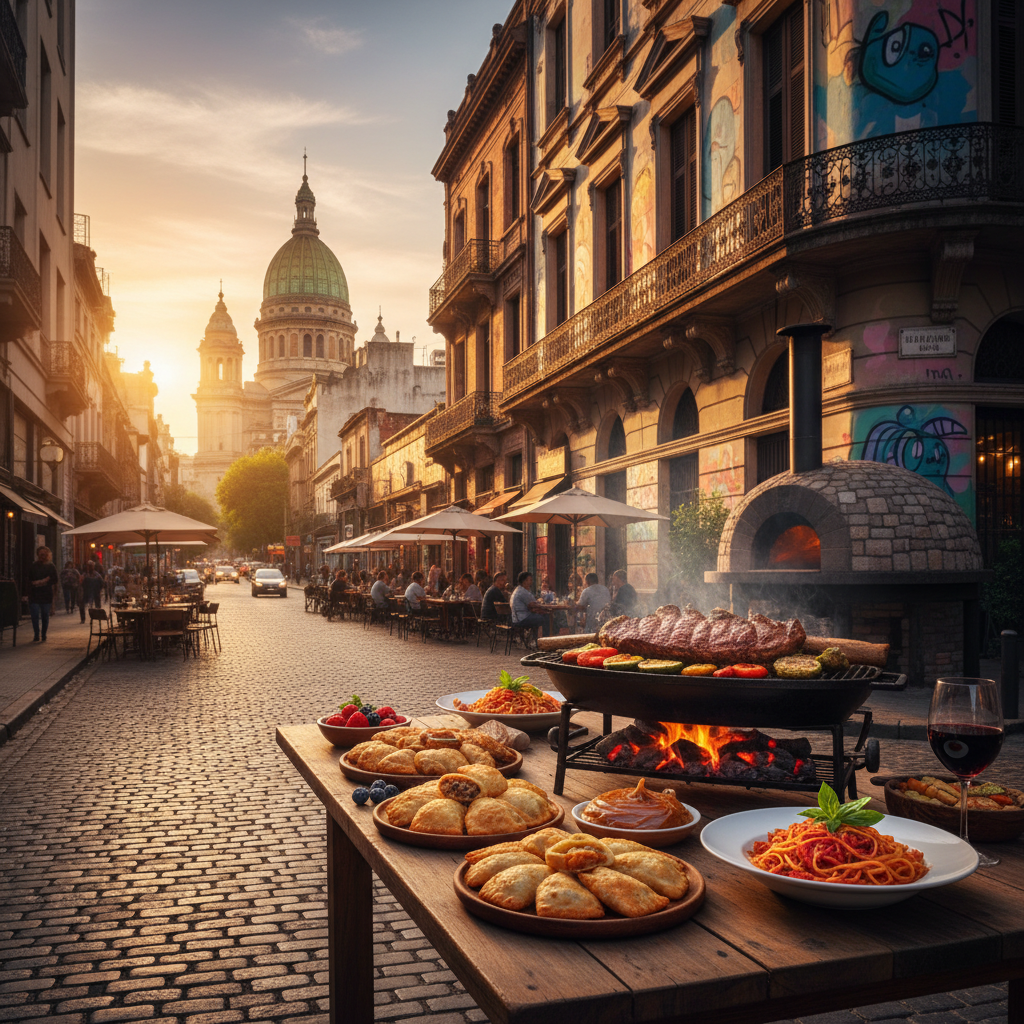
Buenos Aires: 4-Day Italian-Argentine Food & Culture Guide
Savor the unique Italian-Argentine fusion in Buenos Aires with this 4-day food and culture guide. Explore Palermo Soho's dining scene, indulge in empanadas, and discover the city's rich culinary heritage.
- Duration: 4 Days
- Estimated Budget: $800–$1,500
- Best Time to Visit: March-May and September-November for pleasant weather and fewer crowds.
- Destination: Buenos Aires, Argentina
<p><em>Planning a trip to Buenos Aires or Argentina? Read our <a href="/blog/buenos-aires-argentina-complete-travel-guide">complete Buenos Aires travel guide</a> for everything you need to know before you go — neighborhoods, food, tango, football, and the practical details that make the difference.</em></p> Palermo Soho isn't just a neighborhood; it's the beating heart of Buenos Aires's contemporary dining scene, a place where Italian heritage seamlessly blends with Argentine passion. This guide delves deep into the city's unique culinary identity, from the finest pasta to the most succulent asado, all through the lens of its vibrant Italian-Argentine fusion.
The moment you step into the historic Confitería Las Violetas, you're transported to a Belle Époque dream, a testament to Buenos Aires's enduring European elegance. This isn't just a place for coffee; it's an experience, with stained-glass ceilings and marble tables that whisper stories of generations past. It perfectly encapsulates the city's unique blend of old-world charm and vibrant culinary traditions, offering a glimpse into the daily rituals that define Porteño life. You'll find families gathering for afternoon tea, friends sharing facturas, and solo travelers soaking in the atmosphere, all while surrounded by architectural beauty that rivals any European capital. It’s a must-visit for understanding the city's deep cultural roots and its love affair with café culture, setting the stage for a journey into its rich gastronomic landscape.,Should you focus solely on traditional Argentine fare, or embrace the city's Italian influences? Here's the reality: to truly taste Buenos Aires, you must dive headfirst into its Italian-Argentine fusion. The city's culinary identity is inextricably linked to its massive Italian diaspora, which has sculpted everything from its pasta dishes to its pizza. Ignoring this heritage would be like visiting Italy and skipping pasta. You'll discover that what's considered "Argentine" often has a deeply Italian soul, from the way they prepare their milanesas to the prevalence of gnocchi on a Tuesday. This guide champions that beautiful blend, ensuring you experience the full spectrum of flavors that make Buenos Aires so unique and delicious, moving beyond just the steakhouse stereotype.,Food and culture enthusiasts spend their mornings savoring the rich aroma of freshly baked medialunas at a bustling local café, followed by an exploration of the city's vibrant street art in Colegiales. You'll find yourself debating the merits of different dulce de leche brands in a specialty shop, or meticulously choosing the perfect cut of meat from a local carnicería, even if you’re not planning to cook. The rhythm of Buenos Aires for a culinary traveler means leisurely lunches that stretch into the afternoon, punctuated by visits to artisan markets and discussions with passionate vendors. Evenings are dedicated to discovering hidden gem restaurants, where innovative chefs are reinterpreting classic dishes, ensuring every meal is an adventure and a story waiting to be told. <p class="leif-blog-link"><strong>Planning a wine trip?</strong> Read our deep dive: <a href="/blog/wine-destinations-where-the-wine-is-not-the-point-its-the-key">The Wine Destinations Where the Wine Is Not the Point. It's the Key.</a> — covering the Mendoza wine region and five other destinations where wine is the key to the culture.</p>
San Telmo's Italian Echoes & Parrilla Perfection
Start your culinary journey with breakfast at El Federal, the oldest café in Buenos Aires, established in 1864.
This historic spot offers a glimpse into Buenos Aires' past, serving traditional medialunas and excellent café con leche. It's the perfect authentic introduction to the city's breakfast culture.
Wander through the historic streets of San Telmo, admiring the colonial architecture and antique shops.
San Telmo is one of Buenos Aires' most charming and oldest neighborhoods, with cobblestone streets and a tangible sense of history. It's a great way to work up an appetite for lunch.
Experience lunch at Don Julio, widely regarded as the best parrilla (steakhouse) in Buenos Aires and a fixture on the World's 50 Best Restaurants list.
This is a non-negotiable culinary pilgrimage for any food lover in Buenos Aires. Their bife de chorizo and provoleta are benchmarks of Argentine cuisine, showcasing the country's incredible beef.
Explore the Mercado de San Telmo, a bustling indoor market offering everything from antiques to fresh produce and incredible street food.
This market is a sensory delight, showcasing the vibrant daily life and culinary diversity of Buenos Aires. It's an excellent place to sample local treats and soak in the atmosphere.
Enjoy an early dinner at Sottovoce, a classic Italian-Argentine restaurant known for its elegant ambiance and impeccable pasta dishes.
Sottovoce perfectly embodies the Italian influence on Argentine cuisine, offering refined versions of beloved dishes. It's a sophisticated yet comforting end to your first day.
Leif's Tip: Wear comfortable shoes today, as San Telmo's cobblestone streets are charming but can be tough on your feet. Also, embrace the late dining culture; while I've suggested an 'early' dinner, 7:30 PM is still quite early by Argentine standards, giving you a chance to ease into the local rhythm.
Buenos Aires has a sprawling urban landscape, and knowing which culinary corners to explore is the difference between a good meal and a truly unforgettable one. The sheer volume of restaurants, the subtle nuances between Italian-Argentine fusion styles, and the ever-present risk of falling into tourist traps can make planning feel like a full-time job. You might find yourself overwhelmed by conflicting online reviews, unsure if that highly-rated parrilla is genuinely authentic or just popular with visitors. Then there's the challenge of navigating the booking systems for the city's most coveted tables, often requiring local knowledge or a fluent Spanish speaker. This is precisely where Leif steps in, transforming potential headaches into seamless, delicious experiences by curating a path that leads you directly to the city's authentic culinary heart, avoiding any missteps along the way.
When you're standing in the vibrant San Telmo market, eyeing a stall overflowing with tantalizing empanadas, wondering which filling to choose or if the vendor is truly offering the best local experience, Leif has already done the homework for you. Say you want to experience the true essence of Italian-Argentine pasta, but you're not sure which of the hundreds of 'pastas caseras' spots offers the most authentic, handmade tagliatelle. Leif provides a direct recommendation, complete with the specific dish to order and why it's a must-try. You land in Buenos Aires, pull up Leif, and within seconds you know exactly where to go for that perfect medialuna and café con leche, or which confitería offers the most exquisite dulce de leche, ensuring every bite is a discovery, not a gamble.
You'll arrive in this vibrant city with the confidence of a seasoned local, ready to immerse yourself in its rich food culture without a moment of hesitation. Instead of poring over endless reviews and worrying about making the wrong choice, you'll be savoring a perfectly grilled bife de chorizo at a hidden gem parrilla, or delighting in a plate of homemade gnocchi that tastes like nonna's kitchen. The difference is that you'll be experiencing a curated journey, where every meal is a highlight and every culinary stop tells a story, all meticulously planned to align with your specific tastes. Arriving in Buenos Aires with your culinary journey already mapped out means you can simply relax, indulge, and let the city's incredible flavors wash over you, creating memories that will last long after the last bite of alfajor.
Best Time to Visit Buenos Aires, Argentina
Spring (September to November) offers pleasant temperatures, blooming jacaranda trees, and fewer crowds, perfect for strolling and outdoor dining.
Autumn (March to May) is another excellent choice, with mild weather and the city's parks showcasing beautiful fall foliage.
Avoid the peak summer months (December to February) when temperatures can be high and many locals are on vacation, leading to some closures.
For a truly immersive food experience, aim for times outside of major public holidays when popular restaurants might be fully booked or closed.
Getting Around Buenos Aires, Argentina
The Subte (subway) is efficient and the fastest way to navigate central Buenos Aires; purchase a SUBE card at kiosks or Subte stations.
Colectivos (buses) offer extensive coverage but can be confusing for first-timers; Google Maps is invaluable for routes.
Taxis are plentiful and relatively inexpensive; always ensure the meter is running or agree on a price beforehand for longer journeys.
For late-night dining in Palermo Soho, consider ride-sharing apps like Uber or Cabify for convenience and safety.
What to Pack
- Comfortable walking shoes for exploring neighborhoods like San Telmo and Palermo Soho.
- A light jacket or sweater, even in warmer months, as evenings can be cooler, especially after a long dinner.
- An adapter for Type I electrical outlets (three flat pins).
- A reusable water bottle to stay hydrated while exploring.
- A small daypack for market finds and souvenirs.
- Dressy casual attire for nicer restaurants; Argentines appreciate a well-put-together look for dinner.
Money-Saving Tips
- Take advantage of 'menú ejecutivo' (lunch specials) at many restaurants, offering excellent value for a multi-course meal.
- Look for 'happy hour' deals, especially for aperitivos and wine, which can be found in many Palermo Soho bars.
- While fine dining is a highlight, balance it with more casual empanada and pizza joints for budget-friendly, authentic eats.
- Consider staying in an apartment with a kitchen to prepare some meals, especially breakfast, with fresh ingredients from local markets.
Local Insights
- Dinner in Buenos Aires typically starts late, often after 9 PM, so plan your day accordingly and enjoy a leisurely aperitivo beforehand.
- Tipping is customary at restaurants; around 10% is standard if the service charge isn't already included.
- Don't be afraid to try different cuts of meat at a parrilla; 'bife de chorizo' (sirloin) and 'ojo de bife' (ribeye) are excellent starting points.
- Embrace the 'merienda' (afternoon snack) tradition; it's a perfect excuse to indulge in more medialunas, facturas, and coffee.
- When ordering coffee, specify 'café con leche' for a milky coffee, or 'cortado' for an espresso cut with a dash of milk.
Frequently Asked Questions
What's the best way to book popular restaurants like Don Julio or Tegui?
For top-tier restaurants like Don Julio or Tegui, booking well in advance is crucial. Don Julio often requires reservations 3-4 weeks out, especially for prime dinner slots, and Tegui, being a tasting menu experience, can fill up even earlier. Use their official websites or trusted online reservation platforms like TheFork (Mesa Abierta in Argentina) as soon as your travel dates are firm. Don't rely on showing up and hoping for a table, particularly on weekends.
Is it easy to find vegetarian or vegan options in Buenos Aires, especially with the focus on meat?
While Buenos Aires is famous for its meat, the culinary scene has evolved significantly. Many restaurants, especially in areas like Palermo Soho and San Telmo, now offer excellent vegetarian and even vegan options. Look for places specializing in 'cocina de autor' or those with a modern twist on traditional dishes. Empanadas with humita (corn) or verdura (spinach) fillings are widely available, and Italian-Argentine fusion spots often have pasta and vegetable-focused dishes. Don't hesitate to ask; many chefs are happy to accommodate.
What's the difference between a 'confitería' and a 'café'?
While both serve coffee, a 'confitería' is typically a more elaborate establishment, often with a wider selection of pastries (facturas), cakes, and light meals, and a more formal, elegant atmosphere. They are often historic institutions. A 'café' can be more casual, focusing primarily on coffee and perhaps a few basic pastries. For the full experience of Buenos Aires's breakfast and merienda culture, a confitería is the place to go.
How do I navigate the different types of empanadas?
Empanadas are a must-try! The key is variety. "Carne" (beef) is classic, often available "suave" (mild) or "picante" (spicy). "Humita" (creamy corn) is a popular vegetarian option. "Jamón y queso" (ham and cheese) is universally loved. "Pollo" (chicken) and "verdura" (spinach and cheese) are also common. Don't be afraid to try a few different kinds from various stalls or restaurants to find your favorite. Each region of Argentina also has its own empanada style, so you'll find subtle differences.
What's the etiquette for tipping in restaurants?
Tipping (propina) is customary in Buenos Aires restaurants. The standard is usually 10% of the bill if you're satisfied with the service. It's best to leave tips in cash, even if you pay the main bill with a card, as credit card machines often don't have a tipping option for staff. Rounding up the bill is also acceptable for smaller amounts. For exceptional service, 15% is generous and appreciated.
Beyond dulce de leche, what other local sweets should I try?
Definitely explore alfajores! These are shortbread-like cookies sandwiched with dulce de leche and often covered in chocolate or powdered sugar. Rapa Nui is famous for its chocolate and ice cream, but their alfajores are also excellent. Also, look for 'facturas' (a general term for pastries) in any confitería; they come in many shapes and fillings, often with dulce de leche, quince paste (dulce de membrillo), or crema pastelera (custard). Don't miss 'churros con dulce de leche' either!
Is it safe to drink tap water in Buenos Aires?
Yes, tap water in Buenos Aires is generally considered safe to drink. The city's water infrastructure is robust. However, if you have a very sensitive stomach or prefer to err on the side of caution, bottled water is readily available everywhere. Most locals drink tap water without issue, and restaurants typically serve it unless you request otherwise. It's a personal preference, but you shouldn't have any health concerns drinking it.