Italy Has Too Much. That's Exactly the Problem — and the Point.
Destination: Italy
Category: Destination Guides
Italy Has Too Much. That's Exactly the Problem — and the Point.
Nobody tells you this before your first trip to Italy: the country will overwhelm you in the best possible way, and then it will make you feel guilty for not staying longer. You'll stand in front of the Colosseum and think about the Uffizi. You'll be eating cacio e pepe in Trastevere and already mourning the fact that you haven't made it to Bologna yet. You'll watch the sun go down over the Grand Canal and wonder if the Amalfi Coast would have been better. Italy is not a destination. It is a negotiation — between what you have time for, what your body can handle, and what your heart refuses to leave behind.
This guide exists because most Italy travel content fails at the most important question: which Italy is right for you? Not Italy in the abstract, not Italy as a highlight reel, but the specific version of Italy that matches how you travel, who you're traveling with, and what you actually want to feel when you're there. The country is roughly the size of Arizona, but it contains more distinct regional identities, dialects, cuisines, and landscapes than most continents. The Italy of the Dolomites has almost nothing in common with the Italy of Sicily. The Italy of Milan is a different civilization from the Italy of Naples. Getting this wrong — showing up in the wrong region for the wrong reasons — is one of the most common and most fixable mistakes travelers make.
So let's fix it.
The Italy Nobody Talks About: Why Region Matters More Than Anything Else
Italy was not unified as a country until 1861. Before that, it was a patchwork of kingdoms, papal states, city-states, and foreign-controlled territories, each of which developed its own architecture, food culture, dialect, and personality over centuries. That history is not a footnote — it is the entire explanation for why traveling Italy region by region feels like visiting entirely different countries. The Venetians built their city on water because they had no choice, and that necessity produced one of the most surreal urban environments on earth. The Neapolitans developed a cuisine of extraordinary intensity because poverty demanded creativity with simple ingredients. The Tuscans built hilltop towns because the medieval landscape required defense, and those same towns now look like they were placed there by a painter who wanted the light to hit them exactly right.
When you understand this, you stop asking "should I go to Italy?" and start asking the right question: "which Italy should I go to first?"
The answer depends entirely on you.
Rome: For the Traveler Who Wants to Feel the Weight of History
Rome is not a city that eases you in. It drops you directly into 2,800 years of continuous human civilization and expects you to keep up. The Pantheon, still standing after nearly two millennia, sits in a piazza where people eat gelato and argue on their phones. The Forum Romanum — where Julius Caesar was assassinated, where emperors addressed their citizens, where the entire machinery of the ancient world once operated — is a ten-minute walk from a neighborhood bar where locals drink espresso standing up, as they have done every morning for generations.
This layering is what makes Rome unlike anywhere else on earth. Every other great city has a historical district. Rome is the historical district. There is no separation between the ancient and the contemporary; they exist simultaneously, in the same block, sometimes in the same building. The church of San Clemente near the Colosseum has a 12th-century basilica on top of a 4th-century church on top of a 1st-century Roman house on top of a Mithraic temple. You can descend through all four layers in an afternoon. That is Rome in miniature: depth upon depth, each layer more astonishing than the last.
For first-time visitors, Rome rewards those who slow down. The Vatican Museums alone contain enough art to fill a week of serious looking — but most visitors rush through in three hours on the way to the Sistine Chapel, missing the Gallery of Maps, the Raphael Rooms, and the Egyptian collection entirely. The Colosseum is magnificent, but the Palatine Hill above it — where the emperors actually lived, where you can stand on the same terraces where Augustus watched the games below — is where the imagination really catches fire. The Borghese Gallery, which requires advance booking and limits visitors to two hours, contains some of the most extraordinary sculpture ever made, including Bernini's Apollo and Daphne, a marble figure so alive that visitors have been known to reach out and touch it to confirm it isn't flesh.
Rome is also, despite its grandeur, a deeply livable city. The neighborhood of Trastevere, across the Tiber from the historic center, is a warren of cobblestone streets and ivy-covered walls where Romans actually eat dinner — not the tourist-facing restaurants near the Trevi Fountain, but the kind of places where the menu is written on a chalkboard and the house wine comes in a carafe. Testaccio, the old slaughterhouse district, is now home to the city's best street food market and some of its most serious trattorias, where you can eat cacio e pepe, carbonara, and coda alla vaccinara (oxtail braised in tomato and celery) the way they were meant to be eaten: in the neighborhood where they were invented.
Who Rome is for: History obsessives, first-time Italy visitors, solo travelers, couples who want grandeur alongside intimacy, and anyone who has ever wanted to understand how the ancient world actually worked. Rome rewards depth over breadth — plan at least five days, and resist the urge to see everything.
Explore our Rome for Romantics: A 5-Day Couples Itinerary, Rome with Kids: 5-Day Family Itinerary, Solo Rome: 4-Day Itinerary for Independent Travelers, and Rome on a Budget: 5-Day Itinerary for €60/Day Explorers.
Florence: For the Traveler Who Believes Art Can Change You
Florence is a city that has been producing world-changing art for six hundred years and has not stopped. The concentration of masterworks within the city's historic center — which is small enough to walk across in forty minutes — is so dense that the phenomenon of Stendhal Syndrome, a psychosomatic illness caused by overwhelming exposure to beauty, was first documented here. Visitors have fainted in the Uffizi. This is not a metaphor.
The Uffizi Gallery alone contains Botticelli's Birth of Venus and Primavera, Leonardo da Vinci's Annunciation, Caravaggio's Bacchus, Raphael's Madonna of the Goldfinch, Titian's Venus of Urbino, and hundreds of other works that would be the centerpiece of any other museum in the world. The Accademia has Michelangelo's David, which is larger than you expect and more emotionally affecting than any photograph prepares you for — the tension in his shoulders, the sling held loosely in his left hand, the expression that is simultaneously calm and coiled. The Bargello has Donatello's bronze David, the first freestanding nude sculpture since antiquity. The Palazzo Pitti, across the Arno, has the Palatine Gallery, the Royal Apartments, and the Boboli Gardens, which are themselves a masterpiece of Renaissance landscape design.
But Florence is not only a museum. The Oltrarno neighborhood, on the south bank of the Arno, is where the artisans still work — leather craftsmen, bookbinders, goldsmiths, picture framers — in workshops that have been in the same families for generations. The Mercato Centrale, a two-story iron-and-glass market hall built in 1874, has a ground floor of butchers, cheese vendors, and pasta makers, and an upper floor of food stalls where you can eat bistecca alla Fiorentina (the legendary T-bone steak, always served rare), ribollita (the Tuscan bread soup that is somehow more than the sum of its parts), and lampredotto (tripe sandwich, the true Florentine street food, which you should eat standing at a cart near the market before you talk yourself out of it).
The surrounding Chianti wine country — accessible by car or organized tour in under an hour — is one of the most beautiful agricultural landscapes on earth. Rolling hills covered in vineyards and olive groves, punctuated by cypress trees and medieval hilltop towns like Greve in Chianti, Radda, and Castellina. Wine estates here have been producing Sangiovese-based wines since the 13th century, and many of them offer tastings and cellar tours that are among the most pleasurable ways to spend an afternoon in Italy.
Who Florence is for: Art lovers, architecture enthusiasts, food travelers, wine tourists, couples seeking beauty and culture, and anyone who wants to understand the Renaissance not as a historical period but as a lived experience. Florence rewards those who book museum tickets in advance and leave time to simply walk.
Explore our Florence For Couples: A Romantic 4-Day Itinerary, Florence Family Adventure: 4-Day Itinerary with Kids, Solo Florence: The Ultimate 4-Day Itinerary for Independent Explorers, and Florence on a Budget: 4-Day Itinerary for Savvy Travelers.
Venice: For the Traveler Who Wants to Be Genuinely Astonished
Venice should not exist. The fact that it does — that a city of 118 islands, connected by 400 bridges, built on wooden pilings driven into the mud of a lagoon, has been continuously inhabited for 1,500 years and contains some of the most extraordinary architecture and art in the world — is one of the great improbabilities of human civilization. The city is sinking at approximately 2 millimeters per year. The acqua alta (high water) floods St. Mark's Square with increasing frequency. And yet Venice persists, and it is still, despite everything, one of the most beautiful places on earth.
The challenge of Venice is that most visitors see only the surface: the Grand Canal, St. Mark's Basilica, the Rialto Bridge, and a gondola ride. These things are magnificent. But the Venice that will genuinely change you is the one you find by getting lost in the sestieri — the six neighborhoods that make up the city — and discovering that behind the tourist-facing facade is a living city with neighborhood bars (bacari) where locals drink ombra (small glasses of wine) and eat cicchetti (Venetian tapas) at any hour of the day, with markets where fishermen sell the morning's catch directly off their boats, with churches in every campo that contain masterworks by Titian, Tintoretto, and Veronese that most visitors never find because they're not on the standard itinerary.
The islands of the Venetian lagoon are essential. Murano, famous for glass-blowing since 1291, has working furnaces where you can watch masters create objects of extraordinary delicacy in minutes. Burano, a 40-minute vaporetto ride from the city, is a fishing village of such improbable color — every house painted a different shade of pink, yellow, blue, or green — that it looks like a set designer's dream. Torcello, the oldest settlement in the lagoon, has a Byzantine cathedral with 12th-century mosaics that are among the finest in the world and an atmosphere of such profound quiet that it feels like the end of the earth.
Venice is also, despite its reputation as a tourist trap, still possible to experience authentically — but it requires timing and intention. The city is most itself in the early morning, before the day-trippers arrive from the cruise ships, when the light on the canals is gold and the only sounds are water and footsteps. It is most itself in the off-season, in November or February, when the mist rolls in from the lagoon and the city takes on the melancholy beauty that inspired centuries of painters and writers. And it is most itself in the neighborhoods away from San Marco — in Cannaregio, in Castello, in the Dorsoduro — where the city lives its actual life.
Who Venice is for: Couples (it is, despite the crowds, one of the most romantic cities on earth), architecture and art lovers, photographers, travelers who want an experience unlike anything else they've ever had, and anyone willing to wake up early and walk away from the tourist trail. Venice rewards the curious and punishes the passive.
Explore our Venice for Two: A 4-Day Romantic Escape for Couples, Venice for Couples: A Romantic 3-Day Honeymoon Itinerary, Venice Family Adventure: 3-Day Itinerary with Kids, and Venice on a Budget: 4-Day Guide.
The Amalfi Coast: For the Traveler Who Needs to See Something Impossible
There are places in the world that photographs cannot adequately represent, and the Amalfi Coast is one of them. The cliffs drop 1,000 feet straight into the Tyrrhenian Sea. The villages — Positano, Amalfi, Ravello, Praiano — cling to those cliffs at angles that defy structural logic, their pastel-colored buildings stacked on top of each other like an architect's fever dream. The water below is a shade of blue that doesn't have a proper name in English. The lemon groves that terrace the hillsides produce fruit the size of softballs, and the limoncello made from them is nothing like the syrupy version sold in airport duty-free shops.
The Amalfi Coast is also, in high season, genuinely difficult. The SS163 coastal road — one of the most spectacular drives in the world — is also one of the most congested, with buses, cars, and scooters competing for space on a road that was never designed for modern traffic volumes. Positano, the most photographed village, is beautiful in the way that a painting is beautiful: best appreciated from a distance, or in the early morning before the tour boats arrive. The practical advice is to stay in a smaller village — Praiano, Furore, or Atrani — and use the ferry system to reach the main towns, which is both faster and more pleasant than the road.
Ravello, perched 1,100 feet above the sea, is the Amalfi Coast's best-kept secret. The village has no beach and no marina, which means it attracts a different kind of visitor: one who comes for the Villa Rufolo gardens (which inspired Wagner's Parsifal), the Villa Cimbrone with its Terrace of Infinity, and the annual Ravello Festival, which brings world-class classical music to an open-air stage with the sea as a backdrop. It is one of the most beautiful places in Italy, and it is significantly less crowded than the towns below.
The Amalfi Coast is also the gateway to Capri, the island that has been attracting the wealthy and the beautiful since the Roman emperors built their villas there. The Blue Grotto — a sea cave where the water glows an unearthly blue due to the refraction of light through an underwater opening — is one of those experiences that sounds like a tourist gimmick until you're actually inside it, floating in that impossible light, and you understand why people have been coming here for two thousand years.
Who the Amalfi Coast is for: Couples seeking drama and beauty, luxury travelers, photographers, anyone who has dreamed of the Mediterranean as a concept and wants to see it made real. It is not ideal for families with young children (the terrain is steep and the roads are narrow) or budget travelers (it is among the most expensive regions in Italy). But for the right traveler, it is unforgettable.
Explore our Amalfi Coast Romantic Getaway: A 5-Day Itinerary for Couples, Amalfi Coast 5-Day City & Culture Itinerary, Amalfi Coast with Kids: 5-Day Family Adventure, and Capri for Couples: A 3-Day Romantic Escape.
Tuscany: For the Traveler Who Wants Italy to Feel Like a Dream
If Italy is a negotiation, Tuscany is the part where the country stops arguing with you and simply becomes beautiful. The landscape of the Val d'Orcia — rolling hills covered in wheat and sunflowers, punctuated by isolated farmhouses and lines of cypress trees that seem to have been placed there by a Renaissance painter — is so perfectly composed that it was designated a UNESCO World Heritage Site in 2004, not for any specific building or monument, but for the landscape itself. This is a region that has been cultivated and shaped by human hands for so long that the distinction between natural and man-made has dissolved entirely.
The hilltop towns of Tuscany are each a world unto themselves. Siena, whose medieval center is one of the best-preserved in Italy, has the Piazza del Campo — a shell-shaped square that is the site of the Palio, the twice-yearly horse race that has been run since the 13th century and is still the most intense sporting event in Italy. San Gimignano, the "Manhattan of the Middle Ages," has 14 surviving medieval towers that were built by rival families as status symbols, and a gelato that has won the World Gelato Championship. Montepulciano produces Vino Nobile, one of Italy's great red wines, and has a main street that climbs steeply through the town in a series of piazzas and palaces. Pienza, built in the 15th century as a model Renaissance city by Pope Pius II, is so perfectly preserved that it feels like a stage set — except that people actually live there, and the pecorino cheese made in the surrounding countryside is among the best in Italy.
Tuscany is also, more than any other region, the Italy of the slow traveler. Renting a farmhouse in the Chianti or the Crete Senesi and spending a week driving between hilltop towns, eating at family-run restaurants, and drinking wine on terraces as the sun goes down is one of the great travel experiences available anywhere in the world. It requires a car and a willingness to get lost, both of which are features rather than bugs.
Who Tuscany is for: Wine lovers, slow travelers, couples seeking romance without the crowds of the coast, food enthusiasts, anyone who wants to understand Italian culture at a pace that allows for real absorption. Tuscany is best experienced with at least a week and a rental car.
Explore our 4-Day Romantic Tuscany Itinerary for Couples: Wine, Truffles & Hilltop Towns, 7 Days of Romance: Tuscany Wine, Renaissance Art & Hilltop Towns for Couples, and 7-Day Tuscany Family Adventure.
Cinque Terre: For the Traveler Who Wants to Earn the View
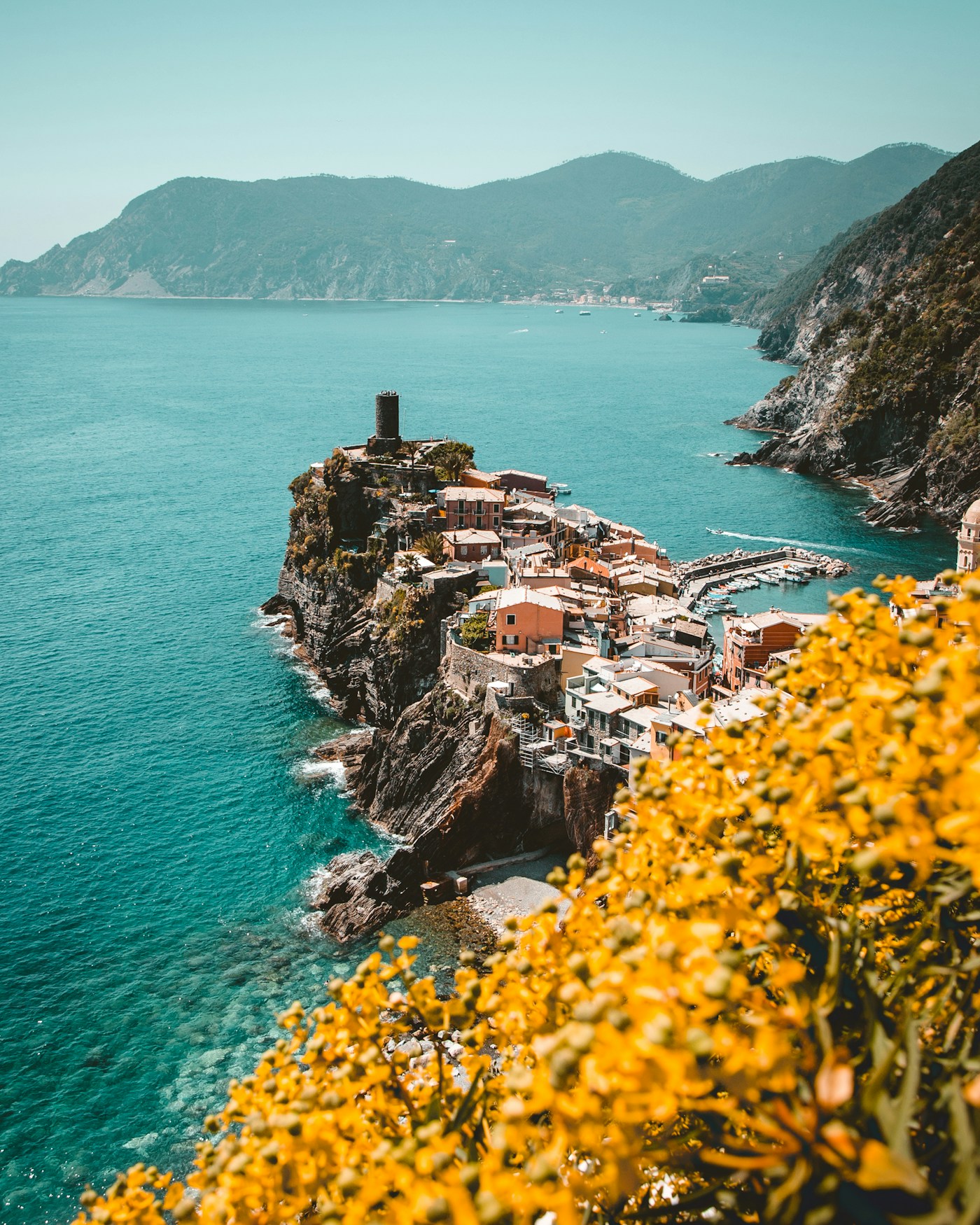
The five villages of Cinque Terre — Monterosso al Mare, Vernazza, Corniglia, Manarola, and Riomaggiore — are strung along a stretch of Ligurian coastline so rugged that until the railway arrived in the late 19th century, they were largely cut off from the rest of Italy. The villages were built by fishing communities who terraced the cliffs with dry-stone walls to grow grapes and olives, and the result is a landscape of such concentrated beauty that it has been a UNESCO World Heritage Site since 1997.
The hiking trails that connect the villages are among the most famous in Italy, and for good reason: the views from the Sentiero Azzurro (Blue Trail) are extraordinary, with the villages visible below and the Ligurian Sea stretching to the horizon. But Cinque Terre is also a victim of its own fame — in summer, the trails and villages are genuinely overcrowded, and the experience of walking between Vernazza and Corniglia in a slow-moving queue of tourists is not what the place deserves. The solution is to go in May or October, when the light is beautiful, the crowds are manageable, and the villages feel like themselves again.
Vernazza is the most beautiful of the five villages, with a natural harbor, a medieval castle, and a main piazza that opens directly onto the sea. Monterosso is the largest and most beach-friendly, with a proper sandy beach and the best restaurants. Manarola, perched on a rocky promontory, is the most photographed — the view of the village from the coastal path at sunset is one of the iconic images of Italy. Each village has its own character, and the best way to experience Cinque Terre is to base yourself in one and walk to the others over several days.
Who Cinque Terre is for: Hikers, couples seeking dramatic scenery, photographers, and anyone who wants to experience the Italian coast without the luxury price tag of the Amalfi. It is not ideal for families with young children (the terrain is steep and the trails are challenging) or travelers who prefer comfort over authenticity.
Explore our Cinque Terre for Couples: 4-Day Romantic Slow Travel Itinerary and 3-Day Coastal Escape to Cinque Terre.
Planning to extend your Italian Riviera trip westward? Monaco sits just 30 minutes by train from Ventimiglia — the last Italian town before the French border. Our 3-Day Monaco First-Timer's Itinerary covers the Casino, the Prince's Palace, and the F1 circuit, and pairs naturally with a Cinque Terre or Ligurian coast trip.
The Dolomites: For the Traveler Who Didn't Know Italy Had Mountains Like This
Most people don't think of Italy when they think of alpine landscapes. This is a mistake. The Dolomites, in the northeastern corner of the country, are a mountain range of such extraordinary geological drama — vertical towers of pale limestone rising thousands of feet above green valleys, their faces turning pink and gold at sunrise and sunset in a phenomenon called enrosadira — that they were designated a UNESCO World Heritage Site in 2009 and are widely considered the most beautiful mountains in the world.
The Tre Cime di Lavaredo — three massive rock towers that rise 9,800 feet above sea level — are the symbol of the Dolomites and one of the most recognizable mountain formations on earth. The circular hike around them takes about three hours and offers views that change with every step. Lago di Braies, a turquoise lake surrounded by forest and mountain walls, is the kind of place that makes you question whether you've wandered into a painting. The Alta Via hiking routes traverse the entire range over multiple days, passing through mountain refuges (rifugi) where you can eat hearty Tyrolean food — speck, canederli, apple strudel — and sleep in bunk beds with views of the peaks.
The Dolomites are also, in winter, one of Europe's premier ski destinations. The Sella Ronda circuit connects four ski areas in a loop that can be completed in a day, passing through some of the most spectacular mountain scenery in the Alps. Cortina d'Ampezzo, the most glamorous of the Dolomite resorts, hosted the 1956 Winter Olympics and will co-host the 2026 Winter Olympics, and has the kind of après-ski culture — fur coats, Aperol spritzes, and restaurants with Michelin stars — that makes it feel like a different Italy entirely.
Who the Dolomites are for: Hikers, skiers, adventure travelers, couples who want dramatic scenery without the crowds of the coast, and anyone who wants to see a side of Italy that most travel guides ignore.
Explore our Dolomites Adventure for Couples: 5-Day Romantic Hiking Itinerary.
Naples and the South: For the Traveler Who Wants Italy Unfiltered
Naples is the most misunderstood city in Italy. Its reputation — chaotic, dirty, dangerous — is a caricature that has been perpetuated by people who have never actually spent time there, or who visited the wrong parts for the wrong reasons. The real Naples is one of the most intensely alive cities in Europe: a place where the street food is the best in Italy (the pizza here is not a dish but a religion, and the sfogliatelle, the shell-shaped pastry filled with ricotta and candied fruit, is one of the great achievements of Italian pastry-making), where the National Archaeological Museum contains the finest collection of Roman artifacts in the world, where the historic center — a UNESCO World Heritage Site — is a labyrinth of Baroque churches, underground Greek ruins, and neighborhoods that have been continuously inhabited for 2,500 years.
Pompeii and Herculaneum, the Roman cities buried by the eruption of Vesuvius in 79 AD, are accessible from Naples in under an hour and are among the most extraordinary archaeological sites in the world. Pompeii is vast — a full day barely scratches the surface — and the experience of walking through streets that were frozen in time by volcanic ash, past houses with their frescoes still intact, past bakeries with bread still in the ovens, is one of those travel experiences that genuinely changes how you think about history. Herculaneum, smaller and less visited, is in some ways even more remarkable: the ash that buried it preserved organic materials — wooden furniture, food, papyrus scrolls — that would have rotted away in Pompeii.
Sicily, the largest island in the Mediterranean, is a destination that deserves its own guide — and has its own distinct culture, cuisine, and identity that reflects its history as a crossroads of Greek, Arab, Norman, and Spanish civilizations. The Valley of the Temples at Agrigento, a row of Greek temples standing on a ridge above the sea, is one of the best-preserved examples of ancient Greek architecture outside of Greece itself. Palermo's street food markets — the Ballarò, the Vucciria, the Capo — are among the most visceral and exciting food experiences in Italy, with arancini, panelle, and stigghiola (grilled intestines, which are better than they sound) sold from carts and stalls in a cacophony of vendors and buyers. Taormina, perched on a cliff above the Ionian Sea with Mount Etna visible in the background, is one of the most dramatically situated towns in Italy.
Who Naples and the South are for: Adventurous travelers, food obsessives, history lovers, budget travelers (the south is significantly cheaper than the north), and anyone who wants to experience Italy without the tourist infrastructure that has smoothed the edges off the more popular destinations.
Explore our Naples Food Lover's Guide: 4 Days of Pizza, Pastries & Neapolitan Delights, Naples Family Adventure: 4 Days of Pizza, Pompeii & Amalfi Coast Fun, Romantic Sicily: A 7-Day Couples' Escape to Italy's Enchanting Island, Palermo Foodie Adventure: A 4-Day Street Food Lover's Guide, and Sicily Family Adventure: 7-Day Itinerary.
The Food: Why Italy's Cuisine Is the Most Regional on Earth
Italian food is not a cuisine. It is a collection of regional cuisines that happen to share a language and a passion for quality ingredients. The carbonara of Rome (eggs, guanciale, Pecorino Romano, black pepper — nothing else, ever) is as different from the ragù of Bologna (a slow-cooked meat sauce that bears no resemblance to what the rest of the world calls "Bolognese") as French food is from Spanish food. The risotto of Milan (saffron-scented, finished with butter and Parmigiano) has nothing in common with the pasta alla Norma of Sicily (eggplant, tomato, ricotta salata). The pizza of Naples (soft, charred, wet in the center, made with San Marzano tomatoes and buffalo mozzarella) is a different food entirely from the thin, crispy Roman pizza al taglio sold by weight from rectangular trays.
Understanding this regionality is the key to eating well in Italy. The rule is simple: eat what is local, eat what is seasonal, and never order a dish that doesn't belong to the region you're in. Don't order carbonara in Florence. Don't order bistecca in Naples. Don't order risotto in Sicily. The locals will notice, and more importantly, you'll be missing the point.
The wines follow the same logic. Barolo and Barbaresco, made from Nebbiolo grapes in Piedmont, are among the greatest red wines in the world — structured, tannic, capable of aging for decades. Brunello di Montalcino, from the hills south of Siena, is Tuscany's most prestigious wine, made from Sangiovese Grosso and requiring at least five years of aging before release. Amarone della Valpolicella, from the hills above Verona, is made from partially dried grapes and has a richness and intensity that makes it one of Italy's most distinctive wines. Prosecco, from the Veneto hills, is the correct aperitivo wine — not Champagne, not Cava, but the real thing, drunk in a spritz (Aperol or Campari, Prosecco, a splash of soda) at 6pm in a bar overlooking a canal.
Practical Italy: What the Guidebooks Don't Tell You
Book everything in advance. The Uffizi, the Vatican Museums, the Borghese Gallery, the Last Supper in Milan, the Colosseum — all of these require advance booking, and in high season, tickets sell out weeks or months ahead. The single most common mistake travelers make in Italy is arriving without reservations and spending their days in queues.
The shoulder seasons are transformative. Italy in April, May, September, and October is a different country from Italy in July and August. The light is better, the temperatures are more comfortable, the crowds are manageable, and the prices are lower. The Amalfi Coast in October, when the summer crowds have gone and the light is golden and slanted, is one of the most beautiful things you'll ever see.
Learn the coffee rules. Espresso is drunk standing at the bar, not sitting at a table (sitting costs extra). Cappuccino is a morning drink — ordering one after noon marks you as a tourist. Caffè macchiato (espresso with a small amount of milk) is the afternoon compromise. The coffee in Italy is uniformly excellent, and the ritual of the morning espresso at the neighborhood bar is one of the great pleasures of Italian daily life.
Take the trains. Italy's high-speed rail network (Frecciarossa and Italo) connects the major cities quickly and comfortably. Rome to Florence takes 1.5 hours. Florence to Venice takes 2 hours. Milan to Rome takes 3 hours. The trains are faster than flying when you factor in airport time, cheaper than renting a car for city-to-city travel, and significantly more pleasant than either. Book in advance for the best prices.
Eat late. Italians eat lunch between 1pm and 3pm and dinner between 8pm and 10pm. Restaurants that open at 7pm for dinner are catering to tourists. The best food is served to the people who show up when the locals do.
How to Build Your Italy Itinerary
The most common itinerary mistake in Italy is trying to see too much. A week in Italy spent rushing between Rome, Florence, Venice, and the Amalfi Coast will leave you exhausted and with a superficial impression of each place. A week spent in Rome alone — really in Rome, walking the neighborhoods, eating in the trattorias, sitting in the piazzas at dusk — will leave you with an understanding of the city that most people never achieve in multiple visits.
The ideal first Italy trip, if you have ten days, is Rome (four days) and Florence (three days), with a day trip to Siena or the Chianti. If you have two weeks, add Venice (three days) or the Amalfi Coast (three days), but not both. If you're returning, go deeper: a week in Sicily, a week in the Dolomites, a week driving through Puglia, a week eating your way through Bologna and Modena.
Italy rewards return visits more than almost any other destination. The country is inexhaustible — every region, every city, every town has more to offer than a single trip can absorb. The travelers who know Italy best are not the ones who have seen the most of it, but the ones who have returned to the same places enough times to understand them.
That is the real secret of Italy: it is not a destination you check off a list. It is a relationship you build over a lifetime.
Ready to start planning? Use Ask Leif to build your personalized Italy itinerary — whether you're chasing art in Florence, history in Rome, romance on the Amalfi Coast, or adventure in the Dolomites. Our AI-powered planner creates day-by-day itineraries tailored to your travel style, budget, and the exact Italy you're looking for.