Havana Will Make You Feel Things You Weren't Prepared For — and That's Exactly the Point
Destination: Havana, Cuba
Category: International
There is a moment that happens to almost every first-time visitor to Havana, usually within the first few hours of arrival. You're standing somewhere in Habana Vieja — maybe on the corner of Obispo and Mercaderes, maybe on the Malecón watching the last light dissolve into the Straits of Florida — and you realize that nothing you read, watched, or were told about this city actually prepared you for what it feels like to be inside it. The photographs were accurate. The descriptions were technically correct. And yet none of it captured the thing that makes Havana unlike any other city on the planet: the way it holds beauty and heartbreak in the same hand, and offers both to you simultaneously.
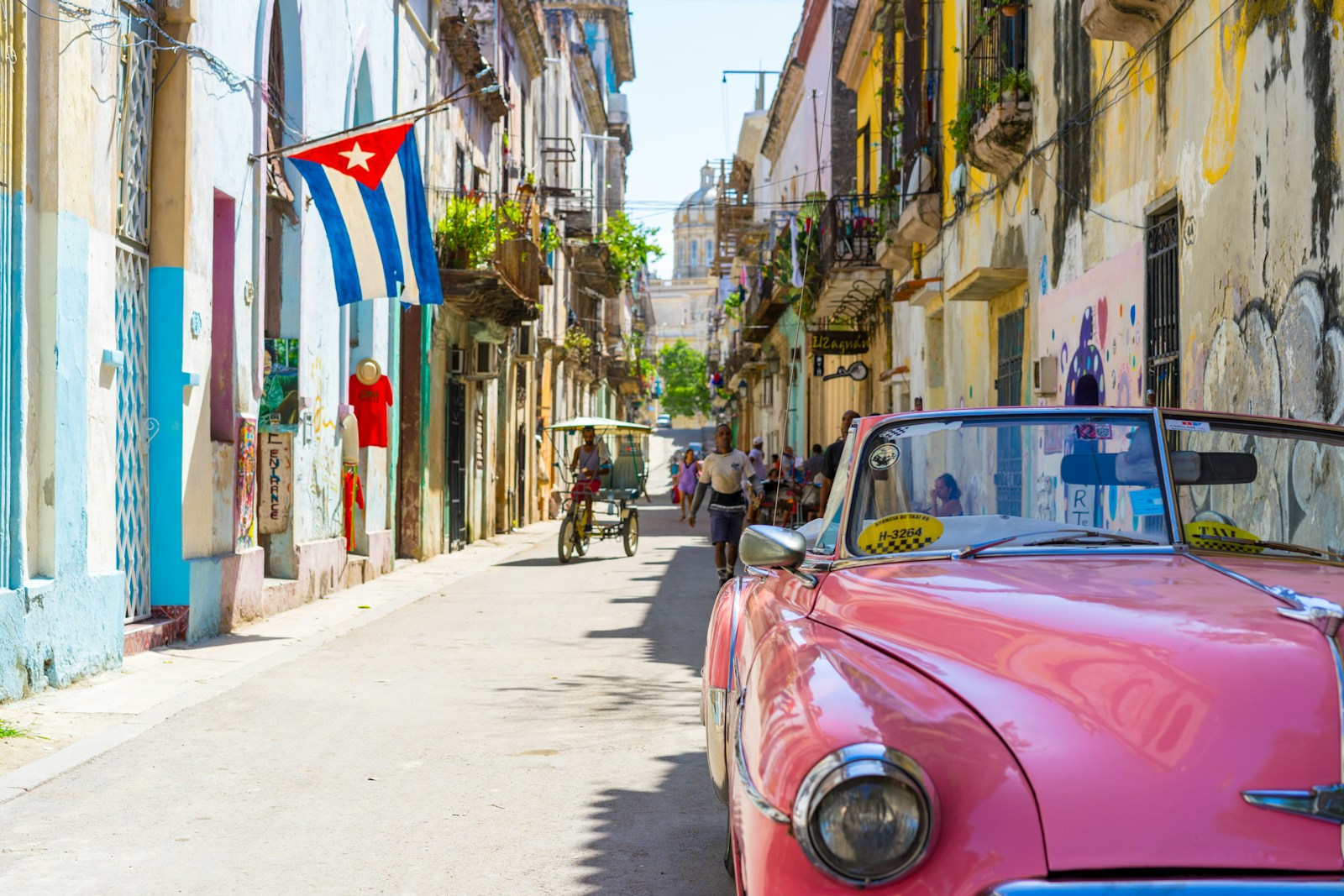
Havana is not a destination you consume. It's one that consumes you. The 1950s American cars — Chevrolets, Buicks, Plymouths, Fords — rolling past colonial facades in shades of turquoise and rose gold aren't a museum exhibit or a theme park attraction. They're the daily transportation of a city that was cut off from the outside world at the precise moment it had achieved a certain kind of splendor, and then left to maintain that splendor with whatever was available. The result is something no urban planner could have designed: a city that looks like a fever dream of mid-century America filtered through Spanish colonial architecture, Caribbean light, and sixty years of extraordinary resourcefulness. Every mechanic in Havana is an artist. Every crumbling building is a portrait. Every street corner has a soundtrack.
But Havana is also a city where the complexity runs deep, and the most honest travel writing about it has to acknowledge that. The beauty you're photographing exists alongside genuine hardship. The warmth of the Cuban people — and it is real, overwhelming, and not performative — exists in a context that has shaped and constrained their lives in ways that deserve more than a passing mention in a travel guide. The best way to honor Havana is to show up curious, informed, and willing to sit with the contradiction rather than resolve it into a comfortable Instagram caption. This guide is written for that kind of traveler.
Whether you're planning your first visit or returning after years away, whether you're coming from the United States navigating the legal categories or arriving from Europe with a straightforward tourist visa, Havana in 2026 rewards the traveler who comes prepared and leaves room for surprise. The city has changed — electricity shortages are more frequent, the economic situation has tightened, the e-Visa system replaced the old tourist card in mid-2025 — but the essential Havana, the one that gets under your skin and stays there, is exactly as it always was.
The Neighborhoods That Actually Define Havana
Most visitors spend their entire trip in Habana Vieja, the old colonial core, and while it's undeniably magnificent, it's also the most tourist-facing version of the city. Understanding Havana means understanding its neighborhoods as distinct worlds, each with its own character, its own relationship to the city's history, and its own version of daily Cuban life.
Habana Vieja (Old Havana) is the UNESCO World Heritage Site that anchors most itineraries, and for good reason. The four main plazas — Plaza de Armas, Plaza Vieja, Plaza de la Catedral, and Plaza de San Francisco de Asís — form a loose circuit that could occupy an entire day of slow walking. Plaza de la Catedral at dusk, when the light turns the limestone cathedral facade the color of aged honey and the outdoor tables fill with the first evening crowd, is one of those travel moments that becomes a permanent fixture in your memory. But the real Habana Vieja is the streets between the plazas — Calle Obispo with its bookshops and music spilling from doorways, the narrow lanes where laundry hangs between buildings and children play baseball with improvised equipment, the courtyards hidden behind heavy wooden doors that open onto entire worlds.
Vedado is where Havana becomes a different city entirely. The neighborhood was developed in the late 19th and early 20th centuries as the city expanded westward, and it has the feel of a mid-century Latin American capital — wide tree-lined boulevards, art deco apartment buildings, the grand Hotel Nacional perched on its bluff above the Malecón. This is where the Fábrica de Arte Cubano lives, where the University of Havana sits on its hill, where you'll find the Cementerio de Colón — one of the most extraordinary cemeteries in the Western Hemisphere, a city of elaborate marble tombs that tells the entire history of Cuban society. Vedado is quieter than Old Havana, more local, and significantly more interesting for the traveler who has already done the standard circuit.
Centro Habana sits between the two, and it's the neighborhood that most honestly reflects the texture of daily Havana life. The streets are busier, the buildings more worn, the energy more raw. It's not a neighborhood that's been polished for tourism, which is precisely why it's worth walking through. The Callejón de Hamel, a narrow alley in Centro decorated floor-to-ceiling in Afro-Cuban murals and sculpture, hosts rumba performances on Sunday mornings that are among the most genuinely moving musical experiences available anywhere in the city.
Miramar, across the Almendares River to the west, is where the embassies and the larger private residences are concentrated. It's less visited but worth the trip for the Tropicana cabaret — operating since 1939, an outdoor performance space under the stars that is simultaneously kitsch and spectacular — and for the sense of what Havana looked like to its wealthiest residents before 1959.
The Malecón: The Living Room of a City
No single piece of urban infrastructure in the world functions quite like the Malecón, the eight-kilometer seawall that runs along Havana's northern coast from Habana Vieja to Vedado. Built in stages between 1901 and 1952, it was designed as a promenade and a flood barrier. What it became is something far more significant: the communal living room of an entire city.
At sunset, the Malecón fills with a cross-section of Havana that you won't find anywhere else. Teenagers sit in clusters with guitars. Couples occupy every available stretch of wall. Fishermen cast lines into the churning sea below. Old men play dominoes on folding tables. Somewhere, always, there is music — not performed for tourists but played because music is as natural to Havana as breathing. The spray from the waves catches the last light and turns it into something briefly golden. If you stand there long enough, watching the city's social life unfold around you, you begin to understand something about what it means to live in a place where public space is genuinely shared.
Walk the Malecón at different times of day. In the morning, it's quiet — fishermen and early joggers. In the afternoon, it's deserted in the heat. At sunset, it comes alive. After midnight, it becomes something else entirely: the city's most democratic gathering place, where the rules of the day loosen and Havana reveals itself most honestly.
Music: The Architecture of the Air
To understand Havana without understanding its music is to miss the entire point. Cuban music is not a genre — it's a living system that has been evolving for five centuries, absorbing African rhythms, Spanish melodies, French contradance, American jazz, and its own internal innovations into something that has influenced virtually every popular music form in the Western world. Son, rumba, danzón, mambo, cha-cha-chá, bolero, timba — these are not historical artifacts. They are the living soundtrack of daily life in Havana.
The Casa de la Música in Miramar hosts some of the best live performances in the city, with both afternoon matinees and evening shows that draw serious musicians and serious audiences. La Zorra y El Cuervo, a jazz club on Calle 23 in Vedado, operates out of a basement accessed through a phone booth door — the kind of detail that feels invented but isn't — and hosts jazz sessions that run until the early morning hours. The Bar Dos Hermanos in Habana Vieja, one of the oldest bars in Cuba, has been hosting live music since the 1920s and maintains a quality that the more tourist-oriented venues rarely match.
And then there is the Fábrica de Arte Cubano — the FAC — which is in a category entirely its own. Opened in 2014 in a former cooking oil factory in Vedado, the FAC was conceived by musician X Alfonso as a space that would blur every boundary between art forms. On any given night, you might move between a photography exhibition, a contemporary dance performance, a film screening, a live concert, and a DJ set, all happening simultaneously in different parts of the vast industrial space. The FAC was named one of Time Magazine's 100 Best Experiences in the World, and it earns that distinction not through spectacle but through the genuine creative energy that fills it. It opens at 8 PM and doesn't really get going until 10. Plan accordingly.
Food: The Revolution That's Actually Happening
For decades, the honest answer to "where should I eat in Havana?" was "manage your expectations." The state-run restaurants operated under constraints that made culinary creativity nearly impossible. That has changed, and the change has been dramatic. The expansion of private enterprise in Cuba's food sector has produced a genuine restaurant scene in Havana — not at the level of Mexico City or Buenos Aires, but real, exciting, and worth planning around.
The paladares — privately owned restaurants that began operating legally in the 1990s and expanded significantly after 2011 — are where the best food in Havana is found. La Guarida, in a crumbling Habana Vieja mansion that served as the filming location for the 1993 film Fresa y Chocolate, remains the most famous and is worth the hype: the building alone, with its grand staircase and peeling grandeur, is worth the visit, and the food — Cuban-Mediterranean fusion with serious technique — is genuinely excellent. Book in advance. O'Reilly 304 is a smaller, more casual spot that does Cuban classics with a lightness and precision that the tourist-facing restaurants rarely achieve. The ropa vieja here — slow-braised shredded beef in tomato and pepper sauce — is the version against which all other versions should be measured.
For breakfast, the casa particular breakfast is the best option in the city: fresh fruit, eggs, strong Cuban coffee, bread, and often fresh juice, served in someone's home for a few dollars. It's also the most direct way to support Cuban families rather than state enterprises. For the best mojito in Havana — and therefore, arguably, on earth — the answer is not El Floridita, where Hemingway drank and the daiquiris are excellent but the tourist markup is severe. The answer is La Bodeguita del Medio on Calle Empedrado, where the mojitos are made with fresh mint, good rum, and the practiced efficiency of a bar that has been doing this since 1942.
A note on El Floridita, since it demands one: yes, it's expensive and crowded. It's also genuinely historic — opened in 1817, it's where Constantino Ribalaigua Vert invented the frozen daiquiri and where Hemingway spent enough afternoons between 1932 and 1960 that there's a bronze statue of him at the bar. The daiquiri Hemingway preferred — double rum, no sugar, extra lime, blended with grapefruit juice — is called the Papa Doble and is still on the menu. Have one. It's worth the price of admission.
The Classic Cars: More Than a Photo Opportunity
The vintage American cars that fill Havana's streets are the city's most photographed feature and, for many visitors, the most misunderstood. They are not a deliberate preservation effort or a tourist attraction that the Cuban government maintains for aesthetic purposes. They are the result of the US trade embargo, which cut Cuba off from American car imports in 1960 and left the island with a fleet of pre-revolutionary vehicles that Cuban mechanics have kept running through a combination of ingenuity, improvisation, and the kind of mechanical knowledge that comes from having no alternative.
The cars are maintained with Soviet-era parts, hand-fabricated components, and engines from a dozen different countries — a 1955 Chevrolet Bel Air might be running a diesel engine from a Soviet truck, fitted with a carburetor from a 1970s Lada, with bodywork repaired using techniques passed down through three generations of the same family. The result is a fleet of vehicles that are simultaneously authentic and entirely improvised, which is perhaps the most Cuban thing imaginable.
A classic car tour is one of the best ways to see the city, particularly for a first-time visitor. The open-top convertibles allow you to see the architecture at pace, and the drivers — who own and maintain their cars as their primary livelihood — are often among the most knowledgeable guides you'll find. Negotiate the price before you get in (expect USD $30–50 for a city loop), and don't hesitate to ask the driver to deviate from the standard route.
Day Trips: The Cuba Beyond Havana
Viñales, two hours west of Havana by colectivo (shared taxi, approximately $20 CUC each way), sits in a valley of extraordinary beauty — limestone mogotes rising from flat tobacco fields, the air thick with the smell of curing leaves, horses moving along red dirt roads. The Viñales Valley is a UNESCO World Heritage Site, and the designation is earned. The tobacco farms here produce some of the finest leaf in the world, and a guided tour of a working plantation is one of the most genuinely educational experiences available in Cuba. Stay overnight if you can; the valley at dawn, before the tour buses arrive, is one of the quieter glories of Cuban travel.
Trinidad, five hours from Havana by bus or colectivo, is the best-preserved colonial city in Cuba and one of the finest in the Caribbean. Founded in 1514, it was a center of the sugar trade and the slave trade that powered it, and the wealth generated during the 18th and 19th centuries produced a collection of colonial architecture that has been almost perfectly preserved. The cobblestone streets, the pastel facades, the Plaza Mayor with its terracotta rooftops — Trinidad looks like a city that time forgot, which is both its beauty and its complexity.
Practical Realities: What You Need to Know in 2026
Entry and visas: Cuba launched its e-Visa system in mid-2025, replacing the old paper tourist card. Apply through evisacuba.cu before your trip. Americans traveling under one of the 12 authorized categories must ensure their activities genuinely align with the chosen category. Travel insurance is mandatory by Cuban law; ensure you have documentation of coverage.
Money: American credit and debit cards do not work in Cuba — not in ATMs, not in restaurants, not anywhere. Bring all the cash you will need for the entire trip. Euros and British pounds exchange at better rates than US dollars (which carry an additional 10% surcharge). The only legal currency is the Cuban Peso (CUP); exchange at Cadeca offices or major banks rather than at the airport. Budget approximately $80–120 per day for a comfortable trip.
Accommodation: Casas particulares — private homestays — are the best option for most travelers. They are cheaper than hotels, more comfortable than the state-run options in the same price range, and the most direct way to ensure your money reaches Cuban families. Old Havana is the most convenient base for first-time visitors; Vedado is quieter and more local.
Connectivity: WiFi remains limited and unreliable. eSIM providers including GigSky and Kolet now offer Cuba data plans — install before you fly. Download offline maps and save all addresses before you arrive. The lack of connectivity is, in its own way, one of Havana's gifts: it forces you to be present in a way that smartphones have made increasingly rare.
Planning Your Havana Itinerary with Ask Leif
Havana rewards slow travel and spontaneity in equal measure, but having a framework helps — especially given the logistical complexity of visiting Cuba. The Ask Leif guides for Havana cover the full range of travel styles: the Havana First-Timer's 5-Day Cultural Immersion is the essential starting point, covering the major neighborhoods, the music scene, the food revolution, and the day trips in a sequence that makes geographic and experiential sense. For couples, the Havana for Two: A Romantic 4-Day Couples' Escape focuses on the city's most intimate and atmospheric experiences — rooftop dinners, sunset walks, private salsa lessons, the FAC after midnight. The Havana's Culinary Revolution: A 4-Day Food & Culture Itinerary goes deep on the paladar scene for the traveler whose primary language is eating. And for those working with a tighter budget, the Havana on a Budget: 4-Day Itinerary for €55/Day maps out exactly how to do it.
If you're building a broader Latin America trip, the Mexico City 5-Day Itinerary pairs naturally with Havana — both cities reward the traveler who comes curious about history and culture rather than just sights. The Tulum Couples Wellness Guide offers a completely different Mexican experience for those who want to extend their time in the region.
Havana is not an easy destination. It requires preparation, flexibility, and a willingness to be uncomfortable in ways that most travel doesn't demand. It also offers something that most travel can't: the experience of a city that has been, against all odds, preserved in a kind of amber — not by design but by circumstance — and that carries within it a beauty so specific, so unrepeatable, and so deeply human that it changes the way you think about cities, about history, and about what it means to be alive in a particular place at a particular time. Go. Go prepared. Go with your eyes open. And go soon, because Havana is changing, slowly and then all at once, and the version of it that exists right now will not exist forever.