Yellowstone with Kids: The Complete 5-Day Family Itinerary
The definitive 5-day Yellowstone family itinerary — Old Faithful, Grand Prismatic Spring, Lamar Valley wildlife safari, Grand Canyon of Yellowstone, and how to keep kids engaged in America's first national park.
- Duration: 5 Days
- Estimated Budget: $2,800–$4,500
- Best Time to Visit: June–Aug for best wildlife viewing and all roads open. July–Aug are busiest — arrive before 8 AM. September is excellent: fewer crowds, fall colors, active wildlife. Avoid May — many roads still closed.
- Destination: Yellowstone National Park, Wyoming
Yellowstone is the world's first national park, and it remains one of the most extraordinary places on earth — a volcanic hotspot where geysers erupt on schedule, rainbow-colored hot springs bubble at 200°F, and bison herds block traffic on roads that were carved through wilderness. Visiting with kids transforms the experience: the moment a child sees Old Faithful erupt for the first time, or watches a wolf pack cross the Lamar Valley at dawn, or peers into the Grand Canyon of the Yellowstone from Artist Point — these are the moments that shape a young person's relationship with the natural world. Five days is enough time to see the park's greatest highlights without rushing.
Yellowstone is a place where the earth is literally alive beneath your feet — where supervolcano activity creates the world's largest concentration of geysers, hot springs, and mud pots, where bison herds of thousands roam freely, and where wolves and grizzly bears live as they have for millennia. Take a boat ride across Yellowstone Lake, the largest high-altitude lake in North America, to truly appreciate the park's immense scale. No other place in the lower 48 states offers this combination of geological wonder and wildlife abundance in a single destination.
Five days in Yellowstone is the ideal length for families — long enough to see the major thermal basins, the Tower Fall area, and the wildlife-rich valleys, without the fatigue that comes from trying to cover too much ground. The park is larger than Rhode Island and Delaware combined, so the key is choosing your areas strategically rather than trying to drive every road. The southern loop (Old Faithful, Grand Prismatic, Hayden Valley) and the northern loop (Norris, Mammoth, Lamar Valley) each deserve two full days.
Yellowstone with kids is a different experience than Yellowstone without them — and in many ways a better one. Children who have never seen a geyser erupt, who encounter their first wild bison from 20 feet away, or who watch a wolf pack move across a snow-covered valley are experiencing something that changes how they see the natural world. This itinerary is built to maximize those moments: the thermal features that are genuinely awe-inspiring for all ages, the wildlife viewing spots that reliably deliver sightings, and the hiking trails that are accessible for young legs while still reaching spectacular viewpoints.
Old Faithful & the Upper Geyser Basin
Arrive at Old Faithful before the first eruption of the day. The visitor center opens at 8 a.m. — check the predicted eruption time on the board.
Old Faithful erupts every 60–110 minutes and shoots 3,700–8,400 gallons of boiling water 106–185 feet into the air. Seeing it with kids in the early morning light, with steam rising across the basin, is one of the most memorable experiences in American national parks.
Walk the Upper Geyser Basin boardwalk — 1.5 miles through the world's largest concentration of geysers.
The Upper Geyser Basin contains 25% of the world's geysers in a single square mile. The boardwalk takes you past Castle Geyser, Grand Geyser, and Morning Glory Pool — each one completely different and equally stunning.
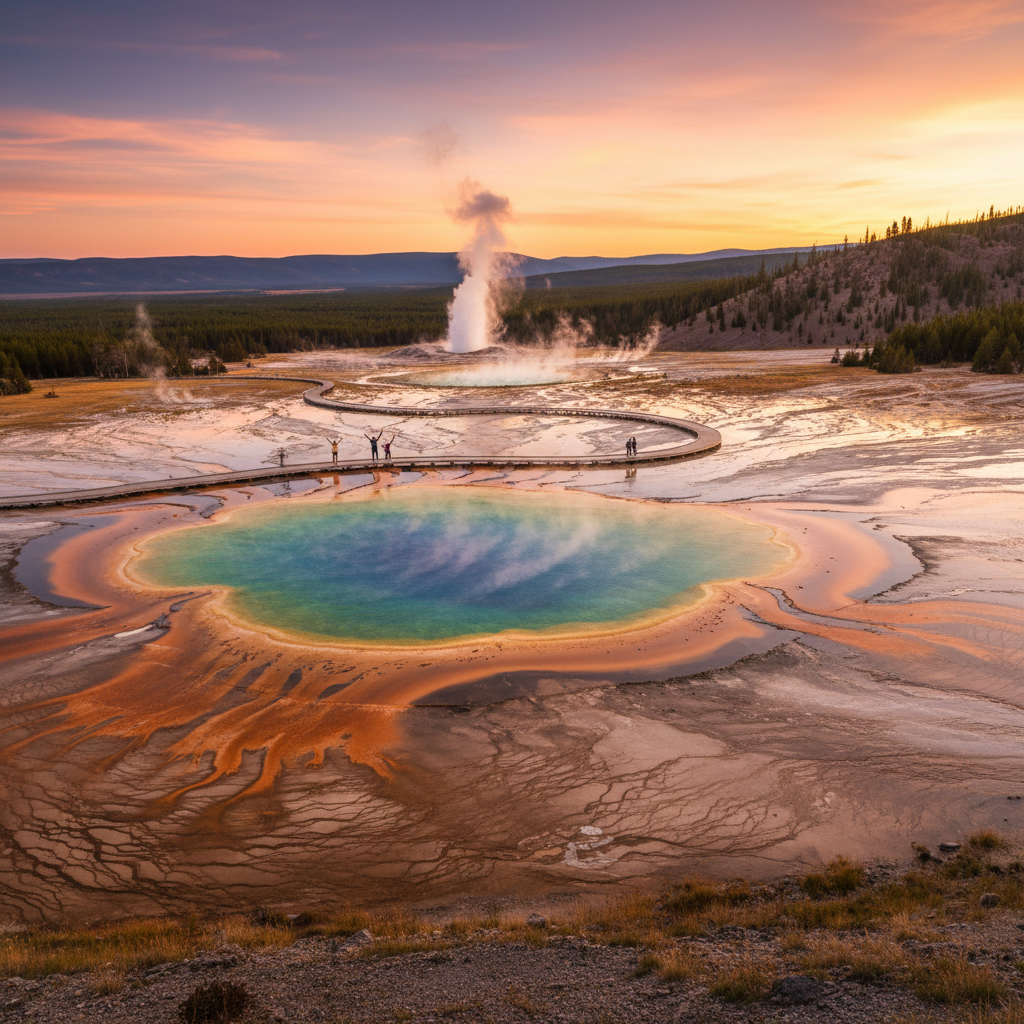
Drive to Midway Geyser Basin — home of the Grand Prismatic Spring, Yellowstone's most photographed feature.
Grand Prismatic Spring is 370 feet wide and 121 feet deep — the largest hot spring in the United States and the third largest in the world. The rainbow of colors (deep blue center, green, yellow, orange rings) comes from heat-loving bacteria and is unlike anything else on earth.
Lunch at Old Faithful Inn Dining Room — the most iconic restaurant in any national park.
Old Faithful Inn is a National Historic Landmark built in 1903–1904 from local lodgepole pine. The 76-foot lobby with its massive stone fireplace is one of the great interior spaces in America. Lunch here is an experience, not just a meal.
Norris Geyser Basin — the hottest and most dynamic thermal area in Yellowstone.
Norris contains Steamboat Geyser, the world's tallest active geyser (can reach 300–400 feet). The landscape here is more alien and dramatic than Old Faithful — acidic pools, hissing vents, and constantly changing features.
Wildlife watching at Hayden Valley during the golden hour — the best place in Yellowstone to see bison, wolves, and bears.
Hayden Valley is a broad glacial lake bed that's now a grassland — perfect habitat for Yellowstone's megafauna. At dawn and dusk, bison herds of hundreds cross the valley, and wolf packs are regularly spotted from the road. This is the Africa safari moment of Yellowstone.
Leif's Tip: Yellowstone's thermal features change constantly — geysers go dormant, new ones appear, and water temperatures shift. The rangers at each visitor center know what's active and worth seeing that specific day. Ask them every morning: 'What's the most interesting thing happening in the park right now?' The answer will surprise you.
Most visitors to Yellowstone arrive with a general idea of what they want to see, but the sheer scale and diverse ecosystems of the park can make daily planning overwhelming, especially with children. Deciding which geyser basin to explore before the crowds arrive, finding accessible trails that still offer breathtaking views for little legs, or knowing the best time of day to spot wildlife in Lamar Valley without endless driving are common dilemmas. You might wonder if you're missing a hidden gem, or if the trail you picked is too strenuous for your youngest adventurer. Leif eliminates this guesswork, crafting a seamless flow between the park's iconic thermal features, wildlife hotspots, and kid-friendly activities, ensuring your family experiences the park's magic without the stress of constant logistical decisions.
Midway Geyser Basin offers an unforgettable introduction to Yellowstone's wonders, especially when traveling with little ones. You'll have clear instructions on where to park, a suggestion for a short, scenic walk suitable for all ages, and even a note about the best spot for a family photo. Later, when the kids are getting restless, Leif seamlessly transitions your day to a picnic spot by Yellowstone Lake, complete with directions to a nearby ranger program designed for young naturalists, ensuring every moment is thoughtfully curated for engagement and enjoyment.
The crisp, pine-scented air of the Tetons filling your lungs as you watch a bison herd graze peacefully in Hayden Valley, knowing you've navigated the park's vastness with ease, is an unparalleled feeling. You won't be scrambling for information or second-guessing your choices; instead, you'll be fully present, sharing genuine moments of wonder with your family as you witness the raw power and beauty of this incredible landscape. Leif empowers you to fully immerse yourselves in the adventure, creating a journey where every turn brings a new discovery, and every evening ends with contented smiles and stories that will last a lifetime.
Best Time to Visit Yellowstone National Park, Wyoming
Late May–early June: wildflowers, active wildlife, manageable crowds, all roads open
September: fall colors, elk rut, thinning crowds, comfortable temperatures
July–August: peak season, all facilities open, but very crowded — book everything 12+ months ahead
Avoid Memorial Day weekend and 4th of July week — the most crowded days of the year
Getting Around Yellowstone National Park, Wyoming
A car is essential — Yellowstone has no public transportation and distances between major features are 20–60 miles
The Grand Loop Road (142 miles) connects all major attractions — plan your route to minimize backtracking
Wildlife jams (cars stopped for animal sightings) can add 30–60 minutes to any drive — build in buffer time
Gas stations inside the park are limited and expensive — fill up in gateway towns (West Yellowstone, Gardiner, Cody)
What to Pack
- Binoculars — essential for wildlife viewing, especially wolves and bears
- Layers for all weather — temperatures can swing 40°F in a single day
- Rain jacket — afternoon thunderstorms are common June–August
- Sturdy walking shoes — boardwalks are uneven and can be slippery
- Bear spray — required for any hiking off boardwalks
- Sunscreen and sunglasses — high elevation (7,000–8,000 feet) intensifies UV exposure
- Refillable water bottles — stay hydrated at altitude
Money-Saving Tips
- The $35 Yellowstone 7-day pass covers both Yellowstone and Grand Teton — combine the parks for maximum value
- Pack your own food for lunches — park restaurants are expensive and often have long waits
- Stay in gateway towns (West Yellowstone, Gardiner) for significantly lower accommodation costs
- The America the Beautiful annual pass ($80) covers all national parks for a year — worth it if visiting 2+ parks
Local Insights
- Rangers at each visitor center know what's happening that specific day — ask them every morning for current wildlife sightings and geyser activity
- The Yellowstone Volcano Observatory website tracks current geological activity — fascinating reading before your trip
- Lamar Valley is called 'America's Serengeti' — the best wildlife viewing in the continental US, especially at dawn and dusk
- The park's thermal features change constantly — geysers go dormant, new ones appear. What you see is unique to your visit
- Cell service is essentially nonexistent inside the park — download offline maps and the NPS Yellowstone app before you arrive
Frequently Asked Questions
When is the best time to visit Yellowstone with kids?
Late May–early June and September are ideal: crowds are manageable, wildlife is active, and temperatures are comfortable (50–75°F). July and August are peak season — the park is crowded but all facilities are open. Winter (December–February) offers snowcoach tours and incredible wildlife viewing but requires serious cold-weather preparation.
Is Yellowstone safe for children?
Yes, with proper precautions. Stay on boardwalks at all thermal features — the ground looks solid but can be a thin crust over boiling water. Maintain 25 yards from bison and elk, 100 yards from bears and wolves. Children under 8 should be held by the hand on all boardwalks. The park is very safe when rules are followed.
Do you need to book lodging inside the park far in advance?
Yes — Yellowstone lodging books up 12+ months in advance for summer. Old Faithful Inn, the most popular option, often sells out within days of the booking window opening (usually in May for the following year). If you can't get inside the park, West Yellowstone, MT and Gardiner, MT have good hotel options 30–60 minutes from major attractions.
What wildlife can you realistically expect to see?
Bison are virtually guaranteed — herds of hundreds roam freely throughout the park. Elk are common, especially in Mammoth Hot Springs. Bears (black and grizzly) are regularly spotted in Hayden Valley and Lamar Valley, especially in spring and fall. Wolves are seen in Lamar Valley most mornings by visitors with binoculars. Bring binoculars — they transform the wildlife experience.
What are the best hikes for families with young children?
Upper Geyser Basin boardwalk (1.5 miles, flat, paved) is perfect for all ages. Mystic Falls Trail (2.6 miles, 200 feet elevation) is manageable for kids 6+. Artist Point at the Grand Canyon of the Yellowstone (0.2 miles from parking) is the most dramatic viewpoint with minimal walking. Avoid backcountry trails with children under 10.
Can you see Old Faithful erupt multiple times in one day?
Yes — Old Faithful erupts every 60–110 minutes (average 90 minutes). In a full day at the Upper Geyser Basin, you can see 4–6 eruptions. The predicted eruption time is posted at the visitor center and on the NPS app. Each eruption is slightly different in height and duration — it's worth seeing more than once.