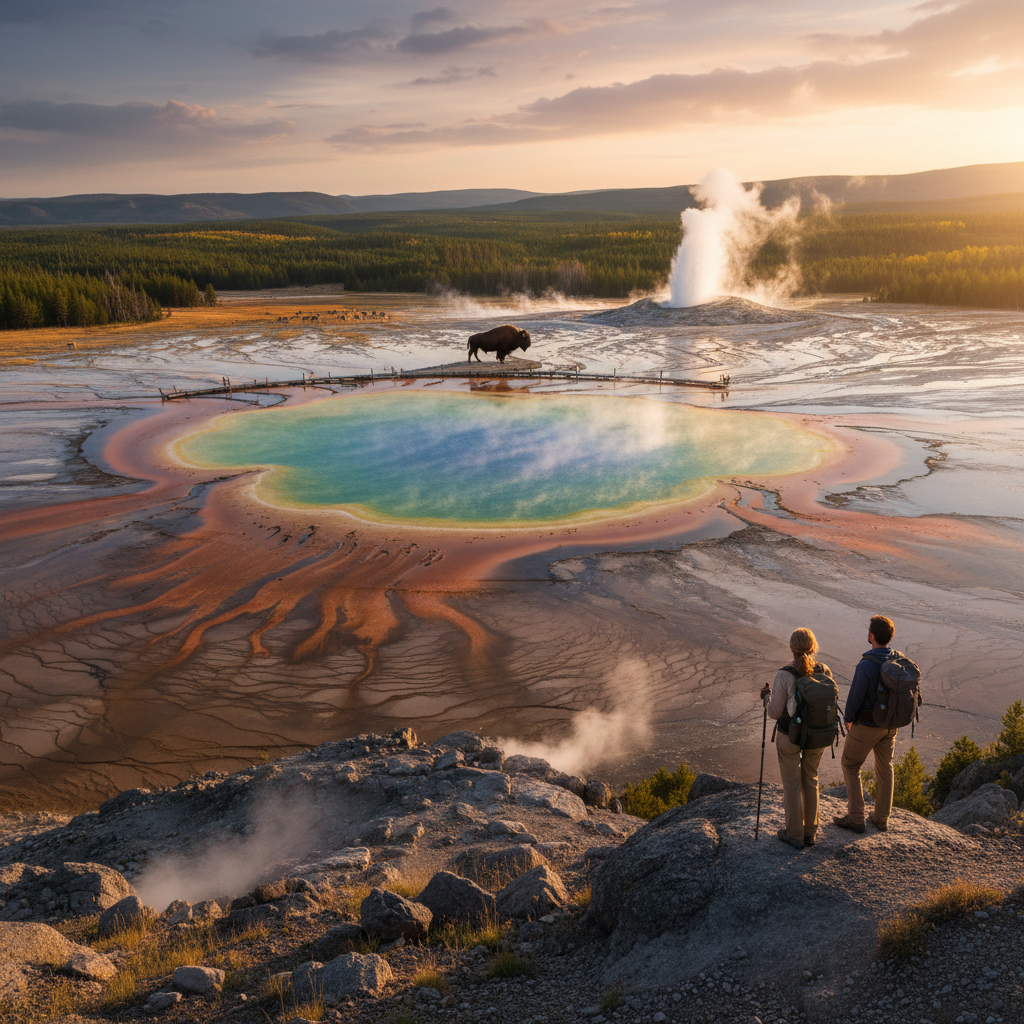
7-Day Yellowstone & Grand Teton: Solo/Couples Wildlife, Geyser & Backcountry Adventure
Embark on an epic 7-day Yellowstone and Grand Teton adventure for solo travelers or couples. Capture stunning wildlife, hike remote trails, and witness geysers.
- Duration: 7 Days
- Estimated Budget: $1,190–$1,960
- Best Time to Visit: Late spring (May-early June) for newborn wildlife and fewer crowds, or early fall (September-early October) for elk rut and vibrant foliage.
- Destination: Yellowstone National Park, Wyoming, USA
Yellowstone and Grand Teton beckon the intrepid solo adventurer and couples seeking raw, untamed beauty. This isn't just a trip; it's an immersive journey into the heart of the American wilderness, perfect for those who crave stunning wildlife photography, exhilarating hikes, and the quiet solitude of the backcountry.
In Yellowstone National Park, the crisp morning air carries the scent of pine and sulfur, alongside the steam rising from a geyser, and the promise of a day spent tracking wolves or hiking to a remote, pristine lake. Witnessing Old Faithful erupt is an experience that transcends mere tourism. Yellowstone and Grand Teton offer an unparalleled canvas for wildlife photographers, avid hikers, and those seeking the profound solitude of the backcountry.
This 7-day adventure is meticulously crafted for the solo traveler or couple eager to push beyond the boardwalks and discover the raw, untamed beauty of these iconic parks. We'll guide you to the best spots for capturing that elusive shot of a grizzly, lead you on trails less traveled, and reveal the secrets of Yellowstone's geothermal wonders. Prepare for early mornings, breathtaking sunsets, and memories that will last a lifetime.
From the dramatic peaks of the Tetons to the geothermal marvels of Yellowstone, every moment is designed to connect you deeply with nature. You'll learn the rhythms of the wild, understand the power of geological forces, and experience the thrill of true exploration. This isn't just sightseeing; it's an expedition into the soul of the American wilderness, offering unparalleled views of Old Faithful and its majestic eruptions.
Jackson Hole Welcome: Art, Wildlife, and Cowboy Charm
Arrive at Jackson Hole Airport (JAC) and pick up your rental car, which will be your trusty companion for this adventure.
Jackson Hole Airport offers stunning Teton views right from the runway, immediately immersing you in the grandeur of the region. A rental car is essential for exploring the vastness of Yellowstone and Grand Teton at your own pace.
Immerse yourself in the beauty of wildlife art at the National Museum of Wildlife Art, perched on a butte overlooking the National Elk Refuge.
This museum boasts an unparalleled collection of wildlife art from around the world, providing a deeper appreciation for the animals you'll soon encounter. It's a perfect prelude to your wildlife photography journey.
Embark on a magical sleigh ride through the National Elk Refuge, getting up close and personal with thousands of elk.
This unique winter experience allows you to observe these majestic creatures in their natural habitat from a safe and respectful distance. It's an unforgettable way to begin your wildlife encounters.
Enjoy a scenic float trip on the Snake River, offering opportunities to spot eagles, elk, and other riparian wildlife.
A float trip provides a serene and unique perspective of the Grand Teton landscape and its inhabitants. It's a relaxing way to experience the ecosystem and capture some beautiful waterside shots.
Experience the iconic Million Dollar Cowboy Bar, a true Jackson Hole institution with saddle barstools and live music.
This legendary watering hole offers a taste of authentic Western culture and a lively atmosphere. It's the perfect spot to unwind and soak in the local flavor after your travels.
Leif's Tip: Even though you're excited to start exploring, take some time to acclimate to the altitude in Jackson Hole (6,237 feet). Stay hydrated and avoid strenuous activity on your first day to prevent altitude sickness, ensuring you're fresh for tomorrow's adventures.
Most visitors to Yellowstone arrive with a general idea of what they want to see, only to find themselves overwhelmed by the sheer scale of the park, the unpredictable nature of wildlife, or the challenge of securing backcountry permits. You might spend hours researching the best time to photograph bison at Lamar Valley, only to miss the morning light because you underestimated the drive time or didn't know about a temporary road closure. Or perhaps you're keen on a multi-day hike to Shoshone Lake, but navigating the lottery system for campsites and understanding bear safety protocols feels like a full-time job. Knowing which trails offer the best chance for spotting bighorn sheep versus those frequented by elk, or how to avoid peak geyser viewing crowds, requires an insider's touch. This is precisely where Leif steps in, transforming potential frustrations into seamless adventures.
Snake River offers an unparalleled backdrop for your wildlife photography, especially as golden hour approaches, promising optimal lighting. You're set up with your telephoto lens, ready for the golden hour, having received a notification the night before about optimal light conditions and potential wildlife activity in the area. Leif has also factored in your preference for less-trafficked trails, suggesting a route to Uncle Tom's Trail that avoids the main rush, complete with detailed instructions on elevation changes and recommended gear for the day's weather. Later, when you're considering a spontaneous detour to Mammoth Hot Springs, Leif instantly provides an updated timeline, highlights key photographic opportunities, and even suggests a less-known, accessible viewpoint for unique perspectives, ensuring your day flows effortlessly.
The crisp, clean air of the Hayden Valley, carrying the scent of pine and damp earth, fills your lungs as you watch a lone wolf traverse the distant ridge. There's a profound sense of accomplishment and connection to the wild, knowing you've experienced Yellowstone not just as a tourist, but as an explorer, guided by insights that felt almost prescient. You've captured stunning images of elusive wildlife, hiked trails that offered solitude and breathtaking vistas, and understood the geothermal wonders on a deeper level, all without the stress of constant planning. Every sunrise and sunset feels earned, every geyser eruption a personal spectacle. You're not just visiting; you're living the Yellowstone experience, fully immersed and utterly prepared for whatever natural wonder awaits.
Best Time to Visit Yellowstone National Park, Wyoming, USA
Late Spring (May-early June): Wildlife is abundant, babies are out, and crowds are thinner than summer. Many roads are open but some higher elevation trails might still have snow.
Early Fall (September-early October): Crisp air, fewer crowds, and stunning fall foliage, especially in Grand Teton. Elk bugling season is in full swing, offering incredible photography opportunities.
Avoid Mid-Summer (July-August) if possible: While all park services are open, this is peak season with significant crowds, traffic, and fully booked accommodations. Wildlife viewing can be more challenging during midday.
For serious wildlife photography, consider shoulder seasons. Animals are more active and visible during cooler temperatures and at dawn/dusk.
Getting Around Yellowstone National Park, Wyoming, USA
Rent a car, preferably an SUV with good clearance, as it is absolutely essential for exploring both parks and accessing trailheads. Four-wheel drive isn't strictly necessary in summer/fall but can be helpful.
Fuel up whenever you see a gas station, especially before entering Yellowstone. Distances between services can be significant, and gas prices inside the park are higher.
Download offline maps for both Yellowstone and Grand Teton National Parks. Cell service is extremely spotty to non-existent in many areas, and you'll rely on these for navigation.
Factor in extra travel time for wildlife jams. When you see cars pulled over, it's usually for a reason – slow down and look for animals, but always pull completely off the road.
Consider a bear spray rental in Jackson or West Yellowstone if you're not bringing your own. It's a crucial safety item for backcountry hiking and can be returned at the end of your trip.
What to Pack
- Layered clothing (base, mid, outer) for fluctuating temperatures, even in summer.
- Waterproof hiking boots with good ankle support for varied terrain and potential stream crossings.
- Bear spray (and know how to use it!) for any hiking, especially in the backcountry.
- High-quality binoculars and a spotting scope for wildlife viewing from a distance.
- Telephoto lens (200mm or more) for wildlife photography, plus a wide-angle for landscapes.
- Headlamp or flashlight for early morning starts and navigating after dark.
- Reusable water bottle and a water filter/purifier for backcountry hydration.
- Sunscreen, hat, and sunglasses – the high altitude sun is intense.
Money-Saving Tips
- Pack a cooler with snacks, drinks, and ingredients for sandwiches. Park food is notoriously expensive and often mediocre. Picnics at scenic overlooks are a fantastic alternative.
- Purchase an America the Beautiful Pass if you plan to visit multiple national parks within a year. It covers entrance fees for both Yellowstone and Grand Teton.
- Book accommodations well in advance, especially if you're aiming for popular lodges like Old Faithful Inn. Last-minute bookings are often more expensive or unavailable.
- Consider camping or staying just outside the park gates (e.g., West Yellowstone, Gardiner) for more budget-friendly lodging options, though this adds to daily driving time.
- Bring your own coffee and a travel mug. A daily coffee run can add up quickly, and enjoying a hot cup while watching a geyser erupt is priceless.
Local Insights
- Always maintain a safe distance from wildlife (25 yards for most animals, 100 yards for bears and wolves). These are wild animals, and their behavior is unpredictable.
- Respect thermal features: Stay on boardwalks and marked trails. The ground around geysers and hot springs can be thin, scalding, and extremely dangerous.
- Be 'bear aware' on all hikes. Make noise, carry bear spray, and know how to react to an encounter. Store food properly in bear-resistant containers or hung from a tree.
- The best wildlife viewing times are dawn and dusk. Plan your drives and photography sessions around these periods for the highest chances of spotting animals.
- Roads in Yellowstone can close unexpectedly due to weather, wildlife, or construction. Always check the park's official website or app for current conditions before heading out.
Frequently Asked Questions
What's the best time of year for wildlife photography in Yellowstone and Grand Teton?
Late spring (May-June) offers newborn animals and lush landscapes, while early fall (September-October) brings the elk rut, vibrant foliage, and fewer crowds. Both seasons provide excellent opportunities, but fall often has more predictable weather for photography.
Do I need a special permit for backcountry hiking in Yellowstone?
Yes, overnight backcountry trips in Yellowstone require a permit, which can be reserved in advance or obtained as a walk-up. For day hikes, like the one to Shoshone Lake, no special permit is needed beyond your park entrance fee, but always check trail conditions with a ranger.
What kind of camera gear should I bring for this trip?
A telephoto lens (200mm-600mm) is essential for wildlife, a wide-angle for landscapes, and a sturdy tripod for low-light and long exposures. Don't forget extra batteries, memory cards, and protection from dust and moisture. A good pair of binoculars is also invaluable.
How challenging are the hikes on this itinerary?
The hikes range from easy strolls (Jenny Lake to Hidden Falls) to more strenuous, longer day hikes (Shoshone Lake). Most are moderate, requiring a good level of fitness. Always carry plenty of water, snacks, and layers, as mountain weather can change rapidly.
Is it safe to hike alone in Yellowstone's backcountry?
While many people hike solo, it's crucial to be prepared. Carry bear spray and know how to use it, inform someone of your itinerary, and be aware of your surroundings. Stick to marked trails and understand that cell service is extremely limited in the backcountry.
What's the best way to avoid crowds at popular spots like Grand Prismatic Spring and Old Faithful?
Arrive as early as possible, ideally before 8 AM, especially at Grand Prismatic Spring's overlook trail. For Old Faithful, try to catch the first eruption of the morning or the second eruption after a major one, as the crowds often thin out. Visiting in the shoulder seasons (May, early June, September, October) also helps significantly.
Can I really swim in Firehole River? Is it safe?
Yes, the Firehole River swimming area is a popular and officially sanctioned spot within Yellowstone, known for its geothermally warmed waters. It's generally safe, but always exercise caution, be aware of currents, and check for any posted warnings from park rangers. The water temperature can vary, but it's a unique and refreshing experience.