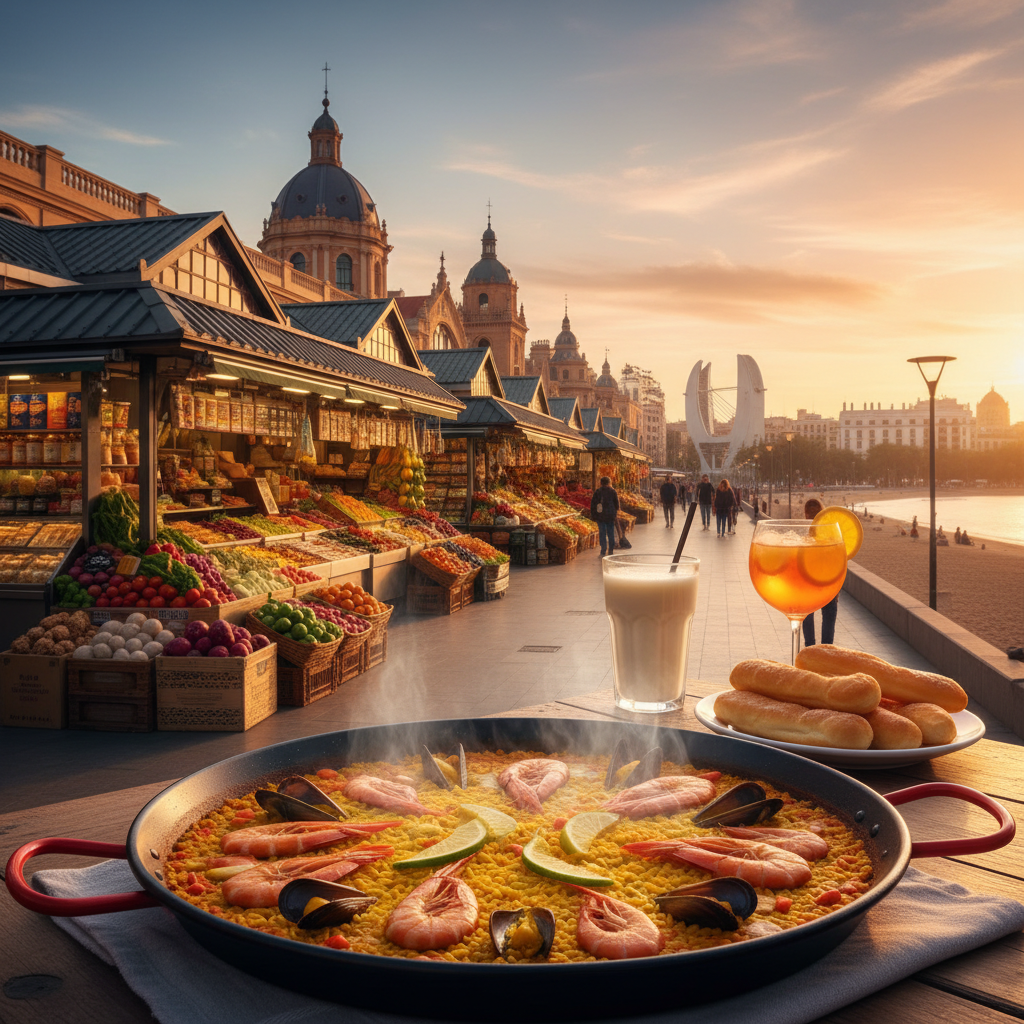
Valencia Food Guide: 4 Days of Paella, Horchata & Mercado Central Delights
Savor 4 days of authentic Valencian cuisine. This food guide takes you from paella's birthplace to the Mercado Central, horchata, and Agua de Valencia.
- Duration: 4 Days
- Estimated Budget: $600–$1,000
- Best Time to Visit: April-June and September-October for pleasant weather and fewer crowds.
- Destination: Valencia, Spain
Valencia's culinary identity is built on rice, citrus, and the Mediterranean, a heritage celebrated with near-religious fervor. This guide dives deep into the city's food scene, from the authentic paella Valenciana to the refreshing horchata and the vibrant Mercado Central, ensuring every bite is an experience.
The bustling aisles of a traditional market, with its vibrant array of fresh produce and the cheerful calls of vendors, is where your culinary journey truly begins. Imagine the aroma of sun-ripened citrus mingling with the savory scent of cured meats, a symphony for the senses that sets the stage for the city's deep connection to its agricultural roots. This isn't just a place to shop; it's a living museum of local flavors, a testament to generations of culinary heritage. You'll find yourself drawn into conversations with passionate stallholders, eager to share stories behind their wares, transforming a simple shopping trip into an immersive cultural exchange. It’s a sensory overload in the best possible way, inviting you to taste, touch, and discover.
Is it possible to truly experience the authentic local cuisine without falling into tourist traps? Here's the reality: many visitors gravitate towards convenient, but often inauthentic, dining options. The key lies in venturing slightly off the main thoroughfares and understanding the local rhythm of meals. Locals prioritize quality ingredients and traditional preparation, often favoring establishments that might appear unassuming from the outside. Knowing where to find these hidden gems, and when to visit them, makes all the difference. It's about seeking out the places where generations of families have gathered, ensuring your culinary exploration is rooted in genuine regional flavors, not manufactured experiences.
Food-focused travelers spend their afternoons delving into the nuances of regional specialties, from refreshing beverages to hearty stews. You'll find yourself savoring a unique, chilled drink made from an unexpected ingredient, a perfect respite from the Mediterranean sun, often accompanied by a light, sweet pastry designed for dipping. Later, the evening might lead you to a charming eatery tucked away in a historic quarter, where you'll discover a rich, slow-cooked dish, perhaps featuring freshwater delicacies, prepared with age-old techniques. This exploration isn't just about eating; it's about understanding the deep cultural significance behind each ingredient and preparation, connecting you to the very soul of the region.
A Taste of Valencia: Market Wonders & Paella Perfection
Begin your culinary adventure with a visit to the magnificent Mercado Central, one of Europe's oldest and most beautiful food markets. Wander through its bustling aisles, admiring the fresh produce, meats, and seafood.
This Art Nouveau masterpiece is a feast for the senses, offering a vibrant glimpse into Valencian daily life and its rich food culture. It's the perfect place to immerse yourself in the local atmosphere and discover unique ingredients.
Grab a freshly squeezed orange juice from one of the many stalls within the Mercado Central. Valencia is famous for its oranges, and this is the freshest you'll find.
Experience the true taste of Valencia's most iconic fruit, bursting with natural sweetness and vitality. It's an invigorating and authentic way to start your day.
Indulge in a jamón ibérico tasting at one of the specialized charcuterie stalls in the Mercado Central. Many offer free samples, allowing you to compare different cuts and curing times.
This is your chance to savor Spain's prized cured ham, a delicacy renowned worldwide for its rich flavor and melt-in-your-mouth texture. It's an essential Spanish culinary experience.
Head to Horchatería Santa Catalina, a historic establishment, for a traditional Valencian horchata with fartons. This refreshing drink made from tiger nuts is unique to the region.
Dive into Valencia's unique horchata culture at one of its oldest and most beloved horchaterías. It's a sweet, nutty, and incredibly refreshing experience unlike anything you've tasted.
Enjoy an authentic Paella Valenciana lunch at La Pepica, a legendary restaurant on Malvarrosa beach, famously loved by Hemingway. Savor the traditional chicken, rabbit, and bean paella.
You can't come to Valencia and not experience paella at its birthplace, and La Pepica offers a historic setting with a truly authentic recipe. It's the quintessential Valencian lunch experience.
Embark on a tapas crawl through the charming, historic streets of El Carmen. Start your evening at Bar Ricardo, known for its local vibe and excellent small bites.
El Carmen offers an atmospheric backdrop for an evening of authentic Valencian tapas, allowing you to sample a variety of local flavors in a lively setting. It's the perfect way to unwind after a day of exploration.
Leif's Tip: Embrace the Valencian pace of life today. Don't rush through your meals, especially lunch. Paella is meant to be savored slowly, often with good company, and it's a social event rather than just a meal. Take your time, enjoy the flavors, and soak in the atmosphere.
Valencia has a rich tapestry of culinary traditions, and knowing which specific eatery offers the most authentic version of a particular dish can be the difference between a good meal and an unforgettable one. The city's food scene, while incredibly rewarding, can be challenging to navigate without insider knowledge. Distinguishing between a tourist-oriented spot and a beloved local institution, understanding the nuances of meal times, or even knowing the best day to visit a market for peak freshness, requires a level of local insight that goes beyond a quick online search. This is precisely where many travelers feel overwhelmed, trying to piece together recommendations from disparate sources, often leading to missed opportunities for truly exceptional dining experiences.
When you're standing in the vibrant heart of the city, perhaps near the historic Lonja de la Seda, and you're wondering where to find the most exquisite local pastries to accompany your mid-morning coffee, Leif has already anticipated your craving. Say you've spent the morning exploring and now you're ready for a light, authentic lunch, but you're not sure which small, family-run eatery will offer the freshest catch of the day without being overly crowded – Leif has a curated suggestion ready for you. You won't waste precious time endlessly scrolling through reviews or wandering aimlessly; instead, you'll be guided directly to a charming, unpretentious spot known for its impeccable seafood and warm atmosphere, ensuring every meal is a discovery.
The difference is tangible: you'll arrive in this sun-drenched city with a clear, delicious roadmap, confident that every bite and sip will be an authentic taste of the region. Instead of feeling anxious about making the 'right' choice, you'll be savoring a perfectly prepared dish at a restaurant cherished by locals, or enjoying a refreshing drink at a historic establishment, knowing you're experiencing the city's culinary soul. Arriving in Valencia with this level of preparation already done means you can fully immerse yourself in the flavors, the aromas, and the vibrant culture, transforming your trip into a seamless, gastronomic adventure that feels both effortless and deeply rewarding.
Best Time to Visit Valencia, Spain
Spring (April-May) offers pleasant temperatures and fewer crowds, ideal for outdoor dining and market browsing.
Autumn (September-October) is another excellent choice, with comfortable weather and the grape harvest season adding to the culinary atmosphere.
Avoid July and August if possible, as temperatures can be very high, making midday paella a bit intense.
The Fallas festival in March is vibrant but incredibly busy; book everything well in advance if you plan to visit then.
For the freshest produce at Mercado Central, aim for a morning visit, especially on weekdays.
Getting Around Valencia, Spain
Valencia's city center is very walkable, especially the areas around Mercado Central and El Carmen, so comfortable shoes are a must.
For trips to La Pepica or La Marcelina on Malvarrosa beach, the tram (line 4 or 6) or bus (lines 19, 31, 32) are convenient and affordable.
To reach El Palmar in Albufera, take bus line 25 from the city center; it's a scenic and budget-friendly option.
Consider using a Valencia Tourist Card for unlimited public transport and discounts on some attractions, though for a food-focused trip, its value depends on how many non-food sights you plan to visit.
Taxis and ride-sharing apps are readily available for late-night returns from El Carmen or if you prefer direct transport.
What to Pack
- Comfortable walking shoes for exploring markets and neighborhoods.
- Light, breathable clothing for warm days, especially in spring and autumn.
- A light jacket or cardigan for cooler evenings, particularly if dining outdoors.
- A reusable water bottle to stay hydrated while exploring.
- A small bag or tote for carrying market purchases like fresh oranges or chufas.
- Sunscreen and a hat, as the Valencian sun can be strong even outside of summer.
- A portable charger for your phone, especially if using it for navigation and food photography.
- An appetite – this is a food trip, after all!
Money-Saving Tips
- Embrace the 'menu del día' (set lunch menu) offered by many restaurants, especially outside the main tourist areas, for excellent value.
- Buy fresh produce, jamón, and snacks from Mercado Central for delicious and affordable picnic options.
- Opt for horchata and fartons for a cheap and authentic breakfast or afternoon snack.
- Take advantage of free samples at Mercado Central, especially for jamón ibérico.
- Many tapas bars offer great value, especially if you share a few dishes rather than ordering individual full meals.
Local Insights
- Always eat paella for lunch, never dinner; ordering it at night is a surefire way to mark yourself as a tourist.
- When ordering horchata, ask for 'horchata con fartons' to get the traditional elongated pastries for dipping.
- Don't be afraid to ask for recommendations from locals at the Mercado Central; they're often happy to share their favorites.
- Valencians dine late; lunch is typically between 2 PM and 4 PM, and dinner rarely starts before 9 PM.
- The 'socarrat' (crispy bottom layer of paella) is highly prized; if you get a good one, consider it a culinary triumph.
Frequently Asked Questions
What's the best way to get to the Albufera Natural Park for paella?
Take the EMT city bus line 25 from the city center (e.g., from outside the Estació del Nord). It's a direct and inexpensive ride, taking about 30-40 minutes to reach El Palmar village, where many traditional paella restaurants are located. The bus runs regularly throughout the day.
Can I find vegetarian paella in Valencia?
While traditional Paella Valenciana contains meat, many restaurants now offer vegetarian paella options, often called 'paella de verduras' (vegetable paella). It's always best to inquire when booking or ordering to ensure it meets your dietary needs. Look for restaurants that specifically advertise it.
What's the difference between Valencian horchata and Mexican horchata?
Valencian horchata (orxata) is made from tiger nuts (chufa), water, and sugar, resulting in a slightly nutty, earthy, and refreshing drink. Mexican horchata is typically made from rice, cinnamon, and vanilla, giving it a sweeter, creamier, and distinctly different flavor profile. They are entirely different beverages.
Is it true that Valencians only eat paella for lunch?
Yes, absolutely. For Valencians, paella is a lunch dish, often enjoyed on Sundays with family. Ordering paella for dinner is considered culturally unusual and might mark you as a tourist. Stick to other local specialties for your evening meals.
What is 'socarrat' and why is it important for paella?
Socarrat is the delicious, slightly crispy, caramelized layer of rice that forms at the bottom of the paella pan. It's a highly prized part of the dish, indicating a perfectly cooked paella, achieved by allowing the rice to toast slightly without burning. True paella connoisseurs always seek out the socarrat.
Where can I try 'Agua de Valencia' authentically?
For an authentic experience, head to Café Madrid, the bar where it was invented in 1959. Another excellent option is Café de las Horas, known for its beautiful, eclectic decor and expertly mixed cocktails. Both offer a classic rendition of this cava, orange juice, vodka, and gin concoction.
Are the food markets open every day?
The main food markets, like the Central Market, are typically open Monday through Saturday, usually from early morning until mid-afternoon (around 2:30 PM or 3 PM). They are generally closed on Sundays and public holidays. Always check specific opening hours before you visit.