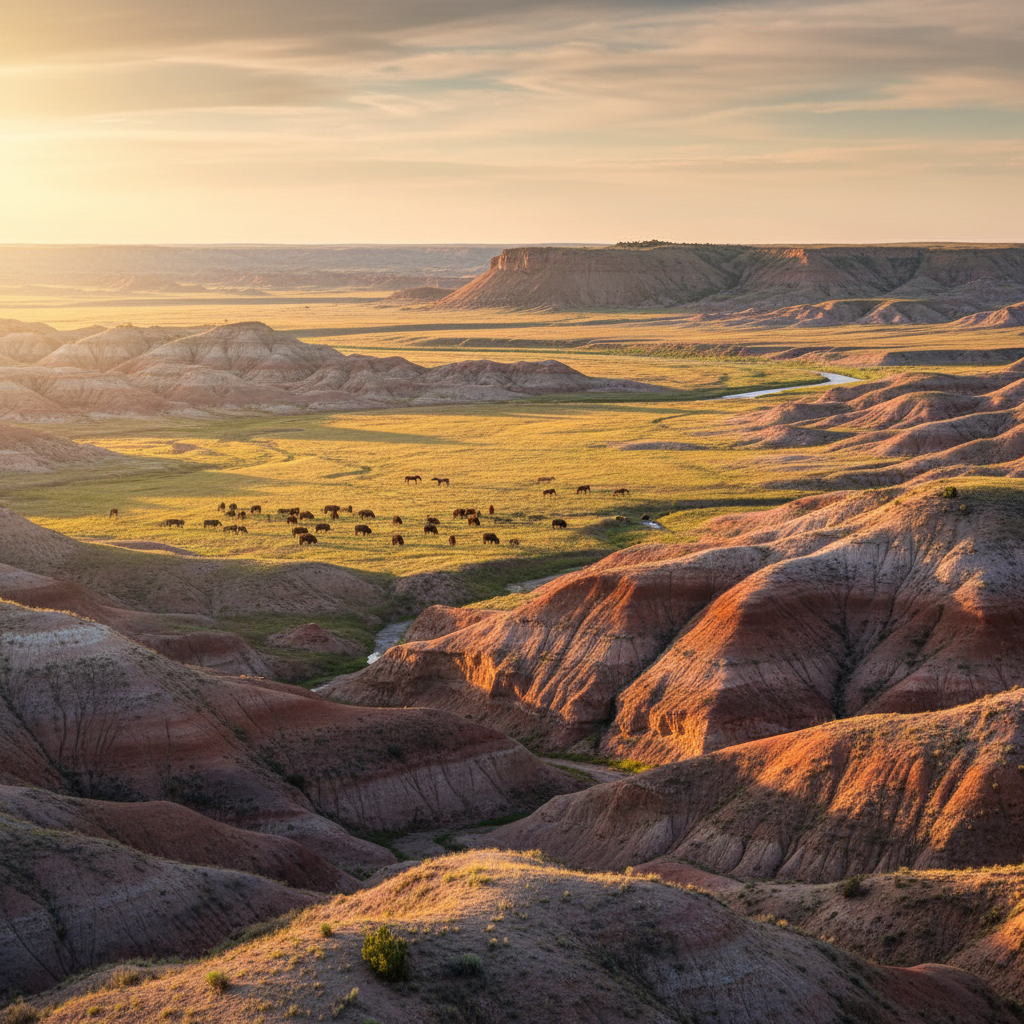
Theodore Roosevelt National Park: 2-Day Badlands & Wildlife Adventure
Uncover the wild heart of Theodore Roosevelt National Park in this 2-day guide, focusing on badlands, bison, and the best wildlife viewing in North Dakota.
- Duration: 2 Days
- Estimated Budget: $220–$500
- Best Time to Visit: May-June and September-October for ideal weather and wildlife viewing (bison calves born April-May).
- Destination: Theodore Roosevelt National Park, North Dakota, USA
Prepare for an unforgettable journey into the dramatic badlands of Theodore Roosevelt National Park, where the spirit of the American West lives on. This guide is your ticket to experiencing North America's most underrated wildlife-watching destination, a place where bison roam free and wild horses gallop across the prairie, all set against a stunning backdrop of colorful buttes and ancient petrified forests. Get ready to connect with nature on a profound level, far from the crowds.
Theodore Roosevelt National Park, often overlooked, offers an unparalleled wildlife spectacle where bison herds graze against a backdrop of painted badlands, and wild horses gallop across the prairie. This isn't some far-flung, overcrowded safari destination; it's Theodore Roosevelt National Park in North Dakota, arguably the most underrated wildlife-watching national park in America. Here, the dramatic landscape, carved by wind and water into colorful buttes and petrified forests, provides a stunning stage for an incredible array of animals. You'll find yourself immersed in a living history lesson, walking in the footsteps of Theodore Roosevelt himself, whose experiences here profoundly shaped his conservation philosophy and ultimately led to the creation of our beloved National Park Service. It's a place where you can explore the historic Maltese Cross Cabin, offering a tangible link to Roosevelt's time in the badlands, waiting to be discovered without the usual crowds.
What truly sets Theodore Roosevelt National Park apart for wildlife enthusiasts is the sheer abundance and accessibility of its inhabitants. Unlike many parks where spotting animals feels like a rare privilege, here, encounters are almost guaranteed. Picture yourself driving the South Unit's Scenic Loop, and suddenly, a massive bison herd ambles across the road, their shaggy forms silhouetted against the badlands. Or perhaps you'll catch a glimpse of wild horses, their manes flowing in the wind, near the Peaceful Valley Ranch. Even the park's prairie dog towns are a delight, with these charismatic rodents popping up from their burrows, chattering their warnings. This isn't just a park; it's a vibrant ecosystem where you're a welcomed observer, not an intruder, making every moment an unforgettable wildlife spectacle.
Beyond the charismatic megafauna, the park offers a unique blend of rugged beauty and serene solitude. The North Unit, with its dramatic Oxbow Overlook and the geological marvels of Cannonball Concretions, feels like stepping onto another planet. Here, you might spot elusive bighorn sheep scaling the steep cliffs or even the park's resident longhorn herd, a living testament to the region's ranching heritage. The lack of crowds means you can truly connect with nature, hearing only the wind and the calls of the wild. Whether you're an avid photographer, a nature lover, or simply seeking an escape from the everyday, Theodore Roosevelt National Park promises an authentic, intimate encounter with America's wild heart, leaving you with memories that will last a lifetime.
Badlands Immersion: Bison, Wild Horses, and Painted Canyons
Your first glimpse of the Badlands begins at the breathtaking Painted Canyon Overlook, a free rest area just off I-94.
This is arguably the most dramatic and accessible view in the entire park, offering a sweeping panorama of the vibrant, sculpted badlands. It's the perfect introduction to the unique geology and scale of Theodore Roosevelt National Park.
Embark on the 36-mile South Unit Scenic Loop Drive, the best way to experience the park's diverse landscapes and abundant wildlife.
This loop is your best bet for encountering the park's iconic bison herds, often grazing right alongside the road. Keep your eyes peeled for wild horses, bighorn sheep, and prairie dog towns.
Stretch your legs on the short but rewarding Ridgeline Trail, offering fantastic views of the badlands.
This 0.4-mile loop is an easy hike that provides elevated perspectives of the rugged terrain you've been driving through. It's a great way to feel truly immersed in the landscape without a strenuous trek.
Explore the charming town of Medora, the gateway to the South Unit, known for its Old West ambiance.
Medora offers a delightful step back in time with its historic buildings and friendly atmosphere. It's the perfect place to grab dinner and soak in the local culture after a day of wildlife viewing.
Experience the legendary Medora Musical, an outdoor variety show celebrating the spirit of the Badlands.
This high-energy, family-friendly show is a North Dakota institution, featuring singing, dancing, and patriotic tributes under the stars. It's a unique cultural experience that captures the essence of the region.
Leif's Tip: Keep your camera ready at all times on the Scenic Loop Drive! Wildlife, especially bison and wild horses, can appear suddenly. Also, consider bringing a good pair of binoculars to spot animals further off in the distance and enhance your viewing experience.
Most visitors to the badlands struggle to balance the vast distances between the North and South Units with prime wildlife viewing times, often missing the best light for photography or arriving when animals are less active. You might find yourself driving for hours only to discover a scenic overlook is closed for maintenance, or worse, you've missed the seasonal migration of certain bird species. Deciphering the subtle signs of bison herds moving across the prairie, or knowing the optimal spots to glimpse wild horses without disturbing them, requires local insight that guidebooks rarely provide. Then there's the challenge of finding suitable lodging or dining options that aren't a significant detour from your planned route, especially when cell service is spotty. These are precisely the complex, real-world travel dilemmas Leif navigates for you, ensuring your adventure unfolds seamlessly.
South Unit, with Leif as your guide, transforms into an unforgettable canvas of Badlands beauty and wildlife encounters. Leif's guidance ensures you're positioned perfectly to witness the first rays of light illuminate the vibrant geological formations, and then provides a route that maximizes your chances of spotting a bachelor herd of bison grazing in the valley below. Instead of fumbling with maps or relying on outdated information, you receive precise, turn-by-turn directions to the best wildlife viewing areas within the South Unit, complete with real-time updates on recent animal sightings and suggested pull-offs for optimal photography. This allows you to focus entirely on the experience, knowing every detail, from the best hiking trails to the nearest accessible restroom, has been meticulously planned.
The crisp, earthy scent of sagebrush and the distant call of a meadowlark greet you as you step out, fully prepared for the day's explorations. You arrive at each destination with a sense of calm confidence, knowing exactly what to expect and what hidden gems await. No longer do you worry about missing a crucial turn or wasting precious daylight searching for a specific viewpoint. This preparation translates into more meaningful encounters with the park's inhabitants, more time absorbing the raw beauty of the badlands, and a deeper connection to this remarkable landscape. You'll leave Theodore Roosevelt National Park with a collection of vivid memories and stunning photographs, ready to share the story of your perfectly orchestrated adventure.
Best Time to Visit Theodore Roosevelt National Park, North Dakota, USA
May and June offer the best chance to see bison calves, a truly heartwarming sight, and the weather is generally pleasant for hiking.
September and October provide cooler temperatures, fewer crowds, and the possibility of fall foliage, making for comfortable wildlife viewing.
Avoid mid-summer (July-August) if possible, as temperatures can be very hot, and the park can be busier, though still less crowded than other national parks.
For the ultimate wildlife experience, plan your visits to the scenic drives and overlooks during dawn and dusk when animals are most active.
Getting Around Theodore Roosevelt National Park, North Dakota, USA
A rental car is absolutely essential for exploring Theodore Roosevelt National Park; public transportation is non-existent, and the units are far apart.
Be prepared for significant driving distances between the North and South Units (about an hour's drive), so factor this into your daily planning.
Keep your gas tank full, especially before heading to the North Unit, as services are limited once you leave towns like Medora.
Drive slowly on park roads, especially at dawn and dusk, as wildlife frequently crosses the roads without warning.
What to Pack
- Binoculars are a must-have for wildlife spotting; you'll want to get a closer look at those bison and wild horses.
- Layers of clothing are key, as temperatures can fluctuate dramatically between morning, midday, and evening in the badlands.
- A wide-brimmed hat, sunglasses, and high-SPF sunscreen are crucial for protection against the strong North Dakota sun.
- Sturdy hiking shoes with good ankle support are recommended for exploring trails, as terrain can be uneven.
- A reusable water bottle to stay hydrated; water sources can be limited, especially on longer hikes.
- A good camera with a zoom lens to capture those incredible wildlife moments and vast landscapes.
- Snacks and picnic supplies, as dining options within the park are very limited, especially in the North Unit.
Money-Saving Tips
- Consider staying at Cottonwood Campground in the South Unit ($14/night) for an authentic experience and to save on lodging costs; bison often wander through!
- Pack a cooler with groceries and make your own meals and picnics; restaurant options in Medora can add up quickly.
- Purchase an America the Beautiful Pass if you plan to visit multiple national parks within a year, as it will save you money on entrance fees.
- Take advantage of the free Painted Canyon Overlook; it offers an incredible view without requiring park entry, perfect for a quick stop.
Local Insights
- Always maintain a safe distance from wildlife, especially bison and wild horses; they are wild animals and can be unpredictable.
- The Medora Musical is a North Dakota institution; while it's an extra cost, it's a unique and highly entertaining experience that many visitors cherish.
- Cell service can be spotty to non-existent in many parts of the park, so download offline maps and information before you go.
- Even though it's underrated, the park does get visitors; start your scenic drives early in the morning to beat any potential crowds and increase wildlife viewing opportunities.
- Don't underestimate the size and ruggedness of the park; plan your activities realistically and allow ample time for driving and exploring.
Frequently Asked Questions
What's the best way to guarantee seeing bison and wild horses?
For bison, your best bet is the South Unit Scenic Loop Drive, especially in the early morning or late afternoon. They frequently cross the road and graze near the prairie dog towns. Wild horses are often spotted near the Peaceful Valley Ranch area within the South Unit, but they can be more elusive. Patience and a good pair of binoculars are key for both!
Is it worth visiting both the North and South Units, or should I just pick one?
Absolutely visit both! They offer distinct experiences. The South Unit is more accessible and has higher chances for bison and wild horse sightings, plus the charming town of Medora. The North Unit, though a 60-mile drive, boasts more dramatic, rugged badlands scenery at places like Oxbow Overlook and unique geological features like the Cannonball Concretions. You'd miss out on half the park's magic by skipping one.
What's the best time of year to visit for wildlife viewing and good weather?
May-June and September-October are ideal. In May and June, you'll have a chance to see adorable bison calves, and the weather is generally pleasant. September and October offer cooler temperatures, fewer bugs, and often stunning fall colors, making for comfortable hiking and excellent wildlife activity. Avoid mid-summer if you dislike heat and crowds (though 'crowds' here are relative!).
Are there any easy hikes suitable for all fitness levels with good views?
Yes! In the South Unit, the Ridgeline Trail (0.4 miles) offers fantastic, sweeping views of the badlands with minimal effort. In the North Unit, while many trails are longer, even just walking a short distance from the Oxbow Overlook provides breathtaking scenery. For a slightly longer but still manageable option, part of the Caprock Coulee Trail is relatively flat at the beginning.
What should I bring for a day of wildlife watching in the park?
Binoculars are non-negotiable for spotting distant animals. A good camera with a zoom lens will also enhance your experience. Don't forget plenty of water, snacks, sunscreen, a hat, and layers of clothing, as the weather can change quickly. A park map and a full tank of gas are also essential, especially for the North Unit drive.
Is Medora a good base for exploring the park, and what's the Medora Musical like?
Medora is an excellent base, especially for the South Unit. It's right at the park entrance and offers charming amenities like the Rough Riders Hotel. The Medora Musical is a must-see! It's an outdoor, family-friendly variety show celebrating the history of the Badlands and Theodore Roosevelt, set against a beautiful backdrop. It's incredibly entertaining and a unique North Dakota experience.
Can I really expect to see wildlife within the Cottonwood Campground?
Yes, it's not uncommon at all! Cottonwood Campground, located inside the South Unit, is famous for bison frequently wandering right through the campsites. You might wake up to a bison grazing just yards from your tent. It's an incredible, immersive experience, but remember to always maintain a safe distance and never approach or feed the animals.