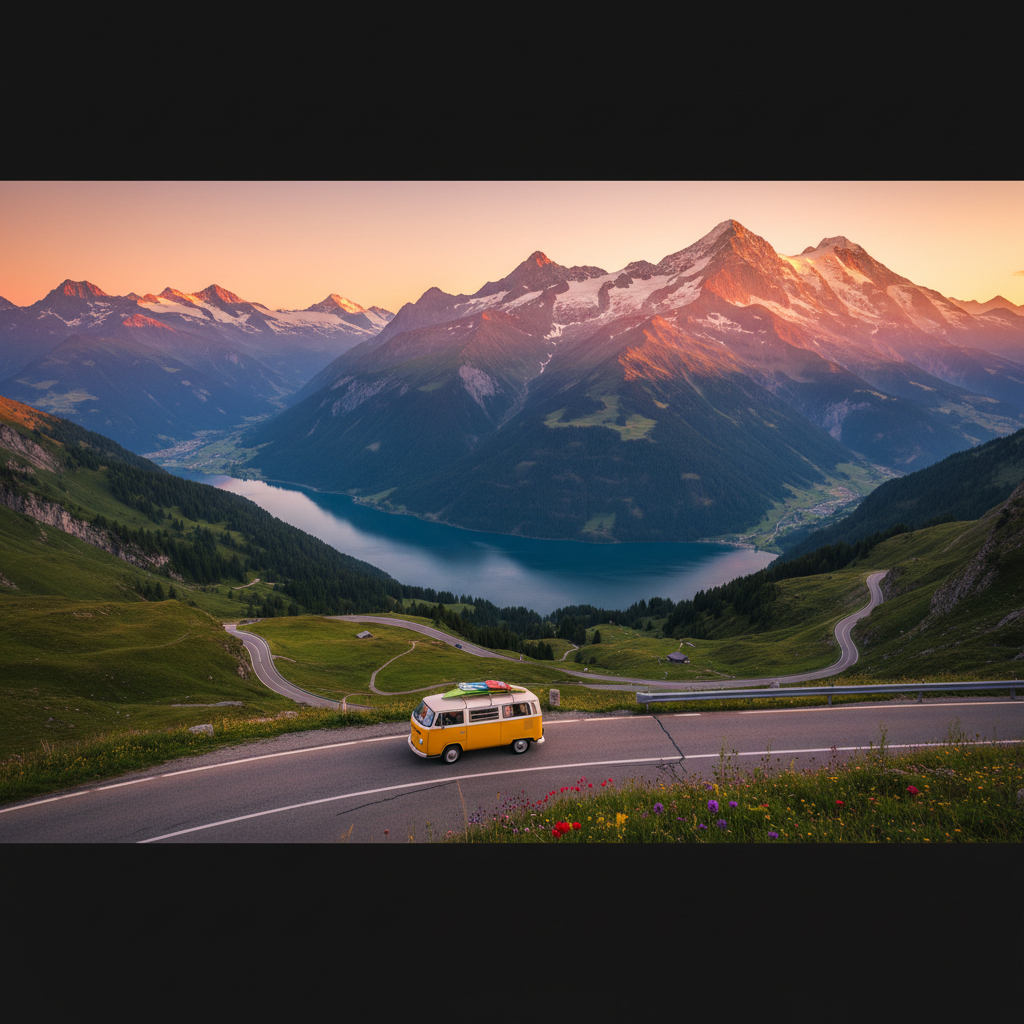
Swiss Alps Road Trip: 7-Day Scenic Adventure Through Switzerland's Peaks
Embark on an unforgettable 7-day road trip through the majestic Swiss Alps. Discover breathtaking landscapes, charming villages, and iconic passes.
- Duration: 7 Days
- Estimated Budget: $2,500–$4,500
- Best Time to Visit: June-September for clear mountain passes and hiking; December-March for winter sports.
- Destination: Swiss Alps, Switzerland
Driving the winding mountain passes near Interlaken, you'll glide... past turquoise lakes and storybook villages. A Swiss Alps road trip isn't just a journey; it's an immersive experience into nature's grandeur, offering unparalleled freedom to explore at your own pace. Now is the perfect time to discover the serene beauty and thrilling drives of this iconic region.
Your Swiss Alps adventure begins with a drive through emerald valleys, past chocolate-box villages, and up to the foot of majestic peaks like the Matterhorn and Jungfrau. This 7-day road trip through the Swiss Alps isn't just a drive; it's an immersive journey into a landscape that feels almost impossibly perfect. You'll have the freedom to pull over for impromptu photo ops, discover hidden mountain passes, and truly soak in the unparalleled beauty that Switzerland is famous for.
This itinerary is crafted for those who crave independence and adventure, allowing you to set your own pace while still hitting all the iconic highlights. From the glacial grandeur of Zermatt to the serene lakes of Interlaken and the charming streets of Lucerne, every turn of the road reveals a new postcard-perfect scene. Get ready to experience the Alps not just as a spectator, but as an active participant in its breathtaking drama.
Forget rigid schedules and crowded tour buses; with your own wheels, the Swiss Alps become your personal playground. You'll navigate scenic routes like the Grimsel Pass, discover local cheese farms, and find those secluded spots that larger groups simply can't reach. This is your chance to create unforgettable memories, one stunning vista and charming village at a time, all at your own rhythm.
Arrival in Interlaken: Gateway to Alpine Wonders
Arrive at Zurich Airport (ZRH), pick up your rental car, and begin your scenic drive towards Interlaken, the adventure capital of the Bernese Oberland.
Starting your journey from Zurich provides excellent flight options and the drive itself is a beautiful introduction to the Swiss landscape. Interlaken is perfectly situated between two stunning lakes, offering a picturesque base for your alpine adventures.
Check into your hotel in Interlaken and take some time to settle in and freshen up after your journey.
It's important to have a comfortable base to relax and unpack, setting a calm tone for the rest of your trip. Interlaken's central location makes it ideal for exploring the surrounding regions.
Stroll along Höheweg, Interlaken's main promenade, enjoying the views of Jungfrau mountain and the paragliders descending into the central park.
This iconic street offers breathtaking panoramic views of the surrounding mountains and the vibrant atmosphere of the town. It's a perfect way to get acquainted with Interlaken and feel the pulse of this adventurous hub.
Take a leisurely boat cruise on Lake Thun, departing from Interlaken West, offering stunning views of castles and charming lakeside villages.
This cruise provides a different perspective of the region's beauty, showcasing medieval castles like Oberhofen and Spiez against the backdrop of the Alps. It's a relaxing activity after a day of travel.
Enjoy an aperitif at the Grand Restaurant at Victoria Jungfrau Grand Hotel & Spa, soaking in the elegant ambiance and views.
This historic hotel offers a glimpse into Interlaken's luxurious past and provides a sophisticated setting for a pre-dinner drink. It's a lovely way to unwind and feel a bit pampered.
Leif's Tip: Upon arrival in Switzerland, make sure to pick up a local SIM card or activate an international roaming plan. Reliable data will be invaluable for navigation, checking train schedules, and finding local recommendations throughout your trip. Also, don't forget to exchange some currency for Swiss Francs, as not all smaller establishments accept cards.
Navigating the myriad of mountain passes, understanding seasonal road closures, and distinguishing between a scenic detour and a time-consuming dead end can turn planning a Swiss Alps road trip into a logistical puzzle. You're faced with choosing between the iconic but often crowded routes and the lesser-known, equally breathtaking alternatives. Deciphering which charming village offers authentic local experiences versus those catering solely to mass tourism, or how to seamlessly integrate a spontaneous cable car ride into a tight driving schedule, requires a depth of knowledge few possess before arrival. This is precisely where a personalized plan becomes invaluable, transforming potential frustrations into effortless exploration.,Jungfrau offers more than just stunning views; your personalized Ask Leif guide ensures every detail of your visit is effortlessly managed. It anticipates the optimal parking spots near the cable car station, provides alternative routes if a pass is unexpectedly closed due to weather, and even highlights a secluded viewpoint overlooking the Rhone Valley that most guidebooks miss. You won't be fumbling with maps or endlessly searching for reliable information; every turn, every stop, and every breathtaking vista is thoughtfully integrated into your day.,The crisp, clean air, carrying the scent of pine and distant wildflowers, fills your lungs as you pull over at a panoramic viewpoint, completely confident in your route. You've just navigated a challenging mountain pass with ease, knowing that the next charming guesthouse, hand-picked for its authentic Swiss hospitality, is just around the corner. This isn't just about driving from point A to point B; it's about experiencing the rhythm of the Alps, savoring each moment without the stress of uncertainty. Your journey through Switzerland will unfold with a natural grace, allowing you to fully immerse yourself in its unparalleled beauty. <p><strong>Planning a Switzerland trip?</strong> Read our full guide: <a href="/blog/switzerland-travel-guide-alps-interlaken-zermatt-complete">Switzerland Costs Twice as Much as Everywhere Else — Here's Why You Should Go Anyway</a>.</p>
Best Time to Visit Swiss Alps, Switzerland
Late Spring (May-June): Wildflowers are blooming, trails are opening, and the crowds are thinner than peak summer. It's a sweet spot before the major tourist rush.
Summer (July-August): Ideal for hiking and outdoor activities with warm weather and full accessibility to all mountain passes and cable cars. Expect larger crowds and higher prices.
Early Autumn (September-October): Crisp air, stunning fall foliage, and fewer tourists. Many cable cars and mountain railways are still operating, offering breathtaking views.
Winter (December-March): Perfect for skiing, snowboarding, and other winter sports. The Alps are transformed into a snowy wonderland, but be prepared for cold temperatures and potential road closures.
Getting Around Swiss Alps, Switzerland
Rent a car: For a road trip, a car is essential. It gives you the freedom to explore remote areas and stop at scenic viewpoints whenever you wish. Ensure it has winter tires if traveling in colder months.
Swiss Half Fare Card: If you plan on using trains, buses, and mountain transport frequently, consider this card. It gives you 50% off most public transport, and even with a car, you'll likely use some mountain railways.
Parking: Parking in Swiss towns can be expensive and limited. Look for 'P+R' (Park and Ride) options on the outskirts of larger towns and use local buses or walk into the center.
Mountain Passes: Many iconic routes involve mountain passes (e.g., Grimsel Pass, Furka Pass). Check their opening status, especially outside of summer, as some close due to snow.
What to Pack
- Layered clothing (thermal base, fleece, waterproof/windproof outer shell)
- Comfortable hiking boots (broken in!)
- Sunscreen and sunglasses (even in winter, sun reflection off snow is intense)
- Reusable water bottle (tap water is excellent and safe to drink)
- Swimsuit (for hotel pools or thermal baths)
- Power adapter (Type J for Switzerland)
- Small backpack for day hikes
- Camera with extra batteries
Money-Saving Tips
- Cook some of your own meals: Grocery stores like Coop and Migros are widely available. Buying ingredients for picnics or simple dinners can save a lot compared to eating out for every meal.
- Picnic lunches: Pack sandwiches, cheese, and fruit for lunch instead of buying expensive meals at mountain restaurants. The views are often better from a scenic picnic spot anyway!
- Stay in guesthouses or apartments: These often offer better value than hotels, especially if they include a small kitchen. Look for 'Gasthof' or 'Ferienwohnung'.
- Limit souvenir shopping: Swiss souvenirs can be pricey. Focus on experiences and photos rather than accumulating expensive trinkets.
- Avoid impulse buys at tourist traps: Many mountain top restaurants and shops have inflated prices. Plan your purchases.
Local Insights
- Greetings: A simple 'Grüezi' (hello in Swiss German) or 'Bonjour' (French) goes a long way. People appreciate the effort.
- Punctuality: Switzerland runs like clockwork. Public transport is almost always on time, and appointments are expected to be kept promptly.
- Sunday Closures: Many shops and supermarkets are closed on Sundays, especially outside of major cities. Plan your grocery shopping accordingly.
- Tipping: Tipping is not obligatory in Switzerland as service charges are included, but rounding up to the nearest franc or leaving a small amount for excellent service is appreciated.
- Respect the trails: Stay on marked paths, don't litter, and respect private property. The Swiss take their natural environment very seriously.
Frequently Asked Questions
What's the best time of year for a Swiss Alps road trip?
Late spring (May-June) or early autumn (September-October) are ideal. The weather is generally pleasant, mountain passes are open, and you'll avoid the peak summer crowds and prices. Winter offers stunning snowy landscapes but many mountain roads will be closed.
Do I need an international driving permit for Switzerland?
If your driver's license is not in English, German, French, or Italian, it's highly recommended to carry an International Driving Permit (IDP) alongside your national license. It's not always legally required for short visits, but it can make interactions with rental agencies or police much smoother.
Are the mountain roads difficult to drive in Switzerland?
Swiss roads are generally well-maintained and clearly signposted, even in the mountains. However, expect narrow, winding roads with steep inclines and descents on mountain passes. Take your time, use lower gears, and be aware of cyclists and motorcyclists. Some tunnels require a vignette (toll sticker).
What kind of car should I rent for this trip?
A compact or mid-size car is usually sufficient. You don't necessarily need a 4x4 unless you plan to venture off paved roads (which isn't common or recommended in the Alps). Ensure your rental includes a Swiss motorway vignette, or purchase one at the border.
How much should I budget for a 7-day road trip in the Swiss Alps?
Switzerland is known for being expensive. For a comfortable 7-day road trip, budget roughly 200-400 CHF per person per day, covering accommodation, food, fuel, tolls, and activities. This can vary greatly depending on your hotel choices and dining habits.
Can I easily find parking in Swiss towns and at trailheads?
Parking can be challenging and expensive in popular towns like Zermatt (car-free, you'll park in Täsch) or Interlaken. Look for 'P+R' (Park and Ride) options or designated parking garages. At trailheads, parking is often available but might fill up quickly during peak season, so arrive early.
What are some essential items to pack for a Swiss Alps road trip?
Layered clothing is key, as mountain weather can change rapidly. Bring comfortable hiking shoes, rain gear, sunglasses, sunscreen, a reusable water bottle, and a good camera. Don't forget a European plug adapter and a portable charger for your devices.