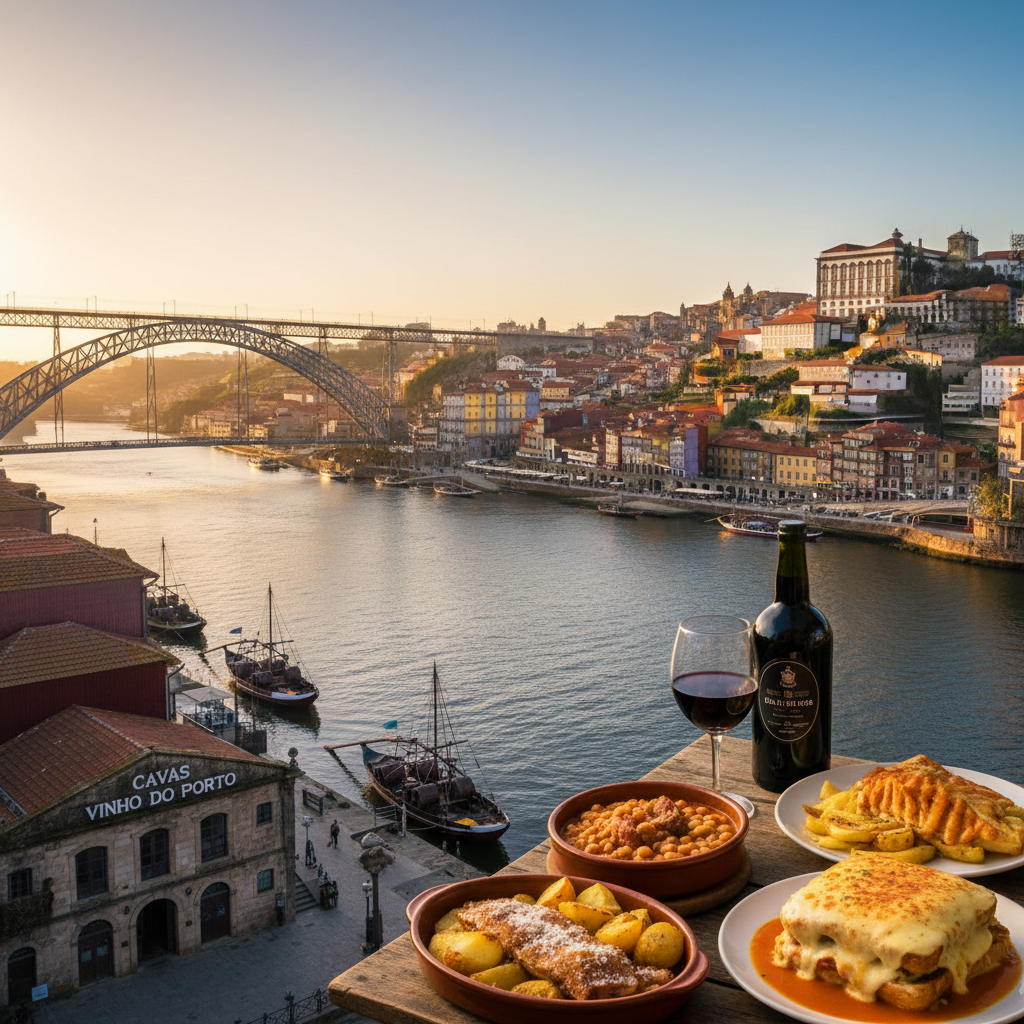
Porto Food Guide: 4 Days of Francesinha, Port Wine & Bacalhau
Uncover Porto's working-class culinary soul in this 4-day food guide. Indulge in francesinha, explore port wine caves, and savor bacalhau like a local.
- Duration: 4 Days
- Estimated Budget: $350–$600
- Best Time to Visit: April-June and September-October for pleasant weather and fewer crowds
- Destination: Porto, Portugal
Porto's food identity is inseparable from its working-class history, making it the perfect destination for a deep dive into hearty, unpretentious Portuguese cuisine. This isn't about Michelin stars; it's about the honest flavors of francesinha, the rich heritage of port wine, and the soulful comfort of bacalhau. <p><strong>Ready to plan your Porto trip?</strong> Read our complete destination guide: <a href="https://askleif.com/blog/porto-portugal-complete-travel-guide">Porto, Portugal: The City That Gets Under Your Skin and Never Lets Go</a></p> 📖 **Read our full destination guide:** Lisbon vs Porto: One City Wants to Impress You. The Other Doesn't Care.
The Rua Heróis de França in Matosinhos isn't just a street; it's a vibrant, aromatic testament to Porto's deep connection with the sea. Here, the day's catch is grilled over open flames right outside the restaurants, a spectacle of sizzling fish and shellfish that draws locals and savvy visitors alike. This isn't fine dining in the traditional sense, but an immersive, no-frills experience where the quality of the ingredients speaks for itself. You'll find yourself pointing to whole fish on ice, then watching it transform into a perfectly charred meal, accompanied by simple potatoes and a crisp Vinho Verde. It's a reminder that Porto's culinary heart beats strongest in its honest, unpretentious offerings, far from the tourist-trodden paths.,Should you be intimidated by dishes like <i>tripas à moda do Porto</i>? Here's the reality: while the name might sound daunting, embracing these traditional, hearty meals is crucial to truly understanding Porto's food story. This isn't about exotic ingredients for the sake of it, but about a resourceful, working-class history woven into every bite. The city's nickname, "Tripeiros," isn't just a historical footnote; it's a badge of honor. Trying these dishes isn't just about expanding your palate; it's about connecting with centuries of local culture and tradition, a culinary pilgrimage that reveals the soul of the city in a way no museum ever could. Don't shy away; lean in and savor the authenticity.,Your afternoons in Porto look like a delicious journey through its historic center, discovering the secrets behind its most iconic flavors. You'll find yourself stepping into a bustling tasca in the Bonfim neighborhood, a place where time seems to slow down, and the aroma of slow-cooked stews fills the air. Lunch might be a generous plate of <i>bacalhau à Gomes de Sá</i>, a comforting cod dish that tells a story of ingenuity and tradition, perfected over generations. Later, you'll wander towards the river, perhaps stopping at a local café for a strong espresso and a quick <i>bifana</i>, observing the city's rhythm as locals go about their day, fueled by these simple, yet profoundly satisfying, culinary staples. <p class="leif-blog-link"><strong>Planning a wine trip?</strong> Read our deep dive: <a href="/blog/wine-destinations-where-the-wine-is-not-the-point-its-the-key">The Wine Destinations Where the Wine Is Not the Point. It's the Key.</a> — covering the Douro Valley wine region and five other destinations where wine is the key to the culture.</p>
Francesinha, Port Wine, and the Heart of Porto's Markets
Dive into the vibrant atmosphere of Mercado do Bolhão, Porto's recently restored historic market, brimming with fresh produce, fish, and local goods.
This is where Porto's culinary heart beats, offering a glimpse into daily life and the raw ingredients that define its cuisine. It's a feast for the senses and a true local experience.
Enjoy a traditional Porto working lunch at one of the tascas inside Mercado do Bolhão.
Experience how locals eat, with simple, hearty dishes prepared with fresh market ingredients. It's an unbeatable value and a genuine taste of Porto.
Embark on a guided tour and tasting at Graham's Port Lodge in Vila Nova de Gaia, offering stunning views of Porto.
Graham's provides one of the most comprehensive and enjoyable port wine experiences, known for its excellent tawny ports and the best panoramic views of the Douro River and Porto skyline.
Stroll along the Ribeira waterfront, soaking in the iconic views of the colorful houses and the Dom Luís I Bridge.
Ribeira is the postcard image of Porto, a UNESCO World Heritage site that truly captures the city's charm and history. It's a perfect place for people-watching and absorbing the atmosphere.
Indulge in Porto's most famous and fiercely regional dish, the francesinha, at the legendary Café Santiago.
You can't come to Porto and not try a francesinha, and Café Santiago is arguably the most famous spot, known for its rich, secret sauce and generous portions. It's a rite of passage for any food lover in Porto.
Leif's Tip: Wear comfortable shoes today, as you'll be doing a fair bit of walking between the market, the riverfront, and across the bridge to Gaia. Also, come hungry for that francesinha; it's a serious meal!
Porto has a dizzying array of tascas, cafés, and restaurants, and knowing which ones are genuinely serving up the city's soul food versus those catering to fleeting tourist tastes is the difference between an unforgettable culinary adventure and a series of mediocre meals. The sheer volume of choices, coupled with the subtle nuances of local specialties like francesinha sauces or the proper preparation of bacalhau, can make planning feel like navigating a labyrinth. You might find yourself wondering if that unassuming spot in Bonfim is truly serving the best <i>tripas</i>, or if the queue at Café Santiago is worth the wait. This is precisely where Leif steps in, cutting through the noise to deliver an itinerary that’s not just a list of places, but a curated journey into the authentic, working-class heart of Porto’s food scene, ensuring every bite is a discovery.
When you're standing on the banks of the Douro, gazing across at the port wine lodges, and wondering which one offers the most insightful tour for a true wine enthusiast, Leif has already done the homework. Say you're craving the best <i>bacalhau à Zé do Pipo</i>, but you're not sure which restaurant in Bonfim truly honors the dish's legacy – Leif will point you directly to Restaurante Zé do Pipo, the very place that invented it, complete with insider tips on what else to try. Or perhaps you're at the Mercado do Bolhão, overwhelmed by the sensory explosion, and need to know exactly which upstairs tasca serves the most authentic, budget-friendly market lunch. Leif provides that precise, actionable guidance, transforming potential indecision into confident, delicious exploration.
Arriving in Porto with your Leif itinerary already in hand means you won't waste a single moment wondering where to find the city's most iconic dishes. Instead of poring over reviews or wandering aimlessly, you'll confidently stride into a local favorite in Cedofeita for a perfectly grilled fish, knowing it was caught just hours before. You'll savor a robust Douro table wine at a cozy wine bar near the Clérigos Tower, feeling like a true local, rather than a transient visitor. The difference is the pure joy of discovery, the satisfaction of every meal being a perfectly planned, authentic experience, allowing you to fully immerse yourself in the unpretentious, hearty flavors that define Porto, leaving you with memories that taste as rich as the city's history.
Best Time to Visit Porto, Portugal
Spring (April-May) or Fall (September-October) for pleasant weather and fewer crowds, perfect for walking between food spots.
Avoid peak summer (July-August) if you dislike heat and tourist throngs; restaurants can be packed and prices higher.
Late autumn or early spring can offer a more authentic, less touristy experience, though some outdoor dining might be limited.
For the freshest seafood in Matosinhos, aim for a weekday morning when the market is bustling and the catch is just in.
Any time is good for francesinha, but a chilly evening makes the rich sauce even more comforting.
Getting Around Porto, Portugal
The Porto metro is efficient and connects major areas, including Matosinhos for seafood and Vila Nova de Gaia for port caves.
Purchase an 'Andante' card for the metro and buses; it's rechargeable and cheaper than single tickets. You can buy them at any metro station.
Walking is the best way to explore the historic center and work up an appetite between meals; wear comfortable shoes.
Taxis or ride-sharing apps are readily available for late-night returns or when your feet are tired from all the eating.
Consider the 901 or 906 bus for direct access to Vila Nova de Gaia from central Porto, offering scenic views along the way.
What to Pack
- Comfortable walking shoes – Porto is hilly, and you'll be doing a lot of food-motivated exploring.
- An appetite – seriously, come hungry and be prepared to eat hearty, rich food.
- Layers of clothing – mornings can be cool, but afternoons often warm up, especially when walking.
- A reusable water bottle – stay hydrated between all the wine and rich dishes.
- A small umbrella or light rain jacket – Porto weather can be unpredictable, even outside of winter.
- A camera – for capturing those epic francesinha shots and stunning Douro views.
- Cash – some smaller tascas and market stalls prefer or only accept cash.
- An open mind – especially for tripe and other traditional dishes; embrace the local flavors.
Money-Saving Tips
- Embrace the 'Prato do Dia' (dish of the day) or 'Menu do Dia' at local tascas for incredibly affordable and authentic lunches, often including soup, main, drink, and coffee for under –10.
- Drink vinho da casa (house wine) at restaurants; it's almost always delicious, local, and significantly cheaper than bottled options.
- Visit Mercado do Bolhão for lunch; the upstairs tascas offer fantastic, cheap meals popular with locals.
- Take advantage of free viewpoints like the Espaço Porto Cruz rooftop instead of paying for every port cave tour.
- Buy fresh produce, bread, and cheese from local markets like Bolhão for picnic lunches or snacks instead of eating out for every meal.
Local Insights
- Don't be afraid to ask for recommendations from locals; they're proud of their food and happy to share their favorite spots.
- Porto dining is often a leisurely affair; don't expect to be rushed, especially during dinner.
- When ordering francesinha, ask for it 'com ovo' (with an egg) and 'com batatas' (with fries) for the full experience.
- Tipping is appreciated but not mandatory; rounding up the bill or leaving a few euros for good service is common.
- Understand that 'tripas à moda do Porto' is a badge of honor for locals; trying it is a sign of respect for their culinary heritage.
Frequently Asked Questions
Is Porto's food scene vegetarian-friendly?
While traditional Porto cuisine is heavily meat and fish-centric, many modern restaurants and cafés in areas like Cedofeita and Baixa are increasingly offering vegetarian and vegan options. You'll find salads, vegetable-based soups like Caldo Verde (ask for it without chouriço), and some places adapting traditional dishes. It requires a bit more searching, but it's definitely possible to eat well.
What's the best way to get to Matosinhos for seafood?
The easiest and most efficient way to reach Matosinhos from Porto is by metro. Take the Blue Line (Line A) directly to the Matosinhos Sul or Mercado stop. It's a pleasant 20-25 minute ride, and you'll be right in the heart of the seafood action. Taxis or ride-sharing apps are also an option, but the metro is reliable and budget-friendly.
Can I do a port wine tasting without a full cave tour?
Absolutely! Many of the port wine lodges in Vila Nova de Gaia offer tasting-only options without the full tour, often at a lower price point. Places like Espaço Porto Cruz even have a fantastic rooftop bar where you can enjoy a glass of port with stunning views of Porto, no tour required. It's a great way to sample different styles if you're short on time or prefer a more casual experience.
Is the Mercado do Bolhão open on weekends?
No, the Mercado do Bolhão is typically open from Monday to Friday, generally from morning until early evening, and on Saturday mornings. It's closed on Sundays and public holidays. For the best experience, aim to visit on a weekday morning when it's bustling with local shoppers and the upper-floor tascas are serving fresh, affordable lunches.
What's the difference between bacalhau à Gomes de Sá and bacalhau à Zé do Pipo?
Both are iconic Porto bacalhau dishes. Bacalhau à Gomes de Sá features flaked cod baked with potatoes, onions, olives, and hard-boiled eggs, often drizzled with olive oil. Bacalhau à Zé do Pipo, on the other hand, is a richer dish, typically made with cod fillets covered in a mayonnaise-based sauce, often gratinéed, and garnished with olives and sometimes mashed potatoes. Both are delicious but offer distinct flavor profiles.
Are there any food tours you recommend in Porto?
While this guide encourages independent exploration, if you prefer a structured experience, look for food tours that focus specifically on traditional Porto dishes and visit local tascas and markets rather than just tourist traps. Some tours specialize in francesinha or port wine. Always check reviews to ensure they offer an authentic, off-the-beaten-path experience rather than a generic overview.
What's a good wine to pair with francesinha?
The rich, savory, and often spicy francesinha pairs surprisingly well with a crisp, slightly effervescent Vinho Verde, particularly a dry one. Its acidity cuts through the richness of the cheese and sauce. Many locals also enjoy it with a cold beer, especially a local Portuguese lager. For red wine lovers, a young, fruity Douro red can also be a good match, but Vinho Verde is the classic local pairing.