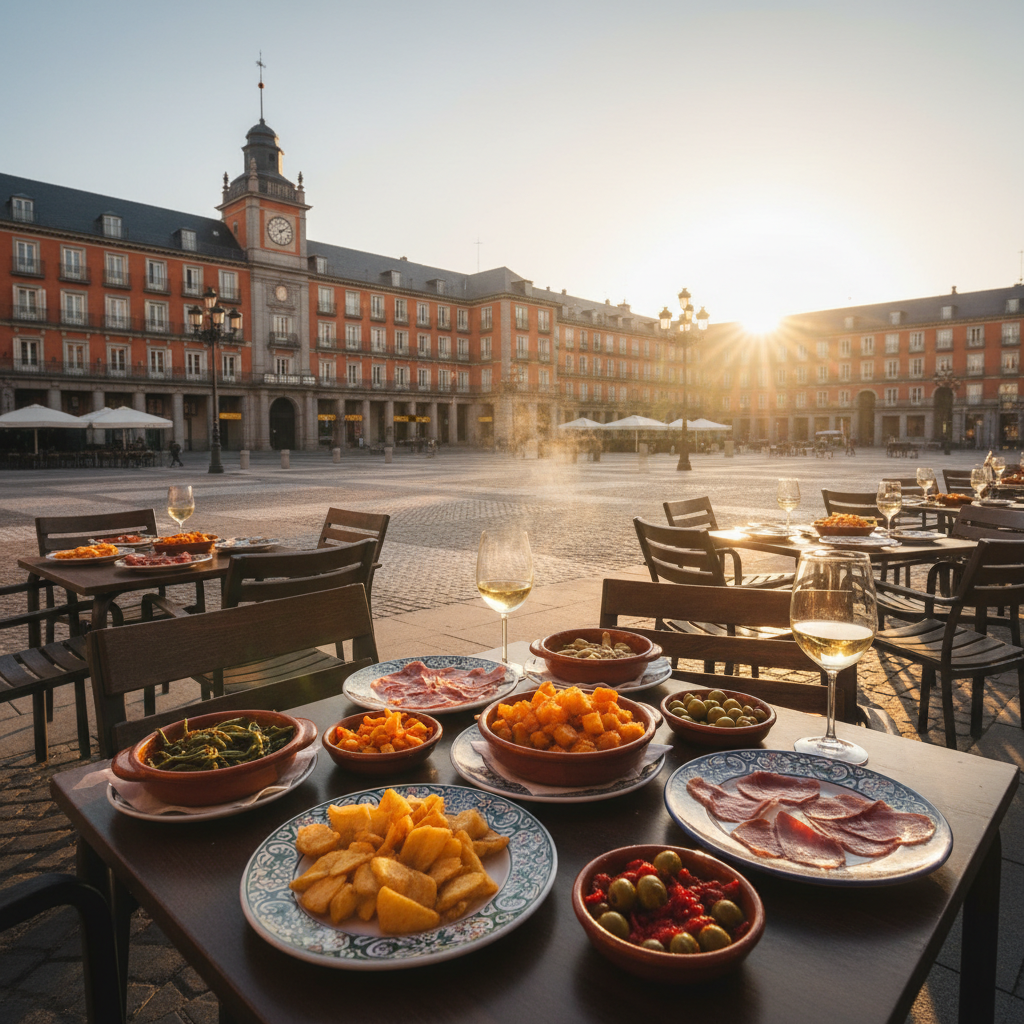
Madrid Food & Tapas: A 4-Day Culinary Journey for Foodies
Discover Madrid's vibrant food scene on a 4-day culinary adventure. Explore tapas bars, markets, and traditional eateries for an unforgettable taste of Spain.
- Duration: 4 Days
- Estimated Budget: $200–$320
- Best Time to Visit: April-May and September-October for pleasant weather and outdoor dining.
- Destination: Madrid, Spain
Madrid is, without a doubt, Spain's most underrated food city, offering a richer and more accessible culinary experience than its more famous counterparts. This guide dives deep into the heart of Madrid's gastronomic culture, routing you through bustling tapas bars, authentic food markets, and neighborhood restaurants where locals truly eat. Prepare to discover why Madrid is a true foodie paradise, far beyond the tourist traps.
The moment you step into the vibrant energy of La Latina on a Sunday afternoon, you'll understand Madrid's culinary soul. This historic neighborhood, with its winding streets and ancient architecture, transforms into an open-air feast, particularly along Calle Cava Baja. Here, generations of Madrileños have perfected the art of the tapas crawl, hopping from one bustling bar to another, each specializing in a few iconic dishes. You'll find yourself shoulder-to-shoulder with locals, savoring small plates of perfectly fried croquetas or rich, slow-cooked stews, all washed down with a glass of crisp vermouth. It's an immersive experience that goes beyond just eating; it's about community, conversation, and the sheer joy of shared food, a tradition deeply embedded in the city's fabric.
Is it possible to eat incredibly well without breaking the bank? Absolutely, and Madrid proves it. Unlike some European capitals where fine dining comes with an intimidating price tag, this city offers exceptional quality at remarkably accessible prices. You can indulge in a multi-course set lunch, known as a menú del día, for just €12-16, often including wine, water, and dessert. Evenings are for tapas, where individual plates typically range from €2-5. This affordability isn't a compromise on quality; it's a reflection of a culture that values fresh, local ingredients and communal dining. You'll discover that eating like a local means enjoying high-quality, authentic Spanish cuisine throughout your day, leaving you satisfied without feeling guilty about your budget.
Evenings in Madrid for the food-focused traveler often involve a delightful dance between tradition and modernity. You'll find yourself starting with classic vermouth and olives in a centuries-old bodega in the Barrio de las Letras, soaking in the history, before moving to a more contemporary Spanish restaurant in Chueca for innovative small plates. Later, perhaps a late-night stop for churros and thick hot chocolate, a quintessential Madrileño experience. This rhythm allows you to taste the city's evolution, from its deeply rooted culinary heritage to its burgeoning modern gastronomic scene. It's a journey that satisfies every palate, ensuring each meal is not just sustenance, but a memorable part of your exploration.
Welcome to Madrid: A Tapas Immersion in La Latina
Start your Madrid food adventure at Chocolatería San Ginés, a historic churrería famous for its churros con chocolate since 1894.
This iconic spot is a Madrid institution, offering the quintessential Spanish breakfast experience. The rich, thick chocolate and crispy churros are a perfect welcome to the city.
Head to Mercado de San Miguel, a stunning wrought-iron market near Plaza Mayor, to sample an array of gourmet Spanish tapas.
This beautifully restored market is a feast for the senses, offering high-quality jamón ibérico, fresh seafood, croquetas, and vermouth under one roof. It's an excellent introduction to Spain's diverse culinary landscape.
Enjoy a traditional Spanish lunch at Casa Lucio, famed for its 'huevos rotos' and classic Castilian cuisine.
Casa Lucio is a Madrid legend, beloved by locals and celebrities alike for its simple yet perfect 'huevos rotos' (fried eggs with ham and potatoes). It's a taste of authentic Madrid tradition.
Stroll through the charming streets of La Latina, soaking in the historic atmosphere and preparing for your evening tapas crawl.
La Latina is one of Madrid's oldest and most picturesque neighborhoods, known for its narrow winding streets, beautiful plazas, and vibrant tapas scene. It's the perfect place to digest and get a feel for local life.
Embark on a tapas bar crawl along Calle Cava Baja in La Latina, stopping at Taberna Matritum, El Almendro, and Casa Lucas.
Calle Cava Baja is the heart of Madrid's traditional tapas scene, offering a lively atmosphere and a fantastic selection of classic Spanish bites. Each bar has its own specialty and unique charm.
Leif's Tip: Embrace the Spanish rhythm today. Lunch is later, dinner is even later, and tapas are meant to be enjoyed slowly with a drink in hand. Don't rush, and allow yourself to get lost in the moment and the flavors. Stand at the bar like a local, and practice a few Spanish phrases for ordering – it goes a long way!
Madrid has countless districts, and knowing which ones offer the best authentic food experiences versus tourist traps is the difference between a truly memorable culinary journey and a series of disappointing meals. Navigating the labyrinthine streets to find that hidden gem serving the best 'tortilla de patatas' or the most exquisite 'jamón ibérico' can feel like a daunting task. Between deciphering Spanish menus, understanding local dining customs, and pinpointing the exact time a specific bar opens for its specialty, Madrid can feel overwhelming before you even arrive. Many travelers fall into the trap of sticking to the main squares, missing out on the vibrant, local-filled establishments just a few blocks away. This is precisely where Leif shines, cutting through the noise to deliver an itinerary that feels effortlessly local and deeply delicious.
When you're standing in the bustling Mercado de Vallehermoso, wondering which vendor offers the freshest oysters or the most authentic 'empanada gallega', Leif has already guided you there. Say you're craving the legendary 'cocido madrileño' on a Thursday, but you're not sure which traditional 'taberna' to choose without falling into a tourist trap – Leif provides the specific recommendation for Taberna La Bola, complete with its rich history and the best time to go. Or perhaps you want to experience the vibrant Ponzano Street food corridor in Chamberí, but you're unsure which of the dozens of bars to prioritize for a true local experience. Leif curates a path, ensuring you taste the very best of Madrid's diverse culinary landscape, without a moment of hesitation or second-guessing.
You'll arrive in Madrid knowing exactly where to find the crispiest 'bocadillo de calamares' at El Brillante, or the most decadent 'churros con chocolate' at Chocolatería San Ginés, without ever having to pull out your phone for a frantic search. Instead of wandering aimlessly, you'll confidently stride into Bodega de la Ardosa for a perfect vermouth and croquetas, feeling like a seasoned local. The difference is savoring every bite of 'huevos rotos' at Casa Lucio, knowing you're experiencing a true Madrileño classic, rather than settling for an overpriced imitation. Arriving in Madrid with your food itinerary already curated means your taste buds are ready for an unforgettable adventure, transforming every meal into a cherished memory.
Best Time to Visit Madrid, Spain
Spring (April-May) offers pleasant temperatures for walking between tapas bars and markets, with fewer crowds than summer.
Autumn (September-October) is another fantastic time, with crisp air and the city buzzing after the summer break.
Avoid August if possible; many locals leave the city, and some smaller, authentic establishments might be closed for holidays.
Winter (November-March) can be chilly but offers a cozy atmosphere, perfect for hearty stews like cocido madrileño.
Getting Around Madrid, Spain
Madrid's metro system is incredibly efficient, clean, and covers almost everywhere you'll want to go. Purchase a Multi Card at any station.
Walking is often the best way to explore central neighborhoods like La Latina, Malasaña, and Chueca, allowing you to stumble upon hidden gems.
Taxis and ride-sharing apps (Uber, Cabify) are readily available and reasonably priced for late-night returns or longer distances.
Consider the 'Madrid Tourist Travel Pass' if you plan extensive use of public transport over several days; it can save you money.
What to Pack
- Comfortable walking shoes – you'll be on your feet exploring markets and tapas bars for hours.
- A light jacket or cardigan, even in spring/autumn, as evenings can cool down.
- A small, secure cross-body bag to keep your valuables safe in crowded areas.
- An appetite! Seriously, come hungry and ready to eat.
- A portable power bank for your phone – for navigation and snapping food photos.
- A reusable water bottle to stay hydrated while exploring.
- A Spanish phrasebook or translation app for ordering and interacting with locals.
- Dressy-casual attire for nicer dinners; Madrileños appreciate a well-put-together look.
Money-Saving Tips
- Embrace the 'menú del día' for lunch; it's a fantastic value (12-16€) and often includes multiple courses, bread, and wine.
- Look for bars offering 'tapa gratis' (free tapa) with your drink, especially outside the most touristy areas.
- Share tapas! Order a few dishes for the table rather than one per person to try more variety without overspending.
- Buy your jamón ibérico and cheese from local markets like Mercado de Vallehermoso for a picnic, rather than always eating out.
- Stick to house wine (vino de la casa) or vermouth; they are delicious and much more affordable than cocktails.
Local Insights
- Dinner starts late in Madrid, typically not before 9 PM. Embrace the Spanish schedule and enjoy a leisurely afternoon of tapas.
- Tipping is not as obligatory as in the US; rounding up the bill or leaving a few euros for good service is appreciated but not expected.
- Don't be afraid to stand at the bar! It's how many locals enjoy their tapas and drinks, and it can be quicker to get served.
- Learn a few basic Spanish phrases like 'Hola', 'Gracias', 'Por favor', and 'La cuenta, por favor' – it goes a long way.
- When ordering tapas, don't be shy about asking for recommendations ('¿Qué me recomiendas?') – the staff often know best.
Frequently Asked Questions
What's the best way to experience tapas in Madrid?
The best way is to do a 'tapeo' or tapas crawl. Visit several bars, ordering one or two dishes and a drink at each. Stand at the bar like a local, soak in the atmosphere, and don't be afraid to move on after a short while. La Latina and Malasaña are excellent neighborhoods for this.
What's the difference between tapas and pintxos?
Tapas are small plates or portions of food, often served free with a drink in some regions, though in Madrid you typically pay for them. Pintxos (pronounced 'peen-chos') are typically small snacks, often served on a slice of bread and skewered with a toothpick, originating from the Basque Country but popular in Madrid's more modern bars.
Should I make reservations for restaurants, especially for dinner?
For popular or upscale restaurants, especially on weekends, reservations are highly recommended. For tapas bars, it's usually first-come, first-served, and part of the experience is standing at the bar. If you're aiming for a specific table at a well-known spot like Casa Lucio, book ahead.
What are some must-try traditional Madrid dishes?
Beyond tapas, you absolutely must try 'cocido madrileño' (a hearty chickpea stew, often served in courses), 'bocadillo de calamares' (fried calamari sandwich), 'huevos rotos' (fried eggs with potatoes and often ham), and 'cochinillo asado' (roast suckling pig) from a traditional Castilian restaurant.
Is it customary to tip in Madrid restaurants and bars?
Tipping is not as ingrained as in some other countries. Service charge is usually included in the bill. For exceptional service, leaving a few euros (5-10% for a sit-down meal, or just rounding up the bill at a tapas bar) is appreciated but not obligatory. Don't feel pressured to overtip.
How late do people eat dinner in Madrid?
Madrid has a very late dining culture. Lunch is typically between 2 PM and 4 PM, and dinner often doesn't start until 9 PM or 10 PM. Many tapas bars will be busy from 7 PM onwards for pre-dinner drinks and snacks, but full dinner service starts much later than in other European cities.
Are there good options for vegetarians or those with dietary restrictions?
While traditional Spanish cuisine can be meat-heavy, Madrid is increasingly accommodating. Many tapas bars offer 'verduras a la plancha' (grilled vegetables), 'patatas bravas' (potatoes with spicy sauce), and various salads. Larger restaurants usually have vegetarian options, and it's always best to inform your server about any allergies or dietary needs.