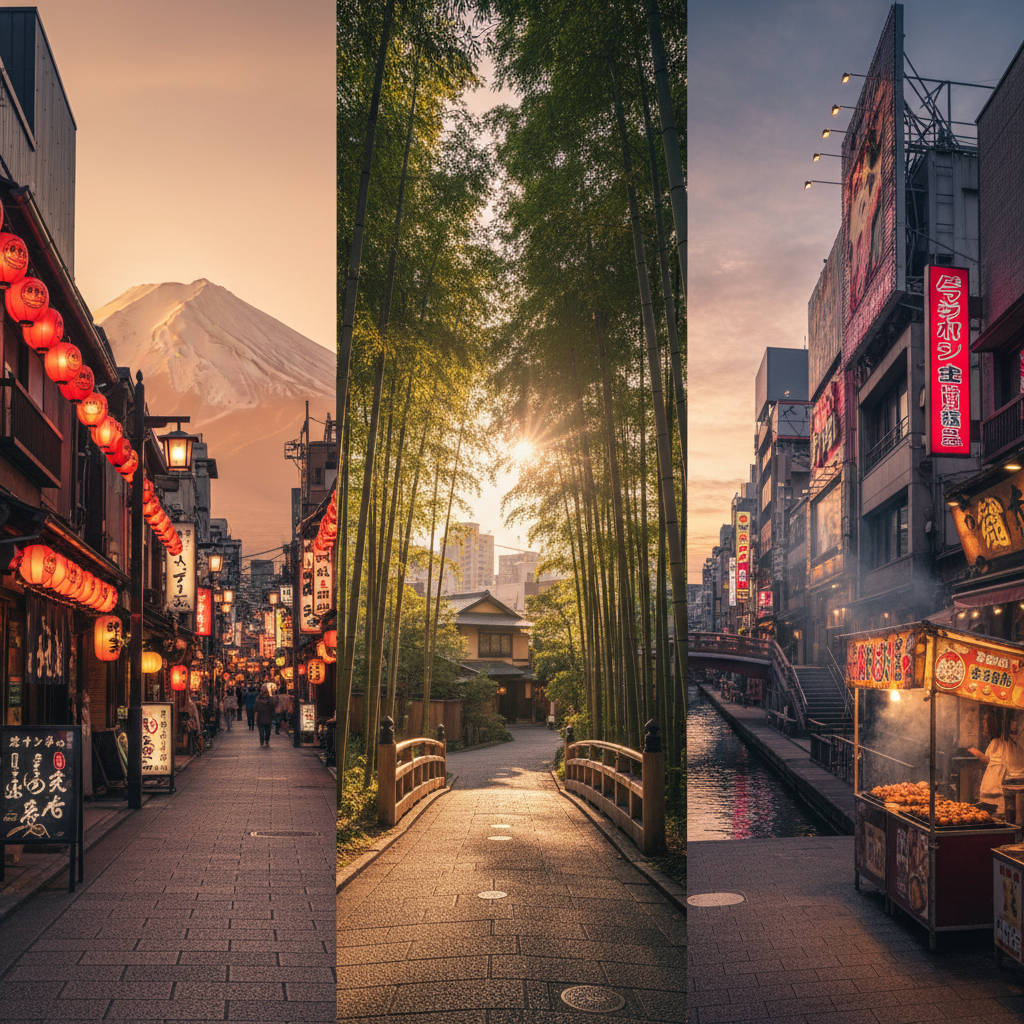
10-Day Japan Food & Culture Deep Dive: Tokyo, Kyoto, Osaka Culinary Journey
Savor Japan on a 10-day culinary adventure through Tokyo, Kyoto, and Osaka. Explore vibrant markets, hidden izakayas, and craft sake breweries.
- Duration: 10 Days
- Estimated Budget: $2,000–$3,500
- Best Time to Visit: March-April (cherry blossom, book accommodation 6 months ahead) or October-November (autumn foliage, fewer crowds than spring). Avoid Golden Week (late April-early May).
- Destination: Japan
Forget the standard tourist trail; this 10-day journey is a feast for your senses, designed for the traveler who wants to truly eat their way through Japan. From the bustling fish markets of Tokyo to Kyoto's ancient culinary traditions and Osaka's street food paradise, you'll dive deep into the heart of Japanese gastronomy and culture. Prepare for an unforgettable exploration of flavors, traditions, and hidden gems that only a true food lover can appreciate.
Japan's culinary landscape extends far beyond sushi and ramen, offering an intricate tapestry of regional specialties and time-honored techniques. This journey invites you to explore the subtle art of kaiseki, a multi-course dining experience that elevates seasonal ingredients to an art form, often enjoyed in serene ryokans. You will also uncover the secrets behind perfectly grilled yakitori, savor the delicate flavors of tempura fried to golden perfection, and understand the cultural significance of a meticulously prepared bento box. Each meal is not just sustenance but a narrative, telling tales of local agriculture, fishing traditions, and generations of culinary mastery. Prepare to have your perceptions of Japanese food redefined, discovering new textures, aromas, and tastes with every bite.
Tokyo's vibrant energy provides an unparalleled introduction to Japan's dynamic food scene, where ancient traditions meet cutting-edge innovation. Wander through the narrow alleys of Shinjuku Golden Gai, sampling various sakes and shochus in intimate bars, or explore the bustling depachika (department store food halls) for an overwhelming array of gourmet delights and exquisite patisseries. This immersive experience delves into the precision of Japanese knife skills demonstrated by master chefs, and the meticulous presentation that makes every dish a visual masterpiece. You'll learn about the profound respect for ingredients, from the freshest seafood sourced daily to the meticulously grown vegetables, all contributing to the unparalleled quality of the cuisine. The city pulsates with gastronomic opportunities, from Michelin-starred establishments to humble street-side stalls.
Kyoto's historical heart beats with a different rhythm, one steeped in centuries of refined culinary heritage and spiritual reflection. Here, you'll engage with the serene practice of a traditional tea ceremony, understanding the profound philosophy behind each gesture and sip of matcha. Explore the Nishiki Market, often called 'Kyoto's Kitchen,' where vendors proudly display an incredible variety of local produce, pickles, and artisanal goods, offering a true taste of the region's bounty. The journey also includes an exploration of sake breweries, witnessing the intricate fermentation process that transforms rice and water into Japan's iconic beverage, complete with guided tastings. This segment of the trip emphasizes the deep connection between food, nature, and spirituality, revealing how these elements intertwine to create a unique cultural identity.
Tokyo Arrival & Tsukiji Outer Market Feast
Arrive at Tokyo Narita (NRT) or Haneda (HND) airport, clear customs, and purchase your Suica or Pasmo IC card for easy transit.
Starting your journey with an IC card simplifies all local travel, allowing seamless use of trains, buses, and even convenience stores. This initial step sets you up for a stress-free exploration of Tokyo's culinary delights.
Travel to your accommodation in Shibuya and check in. Drop off your luggage and freshen up after your flight.
Settling into your hotel promptly allows you to relax and recharge before diving into Tokyo's vibrant food scene. Shibuya's central location makes it an ideal base for exploring.
Head to Tsukiji Outer Market for an early evening exploration and some initial bites.
While the inner market moved, the outer market remains a bustling hub of fresh seafood, street food, and culinary tools. It's an excellent introduction to Japan's food culture and a great spot for an early dinner.
Indulge in fresh uni (sea urchin) on rice or a selection of sushi at one of Tsukiji Outer Market's renowned sushi counters.
Experiencing fresh, high-quality seafood directly from the market is an unparalleled culinary experience. Tsukiji offers some of the best and freshest options available.
Stroll through the upscale Ginza district, admiring the luxury boutiques and department stores, before heading to Ginza Six basement food hall.
Ginza offers a glimpse into Tokyo's sophisticated side, with stunning architecture and high-end shopping. The basement food halls are an incredible display of Japanese culinary artistry, perfect for dessert or a late-night snack.
Leif's Tip: Upon arrival, resist the urge to nap immediately. Power through the afternoon with a walk and an early dinner to help reset your body clock and minimize jet lag. A quick shower and fresh air will do wonders!
Navigating the intricate world of Japanese culinary traditions, particularly when seeking out authentic neighborhood izakayas or understanding the nuances of craft sake, presents a unique set of challenges for visitors. Beyond the language barrier, discerning which establishments offer a truly local experience versus those catering primarily to tourists requires an insider's perspective. You might find yourself overwhelmed by the sheer number of dining options in areas like Shinjuku or Dotonbori, unsure of how to secure reservations for sought-after spots, or even how to properly order in a traditional setting. Understanding the subtle etiquette of a multi-course kaiseki meal or the best time to visit a specific fish market without getting lost in translation can quickly turn an exciting culinary adventure into a stressful endeavor. Leif cuts through this complexity, providing you with a curated path to Japan's gastronomic heart, ensuring every meal is an authentic discovery.
Tsukiji Outer Market, a hub of gastronomic delight, is just one example of the seamless experiences Leif curates. You won't be fumbling with maps or translation apps; instead, you'll know exactly which train line to take to reach the Tsukiji Outer Market for a sushi breakfast, or how to seamlessly transition to a hidden tea house in Gion, Kyoto, for a traditional ceremony. When a sudden rain shower threatens your afternoon plans to explore Osaka's Kuromon Ichiba Market, Leif proactively suggests an equally engaging indoor alternative, perhaps a visit to a local sake brewery with a tasting tour, complete with booking details and transport instructions. This level of foresight and detailed guidance transforms potential travel hiccups into effortless transitions, keeping your focus firmly on the rich cultural and culinary experiences.
The subtle aroma of simmering dashi and freshly brewed green tea, carried on a gentle breeze through a Kyoto alleyway, provides a profound sense of connection to centuries of tradition. Arriving in Japan with a Leif-crafted itinerary means you're not just visiting; you're immersing yourself, confident that every culinary stop, every cultural encounter, and every moment of exploration is thoughtfully curated for depth and authenticity. You'll feel the satisfaction of savoring a perfectly grilled skewer at a tiny izakaya known only to locals, or the quiet reverence of participating in a traditional tea ceremony, knowing you've bypassed the typical tourist traps. This isn't just about eating well; it's about understanding the soul of Japan through its food and drink, creating a tapestry of rich, flavorful memories that will linger long after your return. Let Leif guide you to these unforgettable tastes and moments.
Best Time to Visit Japan
March-April for cherry blossoms, but book accommodation at least 6 months in advance as it's peak season.
October-November offers beautiful autumn foliage and generally fewer crowds than spring, making it a comfortable time for exploring.
Avoid Golden Week (late April-early May) at all costs; prices for everything skyrocket and popular spots are overwhelmingly crowded.
Consider early June for slightly fewer crowds and lush greenery, though you might encounter some rain. The food scene is vibrant year-round.
Getting Around Japan
Purchase an IC card (Suica or Pasmo) immediately upon arrival at Narita (NRT) or Haneda (HND) airport; it's essential for seamless travel on all local trains, subways, and buses, and even for convenience store payments.
For this specific food-focused itinerary, a Japan Rail Pass is NOT necessary. Individual Shinkansen tickets between Tokyo, Kyoto, and Osaka will be more cost-effective and offer greater flexibility.
Utilize Japan's incredibly efficient public transportation system. Google Maps is your best friend for navigating routes, times, and platform numbers in real-time.
For longer distances within cities, taxis are available but can be quite expensive. Save them for late-night returns when trains have stopped running or when carrying heavy luggage.
What to Pack
- Comfortable walking shoes are non-negotiable; you'll be doing a lot of exploring on foot, especially in markets and neighborhoods.
- A portable power bank for your phone, as you'll be using it constantly for navigation, photos, and translating menus.
- An umbrella or light rain jacket, especially if traveling during spring or early summer, as sudden showers can occur.
- A small, foldable bag for market purchases and souvenirs; you'll accumulate delicious treats and unique finds.
- Layered clothing to adapt to varying temperatures, from cool mornings to warmer afternoons, and air-conditioned interiors.
- A universal travel adapter for your electronics, as Japan uses Type A and B outlets with 100V.
- Cash in small denominations (JPY 1,000, 5,000 notes) for smaller shops, market stalls, and izakayas, as not all places accept cards.
- A basic phrasebook or translation app to help with ordering food and simple interactions, though many places catering to tourists will have English menus.
Money-Saving Tips
- Embrace convenience stores (7-Eleven, FamilyMart, Lawson) for excellent, affordable meals like onigiri, sandwiches, and hot foods, perfect for quick breakfasts or lunches.
- Look for 'lunch sets' (teishoku) at restaurants, which offer great value during midday, often including a main dish, rice, soup, and pickles for a reasonable price.
- Take advantage of free tastings at department store basements (depachika) and sake breweries to sample before you buy.
- Consider staying in hostels or budget hotels for some nights to balance out splurges on high-end dining experiences. Hostels in Japan are exceptionally clean and well-run.
- Walk whenever possible. It's a great way to discover hidden gems and save on local transportation costs, plus it helps burn off all the delicious food.
Local Insights
- Tipping is not customary in Japan and can even be considered rude; excellent service is expected as part of the culture.
- Most restaurants display plastic food models (sampuru) outside; don't hesitate to point to what you want if you're unsure of the menu or don't speak Japanese.
- Osaka locals are generally known for being friendlier and more outgoing than those in Tokyo; embrace their lively spirit and don't be afraid to strike up a conversation.
- Always carry a small trash bag with you, as public trash cans are scarce in Japan. You're expected to take your trash with you.
- When dining, it's polite to say 'Itadakimasu' before eating and 'Gochisousama deshita' after finishing your meal, expressing gratitude for the food.
Frequently Asked Questions
Do I need a JR Pass for this itinerary?
No, a JR Pass is not recommended for this specific itinerary. The Shinkansen tickets between Tokyo, Kyoto, and Osaka are generally cheaper when purchased individually, especially given the focused nature of this trip within the urban triangle.
What's the best way to get around the cities?
Public transportation is excellent. Purchase an IC card (Suica or Pasmo) upon arrival at the airport. It works on all trains, subways, and buses, and can even be used for small purchases at convenience stores and vending machines. Walking is also a fantastic way to explore neighborhoods.
Is English widely spoken in restaurants and markets?
While major tourist areas and larger establishments may have English-speaking staff or menus, many smaller, authentic eateries and market stalls will have limited English. Don't worry, pointing at plastic food displays or using simple phrases and gestures works wonders! Embrace the experience.
How much cash should I carry?
While card payments are becoming more common, many smaller izakayas, market stalls, and some traditional restaurants are cash-only. It's always wise to carry a good amount of yen, especially for street food and local experiences. ATMs are widely available at convenience stores.
What are some essential food etiquette tips?
Slurping noodles is a sign of enjoyment. Don't stick your chopsticks upright in your rice bowl (it resembles a funeral ritual). Don't pass food from chopstick to chopstick. It's considered rude to tip in Japan, so simply say 'arigato gozaimasu' (thank you) instead.
Can I find vegetarian or vegan options easily?
While traditional Japanese cuisine often incorporates dashi (fish stock), vegetarian and vegan options are becoming more prevalent, especially in larger cities. Kyoto, with its strong Buddhist traditions, offers excellent shojin ryori (Buddhist vegetarian cuisine). Look for specialized restaurants or use apps to find options.
What's the best way to book popular restaurants?
For high-end or Michelin-starred restaurants, booking several months in advance is essential, often requiring a concierge service or hotel assistance. For popular mid-range places, try to book a few weeks ahead online or ask your hotel to call for you. Otherwise, be prepared for a wait, especially during peak hours.