Moremi Game Reserve: 5-Day Wildlife Photography Safari - Leopards, Wild Dogs & Okavango Landscapes
Capture stunning wildlife photos in Moremi Game Reserve on a 5-day safari. Focus on leopards, wild dogs, and the iconic Okavango Delta landscapes.
- Duration: 5 Days
- Estimated Budget: $4,500–$9,000
- Best Time to Visit: May-October for dry season game viewing and clear skies; November-April for lush landscapes and migratory birds, though some areas may be inaccessible.
- Destination: Moremi Game Reserve, Botswana
Moremi Game Reserve, nestled in the heart of the Okavango Delta, offers an unparalleled canvas for wildlife photographers. Its diverse ecosystems, from floodplains to Mopane forests, create dramatic backdrops for capturing elusive predators like leopards and the endangered African wild dog. This isn't just a safari; it's a dedicated expedition to fill your lens with unforgettable moments.
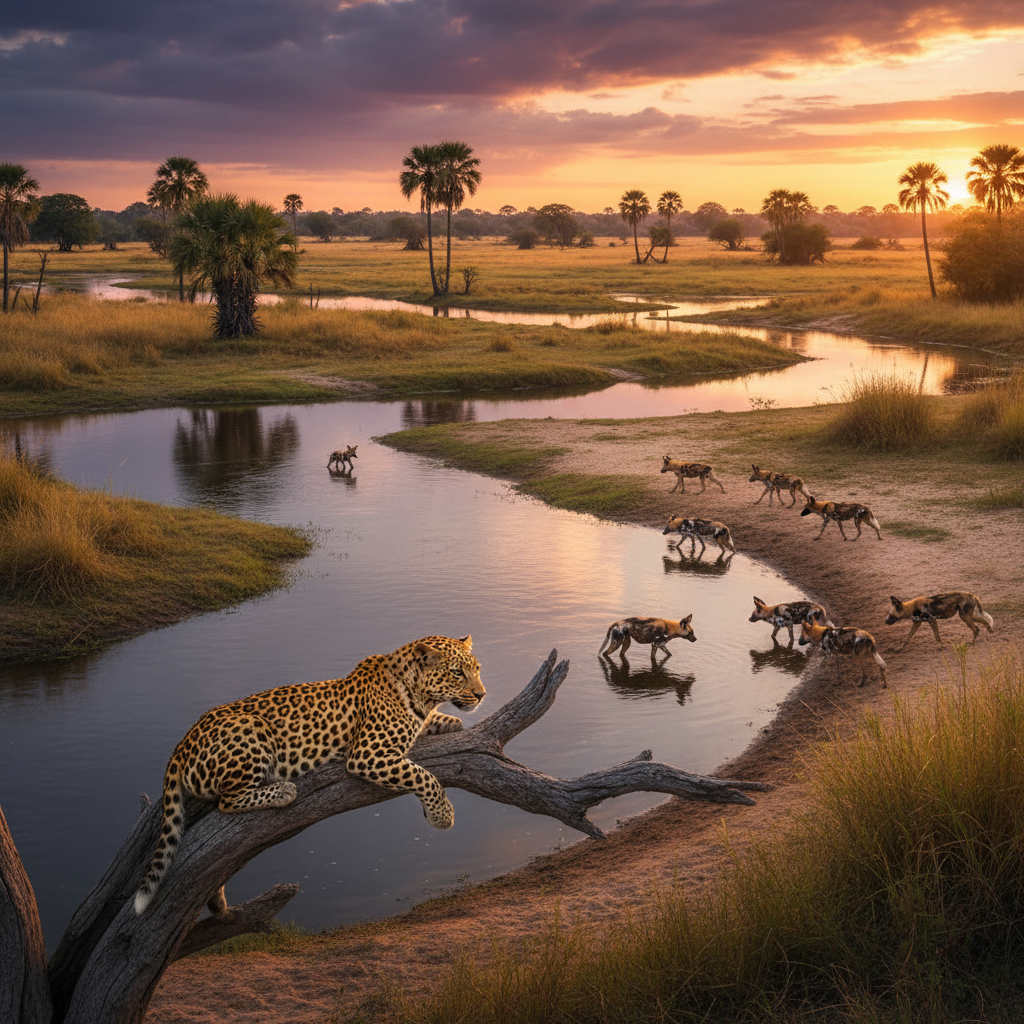
The Khwai Concession, bordering the reserve's northern reaches, is where the magic truly unfolds for photographers. Imagine waking before dawn, the air crisp and cool, with the distant roar of a lion echoing across the savanna. Your guide, a master tracker, points to fresh paw prints in the sand – a leopard has passed this way recently. This isn't just about spotting animals; it's about the anticipation, the chase, and the profound satisfaction of capturing that fleeting moment when a wild dog pack, painted in earthy tones, bursts into a frenetic hunt, or a leopard, draped elegantly over a sausage tree branch, locks eyes with your lens. It's a place where every turn in the dusty track offers a new, breathtaking composition.
Is it possible to get truly unique wildlife shots without disturbing the animals or feeling like you're in a queue of vehicles? Here's the reality: Moremi's commitment to low-impact tourism means fewer vehicles per sighting, especially in the private concessions. Unlike some busier parks, you won't find yourself jostling for position. Leif designs itineraries that leverage expert local guides who understand animal behavior and the best angles for photography, ensuring ethical encounters. They know the territories of specific prides and packs, the favored waterholes, and the prime times for action, allowing you to capture intimate, natural behaviors without stress. This careful approach preserves both the wilderness experience and the quality of your photographs.
Photographers spend their early mornings and late afternoons traversing the intricate network of tracks around the Bodumatau area, focusing on the golden hours when light is soft and animals are most active. You'll find yourself meticulously adjusting settings, anticipating movement, and framing shots of everything from a stately elephant herd crossing a lagoon to a tiny malachite kingfisher perched on a reed. Mid-day often involves reviewing your captures, charging batteries, and perhaps a quiet siesta, preparing for the next photographic adventure. Evenings are for sharing stories around a campfire, discussing techniques, and planning the next day's strategy to find those elusive predators, all while the sounds of the African night envelop you.
Into the Wild: Arrival and First Glimpse of Moremi's Magic
Arrive at Maun International Airport (MUB) and meet your charter flight connection to Moremi Game Reserve.
This is your gateway to the Okavango Delta, where the real adventure begins. Enjoy the anticipation as you transition from modern travel to the heart of the wilderness.
Scenic bush plane transfer directly to your camp's airstrip within Moremi Game Reserve.
Experience the vastness and intricate waterways of the Okavango Delta from a unique perspective. This flight is an adventure in itself, showcasing the incredible landscape you'll be exploring.
Arrive at Camp Moremi, check into your luxurious safari tent, and enjoy a welcome drink.
Settle into your home for the next few days, a perfect blend of comfort and immersion in nature. Take a moment to absorb the sounds and sights of the bush around you.
Afternoon game drive through the Mopane woodlands and floodplains surrounding Camp Moremi.
Embark on your first official safari, seeking out iconic species like elephants, giraffes, and various antelope. This is your chance to start capturing the essence of Moremi's wildlife.
Enjoy sundowners at a scenic spot, followed by a gourmet dinner back at Camp Moremi.
Witness a spectacular African sunset, a truly magical end to your first day, often accompanied by the sounds of the bush. Share stories and anticipation for the days ahead over a delicious meal.
Leif's Tip: Upon arrival, take a few moments to calibrate your camera settings for the African light. The light here can be incredibly harsh mid-day and beautifully golden in the mornings and evenings. Get your white balance and ISO dialed in early to avoid missing those crucial first shots.
The part of Botswana that catches photographers off guard is the sheer logistical complexity of moving specialized equipment between remote camps, often requiring light aircraft transfers with strict baggage limits. Then there's the challenge of securing permits for specific photographic hides or private concessions, and knowing which local guides truly understand the nuances of light, composition, and animal behavior for a perfect shot, rather than just pointing out animals. Between navigating these intricate transport schedules, understanding the best seasonal locations for specific species, and ensuring your valuable gear is always protected, planning a dedicated wildlife photography expedition to the delta can feel overwhelming before you even arrive. This is precisely where Leif steps in, transforming potential headaches into seamless transitions.
Painted wolves at sunrise in the Gomoti concession — that's the shot — but knowing which private reserve holds a resident pack in October versus March, and which guide has the radio network to intercept a hunt, is intelligence that takes years to build. You land at Maun Airport, and instead of wondering about the weight of your Pelican cases for the bush plane, Leif has pre-arranged all the necessary allowances and transfers directly to your chosen lodge near the Gomoti River. That moment when you realize the light is perfect for a low-angle shot of a lioness, but your vehicle is positioned poorly, Leif's curated itinerary ensures your expert guide anticipates these needs, positioning the vehicle for optimal photographic opportunities and even suggesting lens changes or camera settings. It's about having every detail, from the macro to the micro, meticulously planned so you can focus solely on your art.
Instead of the common anxiety of missing a crucial sighting because of poor planning or a generic safari, you'll find yourself immersed in the wild, lens poised, with every element working in your favor. You'll arrive at your camp near the Santantadibe River, knowing that your private vehicle and guide are ready for an early morning pursuit of that elusive leopard, or that the afternoon will bring you to a prime spot for dramatic landscape shots as the sun dips below the horizon. The difference is feeling completely present, unburdened by logistics, and confident that every opportunity for an award-winning photograph has been maximized. Arriving in this pristine wilderness with such specific preparation already done means your focus remains entirely on the breathtaking beauty unfolding before your eyes, ready to capture its essence.
Best Time to Visit Moremi Game Reserve, Botswana
May to October (dry season): This is prime time for wildlife viewing as animals congregate around dwindling water sources, making them easier to spot. The vegetation is also less dense, offering clearer photographic opportunities.
July to September: These months are particularly excellent for leopard and wild dog sightings, as the dry conditions push them into more open areas and near permanent water.
Late May/Early June: The tail end of the green season can offer lush landscapes and still good wildlife, with fewer tourists and potentially lower prices.
Avoid December to March: This is the wet season, characterized by heavy rains, thick vegetation, and dispersed wildlife, making photography challenging and sightings less frequent.
Getting Around Moremi Game Reserve, Botswana
Fly into Maun (MUB): This is the gateway to the Okavango Delta. From Maun, you'll typically take a light aircraft charter directly to airstrips within Moremi Game Reserve, such as Xakanaxa or Khwai.
Safari vehicles are essential: Once in Moremi, all transportation for game drives will be in specialized open-sided 4x4 safari vehicles. Ensure your tour operator provides comfortable seating and good visibility for photography.
Bush flights are part of the adventure: Embrace the small planes! They offer incredible aerial views of the Delta and are the most efficient way to access remote camps.
Self-driving is not recommended for first-timers: Moremi's roads are challenging, sandy, and often flooded. It requires significant off-road experience, proper equipment, and permits, which is not ideal for a dedicated photography trip.
What to Pack
- Long-sleeved, neutral-colored clothing (khaki, olive, brown) to protect from sun and insects and blend with the environment.
- Wide-brimmed hat and sunglasses for sun protection.
- High-quality camera gear: DSLR/mirrorless body, telephoto lens (300mm+), wide-angle lens for landscapes, extra batteries, and plenty of memory cards.
- Bean bag or monopod for camera stability in the vehicle (tripods are often impractical during game drives).
- Headlamp or small flashlight for navigating camp at night.
- Insect repellent with high DEET content.
- Binoculars for spotting distant wildlife.
- Lightweight rain jacket/poncho (even in dry season, unexpected showers can occur).
Money-Saving Tips
- Consider shoulder season travel: Late May/early June or late October/early November can offer slightly reduced rates compared to peak dry season, with still excellent wildlife viewing.
- Book an all-inclusive safari package: While seemingly expensive upfront, these often include flights from Maun, accommodation, meals, activities, and guides, which can be more cost-effective than booking piecemeal.
- Travel with a small group: Some operators offer discounts for small groups, or you can join an existing photography tour to share costs.
- Limit souvenir purchases: Botswana offers beautiful crafts, but focus your budget on the safari experience itself, which is the main draw.
- Bring your own snacks and drinks (non-alcoholic): While camps provide food, having your favorite snacks can save on incidental purchases.
Local Insights
- Learn a few basic Setswana phrases: 'Dumela' (hello), 'Ke a leboga' (thank you), and 'Sala sentle' (stay well/goodbye) will be appreciated by your guides and camp staff.
- Respect local customs: Always ask permission before photographing people, and be mindful of cultural sensitivities.
- Tipping is customary: Guides, trackers, and camp staff work incredibly hard. A general guideline is around $10-20 per guest per day for your guide/tracker and $5-10 per guest per day for general camp staff, given at the end of your stay.
- Listen to your guide: They are experts in the bush and their instructions are for your safety and to enhance your wildlife viewing experience. Their knowledge of animal behavior is invaluable for photography.
- Be patient and present: While photography is the goal, take moments to simply observe and appreciate the incredible environment. Sometimes the best shots come when you're least expecting them, after a period of quiet observation.
Frequently Asked Questions
What kind of camera gear is essential for this trip?
Bring at least one DSLR or mirrorless camera body, a telephoto lens (400mm or more is ideal), a wide-angle lens for landscapes, spare batteries, plenty of memory cards, and a beanbag for stability on game drives. A sturdy tripod is also recommended for low-light landscape shots.
How close can we get to the wildlife for photography?
Guides are expertly trained to approach animals responsibly, maintaining a respectful distance that ensures both your safety and the animals' comfort. While you won't be right next to a leopard, telephoto lenses will allow for incredible close-up shots without disturbing their natural behavior.
What are the best times of year to visit for wildlife photography?
The dry season (May to October) is generally best as animals congregate around diminishing water sources, making them easier to find. However, the green season (November to April) offers lush landscapes, dramatic skies, and excellent bird photography opportunities, plus newborn animals.
Are there opportunities for night photography or astrophotography?
Absolutely! The remote nature of Moremi means minimal light pollution. Many camps offer guided night drives (where permitted) or dedicated spots for astrophotography, allowing you to capture the stunning Milky Way over the African bush. A fast wide-angle lens and a tripod are crucial for this.
What kind of vehicles are used for game drives?
You'll typically be in open-sided 4x4 safari vehicles, designed for optimal viewing and photography. These vehicles often have low sides, allowing for easy camera positioning, and sometimes even charging points for your gear.
Is it possible to arrange a private vehicle and guide for a dedicated photography safari?
Yes, Leif highly recommends and can arrange private vehicles and specialist photographic guides. This allows for maximum flexibility in terms of timing, duration of sightings, and pursuing specific photographic interests without compromise.
What should I pack besides camera gear?
Light, neutral-colored clothing, a wide-brimmed hat, sunglasses, sunscreen, insect repellent, a good pair of binoculars, and a headlamp are essential. Don't forget a waterproof bag or cover for your camera gear, especially during the green season.