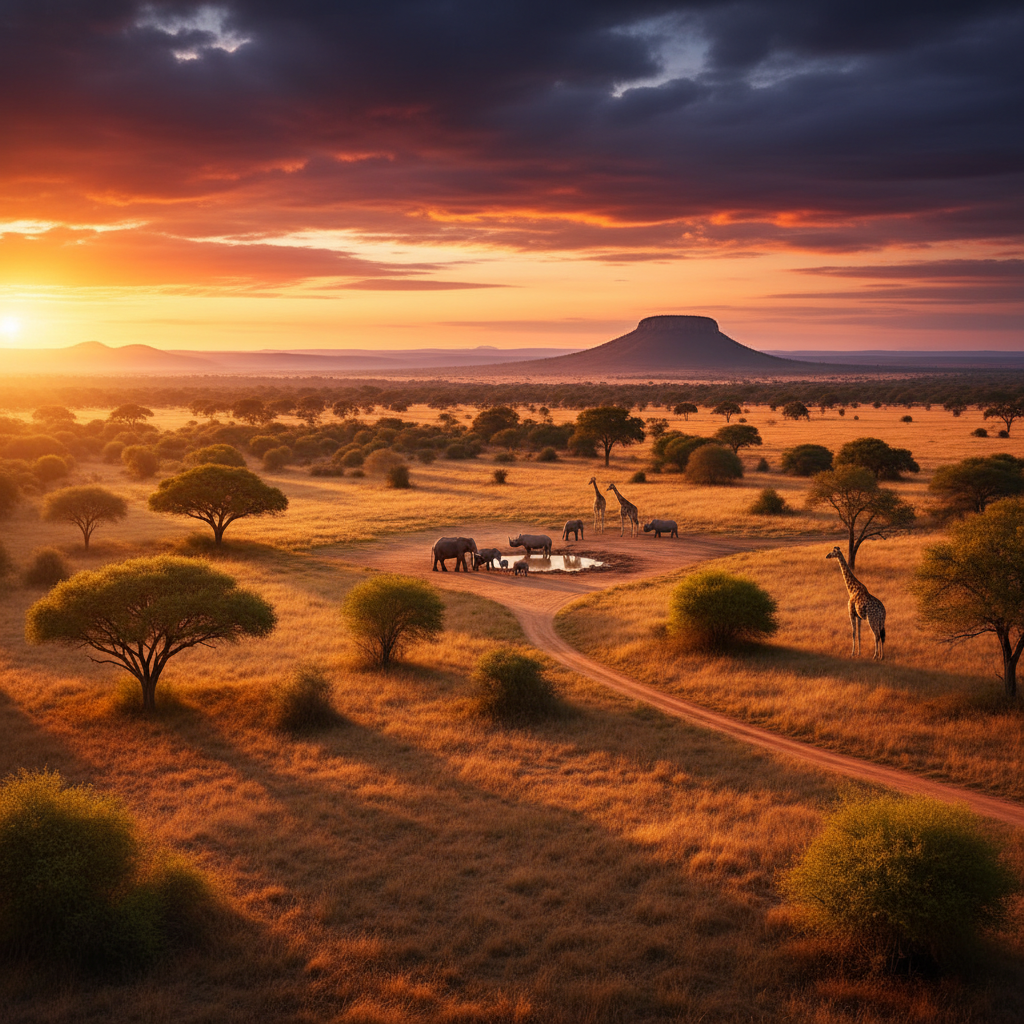
5-Day Kruger Self-Drive Safari Adventure: Big Five & Panorama Route
Unleash your inner explorer on a 5-day self-drive safari adventure in Kruger National Park. Spot the Big Five, enjoy thrilling night drives, and explore the stunning Panorama Route.
- Duration: 5 Days
- Estimated Budget: $1,500–$2,500
- Best Time to Visit: May-September for dry season, excellent wildlife viewing, and pleasant temperatures.
- Destination: Kruger National Park, South Africa
Kruger National Park offers an unparalleled self-drive safari experience, allowing you the freedom to discover the African wilderness at your own pace. This adventure is perfect for those who crave independence and the thrill of spotting wildlife around every bend, making it an ideal time to connect with nature on your terms.
Spotting elephants along the Sabie River is a daily occurrence, their massive forms moving gracefully through the acacia trees, all from the comfort of your own vehicle. The iconic Olifants River lookout provides breathtaking panoramic views, a freedom rarely foun... their massive forms moving gracefully through the acacia trees, all from the comfort of your own vehicle. The iconic Olifants River lookout provides breathtaking panoramic views, a freedom rarely found in other African parks. You're not just a passenger; you're the explorer, navigating the vast network of roads, deciding where to linger and what hidden waterhole to investigate next. This is where the wild truly comes alive, where every turn can reveal a leopard draped over a branch or a pride of lions lounging in the golden hour. It's an adventure that engages all your senses, from the dusty smell of the bush to the distant roar of a lion at dusk, making every moment an unforgettable memory.
Our 5-day itinerary is crafted for the intrepid traveler eager to embrace the self-drive adventure, focusing on the southern reaches of Kruger, renowned for its incredible Big Five density. We'll guide you from the moment you land in Johannesburg, through the scenic drive to the park, ensuring you enter at the most convenient gates like Phalaborwa or Orpen to maximize your game viewing time. Prepare for early mornings and late afternoons, the 'golden hours' when wildlife is most active, punctuated by the option of thrilling night drives with experienced rangers. This isn't just a trip; it's an immersion into the heart of the African wilderness, where you control the pace and the discoveries.
Beyond the exhilarating game drives, this journey culminates with a breathtaking drive along the Panorama Route, offering a dramatic contrast to the flat plains of Kruger. Picture yourself standing at God's Window, gazing across a seemingly endless expanse of verdant valleys, or marveling at the intricate formations of the Blyde River Canyon, one of the largest canyons in the world. This itinerary isn't just about spotting animals; it's about experiencing the diverse beauty of South Africa, from its iconic wildlife to its majestic landscapes. Combine this with a few days in vibrant Cape Town, and you have the makings of a truly epic 10-day South African adventure.
From City Buzz to Bushveld Bliss: The Journey to Kruger
Pick up your rental car at O.R. Tambo International Airport (JNB) in Johannesburg. Opt for an SUV or vehicle with good ground clearance, even if it's not 4x4.
A reliable rental car is essential for your self-drive safari, offering the freedom to explore Kruger at your own pace. Booking in advance ensures you get the vehicle type best suited for the park's gravel roads.
Begin your scenic drive from Johannesburg towards Kruger National Park, heading east on the N12/N4. This approximately 4-5 hour drive will take you through diverse landscapes.
The journey itself is part of the adventure, transitioning from urban sprawl to the vast, open spaces of Mpumalanga. It allows you to mentally prepare for the wilderness ahead.
Stop for lunch in Nelspruit (Mbombela), a major town just before the park. Grab a bite at The Bagdad Cafe for a casual, local experience.
Nelspruit is your last major stop for supplies and a proper meal before entering the park. It's a great place to stretch your legs and refuel both yourself and your vehicle.
Arrive at the Phalaborwa Gate, one of the northern entry points to Kruger National Park. Complete your entry formalities and pay your conservation fees.
Entering the park is an exciting moment, marking the official start of your safari adventure. Phalaborwa Gate offers a less congested entry point compared to some southern gates.
Enjoy your first short game drive as you make your way from Phalaborwa Gate to Satara Rest Camp, your accommodation for the night. Keep your eyes peeled for your first sightings!
This initial drive is a fantastic introduction to Kruger's wildlife. Even a short drive can yield exciting sightings and gets you into the safari mindset immediately.
Leif's Tip: Don't rush this first day. The drive from Johannesburg is long, so take breaks, enjoy the scenery, and arrive at the park gates well before closing time. The real safari begins the moment you enter, so stay alert and soak it all in.
Navigating the intricate network of gravel roads and diverse wildlife zones within Kruger National Park, especially for a self-drive adventure, presents unique challenges. You're not just booking accommodation; you're strategizing daily routes to maximize animal sightings, understanding peak activity times for various species, and deciphering which rest camps offer the best access to specific habitats. Then there's the critical decision of when to visit to avoid extreme heat or dense vegetation, and how to secure those coveted early morning game drive slots or night safaris which often book out months in advance. Factor in the logistics of vehicle rental suitable for varied terrain, understanding park gate opening and closing times, and knowing where to refuel or find provisions, and the planning can quickly become overwhelming. This is precisely where Leif steps in, transforming potential headaches into seamless exploration.
Kruger is transformed from a vast wilderness into a personalized safari playground with Leif as your intelligent co-pilot. Instead of aimlessly driving, wondering where the elusive leopards might be, your personalized itinerary guides you to known territories, factoring in recent sightings and seasonal animal movements. Leif anticipates your need for a mid-morning break, suggesting a quiet picnic spot along the Sabie River, away from the crowds, complete with directions to a hidden bird hide. When you consider extending your game drive or changing your route based on a tip from a fellow traveler, Leif instantly recalibrates your day, suggesting alternative paths that maintain optimal wildlife viewing opportunities and ensuring you arrive at your next camp before the gates close, all without missing a beat.
The scent of wild sage and damp earth after a sudden afternoon shower, mixed with the distant call of a fish eagle, becomes your constant companion. You arrive at each camp, whether it's Lower Sabie or Satara, feeling completely prepared and relaxed, not just because your accommodation is secured, but because every detail, from your morning coffee stop to your evening braai, has been thoughtfully considered. There's a profound sense of freedom in knowing you're experiencing Kruger on your own terms, yet with the confidence that you're making the most informed choices for every game drive and every moment of rest. This isn't just a trip; it's your personal safari narrative, unfolding effortlessly, leaving you to fully immerse yourself in the raw, untamed beauty of the African wilderness.
Best Time to Visit Kruger National Park, South Africa
Dry Season (May to October): This is prime wildlife viewing. Vegetation is sparse, and animals congregate around waterholes, making them easier to spot. The weather is also cooler and drier.
Shoulder Months (April, November): Still good for wildlife, with fewer crowds and slightly greener landscapes. You might catch the tail end of the wet season or the beginning of the dry.
Avoid Peak Holiday Periods: South African school holidays (mid-December to mid-January, Easter, July) mean crowded camps and roads. Book far in advance if these are your only options.
Early Mornings and Late Afternoons: Regardless of the season, these 'golden hours' are when animals are most active. Plan your self-drives accordingly.
Getting Around Kruger National Park, South Africa
Rent a High-Clearance Vehicle: While 4x4 isn't strictly necessary for most main roads, a vehicle with higher clearance (like an SUV) offers better visibility over the bush and handles gravel roads more comfortably.
Self-Drive is King: Kruger is designed for self-driving. You have the freedom to stop, observe, and move at your own pace. Stick to the speed limits!
Fuel Up Regularly: Petrol stations are available at major camps like Skukuza, Satara, and Lower Sabie, but distances are vast. Don't let your tank get too low.
Download Offline Maps: Cell service is spotty inside the park. Download Google Maps or Maps.me for offline navigation, especially for camp layouts and road networks.
Book Accommodation Inside the Park: Staying in SANParks rest camps allows you to be inside the park for early morning and late afternoon game drives, maximizing your wildlife encounters.
What to Pack
- Binoculars: Absolutely essential for spotting distant wildlife and getting a closer look at birds.
- Camera with Zoom Lens: You'll want to capture those incredible moments. A good zoom lens is crucial.
- Lightweight, Neutral-Colored Clothing: Khaki, olive, and brown are best for blending in. Long sleeves and pants offer sun and insect protection.
- Sun Protection: Wide-brimmed hat, sunglasses, and high-SPF sunscreen are non-negotiable. The African sun is intense.
- Insect Repellent: Especially important for evenings and early mornings to ward off mosquitoes.
- Small Cooler Bag: Keep drinks and snacks cool for your long game drives.
- Headlamp or Flashlight: Useful for navigating your camp after dark and for night drives.
- Power Bank/Car Charger: Keep your phone and camera batteries topped up, especially with limited electricity in some camps.
Money-Saving Tips
- Self-Cater: All SANParks rest camps have braai (BBQ) facilities and often a shop. Buying groceries outside the park and cooking your own meals saves a fortune compared to restaurant dining.
- Book SANParks Accommodation Directly: While third-party sites exist, booking directly through the SANParks website usually offers the best rates for their rest camps.
- Purchase a Wild Card if Applicable: If you're visiting multiple South African National Parks within a year, a Wild Card can offer significant savings on entry fees.
- Limit Guided Activities: While night drives are fantastic, doing too many guided safaris adds up. Focus on self-driving for most of your game viewing.
- Pack Your Own Snacks and Drinks: Prices for these items inside the park shops are higher due to logistics. Stock up before you enter.
Local Insights
- Respect the Animals: Always maintain a safe distance, never feed them, and avoid sudden movements or loud noises. They are wild animals, not pets.
- Gate Times are Strict: Kruger gates open at sunrise and close at sunset. Arriving late or leaving early can result in fines. Plan your drives carefully.
- Road Rules: Stick to the speed limits (50 km/h on tar, 40 km/h on gravel) and never get out of your vehicle unless in designated areas. This is for your safety.
- The 'Kruger Wave': It's customary to wave at other vehicles on game drives. It's a friendly gesture and often a silent inquiry about recent sightings.
- Support Local Communities: When you're outside the park, consider stopping at local markets or small businesses in towns like Hazyview or Phalaborwa to support the economy.
Frequently Asked Questions
What's the best time of year for a self-drive safari in Kruger?
The dry season (May to October) is generally considered the best. Vegetation is sparser, making wildlife easier to spot, and animals congregate around permanent water sources. Temperatures are also more moderate, especially in winter months.
Do I need a 4x4 vehicle for self-driving in Kruger?
No, a standard 2WD sedan with decent ground clearance is perfectly fine for the main tarred and well-maintained gravel roads in Kruger. You only need a 4x4 if you plan to explore very specific, often less-traveled, dirt tracks, which aren't typically necessary for a first-timer's excellent game viewing experience.
Is it safe to self-drive in Kruger National Park?
Absolutely, as long as you follow park rules. Stay in your vehicle, maintain speed limits, and never feed animals. The roads are well-marked, and the park is designed for self-drivers. Just be aware of your surroundings and give animals plenty of space.
What are the essential items to pack for a Kruger self-drive?
Beyond your usual travel essentials, pack binoculars (a must!), a good camera with a telephoto lens, a wide-brimmed hat, sunglasses, high-SPF sunscreen, insect repellent, comfortable walking shoes, and layers of clothing for varying temperatures. A cooler box for drinks and snacks is also highly recommended.
How early should I book accommodation inside Kruger National Park?
Very early, especially for popular camps like Lower Sabie, Satara, and Skukuza, and particularly during peak season (school holidays, dry season). Book at least 6-12 months in advance to secure your preferred dates and camp.
Can I do night drives if I'm self-driving?
Yes! While you can't self-drive after gate closing hours, you can book guided night drives with park rangers from most main camps. These are fantastic opportunities to spot nocturnal animals like leopards, civets, and genets, and are highly recommended.
What are the best tips for spotting the Big Five on a self-drive safari?
Drive slowly, stop frequently, and scan the bush. Look for animal behavior (e.g., impalas staring intently), listen for alarm calls, and check around waterholes and riverbeds. Don't be afraid to pull over and wait. Chat with other self-drivers; they often share recent sightings. And remember, patience is key!