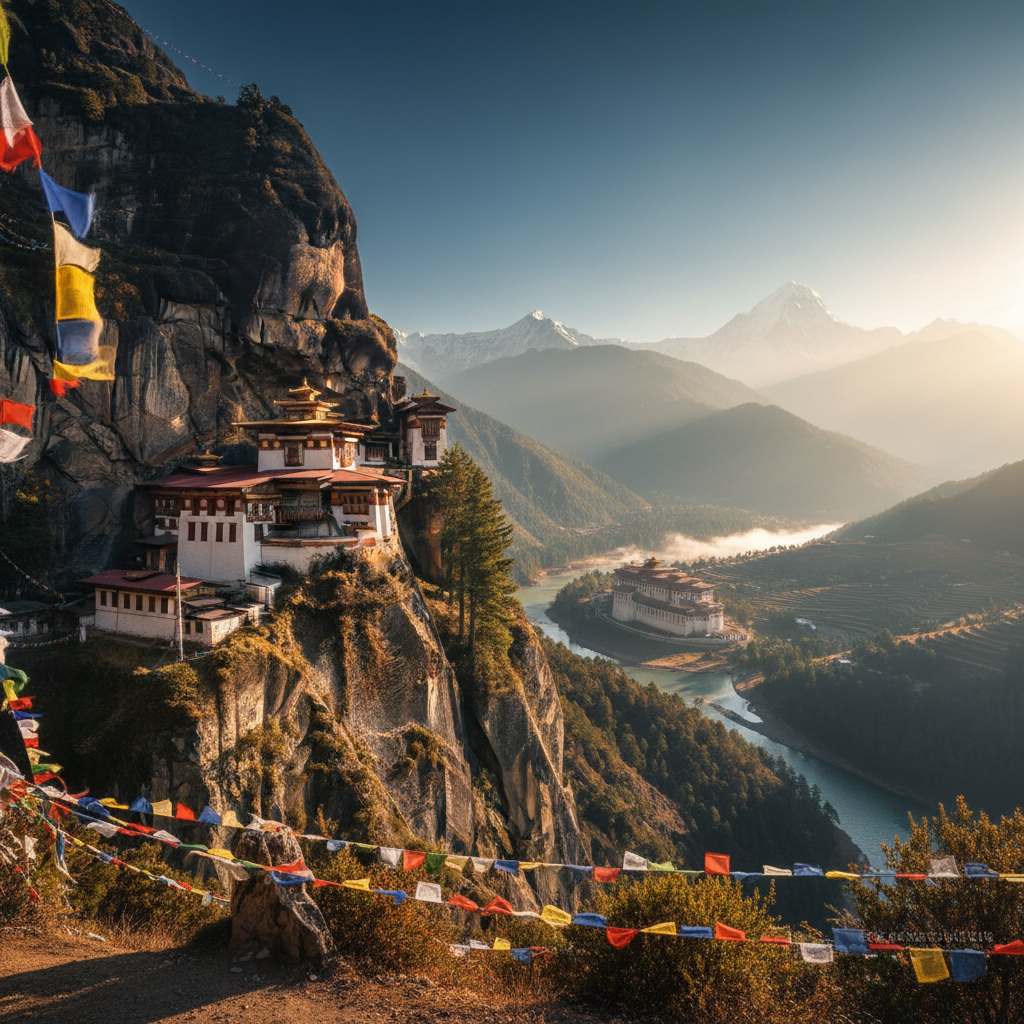
Bhutan Adventure: 5-Day Journey to Tiger's Nest & Gross National Happiness
Embark on a 5-day adventure through Bhutan, exploring ancient dzongs, hiking to Tiger's Nest, and discovering the unique culture of Gross National Happiness.
- Duration: 5 Days
- Estimated Budget: $2,250–$4,000
- Best Time to Visit: March-May and October-November for clear skies and pleasant trekking conditions.
- Destination: Bhutan
Prepare for an extraordinary adventure in Bhutan, the last Shangri-La, where ancient traditions meet breathtaking Himalayan landscapes. This journey isn't just a trip; it's an immersion into a culture that prioritizes well-being, offering a rare glimpse into a world untouched by mass tourism. Get ready to hike to iconic monasteries, explore majestic fortresses, and discover the profound philosophy of Gross National Happiness.
Bhutan isn't just a destination; it's an immersive journey into a philosophy. This 5-day adventure is crafted for the intrepid traveler eager to delve deep into the heart of the Himalayas, where the iconic Tiger's Nest Monastery clings precariously to a cliff face, inviting awe and contemplation. Imagine soaring into Paro International, one of the world's most dramatic airport approaches, as the jagged peaks of the Himalayas give way to verdant valleys and the first glimpse of a fortress dzong. You're not just visiting a country; you're stepping into a meticulously preserved culture, where ancient traditions blend seamlessly with a profound respect for nature. This trip offers a rare opportunity to disconnect from the ordinary and reconnect with something truly extraordinary, a place where every vista is a postcard and every interaction a lesson in tranquility.
This itinerary is a carefully curated blend of iconic landmarks and authentic cultural immersion, designed to give you a comprehensive taste of Bhutan's unique charm. From the spiritual ascent to Tiger's Nest, an experience that will challenge your body and uplift your soul, to exploring the vibrant, traffic-light-free capital of Thimphu, you'll witness the kingdom's commitment to its heritage firsthand. You'll wander through magnificent dzongs like Punakha, marveling at their intricate architecture and strategic placement, and discover the quirky charm of the fertility temple, Chimi Lhakhang, nestled amidst emerald rice paddies. Every day is an opportunity to uncover a new facet of this enigmatic kingdom, guided by the wisdom of its people and the breathtaking beauty of its landscapes.
Ascending to the Tiger's Nest Monastery, you'll feel the spirit of Bhutan's Gross National Happiness. This adventure isn't just about seeing the sights; it's about connecting with the warmth of its people as you explore the vibrant streets of Thimphu. You'll savor the fiery national dish, Ema Datshi, understand the significance of the 108 chortens at Dochula Pass, and perhaps even acquire a taste for Suja, the traditional butter tea. This journey is an invitation to slow down, to breathe in the crisp Himalayan air, and to reflect on a way of life that values harmony above all else. It's an exclusive passage into a kingdom that truly feels like the last Shangri-La, promising memories that will last a lifetime and a perspective that will forever change your view of the world.
Welcome to Paro: Fortress Views and Cultural Immersion
Arrive at Paro International Airport (PBH), one of the most breathtaking airport approaches in the world, nestled in a Himalayan valley.
Your first glimpse of Bhutan will be unforgettable, flying between towering peaks. It truly sets the stage for the magic that awaits.
Check into your hotel and enjoy a traditional Bhutanese lunch.
Settle in and refuel after your journey, preparing for an afternoon of exploration. Your first taste of Bhutanese cuisine will be a delightful introduction.
Explore Rinpung Dzong, a magnificent fortress monastery that serves as the administrative and religious center of Paro.
This iconic dzong is one of the most photographed sites in Bhutan, offering stunning architecture and a glimpse into Bhutanese spiritual life. It's a perfect introduction to the country's unique heritage.
Visit the National Museum of Bhutan, housed in a circular ancient watchtower (Ta Dzong) above Rinpung Dzong.
Gain essential context for Bhutanese history, culture, and art before diving deeper into your journey. The museum's collection provides a fantastic overview of the kingdom's heritage.
Stroll through Paro town, exploring its charming main street lined with traditional Bhutanese shops.
Discover local crafts, souvenirs, and get a feel for everyday life in a Bhutanese town. It's a great opportunity to pick up unique gifts or simply soak in the atmosphere.
Leif's Tip: Take it easy on your first day to acclimatize to the altitude, even though Paro is relatively low. Drink plenty of water and don't rush; Bhutanese pace is slow and deliberate, and you'll enjoy it more if you embrace that rhythm from the start.
Navigating the intricate visa process and understanding the unique permit system for Bhutan can be a daunting task, often leaving travelers confused about which documents are truly necessary and how far in advance to apply. Beyond the paperwork, figuring out the optimal time of year for a comfortable hike to the Tiger's Nest, avoiding monsoon season while still catching clear Himalayan views, requires insider knowledge. You might also wonder how to genuinely engage with the Gross National Happiness philosophy, rather than just observing it from a distance, or how to distinguish between a truly authentic cultural experience and one tailored purely for tourists. Leif cuts through this complexity, providing clear, actionable guidance on every logistical hurdle and cultural nuance, ensuring your journey is smooth from the very first step.
National Museum of Bhutan, housed in a circular ancient watchtower, offers a deep dive into the kingdom’s rich heritage before you venture further. If you're pondering an alternative route to a lesser-known monastery near Gangtey, Leif instantly provides options, complete with elevation gains and estimated trekking times, suggesting a local lunch spot that serves traditional Bhutanese fare away from the main tourist circuit. This isn't just about directions; it's about enriching every moment, anticipating your needs, and ensuring you experience the heart of Bhutan, whether you're adjusting to the altitude or seeking out a specific festival.
The crisp, clean air of the Himalayan foothills, carrying the faint scent of pine and incense, greets you as you step out each morning, fully prepared for the day's adventures. You'll feel a profound sense of calm knowing every detail, from your guided trek through rhododendron forests to a quiet moment of reflection at a remote chorten, has been meticulously arranged. This preparation allows you to truly immerse yourself in the spiritual landscape and vibrant culture, engaging with locals and appreciating the breathtaking scenery without a single logistical worry. Your journey through Bhutan becomes a seamless exploration, leaving you free to absorb every lesson and marvel at every vista.
Best Time to Visit Bhutan
March-May offers vibrant rhododendrons and reliably clear skies, perfect for photography and hiking.
October-November provides crisp, post-monsoon air with exceptional visibility for panoramic Himalayan views, including Dochula Pass.
Avoid June-September if possible, as this is monsoon season with frequent rain and cloud cover that can obscure mountain vistas.
For the Tiger's Nest hike, aim for a clear morning in shoulder seasons (late March/early April or late October/early November) to beat the heat and crowds.
Getting Around Bhutan
All internal transportation (including airport transfers) is included in your daily Sustainable Development Fee (SDF) and arranged by your licensed tour operator.
You'll travel in a comfortable private vehicle with your guide and driver, making stops at your leisure.
The roads between major towns like Paro, Thimphu, and Punakha are generally well-maintained but can be winding; if you're prone to motion sickness, pack appropriate medication.
Flying into Paro International Airport (PBH) is an experience in itself; try to get a window seat for breathtaking Himalayan views on approach.
What to Pack
- Layered clothing is essential, as temperatures can vary significantly between day and night, and at different altitudes.
- Comfortable, sturdy hiking boots with good ankle support are a must, especially for the Tiger's Nest hike.
- A waterproof and windproof jacket is crucial for unexpected showers and cooler mountain conditions.
- Sunscreen, sunglasses, and a wide-brimmed hat to protect against the strong Himalayan sun.
- A small daypack for water, snacks, and extra layers during daily excursions.
- A reusable water bottle to minimize plastic waste; your guide can help you refill it.
- Modest clothing (shoulders and knees covered) for visiting dzongs and monasteries, as a sign of respect.
- A good quality camera with extra batteries and memory cards to capture the stunning landscapes.
Money-Saving Tips
- The daily SDF ($200-250) is all-inclusive for accommodation, meals, guide, and transport, so there are fewer hidden costs than you might expect.
- Focus your additional spending on unique Bhutanese handicrafts and souvenirs, as most other expenses are covered.
- Consider mid-range hotels like Uma by COMO Paro for excellent value without compromising on quality, rather than the ultra-luxury options.
- While your meals are included, try local street food or smaller restaurants for a more authentic and budget-friendly culinary experience if your guide allows for it.
- Tipping your guide and driver is customary and appreciated, but not mandatory; factor this into your overall budget.
Local Insights
- Always ask permission before photographing people, especially monks or during religious ceremonies, to show respect.
- Dress modestly when visiting religious sites; this means covering your shoulders and knees. Your guide will remind you.
- Embrace the concept of 'Gross National Happiness' – it's a core philosophy here. Engage your guide in conversations about it.
- Be prepared for spicy food! Ema Datshi, the national dish, is chili and cheese, and it's genuinely fiery. Don't be afraid to ask for milder versions.
- Learn a few basic Dzongkha phrases like 'Kuzu Zangpo' (hello) and 'Kadrin Chhe La' (thank you); locals appreciate the effort.
Frequently Asked Questions
Why is Bhutan so expensive to visit?
Bhutan implements a 'High Value, Low Impact' tourism policy. The daily Sustainable Development Fee (SDF) of $200-250 per person covers your accommodation, meals, guide, transport, and most entry fees. This fee helps preserve Bhutan's culture and environment by limiting tourist numbers and funding free education and healthcare for its citizens. It's an investment in a unique, sustainable travel experience.
Can I travel independently in Bhutan?
No, independent travel is not permitted. You must book your trip through a licensed Bhutanese tour operator. This ensures you have a dedicated guide and driver throughout your journey, making your experience seamless and enriching. Your tour operator handles all logistics, from visas to hotel bookings, included in your SDF.
What's the best time of year to visit Bhutan for this adventure?
The best times are March-May and October-November. March-May offers vibrant rhododendron blooms and clear skies, perfect for hiking. October-November, post-monsoon, provides crystal-clear visibility for stunning Himalayan views, including Gangkhar Puensum. June-September is monsoon season, which can bring heavy rains and affect visibility.
How difficult is the Tiger's Nest hike?
The Tiger's Nest hike is moderately challenging, taking 4-5 hours round trip with a 900m elevation gain. The path is well-maintained but steep in sections. Horses are available for the first section up to the cafeteria for $15-20, which can ease the ascent. Take your time, stay hydrated, and enjoy the breathtaking views – it's absolutely worth the effort.
What should I pack for a 5-day adventure in Bhutan?
Pack layers as temperatures can vary. Include comfortable hiking shoes for Tiger's Nest, warm clothing for evenings (especially at higher altitudes like Dochula Pass), and lighter clothes for daytime. Remember to bring a hat, sunscreen, sunglasses, and a rain jacket. For visiting dzongs and monasteries, ensure you have clothes that cover your shoulders and knees.
Is the food very spicy in Bhutan?
Bhutanese cuisine, particularly the national dish Ema Datshi (chili and cheese stew), can be quite spicy. However, hotels and restaurants catering to tourists are generally mindful of varying spice tolerances and can adjust dishes. Don't be afraid to try local specialties like red rice and Suja (butter tea) for an authentic taste of Bhutan.
What are the photography etiquette rules in Bhutan?
Always ask permission before photographing people, especially monks or locals, out of respect. Inside temples and monasteries, photography is generally prohibited, or only allowed in specific areas – your guide will advise you. Outside, feel free to capture the stunning landscapes and architectural wonders, but be mindful of your surroundings and local customs.